 Bullish Portfolio

Introduction to P2P Lending for Financial Independence
Peer-to-peer lending offers an alternative path to wealth building that goes beyond traditional stocks and real estate. By connecting borrowers directly with investors through online platforms, individuals can earn interest income that compounds monthly, accelerating progress toward financial independence (FI) by 2026. This approach emphasizes consistent reinvestment and careful risk management to generate steady returns. Many investors appreciate the accessibility of P2P options, which often require lower minimums than other alternative assets while providing transparent access to loan details and performance metrics.
Investors seeking passive income streams find P2P lending attractive because payments arrive regularly, allowing immediate reinvestment rather than waiting for quarterly dividends or annual distributions. The focus remains on building a diversified portfolio that withstands economic shifts while targeting long-term FI goals. Understanding the mechanics of origination, servicing, and repayment helps new participants enter the space with realistic expectations about timelines and outcomes.
Platform Selection Criteria
Choosing the right P2P platform starts with evaluating key factors such as borrower screening processes, historical performance data, and fee structures. Look for platforms with transparent reporting on default rates and strong regulatory compliance. Features like auto-invest tools and secondary markets for selling notes enhance liquidity and efficiency. Advanced platforms also offer detailed analytics dashboards that track metrics such as average loan duration and recovery rates after defaults.
Compare origination fees, servicing costs, and minimum investment requirements across options. Platforms that provide detailed credit scoring models and borrower verification help reduce exposure to high-risk loans. Always review user experiences and independent audits before committing capital. Some platforms specialize in specific loan types, such as personal loans or small business financing, allowing investors to align choices with personal expertise or risk preferences. Reading platform terms of service and understanding how disputes are resolved adds another layer of due diligence.
Risk Mitigation Tactics
Effective risk mitigation involves spreading investments across numerous loans with varying credit profiles and loan purposes. Limit exposure to any single borrower or sector to avoid concentration risk. Utilize platform tools that automatically diversify portfolios based on chosen risk parameters. Additional tactics include setting maximum allocation limits per note and incorporating loans from multiple geographic regions to buffer against localized economic downturns.
Monitor economic indicators and adjust allocations accordingly. Setting aside a portion of returns as a reserve fund covers potential late payments. Regular portfolio reviews ensure alignment with overall FI timelines and prevent overexposure during market volatility. Investors often combine P2P with other asset classes to create a balanced overall strategy that supports compounding without excessive stress on any one component.
Reinvestment Schedules and Compounding
Monthly compounding thrives on disciplined reinvestment schedules. Investors typically reinvest principal and interest payments within days of receipt to maximize growth. Automated reinvestment features on many platforms simplify this process while maintaining diversification rules. Establishing calendar reminders or using platform alerts ensures no funds sit idle for extended periods.
Establish a consistent cadence, such as weekly reviews of available notes, to keep capital working continuously. This approach turns modest interest rates into substantial portfolio growth over several years, directly supporting 2026 FI targets through the power of frequent compounding cycles. Tracking cumulative reinvested amounts over time reveals the exponential effect that consistent action produces.
Real-World Portfolio Examples
Consider a balanced portfolio mixing consumer loans, small business funding, and real estate-backed notes. One example allocates across hundreds of individual loans graded from A to E, with heavier weighting toward higher-grade notes for stability. Projected yields depend on economic conditions and platform performance but emphasize reinvestment to achieve compounding benefits. Another scenario involves an investor who starts with a conservative mix and gradually incorporates more notes as familiarity with platform tools grows.
Another approach focuses on shorter-term loans for faster turnover, allowing quicker redeployment of funds. Tracking performance metrics such as realized returns versus expected defaults provides insights for ongoing optimization toward financial independence milestones. Reviewing these examples highlights how different risk levels and reinvestment frequencies influence overall trajectory without guaranteeing specific outcomes.
5-Step Implementation Guide
- Assess your current financial situation and determine capital available for P2P allocation without impacting emergency reserves. This includes reviewing overall net worth, existing debt obligations, and income stability to ensure the allocation fits comfortably within a broader wealth plan.
- Research and select 2-3 platforms that meet your risk tolerance and feature requirements. Spend time comparing user interfaces, customer support responsiveness, and educational resources offered to new investors.
- Create diversified note portfolios using auto-invest settings calibrated to monthly compounding goals. Define clear parameters such as maximum note size, minimum credit grade, and preferred loan categories before activating automation.
- Implement monthly reinvestment routines and track performance with spreadsheets or platform analytics. Document key decisions and results to identify patterns that can inform future adjustments.
- Review and rebalance the portfolio quarterly, adjusting for any changes in platform policies or personal FI objectives. Incorporate feedback from performance data to refine criteria and maintain momentum toward 2026 targets.
Comparison of Net Returns
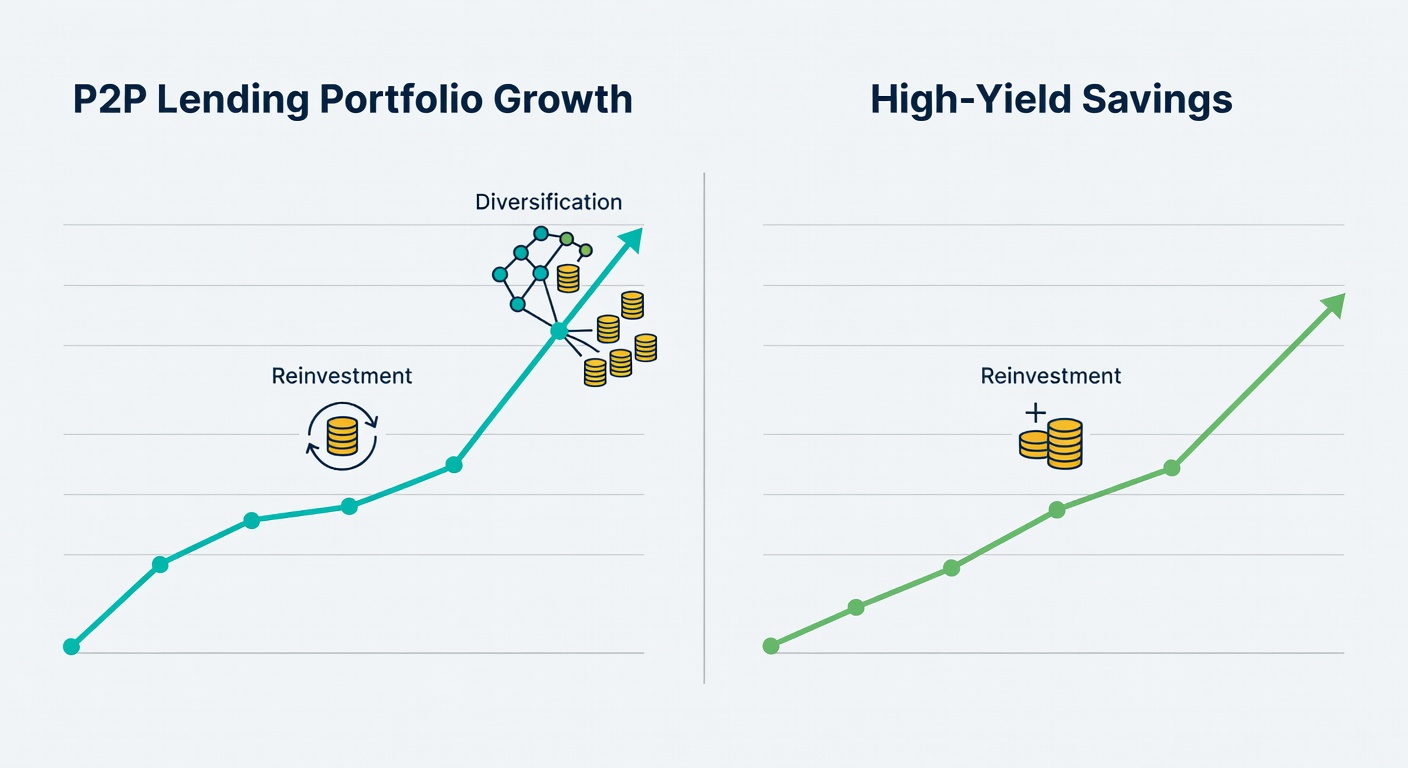
A comparison table highlights advantages of P2P strategies versus high-yield savings accounts. P2P often delivers higher potential yields through active management and compounding, while savings accounts provide principal protection and immediate liquidity. Investors weigh these differences against their risk appetite and timeline for reaching financial independence. The table below summarizes core distinctions that help guide allocation decisions.
| Vehicle | Typical Characteristics | Liquidity |
|---|---|---|
| P2P Lending | Monthly payments with reinvestment potential | Secondary markets available |
| High-Yield Savings | Stable but lower growth | Instant access |
Common Mistakes to Avoid
New participants sometimes overlook the importance of thorough platform due diligence, leading to surprises with fee structures or loan quality. Another frequent error involves concentrating too heavily in a single loan grade or category without adequate diversification. Failing to maintain a reinvestment schedule can also diminish compounding effects over time. Investors benefit from consulting resources at SEC.gov for regulatory context around alternative investments.
FAQ
How are P2P lending returns taxed?
Interest income from P2P lending is generally reported as ordinary income. Consult official resources at IRS.gov for current filing requirements and record-keeping best practices.
What about liquidity concerns?
While P2P notes are less liquid than savings accounts, many platforms offer secondary marketplaces. Review platform policies and consider holding periods when planning withdrawals for FI expenses.
Can P2P lending be part of a retirement account?
Certain self-directed retirement accounts allow P2P investments, but rules vary by custodian. Verify eligibility directly with account providers before proceeding.
Conclusion
P2P lending provides practical tools for compounding returns en route to 2026 financial independence. By focusing on platform selection, risk controls, and disciplined reinvestment, investors build resilient portfolios that generate passive income. Start with small allocations, follow the implementation steps, and refine tactics based on real performance data to stay on track. Continuous learning and measured adjustments position participants for sustained progress in this alternative investment space.

No comments yet. Be the first!