 Bullish Portfolio

Introduction to Automated Compounding for Financial Independence
Compounding returns form the cornerstone of long-term wealth accumulation, where earnings generate additional earnings over time. In today's dynamic markets, automating this process removes emotional decision-making and ensures consistent growth toward financial independence. This approach leverages recurring investments, dividend reinvestment, and systematic rebalancing to create a truly hands-off portfolio suitable for 2026 conditions. Readers seeking passive strategies will find practical value in selecting the right platforms and implementing proven techniques that maximize the power of compounding without daily oversight. The beauty of automation lies in its ability to turn small, consistent actions into substantial outcomes over decades, allowing individuals to focus on career, family, or other pursuits while their wealth grows steadily in the background.
Choosing the Right Platforms for Recurring Investments
Selecting a brokerage or robo-advisor with robust automation features is essential. Look for platforms offering seamless recurring transfers, low or no fees on ETF purchases, and integration with bank accounts. Key considerations include user-friendly interfaces, tax-efficient account options like IRAs, and mobile access for monitoring progress. Compare features such as automatic dividend handling and rebalancing tools before committing. Many investors start with established providers known for reliability in handling automated contributions. Additional factors to evaluate are security protocols, customer support responsiveness, and the availability of educational resources that help users understand how their automated systems function. In 2026, platforms with advanced API integrations and AI-assisted allocation suggestions are becoming increasingly popular for those aiming for true set-it-and-forget-it experiences.
Step-by-Step Guide to Setting Up Automated ETF Portfolios
Follow these steps to build an automated system:
- Open an account with a brokerage supporting recurring investments and dividend reinvestment plans (DRIPs). Verify eligibility for tax-advantaged accounts if applicable.
- Fund the account and set up automatic transfers from your bank on a weekly or monthly schedule aligned with your income cycle.
- Select a diversified portfolio of low-cost index funds or ETFs, such as total market or S&P 500 trackers, ensuring alignment with your risk tolerance and time horizon.
- Enable automatic dividend reinvestment to purchase additional shares immediately upon payout.
- Configure periodic rebalancing, typically quarterly, to maintain target allocations without manual intervention.
- Monitor the system annually through performance reports while avoiding frequent adjustments that could disrupt compounding.
This setup ensures contributions compound consistently. For example, an investor allocating to a broad market ETF can watch the portfolio grow through reinvested earnings and new capital without manual intervention. Consider a sample portfolio mix of 60 percent domestic equities, 25 percent international equities, and 15 percent fixed income, automated across multiple accounts for balanced exposure.
Dividend Reinvestment Automation in Practice
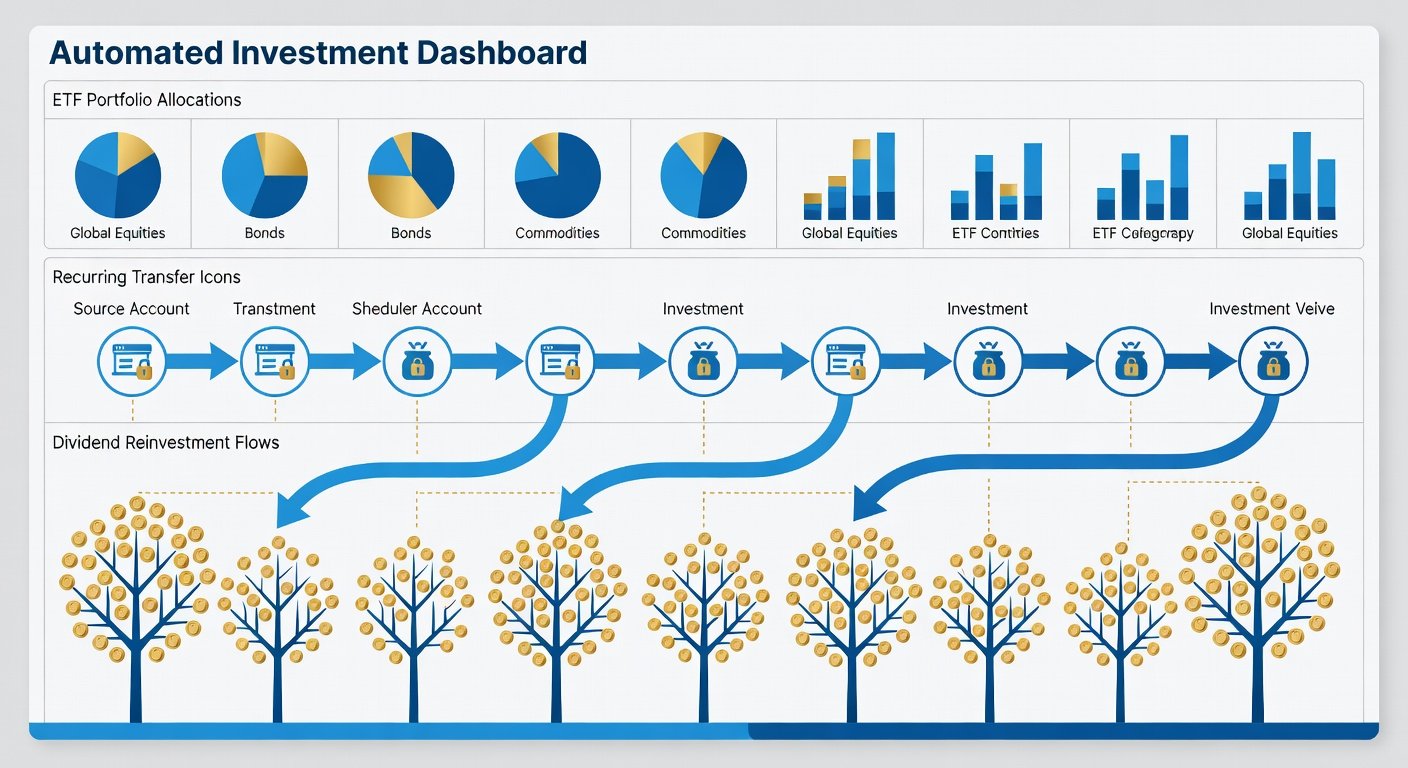
Dividend reinvestment automation accelerates compounding by immediately putting payouts back to work. Most modern platforms handle this seamlessly through DRIP features. Enable this option during account setup to avoid cash drag on returns. Practical examples include portfolios heavy in dividend-focused ETFs where quarterly payouts buy more shares automatically, enhancing long-term growth trajectories compared to manual reinvestment. In one scenario, an investor with holdings in a global equity ETF sees dividends from various holdings pooled and redeployed into underweighted positions, maintaining momentum. Another example involves using automation within a Roth IRA to shelter growing compounded amounts from taxes entirely, illustrating how the strategy scales across different account types for optimized outcomes in varying market environments.
Portfolio Rebalancing Techniques for Sustained Growth
Automated rebalancing maintains optimal asset allocation as markets fluctuate. Techniques range from threshold-based triggers (rebalance when allocations drift beyond 5 percent) to calendar-based schedules executed on the first business day of each quarter. Robo-advisors often excel here by executing tax-efficient trades that minimize realized gains. Manual approaches require more effort and risk behavioral biases, while automated systems ensure discipline. Comparisons show automated portfolios often outperform manual ones over multi-year periods due to consistent execution and reduced transaction costs from timely adjustments. For instance, during periods of strong equity performance, automation sells portions of outperforming assets to buy bonds, preserving the intended risk level without user input.
Manual vs. Automated Compounding: Key Comparisons and Real-World Outcomes
Manual compounding demands regular attention to contributions, reinvestments, and adjustments, which can lead to missed opportunities or emotional selling during downturns. Automated systems, by contrast, operate on predefined rules, reducing costs from inaction and improving adherence to strategy. Real-world examples demonstrate that investors using automation achieve steadier progress toward independence milestones, especially when combined with tax-advantaged accounts. Over a 20-year horizon, the difference becomes pronounced as even minor delays in reinvestment compound into significant shortfalls. Automated approaches also integrate well with employer-sponsored plans, allowing seamless increases in contribution percentages over time without additional decision fatigue.
Common Mistakes to Avoid When Automating Compounding
Many beginners overlook the importance of starting with an emergency fund separate from automated investment accounts. Another frequent error is selecting overly complex portfolios that trigger excessive rebalancing activity. Investors should also avoid ignoring tax implications across different account types and periodically review contribution amounts to match life changes such as salary increases. By sidestepping these pitfalls through careful initial setup, users can ensure their automated systems deliver reliable results toward financial independence.
Conclusion
Automating compounding returns transforms financial independence from an aspirational goal into an achievable reality. By focusing on platform selection, dividend automation, and disciplined rebalancing, individuals can build resilient portfolios that work continuously in the background.
FAQ
What are the primary risks of automated compounding systems?
Market volatility remains a key risk, though diversification across index funds helps mitigate it. Platform outages or changes in fees could also impact performance, so choosing reputable providers is crucial. Additionally, sequence-of-returns risk in early retirement years warrants consideration of conservative allocation shifts as goals near.
How do taxes affect automated investment strategies?
Tax considerations vary by account type. Use tax-advantaged vehicles like Roth IRAs where possible. Consult resources from authoritative sites such as IRS.gov for current guidelines on capital gains and dividends. In taxable accounts, automation can still be optimized through tax-loss harvesting features available on select platforms.
What optimization tips maximize long-term automated growth?
Increase contribution amounts over time, review allocations annually, and incorporate broad diversification. Additional insights are available through established references like Investopedia and SEC.gov. Consider incorporating international exposure and inflation-protected assets to enhance resilience across economic cycles.

No comments yet. Be the first!