 Bullish Portfolio
Introduction: Turning One-Time Windfalls into Long-Term Wealth
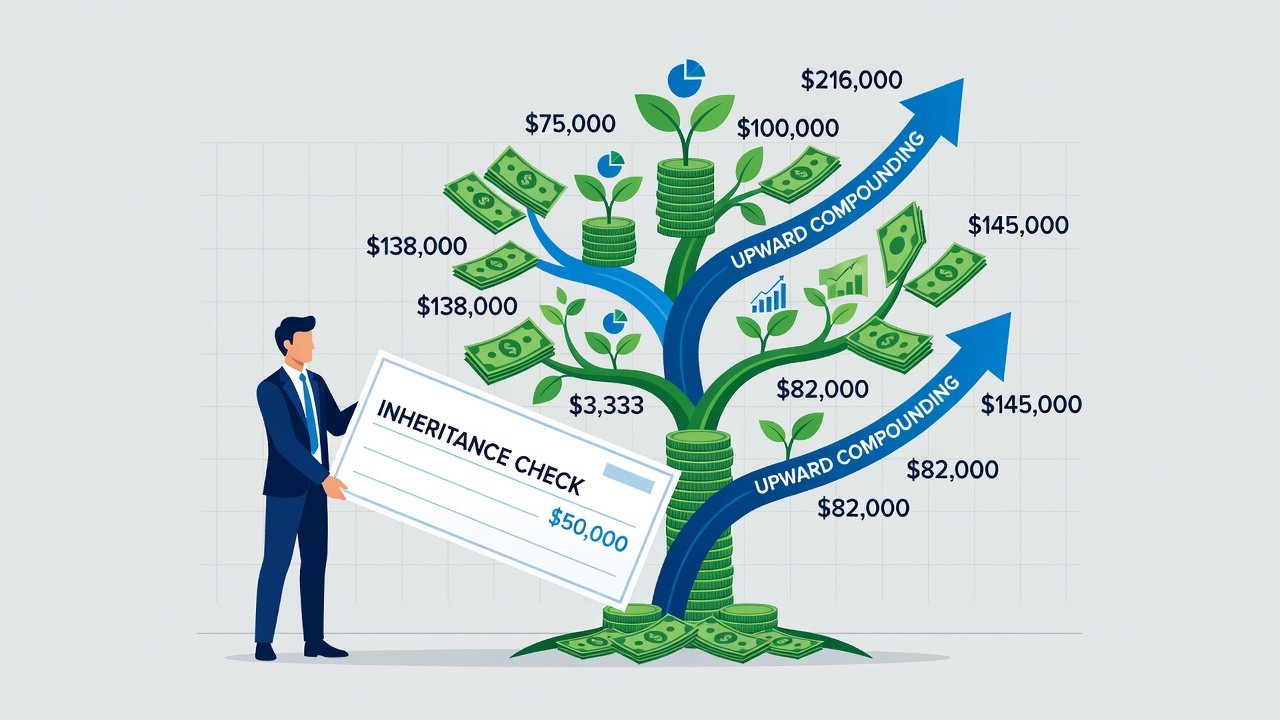
Receiving a windfall such as a work bonus, inheritance, or legal settlement can feel like a financial game-changer. When deployed strategically, these lump sums have the power to dramatically accelerate compounding returns and shorten the timeline to financial independence (FI) by 2026. This guide walks beginners through practical allocation decisions, tax-efficient tactics, and real-world projection examples so you can put every dollar to work. Compounding is often called the eighth wonder of the world because it allows your money to generate earnings that then generate their own earnings over time. A windfall gives you an immediate large principal that starts this process right away, unlike smaller regular contributions that take years to build similar momentum.
Why Windfalls Outperform Steady Contributions
Compounding works best when larger principal amounts start earning returns earlier. A single windfall invested today benefits from more years of growth compared with spreading the same total via dollar-cost averaging (DCA). The difference compounds exponentially over time, especially in growth-oriented assets. Consider the mathematical reality: the earlier a sum begins earning, the more periods of multiplication it experiences. Historical market data shows that equities have delivered average annual returns around 7-10% after inflation over long periods, meaning a lump sum placed in a diversified portfolio can pull ahead significantly versus phased investing. This advantage grows larger with bigger windfalls and longer time horizons leading into 2026 and beyond.
Step-by-Step Deployment Plan
- Build or top up an emergency fund covering 6–12 months of expenses in a high-yield savings account to protect against unexpected costs without touching investments.
- Pay down high-interest debt (above 7%) before investing the remainder because the guaranteed return from eliminating debt often exceeds market expectations after fees and taxes.
- Maximize tax-advantaged accounts such as IRAs or 401(k)s where contribution room exists to shelter growth from immediate taxation.
- Allocate the balance across diversified growth assets according to your risk tolerance and time horizon, favoring low-cost broad-market funds for simplicity and efficiency.
- Rebalance annually and reinvest all dividends and interest automatically to maintain target allocations and keep compounding uninterrupted.
- Review your plan every six months to adjust for life changes while avoiding reactive decisions based on short-term market noise.
Allocation Choices: Growth Assets vs Diversified Holdings
Younger investors with long horizons may tilt toward equities for higher expected returns, while those closer to FI often prefer a balanced mix of stocks and bonds. Low-cost index funds or ETFs keep fees minimal and allow compounding to work unimpeded. A typical growth allocation might include 70-90% equities split between domestic and international markets, with the rest in fixed income for stability. Diversified holdings reduce volatility but may slightly lower peak returns. Assess your personal risk tolerance by considering how you would react to a 20-30% portfolio drop, then match allocations accordingly. Tools from reputable sources can help model scenarios before committing funds.
Tax Efficiency and Low-Fee Principles
Place taxable assets in tax-advantaged accounts when possible. Harvest losses strategically and favor tax-efficient funds. Always compare expense ratios; even small differences matter over decades because they directly reduce the amount available for compounding. Asset location strategies involve putting high-growth assets in Roth accounts and income-generating holdings in traditional accounts to optimize after-tax returns. Official guidance is available at IRS.gov and Investor.gov. Avoiding unnecessary trading also minimizes capital gains taxes that can erode returns.
Simple Projection Formulas and Before-and-After Examples
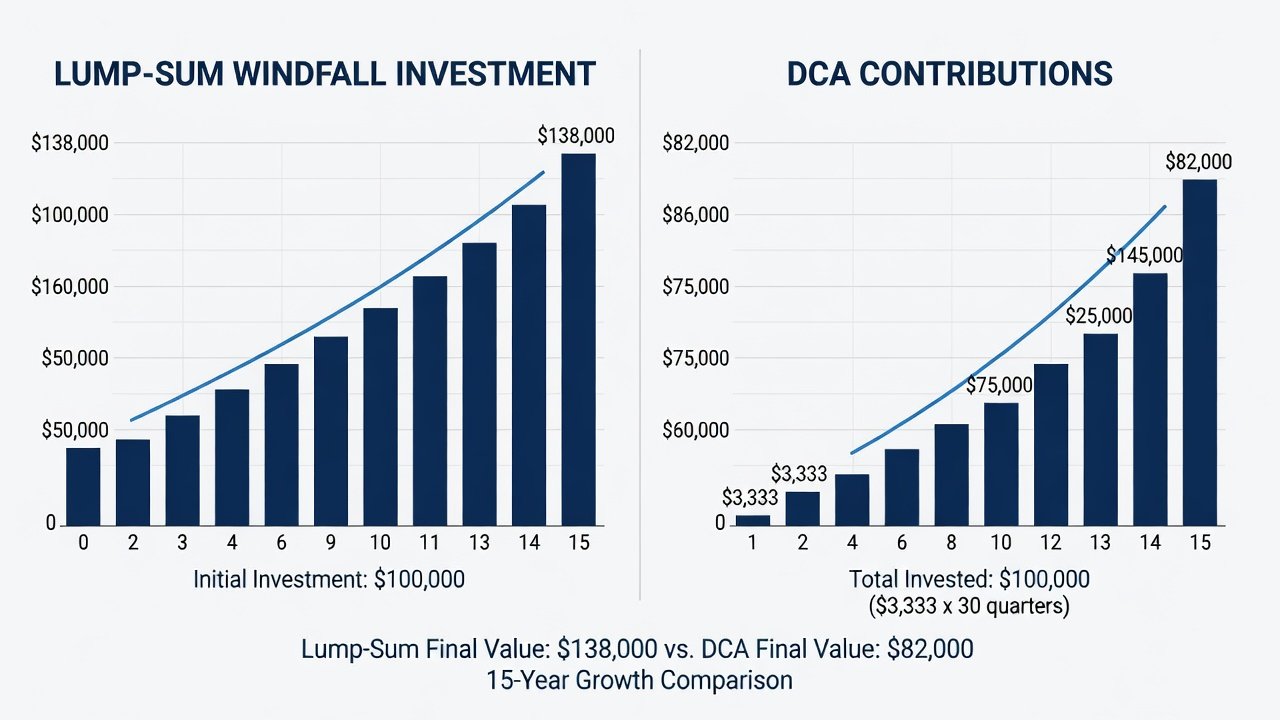
Use the future-value formula: FV = P × (1 + r)^n where P is principal, r is annual return, and n is years. Example one: A $50,000 windfall invested at 7% for 15 years grows to approximately $138,000. The same amount contributed via $3,333 annual DCA reaches only about $82,000 in the same period, illustrating the power of early lump-sum deployment. Example two: A $100,000 inheritance at 8% annual return over 10 years becomes roughly $216,000, while spreading it over time yields closer to $145,000. Adjust the formula for inflation by using real returns or add variables for taxes and fees to create more realistic projections. These calculations assume consistent returns and no withdrawals, highlighting why immediate deployment maximizes the effect heading into 2026.
Reader Case Studies
Case 1: Sarah received a $75,000 inheritance in early 2025. After emergency-fund and debt steps, she invested the balance in a low-cost total-market ETF. By late 2026 projections show her FI date moved forward 18 months thanks to uninterrupted compounding. Case 2: Mark used a year-end bonus to fully fund his IRA and Roth contributions, then placed the rest in a taxable brokerage, achieving similar acceleration while maintaining liquidity for planned home improvements. Case 3: Elena combined a work bonus with an insurance payout totaling $120,000 and allocated 60% to equities and 40% to bonds, resulting in a projected 22-month earlier FI date with lower volatility than an all-stock approach. These examples demonstrate how individual circumstances shape optimal deployment.
Comparison Against Steady DCA Contributions
While DCA reduces timing risk, historical data shows lump-sum investing outperforms DCA roughly two-thirds of the time. The gap widens with larger windfalls and longer horizons. Use DCA only if emotional comfort outweighs the mathematical edge. DCA can still serve as a fallback if markets are extremely volatile, but studies consistently favor getting money invested sooner. The opportunity cost of holding cash during strong market periods can be substantial, reinforcing the value of prompt allocation for most investors seeking 2026 FI.
Mistakes to Avoid and Emotional Spending Risks
Common pitfalls include lifestyle inflation, chasing hot stocks, or delaying deployment due to market fears. Create a written investment policy statement before the windfall arrives to stay disciplined. Emotional spending risks often arise immediately after receipt, such as treating the money as “fun funds” rather than capital for future freedom. Behavioral finance principles suggest setting rules in advance, such as automatically transferring 80% to investment accounts within one week. Avoiding these traps preserves the full power of compounding and keeps you on track for accelerated FI.
Frequently Asked Questions
How soon should I invest a windfall?
After handling debt and emergency reserves, deploy within 30–60 days to capture maximum compounding time while allowing brief reflection on your overall plan.
What if markets are at all-time highs?
Time in the market beats timing the market. A diversified, low-cost portfolio still compounds effectively regardless of entry point, as waiting often leads to missed gains that outweigh potential short-term dips.
Should I consult a professional?
For windfalls over six figures or complex tax situations, a fee-only fiduciary advisor adds value. Start with resources at SEC.gov to understand fiduciary standards.
How do I handle taxes on inherited assets?
Step-up in basis often applies to appreciated assets, reducing capital gains. Consult IRS publications for specifics and consider spreading realizations across tax years if needed.
Conclusion
Windfalls represent rare opportunities to supercharge compounding. By following a disciplined deployment plan, prioritizing tax efficiency, and maintaining a long-term perspective, you can meaningfully advance your 2026 FI goal. Start today with the steps above and let compounding do the heavy lifting for decades of accelerated wealth building.
No comments yet. Be the first!