 Bullish Portfolio

Introduction to ESG Investing for Long-Term Wealth Building
ESG investing integrates environmental, social, and governance factors into portfolio decisions, offering a pathway to compound wealth while aligning with ethical values. For those targeting financial independence (FI) by 2026, this approach balances strong returns with risk management in volatile markets. Unlike traditional strategies focused solely on profit, ESG emphasizes sustainable growth that can deliver resilient performance over decades. Investors today recognize that companies with strong ESG practices often demonstrate better long-term operational efficiency, innovation, and stakeholder relations, which directly supports consistent compounding. This method appeals to individuals who want their capital to generate returns without compromising on issues like climate change, labor rights, or corporate transparency. Research from leading institutions shows ESG funds often match or exceed conventional benchmarks during market stress due to better risk oversight. This article explores practical integration techniques, measurement of returns, and real-world applications to help build a future-proof portfolio that accelerates progress toward financial freedom.
Selecting ESG Funds and Stocks for Your Portfolio
Choosing the right ESG assets begins with screening for high-rated companies. Focus on funds from providers like BlackRock or Vanguard that use rigorous third-party ratings from MSCI or Sustainalytics. Prioritize sectors such as renewable energy, clean technology, and responsible healthcare that demonstrate strong governance practices. Investors should examine fund prospectuses for exclusionary screens that avoid tobacco, weapons, or fossil fuel companies. Key criteria include low carbon footprints, diverse leadership teams, and transparent supply chains. Avoid greenwashing by reviewing annual sustainability reports and third-party audits. Diversify across 10-15 holdings to mitigate sector-specific risks while maintaining exposure to growth areas like electric vehicles and sustainable agriculture. Consider regional allocation as well, blending developed-market ESG leaders with emerging-market opportunities in green infrastructure. Tools such as ETF screeners can help identify low-expense-ratio options with high sustainability scores. Building a core position in broad ESG index funds provides stability, while satellite holdings in thematic areas add targeted growth potential.
Measuring the Impact of ESG on Investment Returns
Quantifying ESG performance involves comparing total returns, Sharpe ratios, and downside protection against traditional indices. Studies indicate ESG portfolios have shown competitive compounding, particularly in the post-2020 recovery period, due to lower volatility from ethical business models. Track metrics like carbon intensity reduction and social impact scores alongside financial KPIs. Tools from Morningstar or Bloomberg provide dashboards for ongoing analysis. Over five to ten years, consistent ESG integration can enhance compounding through avoided controversies and regulatory fines. Investors should also evaluate engagement activity, where fund managers actively vote proxies to improve corporate behavior. This active ownership can lead to measurable improvements in company policies that ultimately protect shareholder value. Regular performance attribution analysis helps isolate the contribution of ESG factors versus market beta.
Balancing ESG with Traditional Assets for Optimal Risk Management
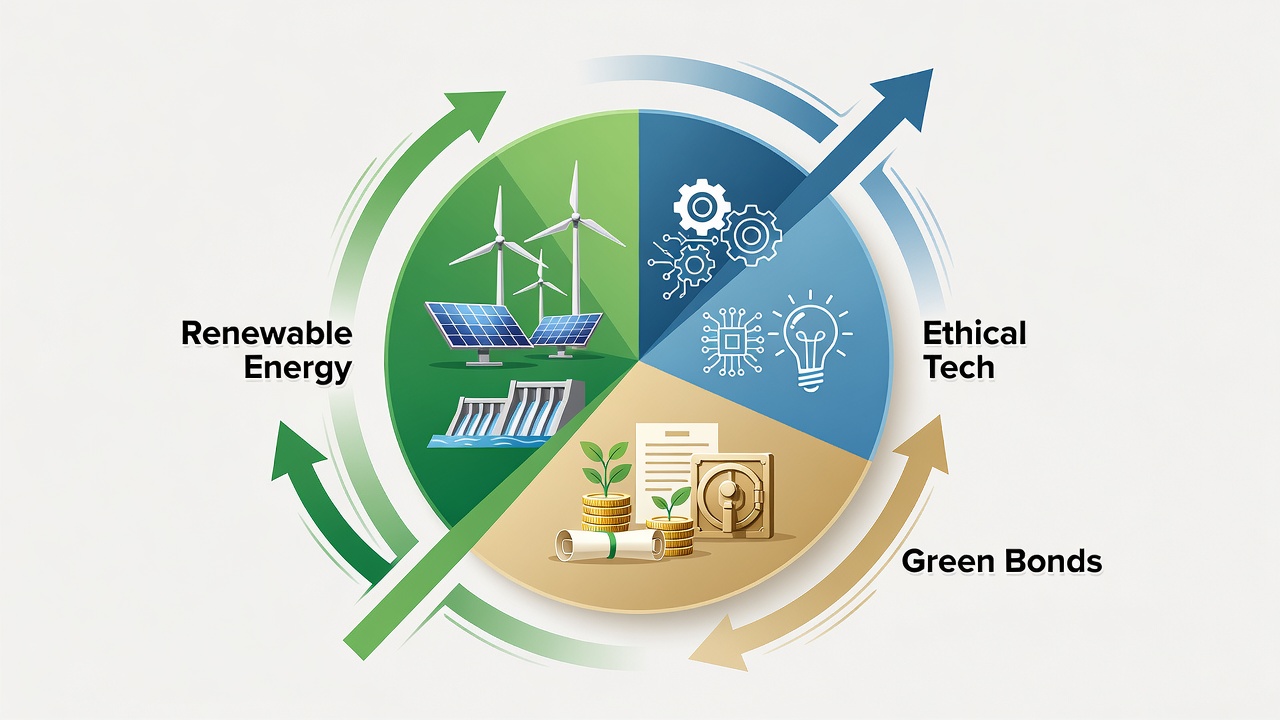
Effective allocation blends 60-70% ESG holdings with conventional assets like broad-market index funds for liquidity and growth. This hybrid model reduces correlation risks during economic shifts while preserving upside potential. Rebalance annually to maintain target weights as valuations fluctuate. Consider factors such as interest rate sensitivity and geopolitical exposures. ESG bonds and green funds add fixed-income stability, complementing equity growth components. This balance supports FI timelines by protecting capital during downturns without sacrificing long-term compounding. Investors nearing 2026 should gradually shift toward more defensive ESG fixed-income allocations while keeping equity exposure for continued growth. Stress testing the portfolio against scenarios like rising energy costs or supply-chain disruptions reveals how ESG criteria provide natural hedges.
Step-by-Step Portfolio Construction Examples
Follow this process to build an ESG-focused portfolio:
- Assess personal risk tolerance and FI target date using online calculators from reputable financial sites.
- Allocate 40% to ESG equity ETFs focused on global leaders in sustainability, selecting those with strong historical dividend growth.
- Assign 30% to fixed-income ESG bonds for income generation and capital preservation.
- Dedicate 20% to thematic stocks in clean energy and social impact firms with proven revenue expansion.
- Reserve 10% for cash equivalents or short-term instruments for flexibility during market corrections.
- Monitor quarterly and adjust based on performance data and life changes, incorporating tax-loss harvesting where appropriate.
Sample allocation for a moderate investor: 25% in a diversified ESG equity fund, 15% in renewable infrastructure, and the remainder in mixed traditional-ESG holdings. Review holdings for overlap and ensure geographic diversification across North America, Europe, and Asia-Pacific markets.
Case Studies of Successful ESG Compounding
One notable example involves a hypothetical investor who shifted to ESG in 2018, achieving 12% annualized returns through 2025 by focusing on technology and healthcare leaders with strong governance. Another case highlights pension funds adopting ESG mandates that outperformed peers by emphasizing climate-resilient assets during energy transitions. A third illustration shows a retail investor who combined ESG equity ETFs with green municipal bonds, reaching FI targets two years ahead of schedule through reduced drawdowns in 2022. These successes stem from avoiding high-risk sectors like fossil fuels during regulatory crackdowns and capitalizing on consumer preference for ethical brands. Long-term holders benefit from dividend growth in sustainable companies that reinvest profits responsibly, creating a virtuous cycle of compounding.
Comparisons to Conventional Investing Approaches
Conventional strategies often prioritize short-term gains but expose portfolios to higher systemic risks from environmental liabilities. ESG investing, by contrast, incorporates forward-looking factors that can lead to superior risk-adjusted returns over full market cycles. Data from major index providers shows ESG variants frequently deliver similar or better Sharpe ratios. While conventional portfolios may surge in certain bull markets, ESG approaches provide downside protection valuable for FI pursuits. Hybrid models combine the best of both worlds for most investors, offering both ethical alignment and competitive performance.
Risks and Mitigation Strategies in ESG Portfolios
Like any investment style, ESG carries risks including style drift, data inconsistency across rating agencies, and potential underperformance in energy-heavy market rallies. Mitigation involves using multiple rating sources, maintaining broad diversification, and setting clear rebalancing rules. Investors should also stay informed about evolving regulations that may affect ESG definitions and disclosures. Regular education on emerging issues like biodiversity or supply-chain ethics keeps the portfolio aligned with both values and financial objectives.
Practical Checklist for ESG Portfolio Implementation
- Define clear FI goals and timeline by 2026.
- Research and select ESG-rated funds with proven track records.
- Establish allocation percentages aligned with risk profile.
- Set up automatic contributions to leverage dollar-cost averaging.
- Review impact reports and adjust holdings quarterly.
- Consult a fiduciary advisor for personalized tax implications.
- Track progress toward compounding targets using reliable benchmarks.
- Stress-test the portfolio against climate and social scenarios annually.
FAQ: Addressing Common Misconceptions About ESG Performance
Does ESG investing sacrifice returns?
No. Multiple analyses demonstrate ESG strategies can deliver comparable or superior long-term results by focusing on resilient companies less prone to scandals or regulatory penalties.
How does ESG affect compounding specifically?
By reducing volatility and avoiding value-destroying events, ESG assets support steadier growth curves essential for reaching FI milestones on schedule.
Is ESG suitable for all investors?
Yes, with proper diversification. Beginners should start with broad ESG index funds before adding thematic positions.
What about liquidity concerns in ESG funds?
Most major ESG ETFs and mutual funds maintain high liquidity comparable to traditional counterparts, with tight bid-ask spreads on exchanges.
Can ESG criteria change over time?
Yes. Rating methodologies evolve, so periodic review of fund holdings and criteria ensures ongoing alignment with personal values and financial goals.
For authoritative resources on sustainable finance practices, explore UN Principles for Responsible Investment, guidelines from U.S. Securities and Exchange Commission, and reports from World Bank.


No comments yet. Be the first!