 Bullish Portfolio

Introduction: The Power of Mindful Spending for Long-Term Wealth
Building substantial wealth over time relies heavily on the principle of compounding, where returns generate additional returns. Sustainable spending habits play a critical role in maximizing this effect by freeing up capital for growth-oriented investments. This guide explores actionable strategies to align daily expenses with long-term financial goals, helping readers progress toward financial independence (FI). By focusing on intentional choices rather than extreme deprivation, individuals can create a balanced approach that sustains motivation while accelerating wealth accumulation. The following sections break down the process into clear, implementable steps supported by real-world examples and decision frameworks.
Auditing Your Expenses for Hidden Savings Opportunities
The first step toward sustainable spending involves a thorough review of current outlays. Begin by categorizing all monthly expenditures into essentials, discretionary items, and recurring subscriptions. Track every transaction for at least 30 days using digital tools or spreadsheets to identify patterns. This audit often reveals areas where small adjustments yield meaningful results without sacrificing quality of life. Start with bank and credit card statements, separating fixed costs like housing and utilities from variable ones such as dining out, entertainment, and transportation. Calculate the percentage of income allocated to each category and highlight any subscriptions that no longer provide value. For instance, many households discover unused streaming services or gym memberships that can be canceled immediately. Once patterns emerge, prioritize high-impact changes that preserve enjoyment while cutting waste. Repeat the audit every six months to account for lifestyle shifts and ensure ongoing alignment with wealth-building objectives.
Redirecting Savings into Growth Assets
Once savings are identified, the next priority is directing those funds into vehicles that benefit from compounding. Common options include diversified stock market index funds, bonds, or retirement accounts. Consistency matters more than large lump sums, as regular contributions allow compounding to work over extended periods. For example, automating transfers from a checking account to an investment platform ensures discipline even during busy months. Over years, even modest redirected amounts can grow substantially due to market returns and reinvested earnings. Consider allocating to low-cost, broad-market options that historically deliver steady growth while minimizing fees. Authoritative resources like Investopedia provide detailed explanations of compounding mechanics to guide these decisions. Another effective tactic is to match each reduction in spending with an equal increase in investment contributions, creating a direct link between mindful choices and portfolio expansion.
Setting Realistic Reduction Targets
Effective targets balance ambition with sustainability. Aim for incremental changes, such as reducing discretionary spending by modest percentages initially rather than drastic cuts. Monitor progress quarterly and adjust based on lifestyle needs. This measured approach prevents burnout and supports long-term adherence. Break targets into categories—for example, lowering food-related expenses through meal planning while maintaining occasional dining experiences that bring joy. Track adherence with simple metrics like monthly savings rate and adjust if unexpected costs arise. Realistic targets also incorporate buffers for life events, ensuring the plan remains flexible rather than rigid.
Before-and-After Spending Scenarios with Compounding Projections
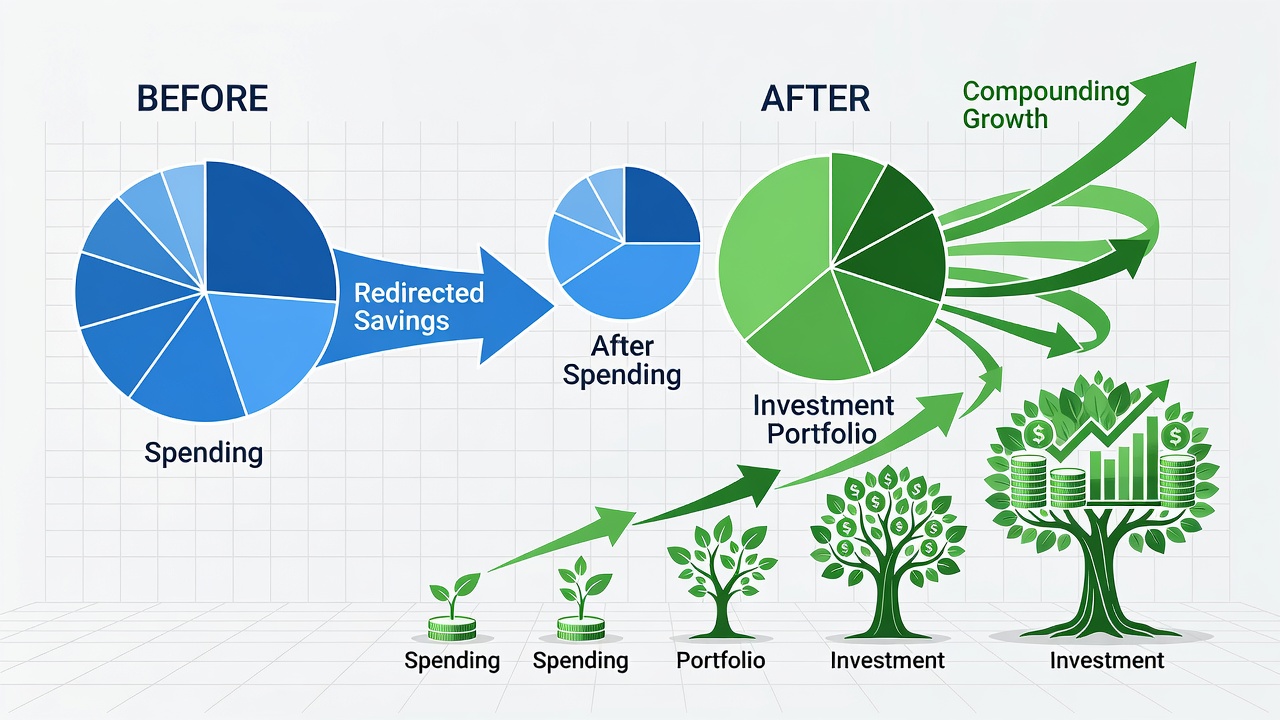
Consider a moderate lifestyle where dining and entertainment expenses are streamlined thoughtfully. In one scenario, reallocating those funds consistently into a broad-market portfolio demonstrates how the difference compounds over 20-30 years. Projections highlight the divergence between unchanged habits and optimized ones, underscoring the value of early action. A second example might involve comparing two households with similar incomes: one maintains status-quo spending while the other implements gradual reductions across multiple categories. The optimized path shows accelerated portfolio growth through reinvested returns, illustrating the tangible impact of sustainable habits. These scenarios emphasize that the timing of changes matters greatly—starting sooner maximizes the exponential nature of compounding.
Tools for Tracking Progress
Several reliable applications simplify ongoing monitoring. Budgeting platforms that integrate with bank accounts offer real-time insights, while net-worth trackers visualize growth. Choose tools that emphasize automation to reduce manual effort and maintain accuracy. Additional options include spreadsheet templates for custom tracking or mobile apps focused on goal setting. Review data monthly to celebrate milestones and identify any backsliding early. Combining multiple tools, such as a budgeting app paired with an investment dashboard, provides a comprehensive view that supports informed adjustments over time.
Comparisons of Frugal Versus Moderate Lifestyles
Frugal approaches prioritize minimalism across all categories, potentially accelerating FI timelines but requiring higher discipline. Moderate lifestyles allow selective indulgences while still directing a solid portion of income toward investments. Both paths can succeed; the key is selecting one that aligns with personal values for sustained execution. A frugal path might involve extensive home cooking and public transportation, freeing larger sums quickly. In contrast, a moderate path could retain some conveniences like occasional travel while trimming less meaningful expenses. Weigh the trade-offs carefully by listing personal priorities and testing small changes before committing fully. Many find hybrid models most effective, blending elements of both for long-term satisfaction.
Balancing Enjoyment with Discipline: Reader FAQs
Many wonder how to maintain quality of life while pursuing aggressive savings. The answer lies in intentional spending on high-value experiences rather than routine consumption. Another common question addresses handling unexpected windfalls—redirecting portions to investments while reserving some for immediate needs preserves both progress and flexibility. Readers also ask about social pressures to spend; setting clear personal boundaries and communicating goals with peers helps maintain discipline without isolation. A further FAQ explores handling inflation or rising costs—focus on value-based decisions and periodic reviews to adapt without derailing the overall plan.
Examples of Automated Saving Systems
Setting up automatic transfers on payday creates a seamless process. Some platforms also enable round-up features that invest spare change. These systems minimize decision fatigue and ensure steady capital flow into compounding assets. For deeper insight into regulatory protections around investing, consult SEC.gov. Additional automation examples include employer-sponsored retirement contributions that increase automatically with raises and dedicated high-yield savings accounts that sweep funds weekly. Test different systems for a few months to determine which integrates best with your cash flow.
Common Mistakes to Avoid
One frequent pitfall is cutting too aggressively without building in rewards, leading to eventual abandonment of the plan. Another is neglecting to revisit targets after major life changes such as career shifts or family additions. Avoid chasing high-risk investments solely to accelerate returns; sustainable wealth building favors consistent, diversified approaches over speculation. Finally, failing to track non-monetary benefits like reduced stress from simplified finances can undervalue the holistic advantages of mindful spending.
Long-Term Mindset for Sustained Success
Developing a long-term mindset involves viewing spending decisions through the lens of future freedom rather than immediate gratification. Regularly revisit core motivations, whether early retirement, travel, or legacy building, to stay inspired. Community resources and accountability partners can reinforce commitment without judgment. Over time, these habits become second nature, transforming wealth building from a chore into an integrated lifestyle.
Conclusion
Sustainable spending habits form the foundation for effective compounding and wealth building. Through careful auditing, strategic redirection, and balanced targets, individuals can achieve meaningful progress toward financial independence. Consistent application of these principles, supported by appropriate tools and mindsets, leads to lasting results that compound across decades.


No comments yet. Be the first!