 Bullish Portfolio

Introduction
Index fund investors often stick to broad-market vehicles like total stock or S&P 500 trackers, yet many portfolios can benefit from targeted sector exposure. In 2026, overlooked sector ETFs offer compelling ways to capture growth themes while maintaining low correlations with core holdings. This guide examines selection criteria, concrete allocation examples, and risk-adjusted metrics to help investors build more resilient blends. By moving beyond popular mega-cap focused funds, investors can uncover opportunities in areas that support long-term economic trends such as infrastructure renewal, supply chain security, and sustainable resource management.
Why Overlooked Sectors Matter in 2026
Market leadership can shift quickly. Sectors such as utilities, materials, and select industrials frequently trade at discounts to mega-cap technology yet provide defensive characteristics during volatility. Pairing these with core index funds reduces single-factor risk and smooths returns over multi-year periods. For instance, water infrastructure and specialty chemicals have shown resilience during periods of economic uncertainty because they serve essential needs that persist regardless of broader market cycles. Aerospace components and advanced manufacturing also stand out as areas benefiting from government initiatives and private sector reshoring efforts. These themes are expected to gain momentum throughout 2026 as global supply chains continue to evolve.
Key Selection Criteria
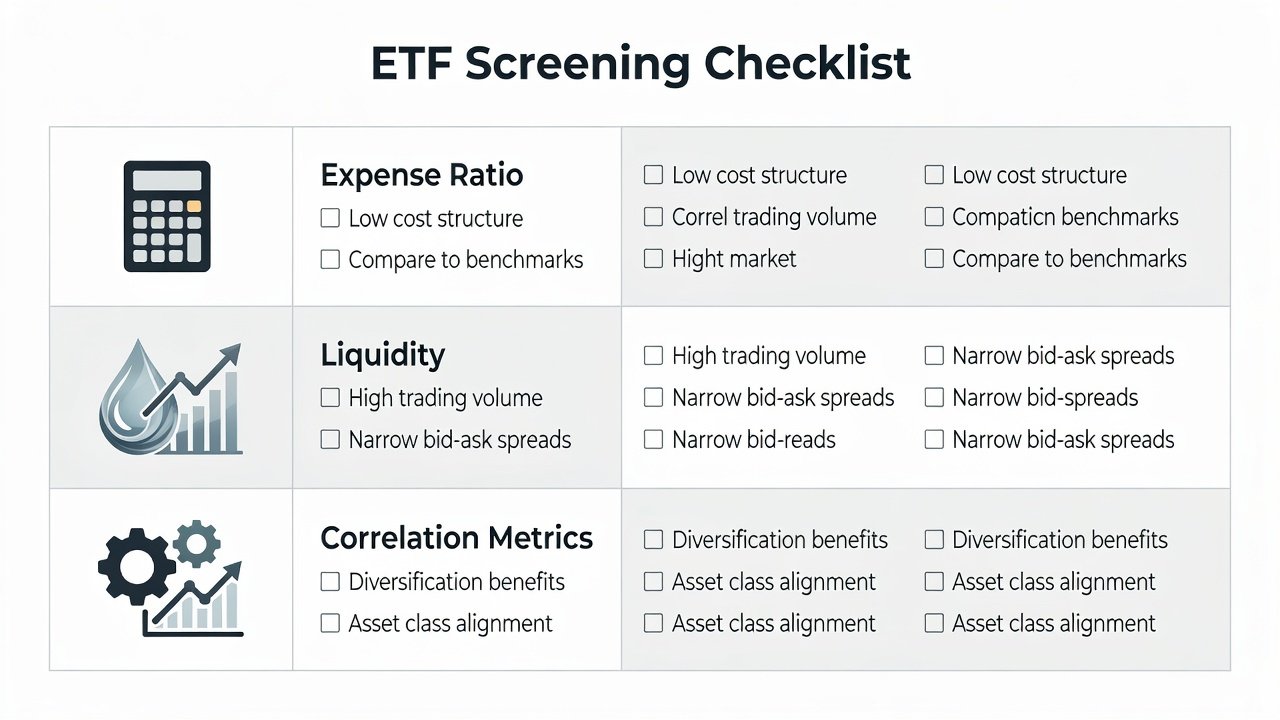
Investors should evaluate three primary factors before adding any sector ETF: expense ratios, liquidity metrics, and correlation data. Low expense ratios preserve compounding power, while strong liquidity ensures tight spreads. Correlation analysis reveals whether a new holding truly diversifies the existing index allocation. Additional considerations include the underlying index methodology, the ETF’s assets under management trajectory, and its historical distribution patterns. When reviewing liquidity, focus on both average daily volume and the tightness of bid-ask spreads during normal trading hours. Correlation data should be examined across multiple time frames, including three-year and five-year rolling periods, to capture how the ETF behaves in different market regimes. Resources such as ETF.com and Morningstar provide standardized data for these comparisons, allowing investors to benchmark new candidates against established peers.
- Expense ratios below 0.25% are generally preferable for long-term holding.
- Average daily trading volume above 500,000 shares supports efficient entry and exit.
- Five-year correlations under 0.70 with the S&P 500 indicate meaningful diversification.
Promising Overlooked Sector ETFs
Several niche vehicles stand out for 2026 blends. Consider ETFs focused on water infrastructure, specialty chemicals, and aerospace components. These areas often exhibit lower correlations with broad equity benchmarks while participating in secular growth trends such as infrastructure spending and supply-chain reshoring. Water infrastructure ETFs typically hold companies involved in treatment, distribution, and conservation technologies. Specialty chemicals ETFs target firms producing materials essential for electronics, agriculture, and industrial processes. Aerospace component ETFs focus on suppliers that support both commercial aviation recovery and defense modernization programs. Each of these categories offers distinct risk and return profiles that can complement a core equity allocation without duplicating exposure already present in broad-market index funds.
Allocation Examples and Performance Context
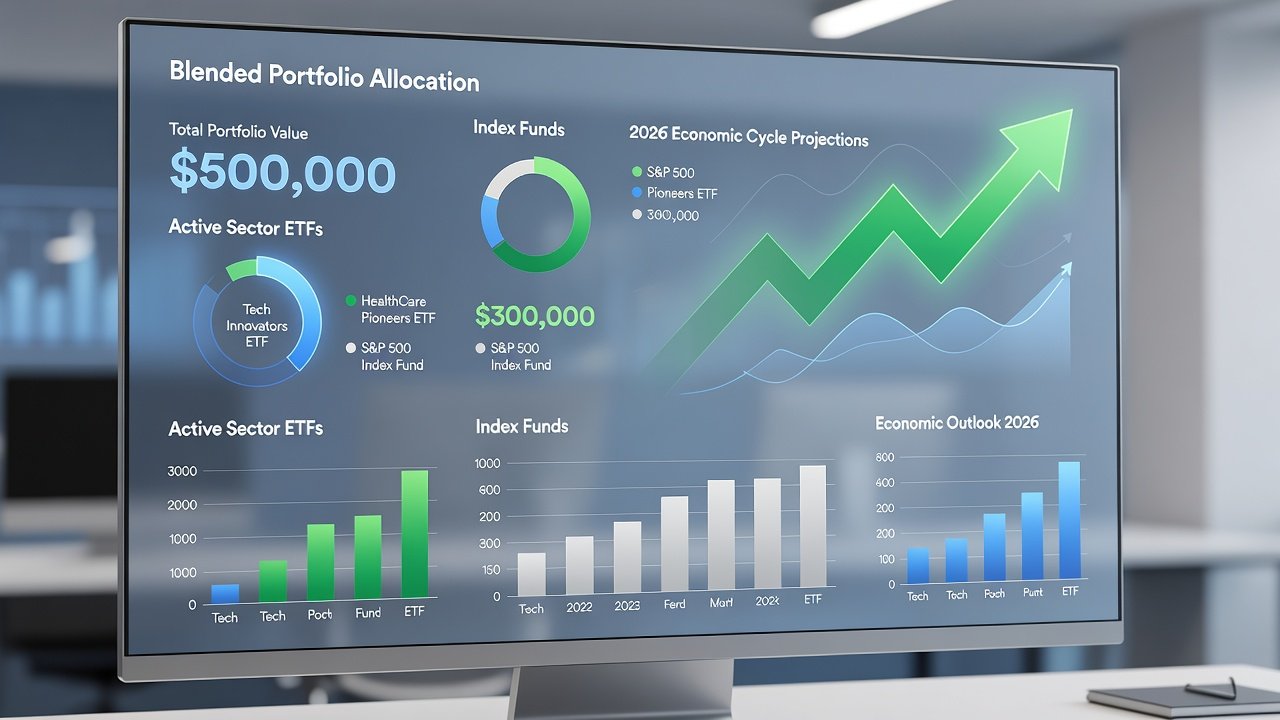
A sample 60/40 core-plus blend might allocate 70% to a total-market index fund, 15% to an S&P 500 tracker, and 15% across three sector ETFs (5% each). Historical rolling five-year periods show that such tilts can improve Sharpe ratios by 0.1–0.3 points when correlations remain moderate. Investors should review rolling performance tables and maximum drawdown statistics to understand downside behavior. Another example involves a more conservative 80/20 portfolio where an investor adds 4% water infrastructure, 3% specialty chemicals, and 3% aerospace exposure. In back-tested scenarios covering both expansionary and contractionary periods, these modest tilts have helped reduce overall portfolio volatility while maintaining competitive total returns. It is important to model each allocation using current holdings data and to stress-test the combined portfolio under various economic assumptions before implementation.
Screening Checklist
- Confirm expense ratio and compare against category peers.
- Verify average daily volume and bid-ask spreads over the past month.
- Calculate or review correlation coefficients versus existing core holdings.
- Assess index construction rules and rebalancing frequency.
- Review tax efficiency through distribution history.
- Examine the ETF’s premium or discount to net asset value during volatile periods.
- Compare holdings overlap with existing index funds to avoid unintended concentration.
Step-by-Step Integration Process
Begin by auditing current portfolio weights and identifying gaps in sector exposure. Next, select one or two ETFs that meet the screening criteria above. Allocate small initial positions (3–7%) and monitor for 90 days before scaling. Rebalance annually or when sector weights drift more than 5 percentage points from targets. Finally, document the rationale for each addition to guide future reviews. During the monitoring phase, track both absolute performance and risk metrics such as standard deviation and downside capture. If an ETF begins to show higher correlation with core holdings than expected, consider reducing the position or replacing it with an alternative that maintains better diversification characteristics. This disciplined approach helps prevent style drift and keeps the overall portfolio aligned with long-term objectives.
Risk-Adjusted Return Considerations
Adding sector ETFs changes portfolio volatility and drawdown profiles. Investors can use metrics such as Sortino ratio and maximum drawdown to evaluate whether the incremental return justifies added complexity. In many cases, modest allocations improve overall efficiency without materially increasing risk. For example, combining a low-volatility water infrastructure ETF with a broad equity index can lower the portfolio’s maximum drawdown during equity market corrections while still participating in economic growth. It is also useful to examine beta and alpha statistics relative to the core benchmark. These calculations provide insight into whether the sector exposure is adding value beyond what a simple market beta allocation would deliver. Regular review of these risk-adjusted figures supports informed decisions about whether to maintain, increase, or trim sector weights over time.
Common Mistakes to Avoid
One frequent error is selecting sector ETFs based solely on recent performance without checking correlation data. Another is overlooking liquidity differences that can lead to higher trading costs when entering or exiting positions. Investors should also avoid over-allocating to multiple similar sectors, which can create unintended overlap and reduce the intended diversification benefit. Finally, failing to document the original investment thesis makes it harder to evaluate whether a holding continues to serve its purpose during periodic portfolio reviews.
FAQs
How often should portfolios be rebalanced?
Annual rebalancing typically suffices for most long-term investors. More frequent adjustments may incur unnecessary transaction costs and tax events. Some investors choose to rebalance when any single sector allocation drifts beyond a predetermined tolerance band, such as plus or minus 2 percentage points from target weight.
What are the tax implications for long-term holders?
ETFs structured as open-end funds often distribute fewer capital gains than mutual funds. Holding periods longer than one year qualify gains for preferential long-term rates. Investors should also consider the impact of any qualified dividend distributions and consult a tax advisor for personalized guidance based on their specific situation and jurisdiction.
Can these sector ETFs be held inside retirement accounts?
Yes, sector ETFs can be held in IRAs, 401(k)s, and other tax-advantaged accounts. Because these accounts defer or eliminate tax on distributions, the primary focus remains on expense ratios, liquidity, and correlation rather than tax efficiency.
Conclusion
Thoughtful inclusion of overlooked sector ETFs can enhance diversification and risk-adjusted returns when blended with core index funds. By applying disciplined selection criteria and following a structured integration process, investors position their portfolios for a range of 2026 market environments. Regular monitoring and modest allocation sizes keep complexity manageable while preserving the benefits of low-cost indexing. The result is a more robust blend capable of navigating shifting economic conditions with greater resilience.
No comments yet. Be the first!