 Bullish Portfolio
Introduction to Dollar-Cost Averaging for Long-Term Wealth
Dollar-cost averaging (DCA) is a disciplined investment strategy that involves investing fixed amounts at regular intervals regardless of market conditions. This approach is especially powerful for investors targeting financial independence (FI) in 2026 and beyond, as it harnesses the power of compounding while minimizing the emotional pitfalls of market timing. By committing to consistent purchases, individuals can build substantial portfolios without the stress of trying to predict market peaks and troughs. In this comprehensive guide, we explore the mechanics of DCA, its synergy with index funds and ETFs, real-world growth examples spanning more than a decade, and comparisons to lump-sum investing. You will also find step-by-step implementation instructions, tax-efficient account choices, common pitfalls, and a beginner FAQ section designed to provide actionable insights for steady wealth accumulation.
Core Mechanics of Dollar-Cost Averaging
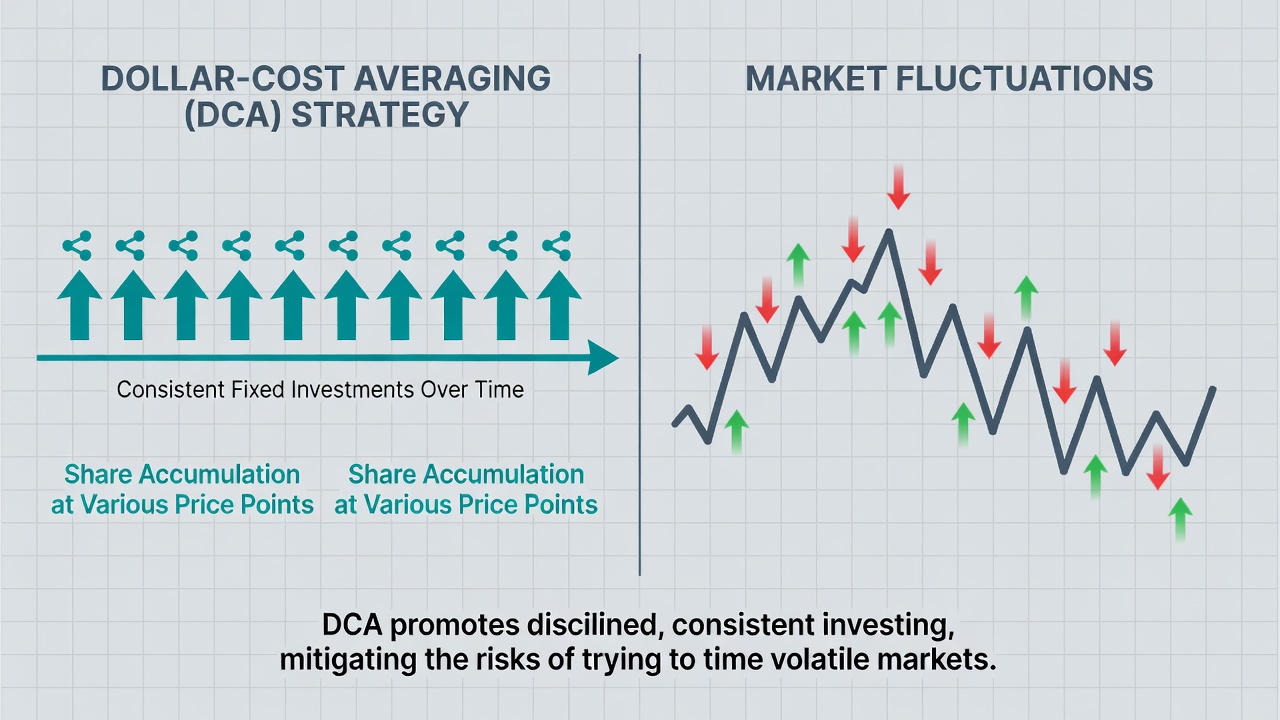
DCA works by purchasing more shares when prices are low and fewer shares when prices are high. Over time, this lowers your average cost per share compared to attempting to buy at market lows. The strategy aligns perfectly with long-term wealth building because it removes the need to predict short-term fluctuations. Investors typically select a fixed dollar amount and a consistent schedule, such as weekly or monthly contributions. This automation ensures participation across market cycles, allowing compounding to work its magic. Additional mechanics include reinvesting dividends automatically and maintaining a diversified portfolio to spread risk effectively. Understanding these fundamentals helps investors stay committed during volatile periods common in 2026 economic landscapes.
Why DCA Reduces Timing Risk
Market timing is notoriously difficult even for professionals. DCA mitigates this by spreading purchases across many market cycles. Historical data shows that missing just a handful of the best trading days can significantly erode returns. By investing automatically, DCA ensures you participate in both bull and bear markets. This risk-reduction benefit becomes even more valuable when pursuing FI, where steady, repeatable contributions compound over decades. Behavioral finance research supports that removing decision-making reduces anxiety and improves adherence to long-term plans. For 2026 investors, this means navigating uncertainties like interest rate changes or geopolitical events with greater resilience.
Step-by-Step Implementation Across Index Funds and ETFs
- Choose a brokerage with low or zero commissions and automatic investment features, ensuring seamless recurring transfers.
- Select diversified, low-expense-ratio index funds or ETFs tracking major indices such as the S&P 500 or total stock market for broad exposure.
- Set up automatic transfers from your bank on payday to maintain consistency without manual intervention.
- Rebalance annually if your allocation drifts due to market movements, keeping risk levels aligned with your FI timeline.
- Track progress using simple spreadsheets or portfolio tools while reviewing performance quarterly without obsessing over daily changes.
- Start with small amounts if new to investing and gradually increase contributions as income grows.
Popular choices include total stock market or S&P 500 ETFs for core holdings, supplemented by international or bond funds for further diversification.
Real-World Numerical Examples Showing 10+ Year Growth
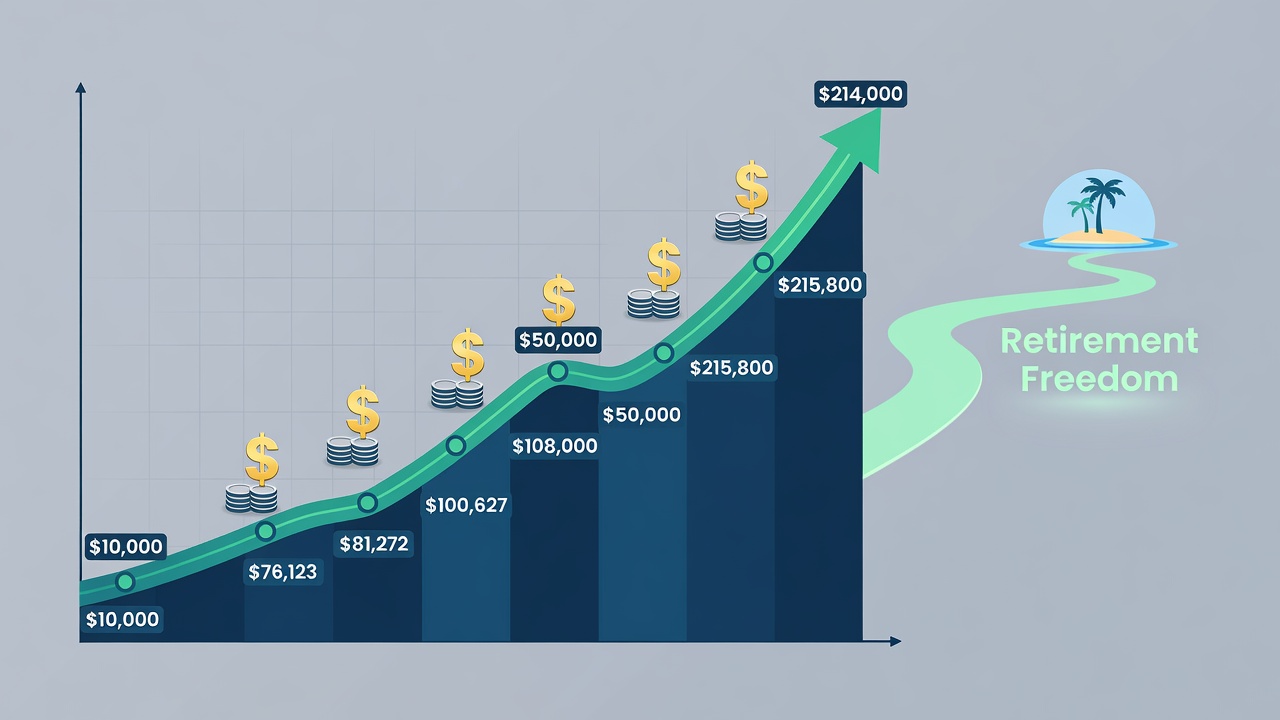
Consider an investor starting with modest monthly contributions into an S&P 500 ETF. Using long-term historical average annual returns, after 15 years the portfolio would have grown substantially through compounding, even accounting for market volatility. A second example might involve bi-weekly contributions over 12 years, illustrating how smaller, frequent investments still produce meaningful wealth accumulation toward FI goals. A third scenario could examine someone increasing contributions annually by a small percentage to accelerate progress. These examples highlight that consistency matters more than perfect entry points, demonstrating how DCA smooths out the impact of market swings over extended periods.
DCA Versus Lump-Sum Investing: Key Comparisons
Research from major institutions indicates lump-sum investing often outperforms DCA on average because markets tend to rise over time. However, DCA provides psychological comfort and lower regret during downturns. For risk-averse investors building toward FI, the behavioral advantages frequently outweigh the modest return difference. Practical comparisons show DCA excels in sideways or declining markets by allowing purchases at lower average prices, while lump-sum works best in strong bull runs. Investors should assess personal risk tolerance when choosing between the two approaches for 2026 wealth strategies.
Tax-Efficient Account Choices
Maximize DCA inside tax-advantaged accounts such as Roth IRAs, traditional IRAs, or 401(k) plans. These shelters allow compounding to occur without annual tax drag. For taxable accounts, focus on tax-efficient ETFs with low turnover. Consult official resources for contribution limits and eligibility rules. Learn more at IRS.gov and SEC.gov for current guidelines on retirement accounts and investor protections. Proper account selection can significantly enhance net returns over a 20-year horizon.
Common Pitfalls to Avoid
- Stopping contributions during market dips, which interrupts compounding
- Choosing high-fee funds that erode returns over time
- Over-allocating to single stocks instead of diversified index products
- Ignoring rebalancing needs as asset values shift
- Letting emotions override the automatic schedule during volatility
- Failing to increase contribution amounts with rising income
Additional Strategies for 2026 and Beyond
Integrate DCA with other FI tactics such as expense tracking and side income generation. Review your plan annually to adjust for life changes like salary increases or new financial goals. Stay informed through reputable sources while avoiding reactionary decisions based on headlines. This holistic approach ensures DCA serves as a cornerstone rather than an isolated tactic.
FAQ for Beginners
How often should I invest with DCA?
Monthly or bi-weekly aligns best with most pay schedules and promotes habit formation.
Is DCA suitable for volatile assets?
Yes, especially for broad-market ETFs where volatility averages out over time, reducing the impact of sharp swings.
Can I combine DCA with other strategies?
Absolutely—many investors use DCA for core holdings while allocating smaller amounts to tactical opportunities or alternative assets.
What minimum amount works for starting DCA?
Even small regular investments can grow meaningfully over 10+ years when paired with low-cost vehicles and reinvested earnings.
How does DCA interact with market crashes?
It allows buying more shares at depressed prices, positioning the portfolio for stronger recovery gains when markets rebound.
Conclusion
Dollar-cost averaging remains one of the most reliable paths to building lasting wealth and achieving financial independence. By focusing on consistency, low costs, and tax efficiency, investors can confidently navigate 2026 markets and beyond. Start small, automate everything, and let compounding do the heavy lifting while avoiding common mistakes through disciplined execution.
No comments yet. Be the first!