 Bullish Portfolio
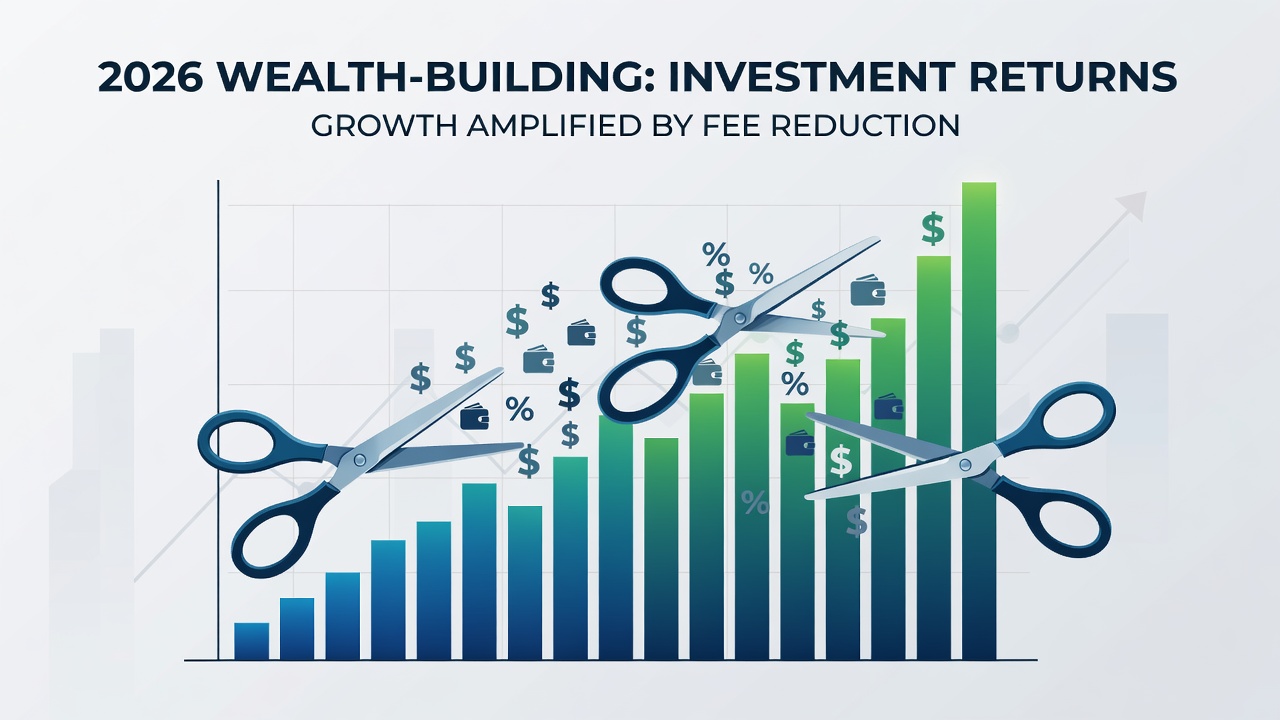
Introduction: Why Every Basis Point Matters in 2026
Investors chasing financial independence often focus on asset allocation and market timing while overlooking the silent erosion caused by hidden fees. In an environment where markets can be unpredictable, minimizing costs becomes one of the few controllable factors that directly boosts long-term compounding. This guide walks through the major fee categories investors encounter, demonstrates their cumulative drag over decades, and provides a repeatable process for fee reduction that delivers measurable results. By understanding and addressing these costs early, individuals can accelerate progress toward their goals without relying solely on higher-risk strategies or increased savings rates.
Understanding Common Fee Structures
Expense ratios represent the annual operating costs of mutual funds and ETFs, expressed as a percentage of assets. Trading commissions, though reduced on many platforms, still appear in certain account types or for specific asset classes. Advisory fees charged by financial planners or robo-advisors typically range from flat annual retainers to percentage-based AUM charges. Each of these layers compounds negatively over time, reducing the capital available to generate future returns. Investors should review all documentation carefully because fees often appear in multiple places across statements and fund documents.
Expense Ratios in Detail
Actively managed funds often carry higher expense ratios due to research and trading activity. Passively managed index funds and ETFs generally maintain lower ratios. Over multi-decade horizons, even a modest difference in annual costs can translate into substantial lost wealth because the reduced amount no longer participates in future market growth. Fund companies must disclose these ratios in prospectuses, yet many investors skip this section during initial purchases.
Trading Commissions and Transaction Costs
Although many brokerages eliminated commissions on U.S. equities, investors still face bid-ask spreads, exchange fees, and occasional costs for mutual fund trades or international securities. Frequent rebalancing or tactical shifts amplify these expenses, especially in taxable accounts where each trade may trigger additional reporting requirements.
Advisory and Platform Fees
Human advisors and automated services provide value through planning and behavioral coaching, yet the fee structure must be evaluated against the net benefit delivered. Wrap programs and certain retirement-plan platforms can add additional layers that are not always transparent in quarterly statements. Understanding the full breakdown prevents surprises when statements arrive.
The Impact of Fees on Compounding Returns
Imagine two identical portfolios starting with the same principal and expected gross return. One portfolio pays higher total annual costs while the other maintains significantly lower expenses. The lower-cost portfolio retains more capital each year, allowing that retained capital to generate additional returns in subsequent periods. Over 30 years, the difference becomes dramatic because the effect is exponential rather than linear. This section illustrates how small annual differences grow into large gaps in ending wealth, highlighting why proactive fee management is essential for long-term investors. 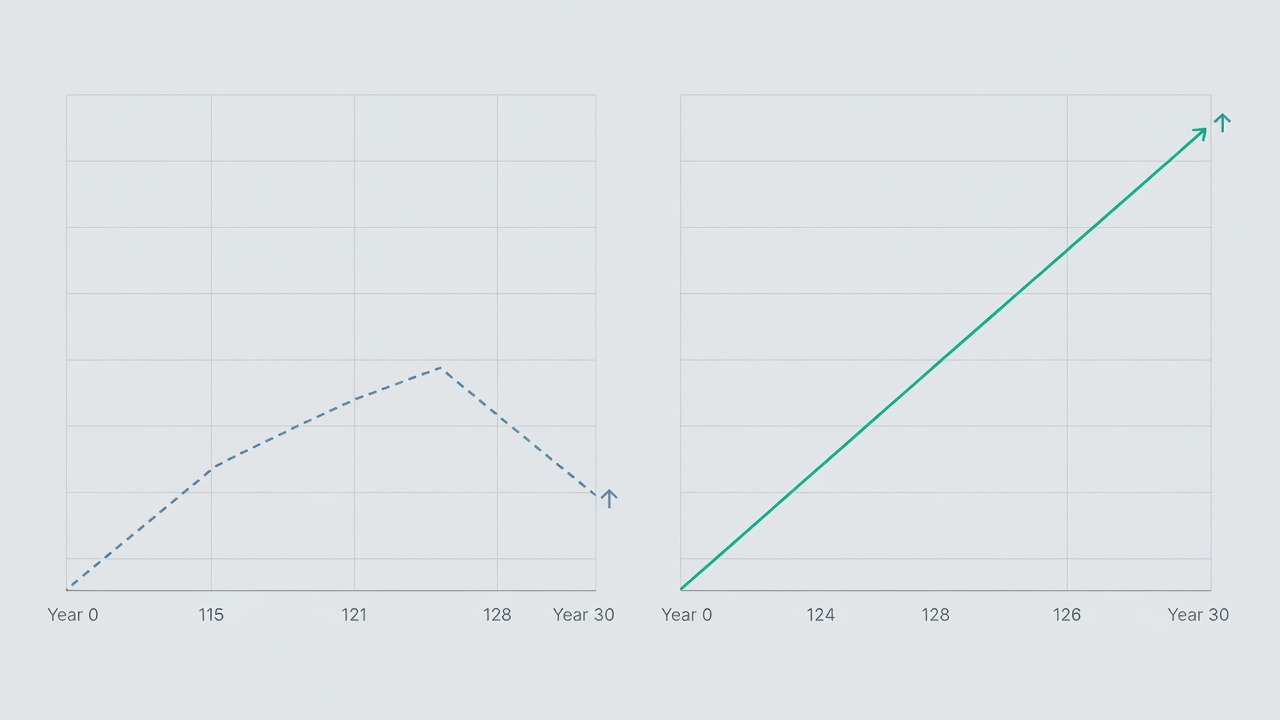
Step-by-Step Fee Audit Process
Conducting a thorough audit requires organization and attention to detail. Begin by collecting all account statements and prospectuses for the past 12 months. Next, list every explicit fee including expense ratios, advisory charges, transaction costs, and custody fees. Calculate the weighted average cost across the entire portfolio to understand the true annual drag. Compare each holding against low-cost alternatives in the same asset class using publicly available data. Model the projected difference in ending wealth using 20- and 30-year horizons with conservative assumptions. Finally, implement changes during tax-advantaged windows such as IRA contributions or 401(k) rollovers when possible to minimize disruption.
Real-World 2026 Portfolio Scenarios
Consider a hypothetical investor with a diversified portfolio spread across equities and bonds. In one scenario, the holdings include several actively managed funds with elevated expense ratios alongside a traditional advisory arrangement. After an audit, the investor shifts to broad-market index ETFs and negotiates a lower advisory rate or moves to a self-directed platform. The second scenario shows the same starting allocation but with consistently lower costs from the outset. Over multiple decades, the second path demonstrates noticeably higher terminal value due to the preserved capital continuing to compound. These examples underscore that the timing of fee reductions matters less than consistency across the entire investment period.
Comparing High-Fee and Low-Fee Investment Vehicles
Actively managed mutual funds with higher expense ratios frequently underperform their benchmarks after fees. In contrast, broad-market ETFs tracking major indices often charge far less. Target-date funds offered inside employer plans vary widely; some carry embedded advisory or revenue-sharing fees that can be avoided by selecting individual low-cost index funds when plan rules permit. Investors should review the summary prospectus and fee table for each holding before making allocation decisions. This comparison helps identify opportunities where switching vehicles can produce immediate and lasting improvements without changing the underlying investment thesis.
Practical Tools for Ongoing Fee Monitoring
Portfolio analytics platforms from major brokerages provide aggregated expense ratios and projected annual costs. Free resources such as Investor.gov offer fee calculators and educational materials. Additional authoritative sources include SEC.gov for regulatory disclosures and FINRA.org for broker and advisor information. Spreadsheet templates can track weighted costs across accounts. Setting a quarterly calendar reminder ensures fees remain visible rather than drifting into the background. Regular reviews allow investors to catch new fees introduced by fund companies or platform changes.
Tax Implications and Performance Reporting
Reducing fees inside taxable accounts can also lower capital-gains distributions when switching to more tax-efficient vehicles. In retirement accounts the primary benefit remains the preservation of compounding capital. When reviewing performance reports, always examine net-of-fees returns rather than gross figures. Consistent net performance above benchmarks after all costs is the relevant metric for long-term success. Tax-loss harvesting opportunities may arise during transitions, but these should be evaluated alongside the fee savings to ensure the overall strategy remains sound.
Common Mistakes Investors Make When Cutting Fees
One frequent error involves chasing the absolute lowest-cost option without considering liquidity or tracking error. Another mistake is ignoring fees embedded in target-date or balanced funds that appear simple on the surface. Some investors delay action because they fear short-term tax consequences, missing years of compounding benefits. Overlooking platform fees or account maintenance charges can also undermine the effort. Avoiding these pitfalls requires a holistic view rather than focusing on any single fee type in isolation.
Frequently Asked Questions
How often should I review my portfolio fees? A full audit once per year combined with quarterly spot checks is usually sufficient for most investors. Does switching to lower-fee funds affect my investment strategy? Not necessarily, as many low-cost options provide equivalent or superior diversification and asset-class exposure. Are there fees that cannot be avoided? Certain custody or regulatory fees may persist, but they typically represent a small fraction compared with expense ratios and advisory charges. How do fees appear in performance reports? Look for net returns after all expenses rather than gross performance figures provided by fund companies.
Conclusion
Lowering investment costs is a repeatable, low-risk action that compounds powerfully over time. By systematically auditing expense ratios, commissions, and advisory charges, investors position themselves to retain more of each year’s market return. The tactics outlined above require only modest effort yet deliver compounding advantages that grow larger with every passing decade. Implementing these steps in 2026 can meaningfully accelerate progress toward financial independence.

No comments yet. Be the first!