 Bullish Portfolio

Introduction to Active and Passive Investing
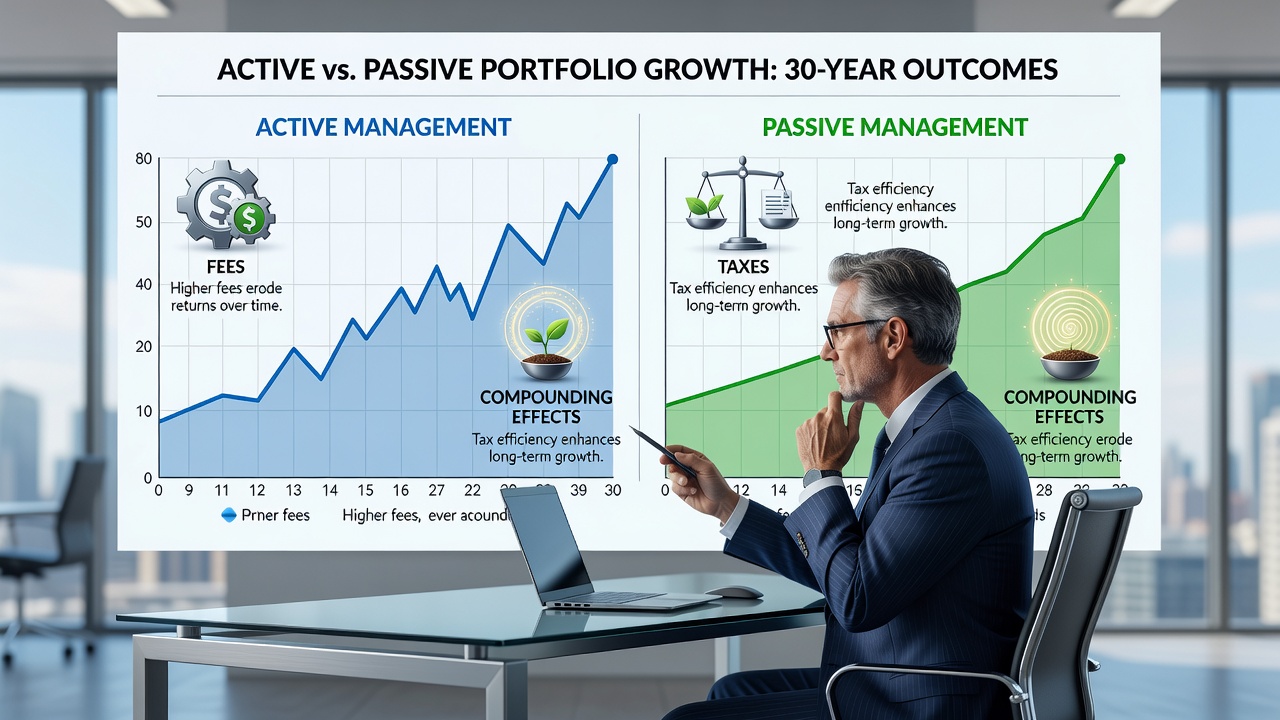
Investors seeking financial independence often debate active versus passive strategies, especially when the goal is superior compounding returns over decades. Active investing involves hands-on stock selection and market timing by professionals, while passive investing tracks broad market indexes with minimal intervention. The difference in long-term outcomes can be dramatic due to fees, taxes, and behavioral factors that quietly erode or enhance wealth over time.
Compounding works best when returns are consistent and costs are minimized. Historical data shows that many active funds struggle to outperform indexes after expenses, making passive approaches attractive for most individuals focused on wealth accumulation. Understanding these two philosophies requires examining not only performance numbers but also the underlying mechanics of how each style interacts with market forces and personal investor behavior.
Over long horizons, even modest differences in net returns create substantial gaps in final portfolio values. This article examines the core trade-offs, supported by practical examples and a clear decision process readers can apply to their own situations.
The Mathematical Impact of Fees and Taxes on Compounding
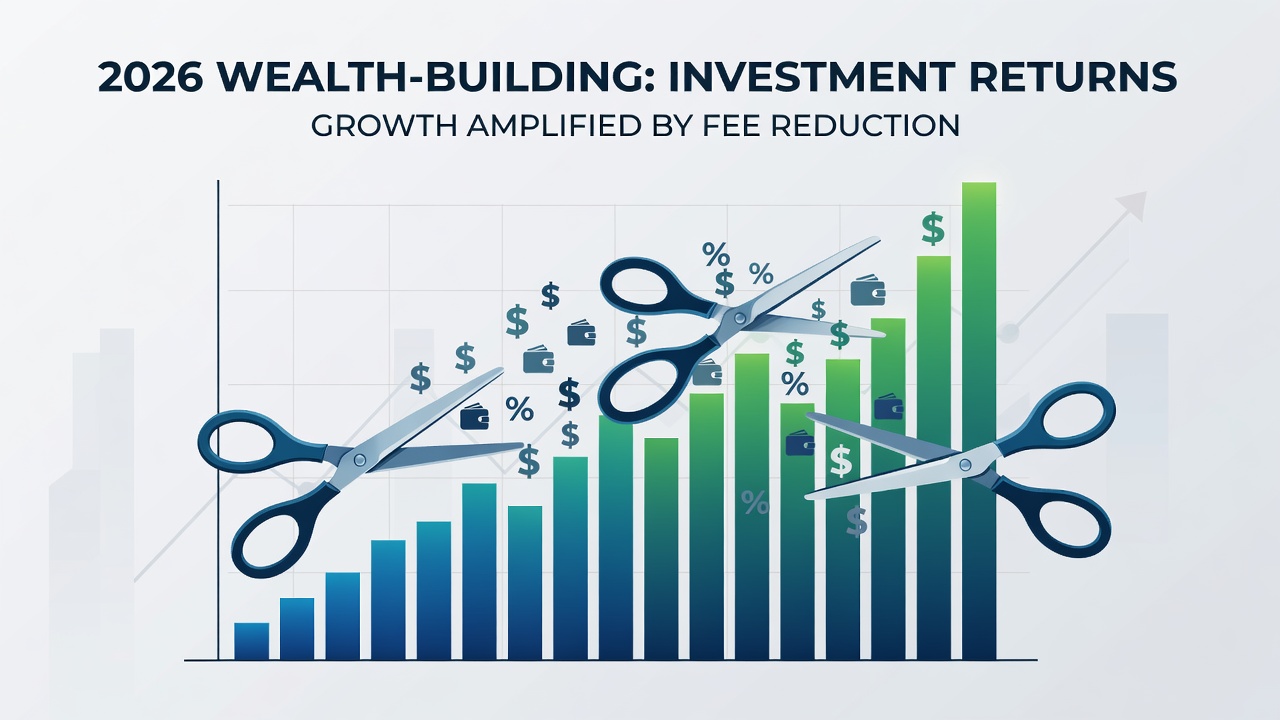
Even small differences in annual costs compound significantly over 20 or 30 years. Expense ratios, trading commissions, and tax drag from frequent trading erode principal. Passive funds typically carry lower expense ratios because they avoid research and high turnover. The effect becomes especially pronounced when returns are reinvested consistently without interruption.
Taxes matter equally. Active strategies often generate short-term capital gains taxed at higher rates, whereas passive index funds defer gains and benefit from lower long-term rates. Over time, these savings accelerate portfolio growth by keeping more capital working inside the account. Consider a hypothetical portfolio growing at similar gross rates; the version with lower annual drag will pull ahead steadily because each year's net return feeds into the next period's base.
Time amplifies these effects. The longer the holding period, the greater the cumulative advantage of minimizing every percentage point of cost. Investors who ignore this dynamic may find their progress toward financial independence slower than expected despite strong market environments.
Historical Performance Consistency and Real-World Examples
Decades of data reveal that only a minority of active managers consistently beat their benchmarks. Periods of outperformance are often followed by underperformance, making reliable alpha difficult to capture. Passive strategies deliver market returns minus tiny fees, providing predictable exposure to broad economic growth that has historically rewarded patient investors.
For instance, broad equity indexes have delivered strong long-term results across multiple market cycles, while many actively managed peers have shown wide dispersion in results. This pattern holds across different asset classes and geographies, suggesting the challenge is structural rather than temporary. Readers can review comprehensive studies from major institutions to see how survivorship bias and style drift further complicate active results.
Behavioral Challenges That Undermine Returns
Behavioral challenges further complicate active approaches. Emotional decisions during market volatility frequently lead investors to buy high and sell low, undermining potential gains. Passive investing reduces these pitfalls by enforcing a buy-and-hold discipline that aligns with the mathematics of compounding. Securities and Exchange Commission resources highlight how common psychological biases affect even experienced investors.
Examples include panic selling during downturns or chasing recent winners, both of which interrupt the compounding process. A passive framework helps investors stay invested through cycles, preserving the integrity of long-term growth projections.
Hybrid Strategies That Blend Both Approaches
Some investors combine elements of both styles. Core holdings in low-cost index funds provide broad market exposure, while a smaller satellite allocation to active managers or individual stocks allows targeted opportunities. This structure balances cost efficiency with the potential for incremental outperformance when specific market segments appear mispriced.
Rebalancing rules and clear allocation targets help maintain discipline across market cycles. Successful hybrid implementations typically cap the active portion at levels that do not overwhelm the cost advantages of the passive core, preserving the overall compounding trajectory.
Side-by-Side Comparison Table
| Factor | Active Investing | Passive Investing |
|---|---|---|
| Average Annual Costs | Higher due to research and trading | Lower expense ratios |
| Tax Efficiency | Often lower from frequent turnover | Higher with low turnover |
| Performance Consistency | Variable; few beat benchmarks long-term | Matches market returns reliably |
| Behavioral Demands | High emotional discipline required | Lower; set-it-and-forget-it |
| Projected 30-Year Outcome | Depends heavily on manager skill | Strong compounding from minimized drag |
Step-by-Step Decision Framework for Your Situation
Creating a personalized plan begins with honest assessment rather than chasing recent winners. Follow these steps in sequence to determine the appropriate mix for your goals.
- Assess your time horizon and risk tolerance through honest self-evaluation or professional guidance. Longer horizons generally favor passive approaches because they allow compounding to overcome short-term volatility.
- Calculate the impact of fees on projected returns using compound interest calculators available from reputable financial sites. Focus on how even one percent annual difference scales over decades.
- Review historical manager performance net of fees, not just gross returns. Look beyond one-year snapshots to multi-year consistency and downside protection.
- Consider tax-advantaged accounts like IRAs or 401(k)s to shelter active strategies if desired. These vehicles can reduce the tax friction that often disadvantages frequent trading.
- Start with a passive core and add active elements only after building a solid foundation. This sequencing prevents over-allocation to higher-cost options before basic market exposure is secured.
- Re-evaluate annually but avoid frequent changes driven by short-term market noise. Annual reviews should focus on whether original assumptions about risk and goals still hold.
Applying this framework helps investors avoid common traps such as overconfidence in stock picking or underestimating the cumulative cost of turnover.
Common Myths Addressed in FAQ
Does active investing always deliver higher returns?
No. While some managers outperform in certain years, the majority fail to beat passive indexes consistently after fees, according to long-term studies. Outperformance tends to be concentrated in specific periods and is difficult to predict in advance.
Is passive investing completely hands-off?
Yes for the most part, but periodic rebalancing and contribution adjustments are still needed to stay aligned with goals. The low maintenance nature remains one of its primary advantages for busy professionals.
Can hybrid strategies eliminate all risks?
Hybrid approaches reduce some costs while retaining upside potential, yet they still require careful monitoring and cannot guarantee superior results. Market risk remains present regardless of style.
Conclusion
Choosing between active and passive investing ultimately depends on individual circumstances, but evidence favors passive strategies for most people pursuing reliable compounding. By minimizing fees and taxes while maintaining discipline, investors position themselves for stronger long-term growth toward financial independence. Start simple, stay consistent, and let compounding do the heavy lifting.
No comments yet. Be the first!