 Bullish Portfolio

Introduction: The Silent Wealth Killer
Lifestyle inflation creeps in quietly as income rises, turning extra earnings into higher spending instead of accelerated savings. In 2026, with economic pressures and new opportunities, maintaining discipline is essential to protect compounding wealth and achieve financial independence sooner. Many professionals experience steady salary growth yet find themselves no closer to their goals because increased earnings fuel consumption rather than investment. This guide provides a complete framework for identifying the problem, implementing safeguards, and measuring progress through concrete actions that preserve the power of compounding over decades.
What Is Lifestyle Inflation?
Lifestyle inflation occurs when spending increases match or exceed income growth. This habit delays wealth building by reducing the capital available for investments that compound over time. Readers focused on long-term goals must recognize this pattern early to safeguard returns. It often begins innocently with small upgrades such as nicer meals or better technology, but these changes compound into permanent higher baselines that erode potential portfolio growth. The result is a longer timeline to financial independence even as nominal income climbs.
Recognizing Early Signs of Lifestyle Creep
Early detection prevents small leaks from becoming large holes in your wealth plan. Watch for these indicators and document them in a monthly review:
- Upgrading housing or vehicles shortly after a raise without comparing total ownership costs
- Increased dining out or subscription services without tracking their cumulative annual impact
- Impulse purchases justified by phrases like "I can afford it now" instead of evaluating opportunity cost
- Neglecting automated savings increases when paychecks grow, allowing lifestyle to absorb the difference
- Comparing your spending habits to peers or social media rather than to your own stated wealth targets
- Feeling financial pressure despite higher income, indicating spending has kept pace with earnings
Monitoring these signs helps maintain focus on wealth accumulation rather than consumption. Create a simple checklist and review it quarterly to stay accountable.
Psychological Triggers Behind Lifestyle Inflation
Understanding the mental drivers makes prevention more effective. Hedonic adaptation causes people to quickly normalize new levels of comfort, turning yesterday's luxury into today's necessity. Social comparison fuels upgrades when friends or colleagues display visible markers of success. Celebration spending after promotions or bonuses reinforces the cycle by linking achievement directly to consumption. Recognizing these patterns allows you to insert deliberate pauses before any spending decision.
Real-World Examples of Its Impact
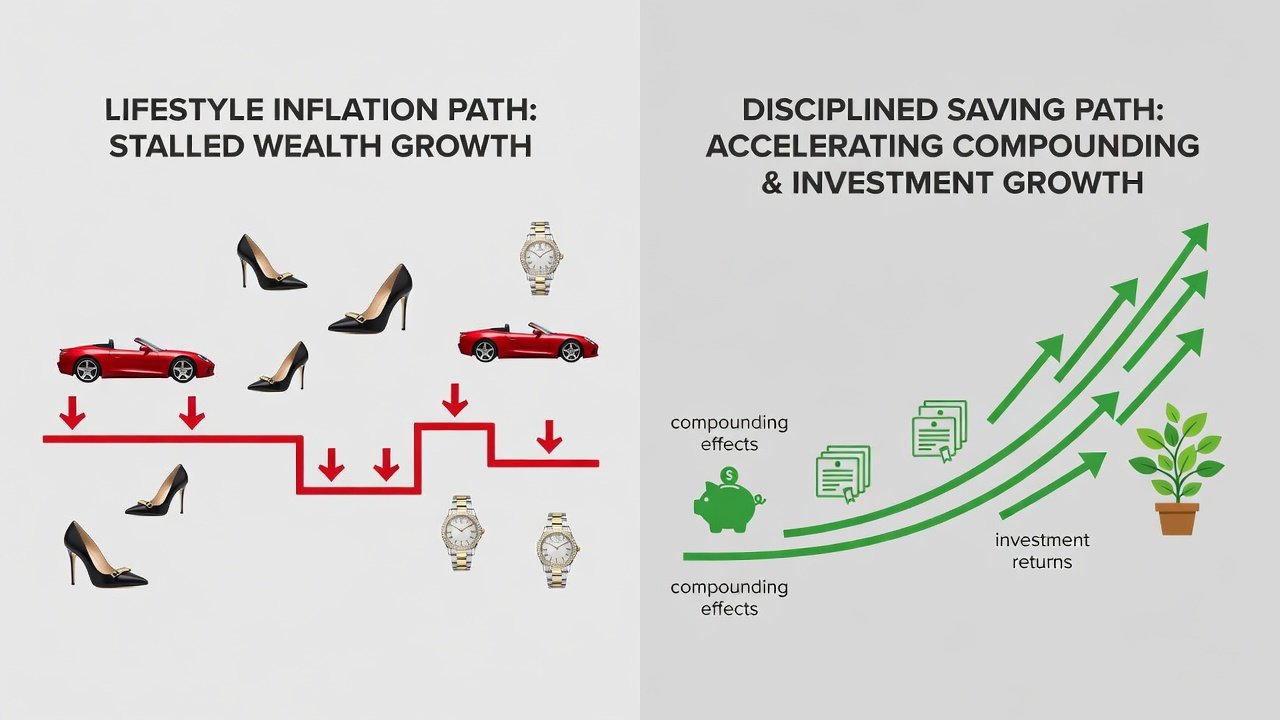
Consider two professionals earning similar starting salaries. One maintains steady spending and directs raises into index funds. The other upgrades lifestyle with each promotion, moving to a larger apartment, leasing a premium vehicle, and adding multiple streaming and dining subscriptions. Over decades, the disciplined approach yields significantly higher net worth due to uninterrupted compounding. Another example involves a mid-career manager who receives annual bonuses yet redirects them entirely into travel and home renovations; within five years the same individual reports feeling "house poor" despite career advancement. These cases illustrate how lifestyle inflation extends the working years required to reach independence by five to ten years or more.
Step-by-Step Methods to Automate Savings
Automation removes willpower from the equation and ensures savings grow ahead of expenses. Follow these detailed steps:
- Calculate your current savings rate as a percentage of income and set a target percentage before any raise arrives.
- Automate transfers to investment accounts on payday using employer direct deposit splits or bank rules that move funds immediately.
- Review and increase contribution rates annually on a fixed calendar date, independent of spending changes or lifestyle desires.
- Use windfalls like bonuses or tax refunds for one-time investments rather than lifestyle upgrades, treating them as acceleration tools.
- Establish separate "fun money" accounts with strict monthly caps so discretionary spending cannot bleed into core savings vehicles.
- Schedule annual audits of subscriptions and recurring charges to eliminate those no longer providing proportional value.
These actions ensure savings grow ahead of expenses and create a buffer against future inflation pressures.
Scenario Comparisons Showing Compounding Outcomes
Disciplined savers who avoid lifestyle inflation see their portfolios expand faster through consistent contributions and market growth. In contrast, those who inflate spending experience slower progress, extending the timeline to financial independence by years. The difference compounds dramatically over 10- or 20-year periods because every dollar saved early has more time to generate returns. Side-by-side modeling reveals that maintaining a consistent savings rate can shorten the path to a target portfolio size by several years compared with allowing spending to rise proportionally with income.
Investing the Difference Effectively
Once savings are automated, direct the preserved capital into diversified, low-cost vehicles. Broad market index funds provide simple exposure while minimizing fees. Tax-advantaged accounts maximize compounding by deferring or eliminating taxes on growth. Rebalance periodically to maintain target allocations without introducing lifestyle-based spending temptations.
Tools for Tracking Spending Habits
Popular budgeting applications help link daily expenses to long-term wealth goals. Pair these with investment dashboards to visualize how restrained spending accelerates compounding. Regular reviews keep habits aligned with retirement targets. Choose platforms that export data easily for annual net-worth calculations and integrate with brokerage accounts for a unified view.
Common Pitfalls and Mistakes to Avoid
Many fall into the trap of comparing lifestyles with peers or celebrating income milestones with immediate rewards. Counter this by focusing on net worth metrics instead of visible consumption. Setting non-negotiable savings rules prevents emotional spending decisions. Another frequent error is underestimating small recurring costs that accumulate over time; review every subscription annually. Finally, avoid the "one more upgrade" mentality by instituting a mandatory 30-day waiting period before any major purchase.
Building Habits for Long-Term Success
Embed wealth-protecting behaviors into daily routines. Track net worth monthly rather than income alone. Share goals with an accountability partner who understands compounding principles. Celebrate milestones with non-spending rewards such as additional investment contributions. Over time these habits become automatic and shield your portfolio from lifestyle inflation even during periods of rapid income growth.
FAQ
How quickly can lifestyle inflation erode wealth?
Even modest annual increases in spending can reduce investable capital enough to delay retirement by several years through lost compounding opportunities.
What tools work best for high earners?
Automated platforms that allocate portions of income directly to retirement accounts before funds reach checking accounts prove most effective. Resources from the Internal Revenue Service outline contribution limits and tax advantages that support this approach.
Can small changes really make a difference?
Yes. Redirecting even a portion of raises consistently builds substantial additional wealth over time due to the power of compounding. Government data from the Federal Reserve highlights how consistent saving behaviors influence long-term household wealth outcomes.
How should I handle peer pressure to spend?
Focus conversations on shared experiences rather than material purchases and maintain a written list of personal financial priorities to reference during social situations.
Is there a recommended savings rate target?
Many wealth-building frameworks suggest starting at 20 percent and increasing by one or two percentage points with each raise while holding lifestyle constant.
Conclusion
Protecting compounding wealth requires vigilance against lifestyle inflation. By recognizing signs early, automating savings, and using tracking tools, individuals can maintain discipline and reach financial independence on an accelerated timeline in 2026 and beyond. Start implementing these strategies today to secure your future. Additional guidance is available through authoritative sources such as the U.S. Securities and Exchange Commission on investor education topics.

No comments yet. Be the first!