 Bullish Portfolio

Introduction to AI-Powered Retirement Planning in 2027
As retirement savers look ahead to 2027, integrating artificial intelligence into Roth IRA and 401k management offers smarter ways to handle contributions, asset allocation, and long-term projections. Tech-savvy professionals can leverage AI to analyze market trends, personalize risk profiles, and forecast tax implications with greater precision than traditional spreadsheets allow. These tools process real-time economic data, historical performance metrics, and individual financial inputs to generate tailored recommendations that adapt to changing life circumstances such as job transitions or family expansions.
This guide explores how these tools streamline decision-making while addressing key concerns like data security and advisor integration. Whether you are a mid-career professional or nearing retirement, understanding AI capabilities helps maximize growth potential. The focus remains on practical implementation rather than hype, ensuring readers gain actionable insights for optimizing tax-advantaged accounts in an evolving financial landscape.
Core Benefits of AI for Roth IRA and 401k Strategies
AI platforms excel at processing vast datasets to recommend optimal contribution schedules and rebalancing tactics. For Roth IRAs, which rely on after-tax contributions and tax-free growth, AI can model future tax bracket scenarios to decide between Roth conversions or traditional contributions. In 401k plans, AI evaluates employer matches and vesting schedules alongside personal cash flow, highlighting opportunities to accelerate savings during high-income years.
Key advantages include automated risk assessments that adjust portfolios based on volatility forecasts and contribution forecasting that factors in salary changes or bonus income. These features reduce emotional decision-making during market swings. Additionally, AI identifies overlooked tax efficiencies, such as timing conversions to minimize lifetime tax burdens, and simulates multiple retirement timelines to stress-test plans against inflation or healthcare cost increases. Users gain clarity on how small adjustments today compound over decades, fostering disciplined saving habits.
Comparing Leading AI Tools for Tax Optimization and Risk Assessment
Several established platforms stand out for retirement-specific AI features. Tools from major brokerages use machine learning to simulate thousands of market outcomes for Roth IRA asset mixes, while dedicated apps focus on 401k rollover analysis and contribution timing. When comparing options, consider factors like integration depth with existing accounts, depth of tax modeling, and customization of risk parameters.
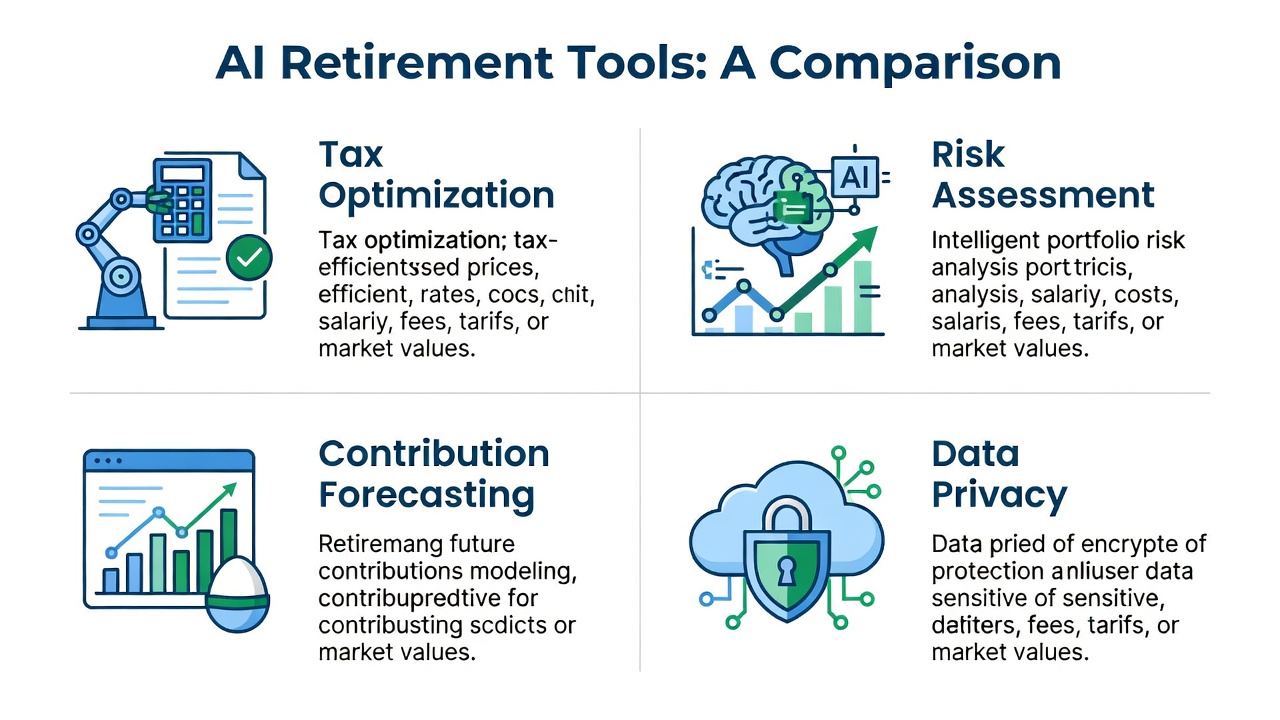
- Tax optimization engines that project qualified distributions and required minimum distributions, helping users avoid penalties through precise timing.
- Risk assessment modules that incorporate personal health data and longevity estimates to refine withdrawal strategies.
- Contribution forecasting that integrates with payroll systems for real-time adjustments based on income fluctuations.
Practical comparisons reveal that some tools emphasize free basic modeling while premium tiers unlock advanced scenario planning. Users should evaluate integration with existing brokerage accounts before committing and test how each handles edge cases like early withdrawals or inherited accounts.
Step-by-Step Setup Guide for AI Retirement Tools
Getting started involves a few structured steps that ensure accurate data flow and reliable outputs. First, aggregate your current Roth IRA and 401k statements into a secure digital vault, scanning paper records if necessary and verifying all balances match official statements. Next, connect accounts via API to the chosen AI platform, ensuring two-factor authentication is enabled and reviewing permission scopes to limit data access.
Then input personal details such as expected retirement age, income trajectory, and risk tolerance through guided questionnaires that prompt for additional context like spousal benefits or expected inheritances. Run initial projections and review AI-generated recommendations for contribution increases or reallocation suggestions, cross-checking against your current budget. Finally, set recurring review alerts to monitor performance against 2027 benchmarks and schedule quarterly manual reviews to incorporate life changes.
Real-world examples show mid-career users increasing projected nest eggs by refining allocation after AI flagged overexposure to certain sectors. Following these steps methodically prevents common setup errors and builds confidence in the tool's ongoing value.
Free Versus Paid AI Features: Making Informed Choices
Many platforms offer tiered access that balances accessibility with advanced capabilities. Free versions typically provide basic contribution calculators and simple risk quizzes suitable for initial exploration. Paid subscriptions unlock detailed tax optimization simulations and personalized forecasting models that incorporate economic indicators and peer-comparison benchmarks.
Evaluate based on your needs: occasional users may thrive with free tools for high-level overviews, while those managing complex portfolios benefit from premium analytics that include Monte Carlo simulations and automated rebalancing alerts. Always review trial periods to test accuracy against your specific situation and read user feedback on how well each tier performs during volatile markets.
Potential Pitfalls and Data Privacy Considerations
While powerful, AI tools require careful handling of sensitive financial data. Choose platforms with strong encryption and compliance with financial regulations to safeguard against breaches. Common pitfalls include over-reliance on automated suggestions without human oversight and entering inaccurate personal data that skews projections, leading to misguided contribution strategies.
Users should cross-reference AI outputs with official resources such as IRS guidelines on contribution limits and withdrawal rules. Additionally, consult SEC investor resources for understanding fiduciary standards in automated advice and review materials from Department of Labor on fiduciary responsibilities in retirement plans. Regular audits of connected apps help maintain control over personal information.
Case Studies: Improved Outcomes for Mid-Career Professionals
Consider a 42-year-old software engineer who used AI to rebalance a 401k after the tool identified suboptimal target-date fund performance. By shifting to a custom allocation informed by risk modeling that accounted for expected salary growth, the user saw improved projected returns over a five-year horizon while maintaining appropriate diversification. Another example involves a teacher who optimized Roth IRA contributions through AI forecasting, adjusting for potential state tax changes and family education expenses, resulting in a clearer path to early retirement goals.
A third case features a marketing manager who integrated AI alerts with a human advisor, using projections to time a partial Roth conversion during a lower-income year. These cases highlight how data-driven insights lead to more confident decisions and measurable progress toward retirement goals when combined with professional guidance.
FAQs on Integrating AI Tools with Traditional Advisors
How do AI tools work alongside human financial advisors? Many advisors now incorporate AI outputs into client meetings, using them as discussion starters rather than replacements to enhance personalized planning.
Are AI recommendations always accurate? They rely on historical data and assumptions, so periodic human review remains essential to adjust for unforeseen events or regulatory shifts.
What about data security? Reputable platforms employ bank-level encryption; review privacy policies before linking accounts and enable all available security features.
Can AI replace traditional advisors entirely? Most experts recommend a hybrid approach where AI handles routine analysis and advisors provide nuanced judgment on complex life factors.
Conclusion
Embracing AI for Roth IRA and 401k planning positions investors for stronger outcomes in 2027 and beyond. By combining automated analysis with prudent oversight, individuals can navigate contributions, allocations, and projections more effectively. Start exploring reputable platforms today to build a personalized strategy that adapts to changing circumstances and supports long-term financial security.

No comments yet. Be the first!