 Bullish Portfolio
Introduction to Retirement Planning for Digital Nomads in 2026
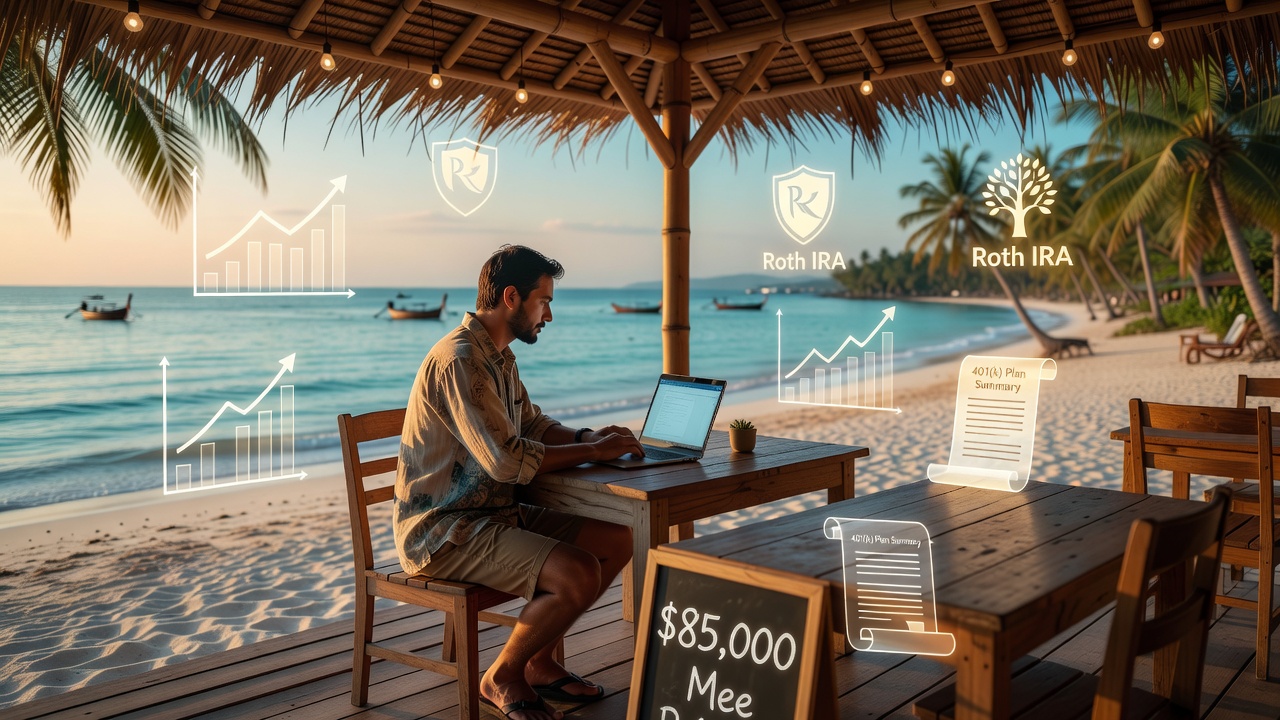
Digital nomads face unique challenges when planning for retirement because traditional employer-sponsored plans often assume a fixed U.S. residence. In 2026, Roth IRA and 401k accounts remain powerful tools for tax-advantaged growth, even for those living and working internationally. This guide provides actionable steps to maintain eligibility, optimize contributions, and navigate foreign income rules. Whether you earn income through freelance platforms or remote U.S. clients, understanding contribution limits and tax implications is essential for long-term wealth building. Location independence does not mean sacrificing retirement security. With proper planning, nomads can continue building tax-free or tax-deferred savings while traveling across continents. The key lies in treating retirement accounts as portable financial tools rather than location-bound benefits. Many digital nomads underestimate how foreign residency affects contribution eligibility and tax treatment, leading to missed opportunities or compliance issues later. This comprehensive resource breaks down every major aspect of using Roth IRAs and 401k plans effectively from anywhere in the world.
Eligibility Rules for International Workers
To contribute to a Roth IRA, you must have earned income and meet income limits based on your filing status. Digital nomads qualify if they report U.S.-sourced earned income on their tax return. Foreign earned income may be excluded under the Foreign Earned Income Exclusion, but this can affect your ability to contribute if it reduces your taxable compensation. For example, a freelance web developer living in Portugal who invoices U.S. clients can still contribute to a Roth IRA as long as the income is reported as self-employment earnings. However, if the nomad elects the Foreign Earned Income Exclusion, they must ensure enough compensation remains to support the desired contribution amount. For 401k plans, eligibility depends on whether you have a U.S. employer offering the plan or if you establish a solo 401k as a self-employed individual. Nomads working for overseas companies may need to explore self-employment options to access these accounts. Age restrictions also apply: you must be under 73 for traditional contributions in many cases, though Roth accounts have more flexibility. Always verify your specific situation against current IRS guidelines before making contributions.
Contribution Strategies While Abroad
Maximize contributions by coordinating with your tax filing status. Many nomads use the Roth IRA for after-tax contributions that grow tax-free. Self-employed nomads can set up a solo 401k to allow higher contribution limits than a standard IRA. A practical approach involves calculating your annual earned income first, then determining how much can be contributed after accounting for any foreign exclusions. For instance, consider a digital marketer earning $85,000 from U.S. clients while based in Thailand. She could contribute up to the annual Roth IRA limit and additional amounts to a solo 401k if she structures her business correctly. Step-by-step actions include tracking all income sources monthly, setting aside funds in a dedicated U.S. account, and consulting a tax professional familiar with international filings. Automate transfers from U.S. bank accounts to avoid missed deadlines. Another effective tactic is using backdoor Roth strategies when income exceeds direct contribution limits. Nomads should also consider timing contributions around currency exchange rates to maximize the USD value deposited.
Tax Implications of Foreign Income
Foreign income can trigger complex reporting requirements. The Foreign Earned Income Exclusion allows qualifying individuals to exclude a portion of foreign earnings, but it interacts with retirement contributions. Roth conversions and backdoor Roth strategies may still be viable for higher earners. Nomads must also consider state tax implications, as some states do not conform to federal foreign income exclusions. Filing Form 2555 for the exclusion and Form 8938 for foreign assets adds layers of complexity. Failure to report correctly can result in penalties. Review your situation with resources from IRS to ensure compliance. Additionally, coordination with Social Security totalization agreements can prevent double taxation on self-employment taxes when working in treaty countries. Understanding these interactions helps nomads avoid surprises during tax season.
Setting Up Accounts Remotely
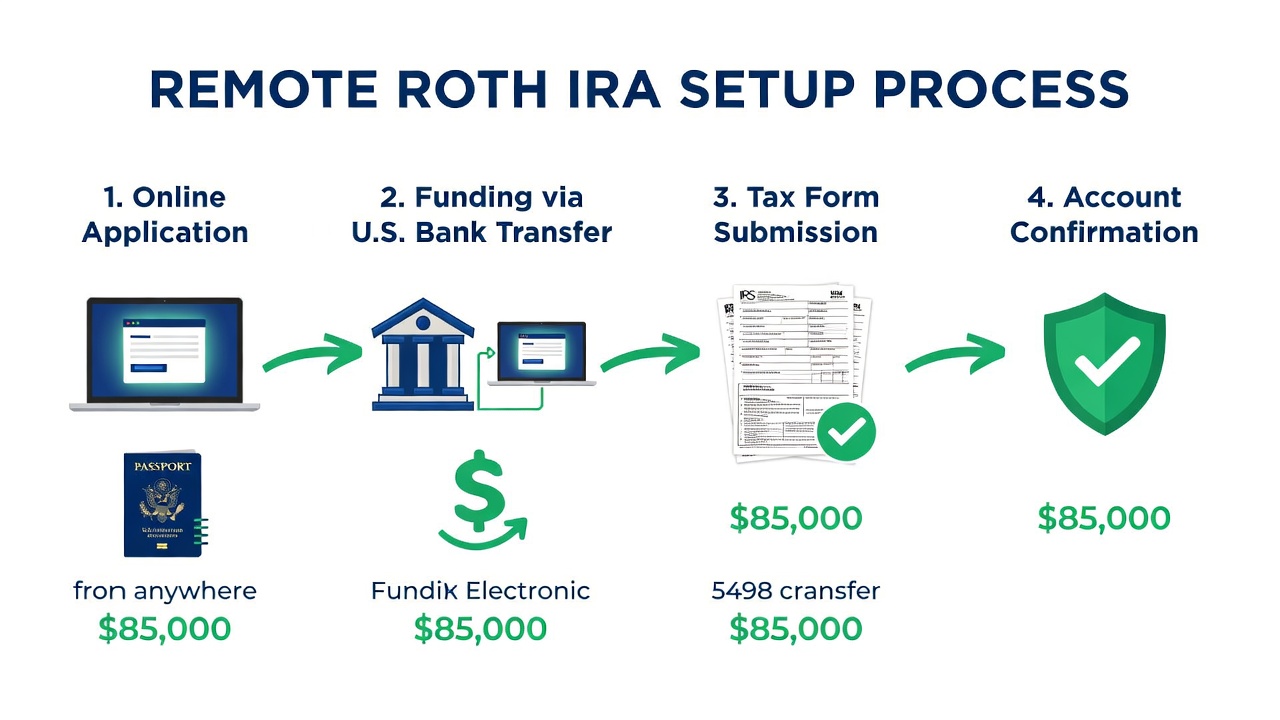
Most brokerage firms allow remote account opening via video verification and electronic signatures. Choose providers with strong international support, such as those accepting foreign addresses for statements. Step-by-step example: 1) Gather passport and proof of U.S. address. 2) Open the account online. 3) Link a U.S. bank for funding. 4) Set up recurring contributions aligned with your cash flow. Many nomads successfully open accounts while in countries like Indonesia or Mexico by using stable internet connections and digital ID verification tools. It is wise to maintain a U.S. mailing address through a trusted family member or virtual mailbox service for any paper documents that may still be required.
Handling Currency Risks and Overseas Banking
Currency fluctuations can erode returns when converting foreign earnings to USD for contributions. Mitigate this by maintaining a U.S. dollar account and timing transfers during favorable exchange rates. Coordinate with international banks that offer multi-currency options. For example, a nomad earning in euros while living in Spain can convert to USD during periods when the exchange rate favors the dollar, preserving more contribution power. Some nomads use forward contracts or currency-hedged accounts offered by certain brokerages to lock in rates. Overseas banking should prioritize institutions with seamless U.S. wire capabilities and low international transfer fees. Maintaining both local and U.S. accounts provides flexibility when moving funds for retirement contributions.
Comparison of Solo vs Employer Plans
- Solo 401k: Higher contribution limits, full control, but requires self-employment income reporting and annual Form 5500 filing once assets exceed certain thresholds.
- Employer 401k: Simpler if available, potential matching contributions, but limited portability for nomads who change locations frequently.
- Traditional IRA: Lower limits but easier setup; useful as a bridge account.
- Roth IRA: Tax-free growth and withdrawals, ideal for nomads expecting higher tax brackets later.
Evaluate based on your income stability and expected time abroad. Solo plans offer superior flexibility for most digital nomads but demand more administrative effort.
Common Pitfalls and FAQ
FAQ
Can I contribute to a Roth IRA if I live abroad full-time? Yes, provided you have U.S. earned income and meet eligibility rules.
How do I handle required minimum distributions while traveling? Plan distributions to a U.S. account and use international wire services.
What happens if I miss contribution deadlines due to travel? Set calendar reminders and use automated systems to avoid penalties.
Can foreign rental income count toward IRA contributions? Only if it qualifies as earned income; passive rental income generally does not.
Do I need to report foreign bank accounts used for contributions? Yes, file FBAR and Form 8938 if thresholds are met.
Is a solo 401k still available if I have no U.S. address? Yes, many providers accept foreign addresses for self-employed individuals.
Conclusion
With careful planning, digital nomads can effectively use Roth IRA and 401k accounts in 2026 to build retirement security regardless of location. Focus on compliance, strategic contributions, and professional advice to maximize benefits. Regular reviews of your accounts and tax situation will help adapt strategies as rules and personal circumstances evolve.


No comments yet. Be the first!