 Bullish Portfolio

Introduction to Longevity Risk in 2026 Retirement Planning
Longevity risk—the possibility of outliving retirement savings—remains a critical concern for high-net-worth individuals planning for 2026 and beyond. With increasing life expectancies, retirees must strategically leverage Roth IRA and 401k accounts to create sustainable income streams lasting 30 years or more. This article examines tax diversification, dynamic withdrawal rules, portfolio adjustments, and practical bucket strategies backed by real-world examples. Effective planning requires understanding how these accounts interact with market volatility, tax law changes, and personal spending needs over extended periods.
Understanding Tax Diversification Between Roth and Traditional Accounts
Tax diversification helps mitigate the impact of future tax rate changes and required minimum distributions (RMDs). Roth IRAs offer tax-free withdrawals, while traditional 401k contributions provide upfront tax deductions. In 2026 planning, converting portions of traditional accounts to Roth can reduce future taxable income, especially if tax brackets rise. Consider your current marginal rate versus projected retirement rates when deciding conversion timing. Roth accounts also provide greater flexibility for heirs since beneficiaries receive tax-free distributions.
Comparisons show Roth conversions often benefit those expecting higher future taxes or who want flexibility with heirs. Step-by-step, evaluate your projected income, fill lower tax brackets gradually, and account for the five-year rule on conversions. Traditional 401k deferrals lower taxable income today but create future tax obligations that can strain long retirements. High-net-worth individuals often blend both account types to balance immediate tax savings with long-term tax efficiency.
Dynamic Withdrawal Rules for Extended Retirement Horizons
Traditional fixed withdrawal approaches may fall short for longevity-focused plans. Dynamic approaches adjust withdrawals annually based on portfolio performance and market conditions. For instance, reduce spending by 10-15% after down years and increase modestly during strong returns. This flexibility, combined with Roth accounts for tax-free access, helps preserve principal over decades. Sequence-of-returns risk becomes especially important when markets decline early in retirement, forcing larger relative withdrawals from depleted balances.
Calculations for safe withdrawal rates incorporate portfolio returns, inflation, and spending variability. Start with conservative rates and incorporate Social Security as a base layer. Tools like Monte Carlo simulations provide personalized risk assessments by running thousands of market scenarios. Retirees should review these rules yearly and adjust for changes in health, family needs, or economic conditions to maintain income sustainability.
Implementing Bucket Strategies with Roth IRA and 401k
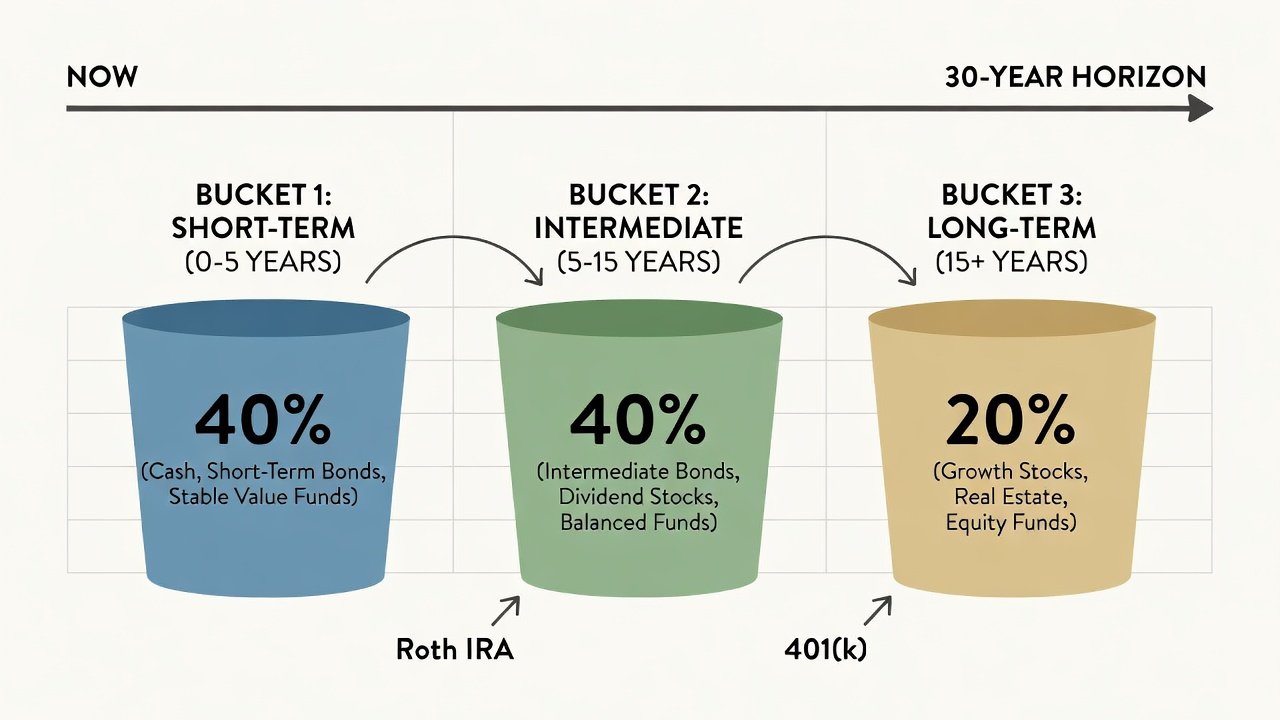
Bucket strategies divide assets into time-segmented portfolios: short-term cash for 1-5 years, intermediate bonds for 5-15 years, and growth-oriented equities for longer horizons. Allocate Roth funds to the growth bucket for tax-free compounding, while using traditional 401k for tax-deferred intermediate buckets. This structure reduces the need to sell equities during market downturns and provides predictable income from safer assets.
Example: A retiree with substantial savings places cash reserves in a Roth IRA for immediate needs, bonds in a traditional 401k for the middle bucket, and equities in a Roth conversion ladder for the long-term bucket. Rebalance annually to maintain allocation targets while considering tax implications of each move. The approach allows retirees to draw from specific buckets based on market performance and personal cash flow requirements.
Real-World Case Studies and Risk Assessment
Case Study 1: A 65-year-old couple uses annual Roth conversions to manage RMDs, projecting a 35-year horizon. They maintain a balanced allocation adjusted for longevity, drawing from Roth first in high-tax years while monitoring Medicare premium surcharges. Case Study 2: A high-net-worth individual employs dynamic rules, cutting withdrawals after a market dip to preserve capital for later recovery. Risk tools such as those from the Social Security Administration help model life expectancy scenarios and integrate them with account-specific strategies.
Portfolio Allocation Adjustments for 30+ Year Retirements
Adjust allocations toward more equities early in retirement, then shift gradually to income-producing assets as needs evolve. Include international diversification and monitor inflation and healthcare costs, which can erode purchasing power over extended periods. Rebalancing should occur at least annually, with attention to tax-lot harvesting in taxable accounts that complement retirement holdings. Consider how rising interest rates affect bond values within intermediate buckets and adjust duration accordingly.
Step-by-Step Roth Conversion Process
Begin by projecting taxable income for the current year and identifying lower tax brackets available for conversions. Calculate the amount to convert without pushing into a higher bracket, then execute the conversion by year-end. Track the five-year clock for each conversion to avoid penalties on early withdrawals. Repeat the process annually while factoring in changes to tax law or personal circumstances. This methodical approach spreads tax costs over time rather than creating a large single-year liability.
Common Mistakes to Avoid
- Ignoring RMD impacts on Medicare premiums and overall tax picture.
- Over-converting without considering future tax brackets or state taxes.
- Failing to update withdrawal strategies annually as markets and life circumstances change.
- Neglecting estate planning integration with Roth beneficiaries and stretch provisions.
- Overlooking the interaction between Social Security taxation and retirement account withdrawals.
Frequently Asked Questions
How do Roth conversions affect longevity planning?
They reduce future RMDs and provide tax-free income, enhancing flexibility for longer retirements while potentially lowering overall lifetime tax burden.
What withdrawal rate is safe for 30+ years?
Dynamic rates starting conservatively with annual adjustments offer better protection than fixed rules by responding to actual portfolio performance.
Should high-net-worth individuals prioritize Roth or traditional accounts?
Blend both for tax diversification, favoring Roth for growth and legacy goals while using traditional accounts for current tax deferral benefits.
How can bucket strategies be customized for different risk tolerances?
More conservative retirees may enlarge the short-term cash bucket, while those comfortable with volatility can allocate larger portions to growth assets within Roth accounts.
Conclusion
Effective 2026 retirement planning with Roth IRA and 401k accounts requires proactive tax strategies, flexible withdrawals, and bucket allocations tailored to longevity. By applying these techniques, reviewing plans regularly, and consulting professionals, retirees can confidently navigate extended lifespans while preserving wealth. Resources from the IRS and U.S. Department of the Treasury provide additional guidance on account rules and tax implications.


No comments yet. Be the first!