 Bullish Portfolio
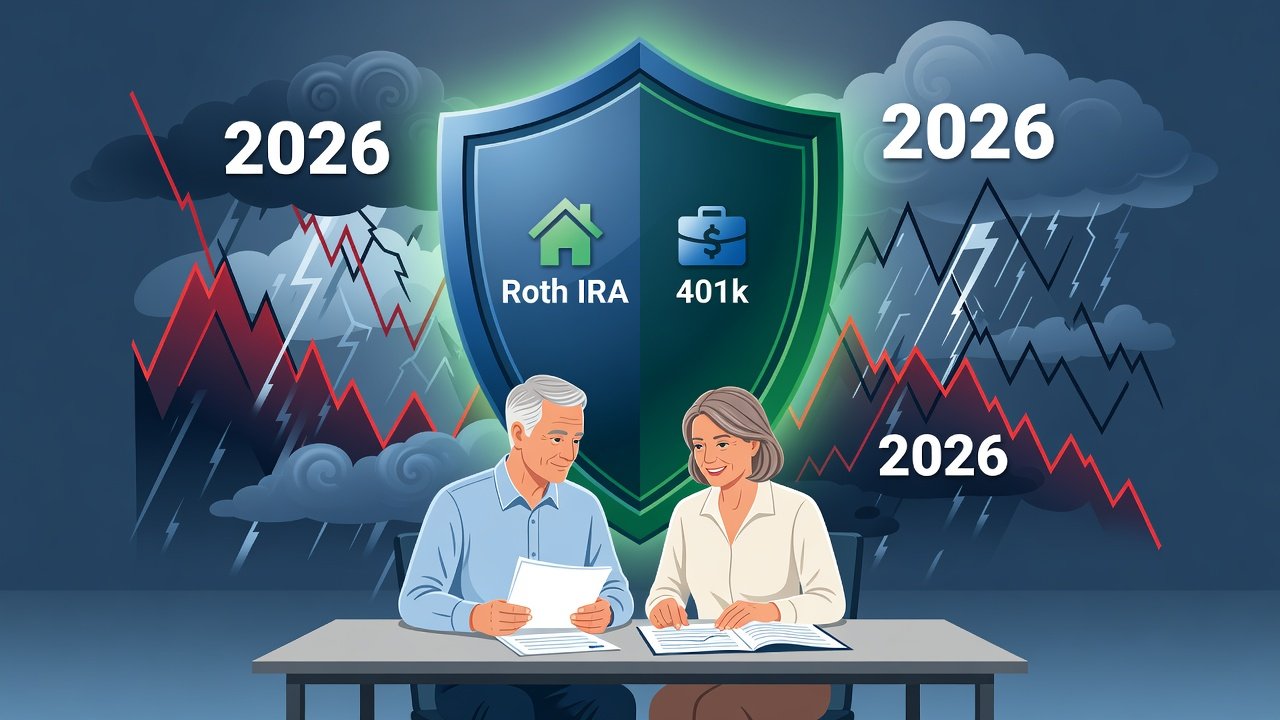
Understanding Sequence of Returns Risk in 2026 Retirement Planning
Sequence of returns risk represents one of the most critical threats to retirement income sustainability. It arises when a series of negative market returns occurs during the early years of retirement, precisely when investors begin drawing down their savings. Even if markets eventually rebound, the combination of withdrawals and depressed portfolio values can create a permanent shortfall that compounds over time. For individuals relying on Roth IRA and 401k accounts, understanding this dynamic is essential because the tax treatment of each account type influences how much net income remains available after each withdrawal.
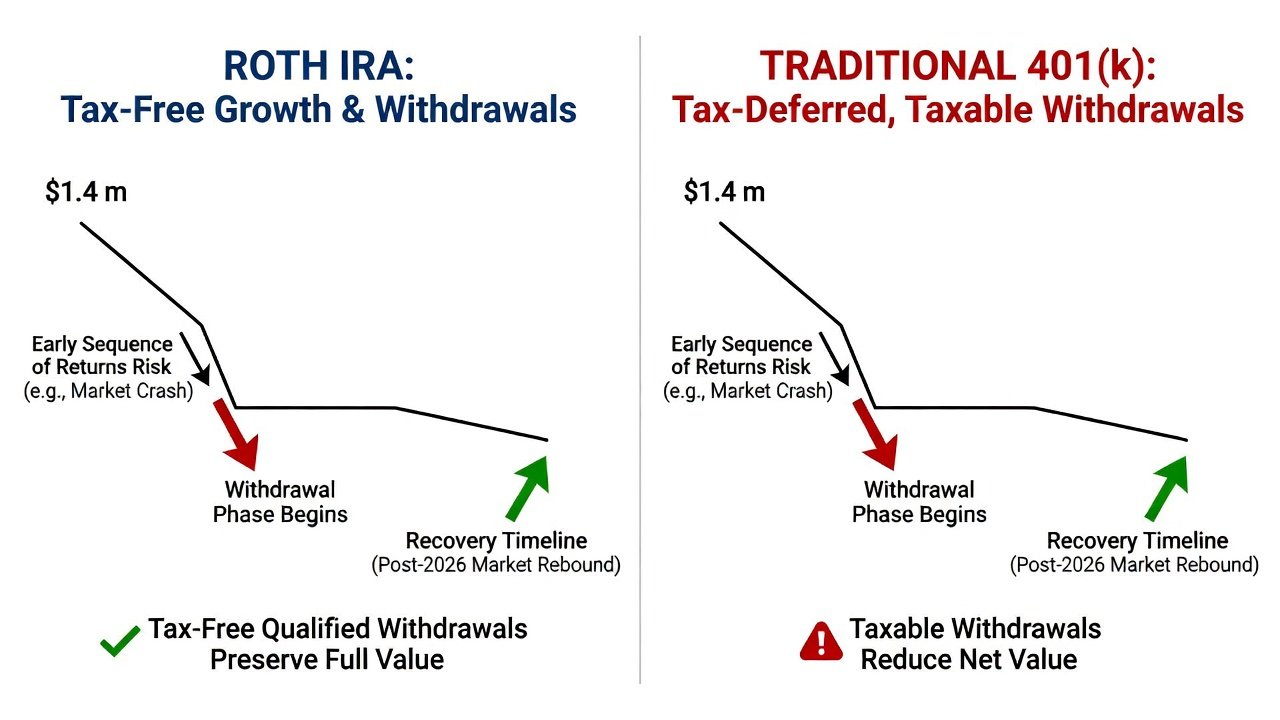
In practical 2026 examples, imagine a retiree who begins withdrawals during a prolonged downturn. A 20-30% decline in equities forces the sale of more shares to meet living expenses, leaving fewer assets to participate in any subsequent recovery. This effect is magnified when the portfolio lacks diversification across account types. Roth IRAs provide a distinct advantage here because qualified distributions are entirely tax-free, preserving the full withdrawal amount for spending needs. Traditional 401k distributions, by contrast, are subject to ordinary income taxes, which reduces the net proceeds and accelerates the depletion of principal during adverse market periods.
The risk is not theoretical. Retirees who ignore sequence-of-returns exposure often discover that their initial withdrawal rate, seemingly conservative on paper, becomes unsustainable after just two or three consecutive down years. Proactive planning therefore requires both an appreciation of the mathematical mechanics and the implementation of defensive allocation and spending frameworks tailored to 2026 market conditions.
Why Roth IRA and 401k Accounts React Differently to Market Downturns
The fundamental difference between Roth and traditional accounts lies in taxation timing. Roth contributions are made with after-tax dollars, allowing all future qualified growth and withdrawals to escape taxation. This feature becomes especially valuable when markets decline because the investor does not lose a portion of each distribution to taxes. A traditional 401k, funded with pre-tax dollars, triggers tax liability upon withdrawal, effectively shrinking the spendable amount and requiring larger gross distributions to meet the same net need.
Consider two hypothetical 2026 retirees, each starting with identical portfolio balances split across account types. During a market correction, the Roth investor maintains higher net cash flow because no tax is withheld. The traditional 401k investor must withdraw additional funds simply to cover the tax bill, increasing the number of shares sold at depressed prices. Over a five-year recovery period, this tax drag can create a measurable gap in ending wealth, even when both investors follow identical investment allocations.
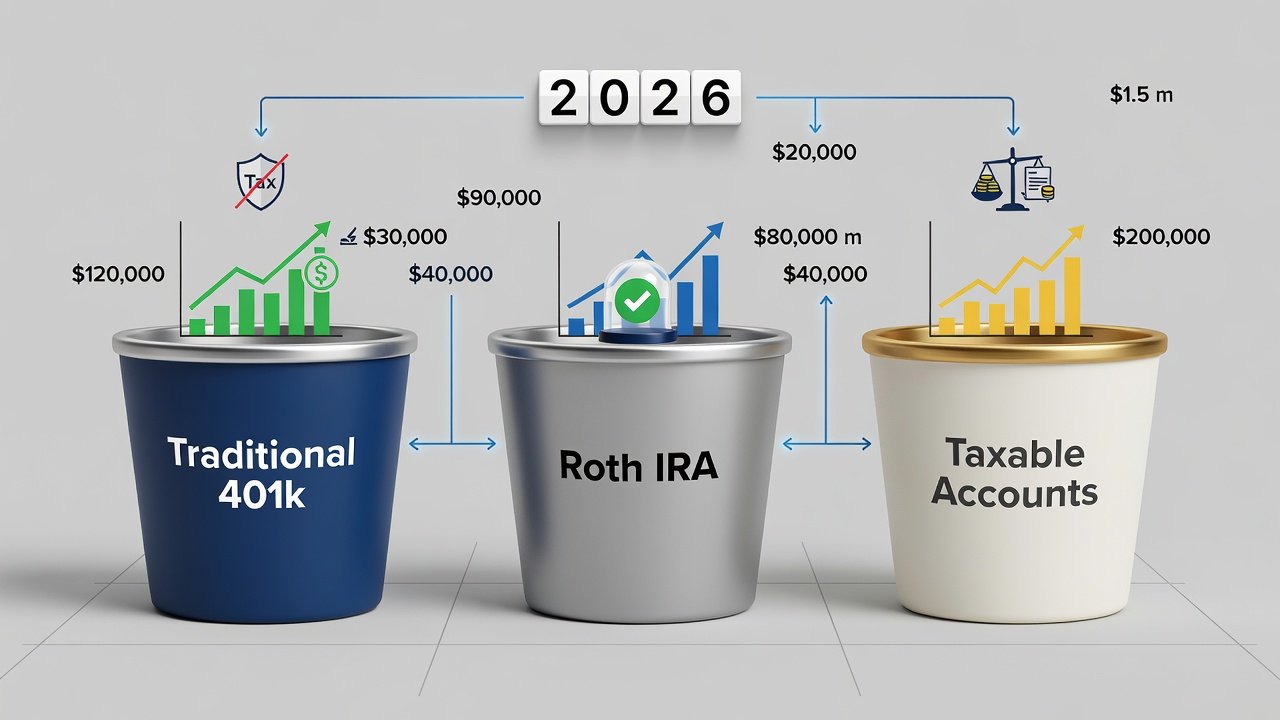
Account location therefore matters as much as asset allocation. Placing growth-oriented equities inside Roth accounts maximizes the benefit of tax-free compounding, while using traditional accounts for income-generating assets can sometimes optimize overall tax efficiency. The interplay between sequence risk and tax rules demands careful coordination across all retirement vehicles.
Historical Context and Lessons for 2026
Sequence of returns risk has appeared in multiple market cycles, including the dot-com bust and the 2008 financial crisis. Investors who retired at market peaks and immediately began withdrawals experienced significantly lower success rates than those who delayed or adjusted spending. These historical episodes underscore the importance of building buffers before retirement rather than reacting after damage occurs. In 2026, with valuations elevated in many equity sectors, the probability of a near-term correction remains a realistic planning assumption.
Modern tools such as Monte Carlo simulations and stress testing against past bear markets help quantify the impact. Retirees who incorporate these analyses into their 2026 planning process gain greater confidence in their withdrawal strategy and can identify the precise size of cash and bond reserves required to weather volatility.
Practical Tactics to Protect Your Portfolio
Four primary defensive tactics have proven effective: bucket strategies, dynamic withdrawal rates, bond ladders, and cash reserves. Each addresses a different aspect of sequence risk and can be combined for layered protection.
Bucket strategies segment the portfolio by time horizon. The first bucket holds cash or cash equivalents sufficient to cover two to three years of essential expenses. The second bucket contains high-quality bonds maturing over the subsequent four to seven years. The third bucket remains invested in diversified equities for long-term growth. This structure prevents the need to sell stocks during downturns.
Dynamic withdrawal rates replace rigid percentage rules with flexible spending. In years when portfolio returns exceed expectations, modest increases are permitted. In down years, spending is reduced by 10-15% to preserve capital. This adaptability has historically raised sustainable withdrawal success rates by double-digit percentages.
Bond ladders provide predictable cash flow through staggered maturities. Investors purchase individual bonds or targeted ETFs so that a portion matures each year, supplying liquidity without forced equity sales. Cash reserves serve as the ultimate backstop, typically held in high-yield savings accounts or short-term Treasury instruments.
The Guardrail Spending Method
An advanced variation of dynamic withdrawals, the guardrail approach sets upper and lower spending bands. When the portfolio exceeds the upper guardrail, spending rises; when it falls below the lower guardrail, spending contracts. This rules-based system removes emotional decision-making and enforces discipline during both euphoric and fearful markets.
Step-by-Step 2026 Portfolio Adjustments
- Calculate total annual expenses and separate essential from discretionary items.
- Inventory every retirement account, noting tax treatment and current balances.
- Establish or replenish a cash bucket covering 24-36 months of essential spending.
- Construct a bond ladder with maturities aligned to years four through ten.
- Reallocate remaining assets into a globally diversified equity allocation suited to risk tolerance.
- Determine initial withdrawal rate and establish guardrails for future adjustments.
- Review tax-efficient withdrawal sequencing, typically drawing from taxable accounts first, then traditional accounts, and Roth accounts last.
- Run stress tests using historical downturn scenarios to validate the plan.
- Schedule annual rebalancing and spending reviews each January.
- Document contingency plans for unexpected longevity or healthcare costs.
Real-Life Case Comparisons
Case 1: A 2026 retiree with $1.4 million across Roth IRA and 401k accounts implements a three-bucket strategy plus dynamic withdrawals. After a 22% equity decline in year two, the cash bucket covers all spending needs. The portfolio recovers fully by year six, and the retiree maintains the original lifestyle without interruption.
Case 2: A peer with the same starting balance uses a fixed 4% withdrawal and no dedicated cash reserves. The same market decline forces larger equity sales, resulting in a permanently lower portfolio value. Ten years later, the ending balance is approximately 18% smaller despite identical subsequent market returns.
Case 3: A couple coordinates Roth conversions in the years immediately preceding retirement to increase tax-free assets. Their 2026 sequence-risk plan includes a larger Roth allocation, which provides additional flexibility during the first five years of withdrawals and reduces overall tax exposure across the retirement horizon.
Common Mistakes to Avoid
- Failing to maintain adequate cash reserves before the first market correction occurs.
- Applying a static withdrawal rate without annual adjustments for portfolio performance.
- Concentrating too heavily in equities within the first five years of retirement.
- Ignoring the tax impact of withdrawals from traditional accounts during down markets.
- Neglecting to rebalance after major market moves, allowing allocations to drift.
- Delaying Social Security or pension income without modeling the sequence-risk implications.
Frequently Asked Questions
How does sequence risk differ between Roth and traditional accounts?
Roth accounts deliver tax-free distributions, preserving more capital during recovery periods, whereas traditional accounts incur taxes that increase the volume of shares that must be sold.
What withdrawal rate works best in 2026?
Many planners suggest beginning between 3% and 3.5% and applying dynamic or guardrail adjustments rather than committing to a fixed percentage indefinitely.
Can I still use the 4% rule safely?
The classic rule assumes average historical returns. Adding buckets, flexibility, and tax-aware sequencing materially improves outcomes even when starting at 4%.
How large should my cash reserve be?
Most experts recommend 24-36 months of essential expenses held outside the equity markets to cover spending during downturns.
Should I build the bond ladder inside or outside retirement accounts?
Taxable bonds are often best held in tax-advantaged accounts, while municipal bonds may suit taxable accounts depending on an individual's marginal tax rate.
When should I review my plan after retirement?
Conduct a formal review every January and after any market move exceeding 15% in either direction.
Conclusion
Protecting Roth IRA and 401k portfolios from sequence of returns risk in 2026 requires deliberate construction of cash buffers, flexible spending rules, and tax-efficient withdrawal ordering. By combining bucket strategies, dynamic guardrails, bond ladders, and disciplined rebalancing, retirees can navigate volatility while preserving long-term purchasing power. Begin implementation with a comprehensive account inventory and gradually layer defensive elements over the coming months. Continued education from authoritative sources strengthens these decisions over time.
Additional guidance is available from IRS retirement resources, SEC investor education materials, and Social Security Administration retirement tools.
No comments yet. Be the first!