 Bullish Portfolio
Introduction to Hidden Gem ETFs
Investors seeking to enhance core index fund portfolios often overlook specialized exchange-traded funds that target emerging themes like cybersecurity, genomics, and water infrastructure. These hidden gem ETFs offer targeted exposure backed by data-driven screening, allowing for thoughtful 10-20% allocations that can diversify returns without excessive overlap with broad market indexes. In today's evolving economic landscape, adding exposure to these niches can provide growth potential while maintaining overall portfolio balance. This comprehensive guide delivers a complete how-to framework for identifying, evaluating, and integrating such ETFs into 2026 portfolios, complete with real-world examples and decision frameworks.
Why Focus on Cybersecurity, Genomics, and Water Sectors
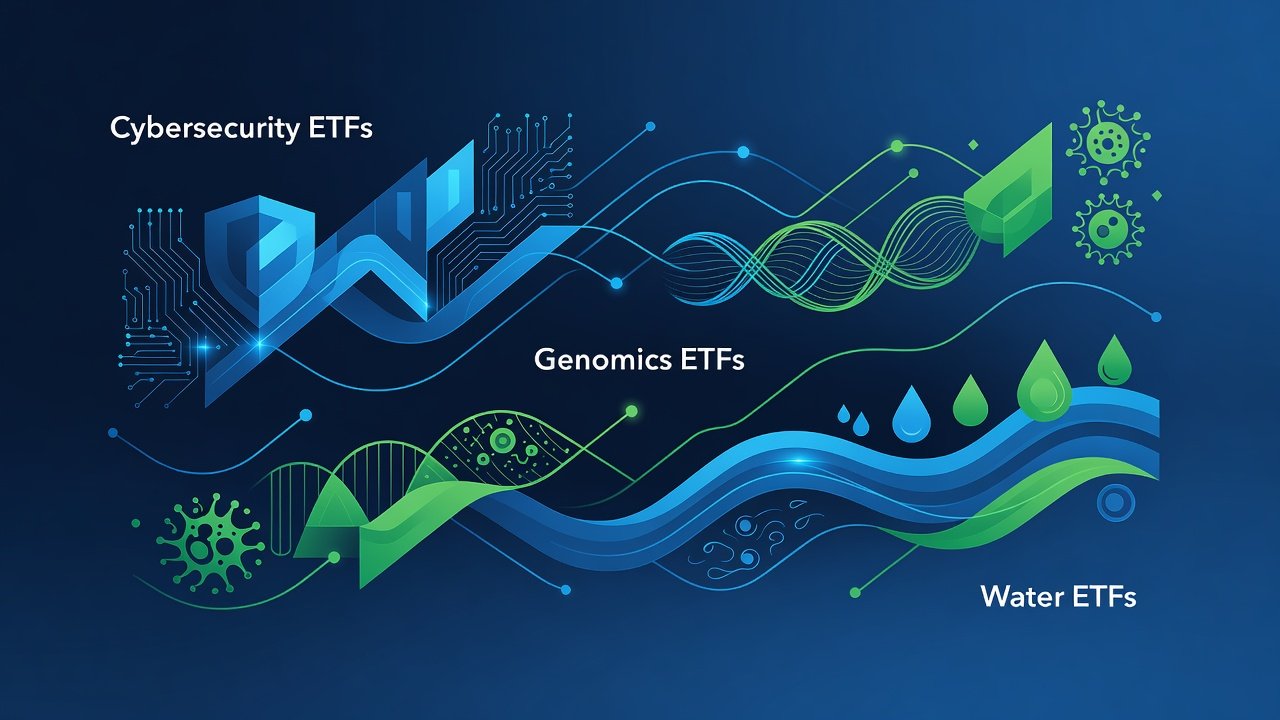
These three sectors stand out due to structural tailwinds that extend beyond typical market cycles. Cybersecurity benefits from escalating digital threats and regulatory demands for data protection. Genomics capitalizes on breakthroughs in gene editing and personalized therapies that promise to transform healthcare delivery. Water infrastructure faces mounting pressures from urbanization, climate variability, and aging systems, creating sustained investment needs. By blending ETFs from these areas, investors gain access to innovation-driven opportunities that complement traditional index holdings like large-cap equities.
Free Screening Tools for ETF Discovery
Begin your search with widely available platforms that allow filtering by sector focus, expense ratios, assets under management, and liquidity metrics. Popular options include ETF provider websites and aggregator sites where users can input criteria such as minimum AUM thresholds or maximum expense ratios. For official regulatory insights, consult resources on the SEC website to review fund prospectuses and holdings disclosures. Another strong starting point is Morningstar, which offers detailed ETF screeners with performance data and risk ratings. Additionally, ETF.com provides sector-specific lists and comparison tools that highlight hidden gems in niche categories. Cross-reference results across multiple platforms to avoid bias and ensure comprehensive coverage of available options in cybersecurity, genomics, and water themes.
Key Metrics: Expense Ratios and AUM Explained
Expense ratios represent the annual cost of fund management expressed as a percentage of assets, directly impacting net returns over time. Lower ratios are preferable for long-term holdings, especially when layering thematic ETFs onto low-cost core indexes. Assets under management indicate fund size and liquidity, with larger AUM generally signaling better trading efficiency and lower bid-ask spreads. When screening, prioritize ETFs with AUM above levels that support institutional interest while keeping expense ratios competitive within their peer groups. These metrics serve as foundational filters before deeper analysis of holdings concentration or sector alignment. Investors should also consider tracking error relative to benchmarks and average daily volume to gauge practical usability in a blended portfolio.
Deep Dive into Each Sector
Cybersecurity ETFs
These funds typically hold companies specializing in threat detection, encryption, and cloud security services. Exposure here aligns with the global shift toward remote work and connected devices, where breaches can carry severe financial and reputational costs. Practical example: an investor might select an ETF tracking firms with strong revenue growth in endpoint protection and zero-trust architectures.
Genomics ETFs
Genomics-focused ETFs invest in sequencing technology providers, gene therapy developers, and diagnostic innovators. The sector offers exposure to accelerating clinical trials and regulatory approvals that could reshape treatment paradigms for chronic diseases. A sample allocation might emphasize ETFs with holdings in CRISPR-related companies and liquid biopsy developers.
Water Sector ETFs
Water ETFs cover utilities, treatment equipment manufacturers, and infrastructure operators addressing supply challenges. With increasing focus on sustainable resource management, these funds provide defensive characteristics alongside growth from desalination and smart metering technologies. Investors often pair them with broader utilities exposure for added stability.
Step-by-Step Selection Process
- Define your overall portfolio goals, time horizon, and maximum thematic allocation (typically 10-20%).
- Apply screening filters on multiple platforms using metrics like expense ratio under peer averages and sufficient AUM for liquidity.
- Analyze top candidates by reviewing top holdings, geographic diversification, and correlation to your core index funds.
- Evaluate risk metrics such as standard deviation and maximum drawdown compared to broad market benchmarks.
- Construct sample portfolios with 10-20% splits across the three sectors and back-test conceptually against historical data.
- Finalize selections and document rationale for future review during rebalancing periods.
Allocation Examples and Practical Portfolio Models
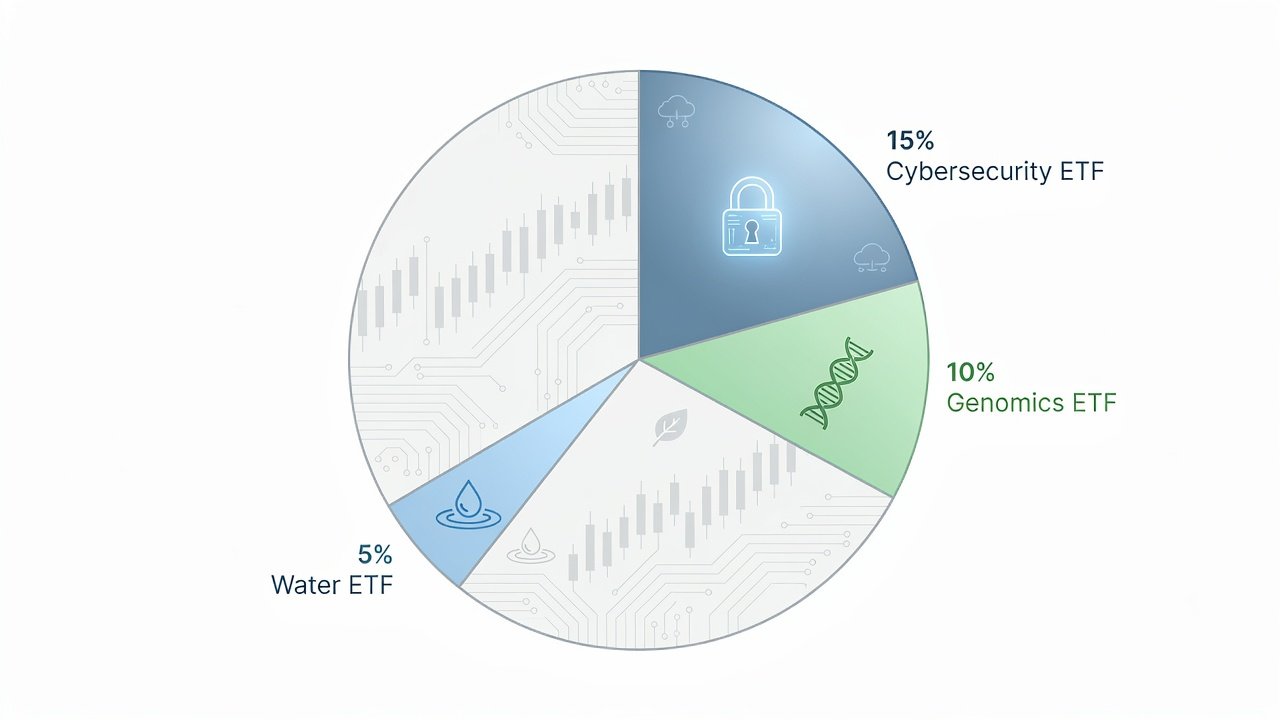
Consider a conservative model allocating 10% to cybersecurity, 5% to genomics, and 5% to water ETFs alongside an 80% core S&P 500 index fund. This setup emphasizes stability while capturing thematic upside. An aggressive variant increases exposure to 20% total thematic, split evenly at roughly 7% per sector, suitable for investors with longer horizons and higher risk tolerance. A balanced example uses 15% cybersecurity for digital defense growth, 8% genomics for healthcare innovation, and 7% water for infrastructure resilience. These models demonstrate how modest additions can enhance diversification without disrupting the low-cost foundation of index investing. Monitor sector performance quarterly and adjust weights if one area shows persistent outperformance or underperformance.
Risk Comparisons Across Sectors
Thematic ETFs generally exhibit higher volatility than broad index funds due to concentrated holdings and sensitivity to regulatory or technological shifts. Cybersecurity faces risks from rapid innovation cycles and competition, genomics contends with clinical trial failures and approval delays, while water ETFs may experience interest rate sensitivity through utility holdings. Compared to a plain vanilla index fund, these additions can increase portfolio standard deviation but also offer lower correlations that improve risk-adjusted returns when properly sized. Stress testing allocations against past market events helps quantify potential drawdowns and informs position sizing decisions.
2026 Economic Cycle Adjustments
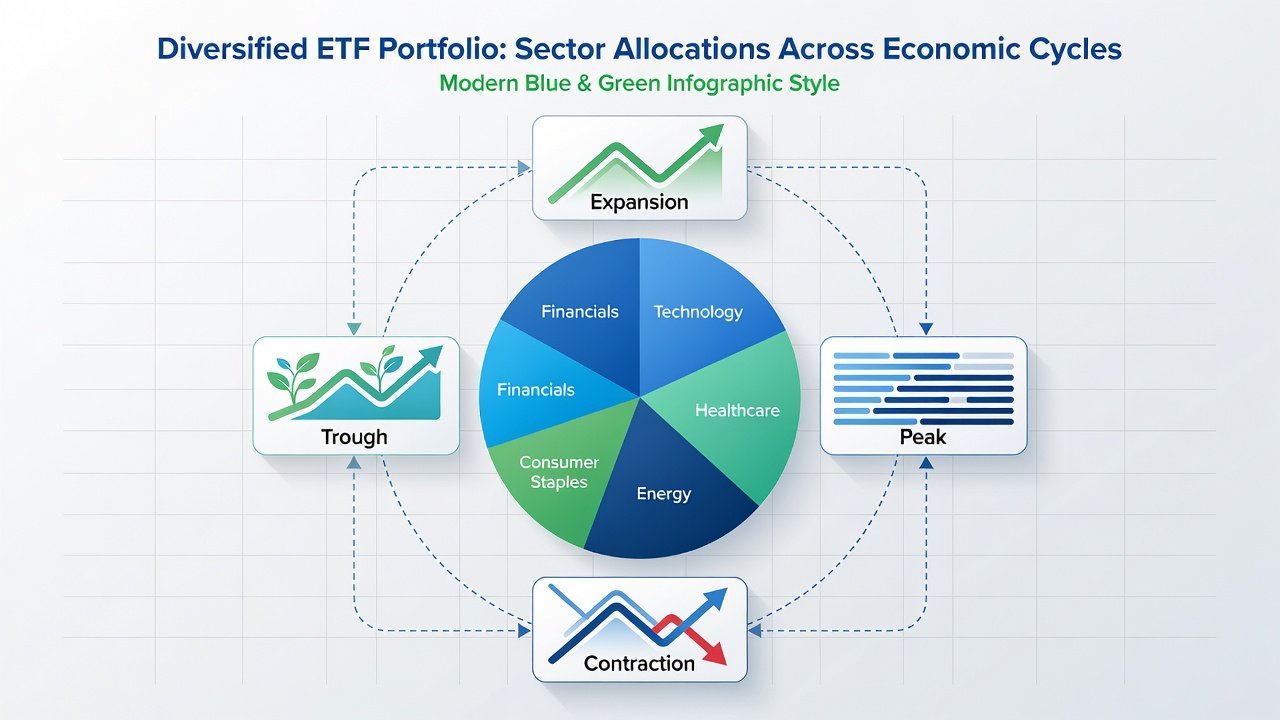
Anticipate influences from artificial intelligence expansion boosting cybersecurity demand, continued biotech funding supporting genomics, and policy initiatives around water resilience amid climate adaptation. Adjust allocations by overweighting defensive water holdings during periods of economic uncertainty while maintaining genomics exposure for growth phases. Review macroeconomic indicators such as technology spending trends and infrastructure budgets to fine-tune the 10-20% thematic sleeve accordingly.
Monitoring, Rebalancing, and Ongoing Management
Establish a quarterly review cadence to assess whether sector weights have drifted beyond target ranges. Use free screening tools to identify any new entrants or underperformers that warrant replacement. Rebalance by trimming outperforming positions and adding to laggards to maintain the intended risk profile. Document all changes and their rationale to build a repeatable process that supports long-term discipline.
FAQ on Common Pitfalls
- How do I avoid over-concentration in thematic ETFs? Cap total exposure at 20% and diversify across multiple sectors rather than single funds.
- What screening mistakes lead to poor selections? Ignoring liquidity metrics or chasing past performance without considering current valuations.
- Are expense ratios the only cost to watch? Factor in trading commissions, bid-ask spreads, and potential tax implications from turnover.
- How often should allocations be reviewed? Conduct formal reviews at least quarterly and after major market events.
- Can beginners start with these ETFs? Yes, but always anchor them to a core index fund foundation first.
- What if a sector faces regulatory headwinds? Maintain flexibility to shift weights within the 10-20% band or temporarily reduce exposure.
Conclusion
Applying data-driven screening combined with measured 10-20% allocations allows hidden gem ETFs in cybersecurity, genomics, and water to meaningfully enhance core index fund portfolios throughout 2026. By focusing on key metrics, following a structured selection process, and incorporating regular monitoring, investors can pursue growth opportunities while effectively managing associated risks. The practical models outlined here provide adaptable templates that balance innovation exposure with overall portfolio stability.
No comments yet. Be the first!