 Bullish Portfolio
Introduction to the Three-Bucket Retirement Strategy
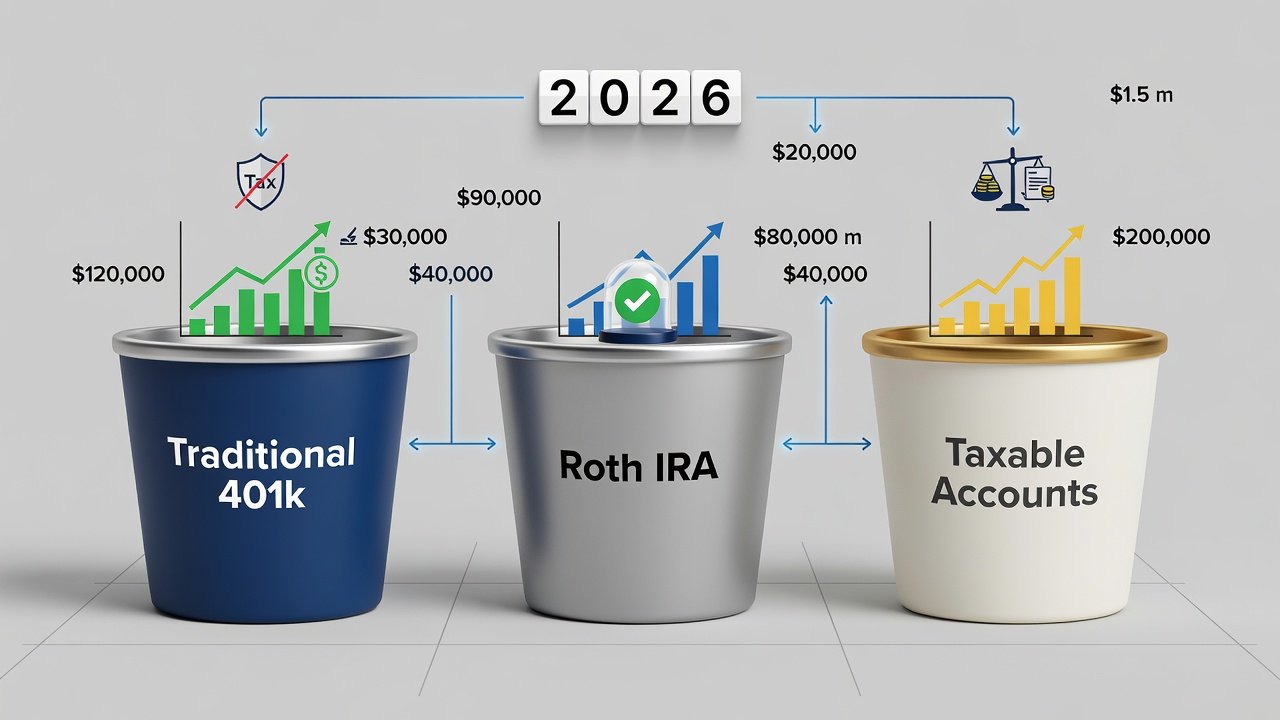
Planning for retirement in 2026 requires a proactive approach to tax efficiency. The three-bucket framework diversifies assets across traditional 401(k) accounts, Roth IRAs, and taxable brokerage accounts. This structure allows retirees to control taxable income year by year while managing required minimum distributions (RMDs) and market volatility. Retirees face increasing complexity from changing tax brackets, potential legislative shifts, and the interaction between different income sources. By allocating contributions strategically based on projected future tax brackets, individuals can reduce lifetime tax burdens significantly. The strategy emphasizes timing conversions, sequencing withdrawals, and maintaining flexibility for unexpected expenses or changes in tax law. This comprehensive approach goes beyond simple contribution decisions and incorporates ongoing management to adapt to personal circumstances and economic conditions.
Understanding the Three Buckets
Bucket one contains pre-tax traditional 401(k) and IRA assets that grow tax-deferred. Withdrawals are taxed as ordinary income, making this bucket sensitive to future tax rate changes. Bucket two holds Roth IRA assets that grow tax-free and offer tax-free qualified withdrawals, providing a powerful hedge against rising tax rates. Bucket three consists of taxable accounts where capital gains and dividends receive preferential tax treatment, often at lower rates than ordinary income. This diversification provides options when income needs change. For example, drawing from taxable accounts first can keep marginal tax rates low before tapping pre-tax buckets. Each bucket serves distinct purposes: traditional accounts maximize current tax deductions, Roth accounts protect against future tax increases, and taxable accounts offer liquidity and lower tax rates on gains. Understanding these differences helps retirees balance growth, liquidity, and tax exposure across decades of retirement.
Allocating Contributions for 2026 and Beyond
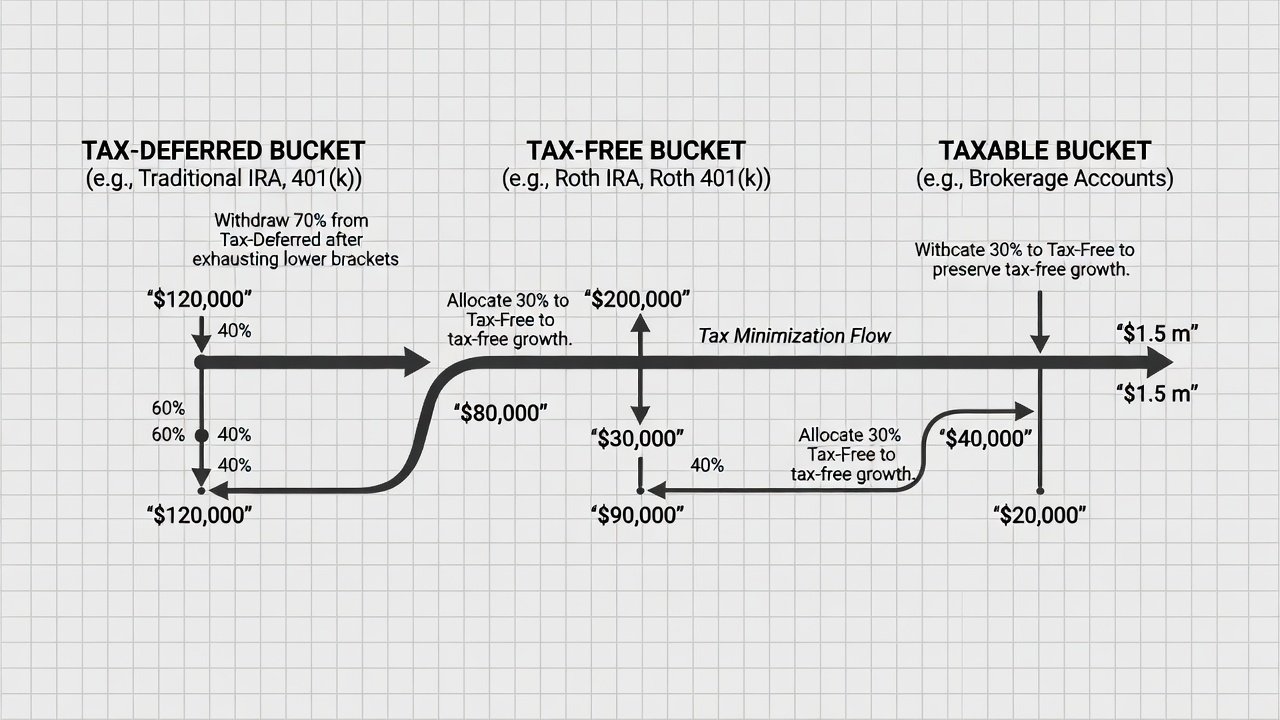
Contribution decisions should reflect expected tax brackets during retirement. Higher-income earners may favor Roth contributions or backdoor Roth strategies to build tax-free growth. Middle-income individuals might split contributions between traditional and Roth accounts. Sample allocations include 60% traditional 401(k), 25% Roth IRA, and 15% taxable for moderate earners, adjusted annually based on income projections and tax law updates. For someone earning $120,000 annually, a practical split could involve maximizing traditional 401(k) contributions up to the annual limit while directing a portion of after-tax dollars into a Roth IRA. Lower-income earners under $80,000 might allocate 40% to traditional accounts and 40% to Roth to balance immediate deductions with future tax-free income. High earners above $200,000 often prioritize backdoor Roth contributions after maxing traditional options. These percentages should be reviewed each year as income, tax laws, and retirement timelines evolve.
Timing Roth Conversions
Conversions from traditional accounts to Roth IRAs are most effective in lower-income years, such as early retirement before Social Security or RMDs begin. Pay taxes on the converted amount from taxable accounts to maximize the benefit. Spreading conversions over multiple years avoids pushing income into higher brackets. Monitor IRS guidelines for annual limits and reporting requirements. A retiree with a large traditional 401(k) balance might convert $30,000 annually over five years during a low-income period to fill the 12% or 22% bracket without exceeding it. This strategy requires careful modeling of future RMDs and other income sources. Conversions also impact Medicare premiums through IRMAA surcharges, so timing must account for those two-year lookback rules. Working with tax software or a professional ensures conversions align with overall financial goals.
Managing Required Minimum Distributions
RMDs from traditional accounts begin at age 73 for those born in 1951–1959 and age 75 for later births. The three-bucket approach mitigates RMD impact by using Roth and taxable assets to fill income gaps without triggering higher taxes. Qualified charitable distributions from IRAs can satisfy RMDs tax-free when directed to eligible organizations. Learn more at IRS. Retirees can also consider Roth conversions before RMD age to shrink the traditional account balance that generates future RMDs. Another tactic involves delaying Social Security to age 70 to create a window for conversions or spending from taxable accounts. Managing RMDs effectively prevents large taxable events that could push retirees into higher brackets or increase Medicare costs.
Sequencing Withdrawals to Minimize Taxes
Optimal withdrawal order often starts with taxable accounts to realize long-term capital gains at 0% or 15% rates, followed by Roth withdrawals if needed, then traditional accounts. This sequencing preserves tax-advantaged growth longer. Rebalancing annually ensures buckets remain aligned with changing tax situations and market conditions. Consider a retiree needing $90,000 annually: first withdraw $40,000 from taxable accounts using 0% capital gains, then $20,000 from Roth (tax-free), and finally $30,000 from traditional accounts staying within the 12% bracket. Adjusting this sequence for years with higher medical expenses or market gains can further optimize outcomes. The goal is to smooth taxable income across retirement years rather than clustering withdrawals.
Step-by-Step Implementation Checklist
- Project retirement income needs and expected tax brackets for 2026–2035 using detailed spreadsheets that include inflation, investment returns, and Social Security estimates.
- Review current account balances and contribution rates across all buckets, ensuring employer matches are maximized in traditional accounts.
- Schedule annual Roth conversion targets during low-income periods while monitoring IRMAA thresholds for Medicare.
- Establish taxable account investment mix focused on tax-efficient funds such as index ETFs and municipal bonds.
- Model RMD scenarios using IRS life expectancy tables and factor in spousal considerations if married.
- Consult a tax professional to simulate withdrawal sequences under multiple market and tax law scenarios.
- Rebalance portfolios quarterly and adjust for legislative changes such as potential tax reform.
- Document all decisions and maintain records for at least seven years for IRS audit protection.
Sample Portfolio Allocations
For a $1.5 million portfolio targeting $80,000 annual spending: 45% traditional 401(k), 35% Roth IRA, 20% taxable. This mix supports flexible draws while controlling tax exposure. A more conservative $800,000 portfolio might use 50% traditional, 30% Roth, and 20% taxable to emphasize stability. Aggressive investors with longer horizons could shift to 35% traditional, 45% Roth, and 20% taxable. These examples assume moderate risk tolerance and should be personalized based on health, longevity expectations, and other assets like pensions.
Comparison Table vs Single-Account Approaches
| Approach | Tax Flexibility | RMD Management | Lifetime Tax Savings Potential |
|---|---|---|---|
| Three-Bucket | High | Excellent | Significant |
| Traditional 401k Only | Low | Poor | Minimal |
| Roth Only | Medium | Good | Moderate |
Common Mistakes to Avoid
One frequent error is ignoring state taxes when planning bucket allocations, as some states tax retirement income differently. Another is failing to coordinate conversions with Social Security taxation, which can make up to 85% of benefits taxable. Retirees also overlook the two-year IRMAA lookback period when executing large conversions. Finally, neglecting to update the plan after major life events like inheritance or divorce can undermine years of tax planning.
Impact of Social Security and Medicare
Social Security benefits interact with the three-bucket strategy through provisional income calculations. Drawing from traditional accounts can increase the taxable portion of benefits, while Roth withdrawals do not count toward provisional income. Medicare premiums via IRMAA are based on modified adjusted gross income from two years prior, making advance planning essential. More details are available at SSA and Medicare.
Conclusion
The Roth IRA and 401(k) bucket strategy offers a robust path to tax-efficient retirement income. By diversifying across account types, planning conversions, and sequencing withdrawals thoughtfully, retirees can navigate 2026 tax rules and beyond with greater confidence and lower overall costs. Regular reviews and professional guidance ensure the strategy remains effective amid changing circumstances.
FAQ
How does market volatility affect the strategy?
Volatility impacts all buckets, but taxable accounts allow tax-loss harvesting to offset gains elsewhere, adding resilience. Rebalancing during downturns can also create opportunities for tax-efficient Roth conversions.
When should RMD timing be addressed?
Begin planning at least five years before RMD age to execute conversions and adjust asset locations proactively. Early action prevents forced large distributions that spike tax bills.
Can the strategy adapt to tax law changes?
Yes, the flexibility of three distinct buckets allows quick shifts in withdrawal sources if brackets or rules change in future years.
What role do Roth conversions play after age 73?
Conversions remain useful post-RMD age to reduce future RMDs and manage bracket creep, though they must be balanced against current-year tax costs.
How do health care costs influence bucket choices?
Higher medical expenses may favor drawing from traditional accounts to stay in lower brackets, while Roth assets provide tax-free funds for out-of-pocket costs without increasing taxable income.

No comments yet. Be the first!