 Bullish Portfolio

Introduction to Emerging Markets in Retirement Accounts
Retirement planning in 2026 demands a forward-looking approach that extends beyond traditional U.S. and developed market holdings. Emerging markets equities and bonds represent a critical avenue for diversification, offering exposure to rapidly growing economies in regions such as Southeast Asia, Latin America, Eastern Europe, and parts of Africa. These markets often feature younger populations, expanding middle classes, and increasing technological adoption, which can translate into long-term growth potential for patient investors using tax-advantaged accounts like Roth IRAs and 401ks.
Many retirement savers have historically concentrated on domestic assets due to familiarity and perceived stability. However, global economic shifts highlight the value of broader diversification. Emerging markets can provide returns that move independently from U.S. equities, helping to smooth overall portfolio performance during periods when American markets face headwinds from inflation, interest rate changes, or sector-specific challenges.
This advanced guide explores how to thoughtfully integrate emerging markets into Roth IRA and 401k strategies. It covers risk evaluation, allocation frameworks, fund selection, tax efficiencies, practical implementation steps, illustrative portfolios, and ongoing management techniques to help investors build resilient retirement plans.
Why Diversify Beyond Developed Markets
Developed markets deliver consistency, yet they often exhibit higher correlations during global downturns. Emerging economies frequently demonstrate distinct growth drivers tied to local infrastructure development, commodity exports, and domestic consumption trends. Including these assets in retirement accounts allows compounding to work over decades without the drag of annual capital gains taxes.
Beyond equities, emerging markets bonds can supply income streams with yields that sometimes exceed those available in developed regions. This dual exposure supports both capital appreciation and cash flow needs in later retirement years. Diversification also reduces reliance on any single economic bloc, protecting against localized recessions or policy shifts.
Risk Assessment for Emerging Markets
Investing in emerging markets involves several distinct risks that require careful evaluation. Currency volatility can erode returns when local currencies weaken against the U.S. dollar. Political and regulatory uncertainties may affect company operations or foreign investment rules. Liquidity constraints can lead to wider bid-ask spreads during market stress.
Additional considerations include varying corporate governance standards and differing accounting practices across countries. Despite these factors, retirement accounts provide a buffer because gains and losses remain sheltered from immediate taxation. Investors can hold through cycles without realizing taxable events.
Mitigation strategies emphasize broad geographic diversification rather than concentrated country bets. Using low-cost index funds helps spread exposure across dozens of nations. Regular monitoring of macroeconomic indicators, such as GDP growth and inflation trends in key emerging economies, supports informed decision-making without reactive trading.
Recommended Allocation Percentages
Allocation decisions should align with individual risk tolerance, time horizon, and existing international holdings. Younger investors with 20 or more years until retirement often benefit from 10-15% emerging markets equity exposure, paired with a smaller bond allocation of 3-5%. Those closer to retirement may reduce equity weightings to 5-10% while increasing bond components for income stability.
Within emerging markets, a balanced split might allocate 70% to equities for growth and 30% to bonds for income. These targets can be adjusted annually based on life changes or shifts in global economic conditions. Starting with modest percentages allows investors to gain familiarity before scaling exposure.
Age-based glide paths provide helpful frameworks. For example, a 30-year-old might target 15% emerging markets overall, while a 60-year-old could aim for 8% with heavier emphasis on bonds. These percentages integrate into a larger international bucket that typically ranges from 20-40% of the total portfolio.
Top ETF and Mutual Fund Picks
Selection focuses on vehicles offering wide diversification, reasonable costs, and strong liquidity. Broad emerging markets ETFs tracking major indices provide passive exposure to hundreds of companies across multiple countries. Actively managed mutual funds may offer advantages in navigating country-specific opportunities or avoiding weaker sectors.
Investors should evaluate factors such as index methodology, country weighting, and sector breakdown. Funds with significant allocations to technology, consumer discretionary, and financials in emerging regions often capture key growth themes. Comparing prospectus details helps identify options aligned with retirement objectives.
Many 401k plans include institutional versions of popular emerging markets funds. Roth IRA holders frequently access additional choices through brokerage windows, enabling selection of specialized ETFs focused on particular regions or themes like sustainable development.
Tax Advantages Specific to Roth IRA and 401k
Roth IRAs deliver tax-free growth and qualified withdrawals, amplifying the benefits of emerging markets returns. Any appreciation from currency movements or equity gains escapes taxation entirely upon distribution. This structure proves especially valuable during periods of strong emerging market performance.
Traditional 401k accounts allow pre-tax contributions and tax-deferred growth. Volatility in emerging markets occurs without triggering annual tax reporting, preserving more capital for compounding. IRS resources outline contribution rules and required minimum distribution requirements that apply to these accounts.
Both account types outperform taxable accounts for international strategies by eliminating taxes on dividends and capital gains until withdrawal or eliminating them altogether in Roth structures. This efficiency supports more aggressive allocation to higher-growth emerging assets.
Additional guidance appears on official sites such as SEC.gov and Investor.gov, which explain investor protections and account features relevant to international holdings.
Step-by-Step Setup Instructions
- Assess your current retirement plan statement to identify available international and emerging markets options.
- Define personal risk parameters and target percentages based on age and goals.
- Research specific funds using available prospectuses and performance data within plan portals.
- Initiate allocation changes through contribution elections or existing balance transfers where permitted.
- Schedule periodic reviews, ideally aligned with contribution increases or life events.
- Consult plan administrators for any restrictions on frequent trading or fund minimums.
Common pitfalls include over-concentration in single-country funds or neglecting to update allocations after market movements. Documenting decisions creates a reference for future adjustments.
Real-World Portfolio Examples
Consider a 40-year-old investor building a Roth IRA with $150,000 in assets. A diversified mix could include 55% U.S. large-cap equities, 20% developed international stocks, 12% emerging markets equities, 8% emerging markets bonds, and 5% short-term fixed income. This structure balances growth with emerging markets participation.
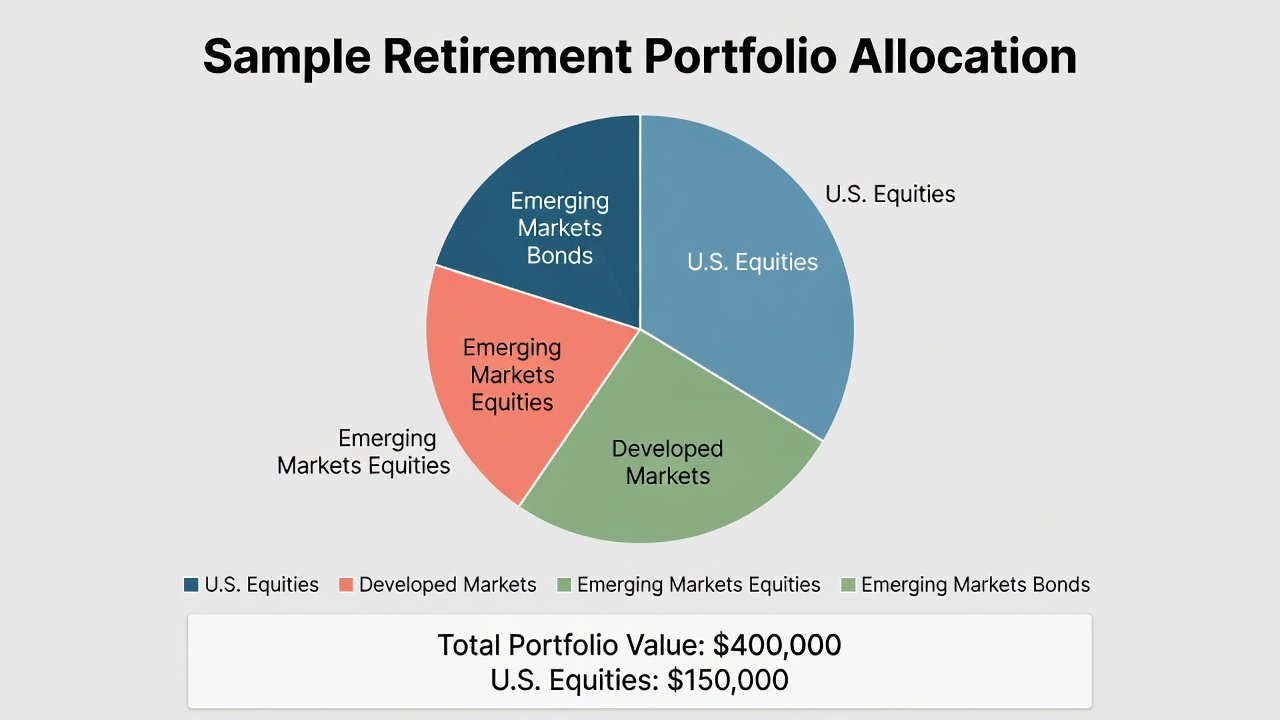
Another example involves a 50-year-old 401k participant with $400,000. The allocation might feature 45% domestic equities, 25% developed markets, 10% emerging markets equities, 12% emerging markets bonds, and 8% U.S. bonds. Rebalancing occurs annually using new contributions to maintain targets.
A more aggressive 28-year-old could allocate 18% to emerging markets equities within a total international sleeve of 35%, emphasizing equity growth over bonds. These examples illustrate scalable approaches adaptable to individual circumstances.
Comparisons Versus U.S.-Only Strategies
U.S.-only portfolios offer simplicity and strong historical performance but expose investors to concentrated risks from domestic policy or economic cycles. Adding emerging markets introduces lower correlation benefits that historically improve risk-adjusted returns over multi-decade periods.
While U.S. markets may lead during certain cycles, emerging regions often accelerate during global recoveries. Retirement accounts magnify these advantages by removing tax friction from necessary rebalancing between asset classes.
Rebalancing Tips
- Conduct formal reviews twice yearly but execute trades no more than annually to control transaction costs.
- Direct new contributions toward underweight asset classes to restore targets organically.
- Track currency effects separately from equity performance for clearer insights.
- Reduce emerging markets equity exposure gradually as retirement approaches in favor of bonds.
- Leverage any automatic rebalancing tools offered by plan providers.
Managing Volatility: FAQs
How should sharp downturns in emerging markets be handled? Maintain focus on long-term objectives and resist emotional selling, allowing recovery within sheltered accounts.
Is dollar-cost averaging effective for emerging markets? Regular, consistent contributions help average purchase prices across fluctuating market conditions.
Do emerging markets bonds reduce overall portfolio risk? They provide income diversification but still face interest rate and credit risks distinct from U.S. fixed income.
What role does research play in ongoing management? Periodic review of economic reports from major emerging economies supports proactive adjustments without excessive trading.
Can emerging markets exposure be increased later? Yes, contribution increases or windfalls provide opportunities to scale toward higher targets if risk tolerance permits.
Common Mistakes to Avoid
Investors sometimes chase recent performance in emerging markets without considering valuations or diversify too narrowly into one or two countries. Others neglect bond allocations within emerging markets, resulting in unnecessary equity volatility. Failing to integrate emerging holdings with broader international strategies can lead to unintended overexposure.
Conclusion
Thoughtful allocation to emerging markets equities and bonds within Roth IRA and 401k accounts enhances diversification and growth potential for 2026 retirement planning. By evaluating risks, selecting appropriate funds, leveraging tax advantages, and applying disciplined rebalancing, investors create robust portfolios capable of navigating global opportunities. This approach transforms emerging markets from peripheral holdings into strategic components of comprehensive retirement success.

No comments yet. Be the first!