 Bullish Portfolio
Understanding Currency Risk in Global Retirement Portfolios
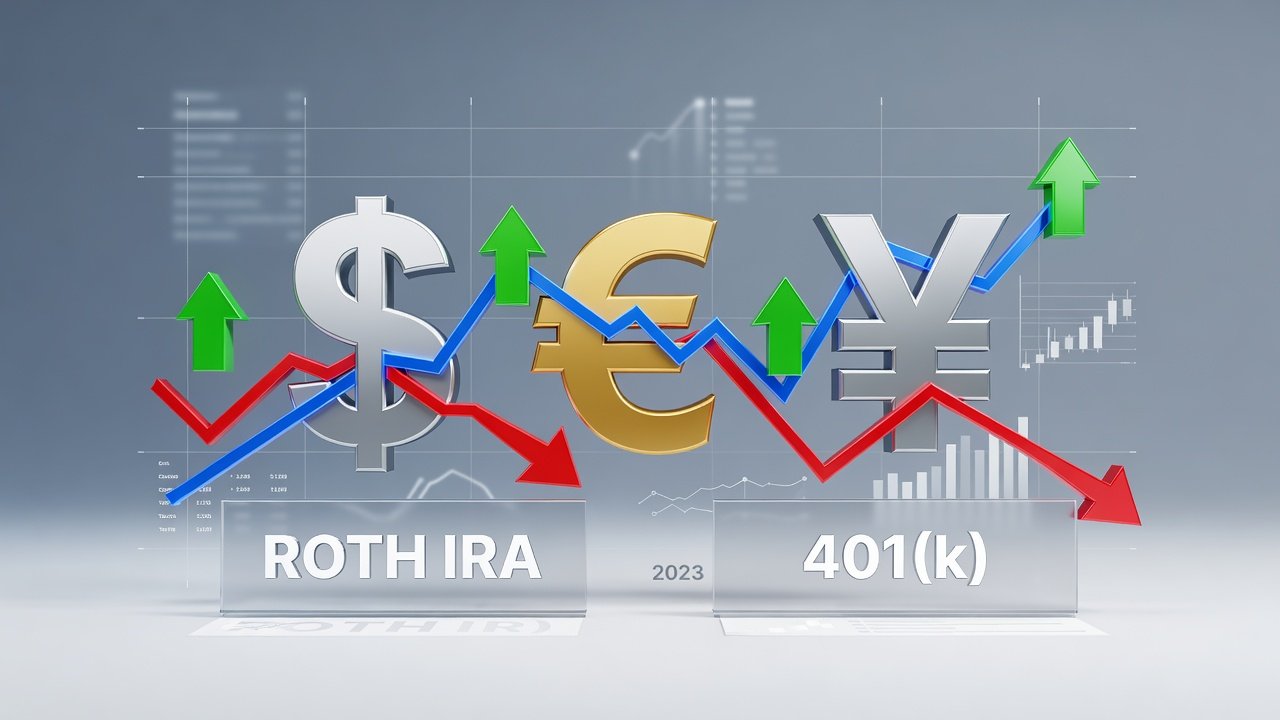
International diversification remains a cornerstone of strong retirement growth, yet exchange rate volatility can erode returns in Roth IRA and 401k accounts. In 2026, investors holding foreign stocks or bonds face ongoing fluctuations between the U.S. dollar and currencies such as the euro, yen, and yuan. These swings directly affect the dollar value of overseas holdings, potentially offsetting gains from strong foreign markets. Currency risk arises because retirement accounts track returns in U.S. dollars. A rising dollar reduces the value of euro-denominated assets, while a weakening dollar amplifies gains. For long-term investors, unhedged exposure adds an extra layer of uncertainty that can compound over decades of contributions and market cycles.
Beyond simple appreciation or depreciation, currency movements often correlate with broader economic events including interest rate differentials, geopolitical developments, and trade policy shifts. In retirement accounts, this means an otherwise successful international equity allocation could underperform domestic holdings purely due to forex dynamics. Recognizing this dynamic helps investors build more resilient portfolios that pursue global opportunities without excessive hidden risks.
Key Hedging Tools for Retirement Accounts
Several accessible instruments help mitigate currency exposure without violating retirement account rules. Currency-hedged ETFs provide the simplest entry point. These funds use forward contracts to neutralize foreign currency movements, delivering returns closer to the underlying local market performance. Investors appreciate their low maintenance since the hedging occurs automatically within the fund structure.
Options strategies offer more flexibility for sophisticated investors. Currency call or put options can protect specific positions, though they require careful monitoring within the account and may involve premium costs that reduce net returns. Forward contracts, typically implemented through specialized ETFs or institutional platforms, lock in exchange rates for future periods and suit larger allocations where precise timing matters.
Each tool carries distinct advantages. Hedged ETFs excel in simplicity and broad applicability, while options allow targeted protection around earnings seasons or major central bank announcements. Forward contracts provide certainty but often require higher minimums or professional oversight.
Step-by-Step Implementation Examples for Common International Holdings
Implementation begins with identifying international holdings and their currency exposures. For example, an investor with significant European equity exposure might allocate a portion to a hedged version of the same index. Step one involves reviewing current allocations through account statements. Step two requires selecting appropriate hedged tickers that match the unhedged counterparts as closely as possible. Step three includes executing the trades and setting calendar reminders for quarterly rebalancing to maintain desired coverage levels.
Consider a Japan-focused holding: An investor could replace half the position with a yen-hedged ETF to reduce volatility from yen-dollar swings. For emerging markets exposure, similar logic applies but with added attention to liquidity differences among available hedged products. Another example involves a diversified international bond allocation where currency hedging can stabilize income streams critical for later retirement withdrawals.
Practical execution also includes monitoring correlation between hedged and unhedged versions over time. Investors should document each change and project long-term impacts using retirement calculators to ensure the strategy supports overall savings goals.
Hedged vs. Unhedged Performance in 2026 Scenarios
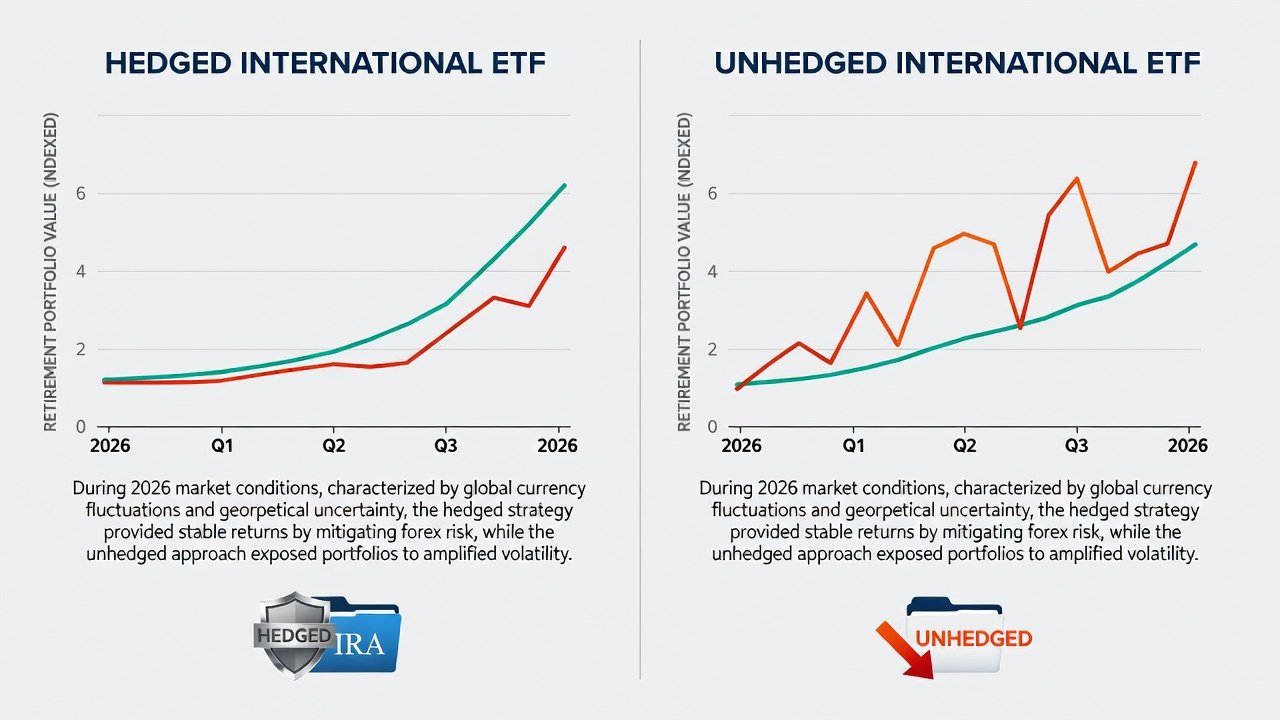
Comparing hedged and unhedged approaches reveals clear trade-offs. In periods of dollar strength, hedged positions preserve value better by eliminating negative currency translation effects. Conversely, when the dollar weakens, unhedged holdings capture additional upside that can boost overall portfolio growth. Historical patterns suggest that over multi-year horizons, hedging often reduces volatility without sacrificing long-term growth potential.
Practical examples include shifting 50% of international equity exposure to hedged ETFs during elevated volatility environments. This balanced approach limits downside from currency moves while retaining some participation in favorable rate shifts. Scenario analysis for 2026 might examine cases of sustained dollar appreciation versus sudden reversals driven by policy changes. Investors benefit from stress-testing their mix against both outcomes to determine comfort levels.
Additional considerations include how hedging interacts with dividend reinvestment and the frequency of rebalancing needed to keep exposures aligned. Over time, the cumulative effect of lower volatility can meaningfully improve retirement readiness metrics such as safe withdrawal rates.
Tax Considerations Specific to Roth IRA and 401k Accounts
Retirement accounts enjoy tax advantages that simplify hedging decisions. In a Roth IRA, all qualified withdrawals remain tax-free, so hedging gains or losses do not trigger immediate tax events. Traditional 401k accounts defer taxes until distribution, meaning currency-related transactions stay sheltered during the accumulation phase. This tax-deferred environment allows hedging strategies to focus purely on risk reduction rather than after-tax optimization.
Investors should still monitor any wash-sale implications or complex derivatives that might require custodian approval. Some plans restrict certain options or forward instruments, making ETF-based hedging the most universally accessible route. Consulting plan documents ensures compliance with specific account rules. Authoritative guidance appears on the IRS website regarding retirement account investments, while further investor education resources are available at Investor.gov.
Practical Checklist for Selecting Low-Cost Hedging Products
- Review expense ratios of hedged ETFs and compare them to unhedged equivalents to ensure the hedging premium remains reasonable over time.
- Confirm the fund uses transparent forward-contract strategies rather than complex derivatives that could introduce unintended risks.
- Assess liquidity through average daily trading volume to guarantee easy entry and exit without excessive spreads.
- Verify alignment with your overall asset allocation and risk tolerance through backtesting against personal retirement timelines.
- Re-evaluate positions annually or after major currency regime shifts to maintain effectiveness.
- Ensure the product fits within your account's approved investment menu by checking with the plan administrator.
- Compare tracking error metrics between hedged and unhedged versions to confirm the hedge performs as intended.
- Consider diversification across multiple hedged regions rather than concentrating protection in a single currency pair.
Frequently Asked Questions
How much international exposure should I hedge?
Many advisors recommend hedging 30-70% of foreign holdings depending on portfolio size and risk preferences. Start conservatively and adjust based on performance reviews and changing market conditions.
Do hedging costs outweigh benefits in retirement accounts?
Expense ratios for hedged products have narrowed significantly in recent years. The primary benefit lies in reduced volatility, which supports steadier compounding over decades of retirement accumulation.
Can I use options inside a 401k?
Most 401k plans limit options trading. Check your plan's investment policy statement or contact the administrator before pursuing advanced strategies.
What role does the Federal Reserve play in currency hedging decisions?
Monetary policy influences dollar strength and therefore hedging needs. Monitoring statements from Federal Reserve resources can inform timing adjustments to hedge ratios.
How often should I review my hedging strategy?
Annual reviews combined with event-driven checks after major economic releases provide a balanced approach that avoids over-trading while keeping the strategy current.
Conclusion
Currency hedging strengthens the foundation of international diversification within Roth IRA and 401k portfolios. By combining hedged ETFs with disciplined implementation, scenario planning, and periodic reviews, investors can pursue global growth while managing exchange rate risk effectively in 2026 and beyond. Regular education and alignment with long-term retirement goals remain essential for sustained success across market cycles.


No comments yet. Be the first!