 Bullish Portfolio

Introduction: Why International Diversification Matters in 2026 Retirement Accounts
Building a resilient retirement portfolio requires looking beyond domestic markets. In 2026, investors using Roth IRA and 401k accounts can enhance long-term growth and reduce risk by adding international equity and bond ETFs. This approach provides exposure to global economies, sectors, and currencies that may perform differently from U.S. assets. International diversification helps smooth volatility and capture growth opportunities in emerging and developed markets. Roth accounts offer tax-free growth and withdrawals, making them ideal for holding higher-return international assets without annual tax drag. Traditional 401k accounts benefit similarly through deferred taxation. This guide walks through practical steps for selecting ETFs, setting allocations, managing currency exposure, and maintaining balance over time. Many investors overlook that roughly 40 percent of global equity market value lies outside the United States, creating meaningful opportunities for those willing to diversify.
Benefits of Adding International ETFs to Roth IRA and 401k Portfolios
Domestic-only portfolios miss out on roughly 60 percent of global market capitalization. International equities have historically delivered periods of outperformance, especially when U.S. valuations are elevated. Bond ETFs from overseas add further diversification because foreign interest rates often move independently of U.S. rates. Tax-free growth in a Roth IRA amplifies these advantages. Rebalancing gains inside the account never trigger capital gains taxes. In a 401k, the same diversification occurs with tax-deferred compounding. Over multi-decade horizons, even modest international allocations can improve risk-adjusted returns by reducing correlation with U.S. large-cap stocks. Investors also gain access to sectors such as European luxury goods, Asian technology manufacturing, and resource-rich emerging economies that have limited representation in domestic indexes.
Selecting Low-Cost International Equity and Bond ETFs
Focus on broad, low-expense-ratio ETFs from reputable providers. Popular equity choices include total international stock funds tracking developed and emerging markets. Bond options typically cover investment-grade government and corporate debt from multiple countries. Key selection criteria include expense ratio under 0.10 percent, high trading volume, and accurate index tracking. Avoid niche or actively managed international funds that carry higher fees. Investors should also confirm the ETF holds actual securities rather than synthetic derivatives. When evaluating options inside a 401k, check whether the plan offers institutional share classes or low-cost brokerage windows that expand ETF availability. IRS retirement account rules permit these holdings without special restrictions, allowing seamless integration into existing contribution and rollover processes.
Setting Target Allocations by Risk Level
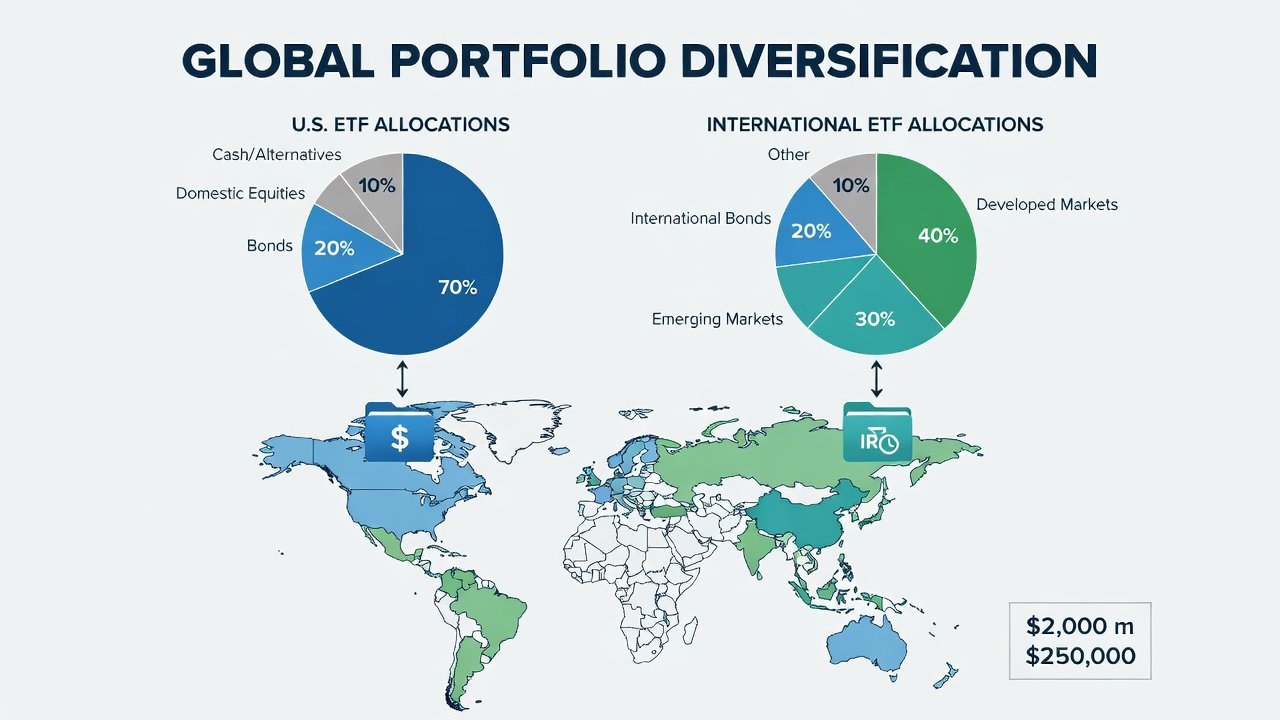
Moderate investors often target 20-30 percent international exposure within the equity portion of their portfolio. Aggressive investors may allocate 35-50 percent internationally to capture higher expected returns over long horizons. Bond allocations typically range from 10-30 percent international depending on overall risk tolerance. Sample moderate allocation for an age 45 investor includes 50 percent U.S. large-cap equity, 25 percent international equity, 15 percent U.S. bonds, and 10 percent international bonds. Sample aggressive allocation for an age 35 investor includes 40 percent U.S. large-cap equity, 40 percent international equity, 10 percent U.S. bonds, and 10 percent international bonds. These targets should be personalized based on expected retirement date, other pension income, and tolerance for short-term volatility.
Managing Currency Exposure Without Separate Hedging
Currency fluctuations add another layer of diversification. Unhedged international ETFs allow the portfolio to benefit when foreign currencies strengthen against the dollar. Most long-term retirement investors accept this volatility rather than paying for currency hedges that reduce returns over time. Automatic currency exposure occurs naturally when holding unhedged ETFs. Rebalancing periodically trims positions that have grown due to currency gains, locking in profits without extra transactions. Currency movements can offset or amplify local market returns, so investors should view them as part of the overall diversification benefit rather than a risk to eliminate.
Practical Steps: Contribution Routing and Rebalancing Schedules
Route new contributions toward underweight asset classes each month or quarter. This dollar-cost averaging method gradually builds international exposure without market timing. Annual rebalancing restores target percentages and sells high while buying low inside the tax-advantaged account. Recommended schedule includes reviewing allocations every six months. Rebalance when any asset class drifts more than 5 percentage points from target. Use incoming contributions first before selling existing holdings. In practice, an investor contributing $2,000 monthly might direct 30 percent of each contribution to international holdings until targets are met, then shift to maintenance mode. This approach minimizes transaction costs and behavioral mistakes.
Tax-Free Growth Comparison: International vs Domestic-Only Portfolios
Historical data shows diversified global portfolios often deliver similar or slightly higher compounded returns with lower maximum drawdowns. The tax-free nature of Roth IRAs magnifies small return differences over 20-30 years. Investors avoid foreign tax withholding complications inside retirement accounts, unlike taxable brokerage accounts. Over long periods, the compounding effect inside tax-advantaged space can add thousands of dollars in additional wealth even when gross returns are comparable. Vanguard research consistently supports global diversification for retirement savers seeking improved outcomes.
Real-World Allocation Examples
Consider a moderate-risk investor with a $250,000 Roth IRA. They maintain 25 percent international equity using a total international stock ETF and 10 percent international bonds. Over five years, they rebalance twice annually and direct 30 percent of new contributions to international holdings. An aggressive investor with a 401k might use target-date fund overlays or custom brokerage windows to achieve 40 percent international equity exposure, reviewing quarterly. These examples illustrate how small, consistent actions compound into meaningful portfolio differences by retirement age.
Common Mistakes to Avoid When Adding International ETFs
Many investors over-allocate to familiar domestic holdings due to home bias. Others chase recent international performance without considering long-term targets. Failing to rebalance regularly allows allocations to drift, increasing unintended risk. Choosing high-cost or narrowly focused international funds erodes returns through fees. Ignoring currency effects can lead to surprise volatility during periods of dollar strength. Avoiding these pitfalls requires a written investment policy statement that outlines targets and review procedures.
Monitoring Performance and Adjusting for Life Changes
Review international ETF performance against benchmarks every six months alongside overall portfolio results. Life events such as job changes, inheritance, or nearing retirement may warrant modest allocation adjustments. For instance, an investor approaching retirement might gradually reduce international equity exposure by 5-10 percent over five years while maintaining some international bond holdings for diversification. Document all changes to maintain discipline.
Quick-Reference Checklist for 2026 Implementation
- Confirm Roth IRA and 401k contribution limits for the tax year.
- Identify low-cost international equity and bond ETFs available in your accounts.
- Set risk-based target percentages for international exposure.
- Establish a six-month review and rebalancing calendar.
- Route new contributions to maintain targets.
- Document allocation decisions and expected currency effects.
- Review plan for life-event adjustments at least annually.
Frequently Asked Questions About International ETF Allocation
How much international exposure is recommended?
Most financial planners suggest 20-40 percent of equities in international markets, adjusted for personal risk tolerance and time horizon.
Do I need separate currency hedging products?
No. Long-term retirement investors typically accept unhedged exposure for natural diversification benefits.
Can I hold international ETFs in a 401k?
Yes, most plans offer international options through core menus or self-directed brokerage windows.
Charles Schwab and similar providers offer extensive international ETF selections in retirement accounts.
Conclusion
Adding international ETFs to Roth IRA and 401k accounts strengthens 2026 retirement planning through broader diversification, potential return enhancement, and tax-efficient growth. By following clear allocation targets, disciplined rebalancing, and low-cost ETF selection, investors position their portfolios for more resilient long-term outcomes. Consistent implementation of these strategies can meaningfully improve retirement security over time.

No comments yet. Be the first!