 Bullish Portfolio

Introduction to Phased Retirement in 2026
Phased retirement allows individuals to gradually reduce work hours while strategically managing retirement accounts. In 2026, combining part-time income with Roth IRA contributions and 401k investing creates a flexible bridge to full retirement. This approach helps maintain income, control taxes, and preserve portfolio longevity. Many workers are extending careers through part-time roles to ease the transition from full-time employment to complete retirement. Earned income supports living expenses and opens doors for additional retirement contributions, while thoughtful account management minimizes tax burdens and maximizes growth potential over the remaining years.
Retirees who adopt this model often find it reduces stress associated with an abrupt stop to work. By keeping some earned income flowing, they can delay drawing down investment portfolios and potentially improve overall financial security. The key lies in coordinating multiple income streams and tax-advantaged accounts in a deliberate manner.
Income Thresholds and Contribution Eligibility
Part-time earnings directly influence eligibility for Roth IRA contributions. Higher earners may face phase-outs, requiring careful planning around modified adjusted gross income limits. Traditional 401k contributions remain available regardless of income level, providing a reliable vehicle for tax-deferred growth even as work hours decline. Understanding these thresholds helps retirees decide between direct Roth contributions or backdoor strategies when income exceeds limits. Part-time wages can also fund spousal IRA contributions for non-working partners, extending tax-advantaged savings opportunities to the entire household.
Eligibility rules change annually, so reviewing IRS guidelines each tax year ensures compliance and maximizes contribution room. Workers earning below certain income levels can contribute the full annual maximum to a Roth IRA, while those above the threshold may need to explore alternative paths such as conversions from traditional accounts.
Managing Tax Brackets in Transition Years
Transition years often feature lower taxable income due to reduced hours. This window presents opportunities to execute Roth conversions at favorable rates. By filling lower tax brackets strategically, retirees can move funds from traditional accounts to Roth accounts without pushing into higher brackets. Coordinating reduced 401k deferrals with increased conversions maintains steady tax liability while building tax-free growth. Monitoring bracket boundaries each year ensures conversions align with overall retirement income projections and long-term tax efficiency goals.
For example, someone earning part-time wages might project their total income and then convert just enough from a traditional 401k to stay within the 12 or 22 percent federal bracket. This proactive step can lower future required minimum distributions and provide more flexibility in later retirement years.
Rebalancing Portfolio Allocations
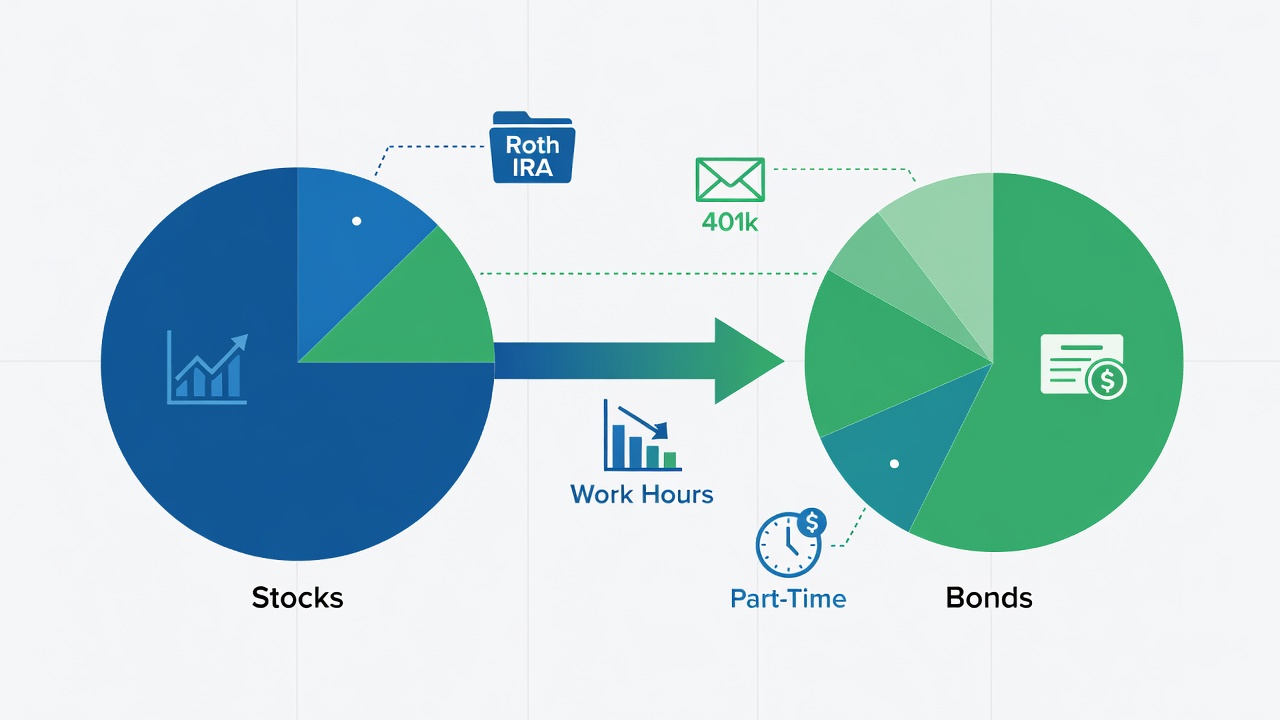
As work hours decrease, overall risk tolerance may shift. Portfolios should be rebalanced to reflect a lower reliance on earned income and greater dependence on investment returns. This typically involves gradually reducing equity exposure while increasing fixed-income holdings. Part-time income provides a buffer that allows slightly more aggressive allocations than full retirement would permit. Regular reviews help maintain target allocations amid market fluctuations and changing personal circumstances.
Investors should also consider factors such as inflation protection, dividend income generation, and liquidity needs when adjusting allocations. Working with a fiduciary advisor can provide personalized guidance tailored to individual risk profiles and time horizons.
Step-by-Step Example: Coordinating Deferrals and Conversions
Consider a worker reducing hours from full-time to 25 hours weekly. Step one involves lowering 401k deferrals to the minimum needed for any employer match. Step two calculates projected taxable income after part-time wages. Step three determines available room in the current tax bracket for Roth conversions from traditional 401k or IRA balances. Repeat this process annually, adjusting for changes in part-time pay or market performance. Documentation of conversion amounts and resulting tax impact supports future planning and IRS compliance.
Another scenario involves someone with a large traditional IRA balance who uses part-time consulting income to cover living expenses. They might pause new 401k contributions entirely and instead focus on converting smaller portions each year to manage tax brackets effectively while still growing their overall retirement nest egg.
Mitigating Sequence-of-Returns Risk
Sequence-of-returns risk poses a significant threat when withdrawals begin during market downturns. Part-time income reduces the immediate need for portfolio draws, providing a natural hedge. Retirees can delay withdrawals until markets recover or use earned income to cover expenses. Additional protections include maintaining a cash buffer equivalent to two to three years of expenses and employing a bucket strategy that separates short-term needs from long-term growth assets. This combination of earned income and conservative withdrawal rules improves portfolio sustainability over multiple decades.
Other tactics include diversifying across asset classes that perform differently in various market environments and periodically stress-testing withdrawal rates against historical downturn scenarios. These measures collectively reduce the probability of permanently damaging portfolio principal early in retirement.
Healthcare Bridging Strategies
Healthcare coverage often represents a major expense before Medicare eligibility. Part-time employment may provide access to employer-sponsored plans or subsidies. Health Savings Accounts funded during working years can bridge gaps with tax-advantaged withdrawals for medical costs. Exploring marketplace options and understanding premium tax credits can further reduce out-of-pocket expenses during the transition period.
Social Security Timing Considerations
Deciding when to claim Social Security benefits is a critical component of phased retirement planning. Delaying benefits increases monthly payments, and part-time income can supplement needs while benefits grow. Earnings above certain thresholds may temporarily reduce benefits before full retirement age, but amounts are later recalculated to provide higher lifetime benefits. Coordinating part-time work with claiming decisions requires careful modeling of break-even points and longevity expectations.
Mistakes to Avoid During Phased Retirement
- Failing to update contribution elections after reducing work hours, which can lead to over-contributing or missing employer matches.
- Ignoring the impact of Roth conversions on Medicare premiums in future years.
- Neglecting to rebalance portfolios regularly as income sources shift from wages to investments.
- Underestimating healthcare costs and not exploring all bridging options before Medicare begins.
- Claiming Social Security too early without modeling the long-term effects on spousal and survivor benefits.
FAQ on Social Security Timing and Healthcare
- When should I claim Social Security during phased retirement? Delaying benefits until full retirement age or later increases monthly payments. Part-time income can supplement needs while benefits grow. Social Security Administration
- How does part-time work affect Social Security benefits? Earnings above certain thresholds may temporarily reduce benefits before full retirement age, but amounts are later recalculated.
- What healthcare options exist before Medicare? COBRA extensions, marketplace plans, or continued part-time employment coverage help bridge the gap. Medicare.gov
- Can I contribute to a Roth IRA while receiving Social Security? Yes, earned income from part-time work qualifies you for contributions regardless of Social Security payments.
Conclusion
Phased retirement in 2026 offers a powerful way to blend part-time earnings with Roth IRA and 401k strategies. By managing tax brackets, rebalancing portfolios, and protecting against sequence risk, retirees can create a smoother, more secure transition. Proactive planning around Social Security and healthcare further strengthens the overall approach. Individuals who take the time to model multiple scenarios and adjust plans annually position themselves for greater financial flexibility and peace of mind in retirement.


No comments yet. Be the first!