 Bullish Portfolio

Introduction to Catch-Up Contributions in 2026
Reaching age 50 marks a pivotal moment for retirement savers who want to accelerate their progress toward financial security. Catch-up contributions provide a targeted opportunity for individuals to add extra funds to Roth IRA and 401k accounts beyond standard annual limits. This approach proves especially useful for mid-career professionals who may have experienced career interruptions, family obligations, or delayed savings starts earlier in life. In 2026, these provisions remain available under IRS guidelines, helping savers close retirement gaps more effectively than regular contributions alone allow.
The strategy aligns well with broader retirement planning goals because extra deposits benefit from compound growth over the remaining working years. Whether you participate in an employer-sponsored 401k or manage a personal Roth IRA, understanding the mechanics ensures you capture every available advantage without compliance issues.
Eligibility Rules for Catch-Up Contributions
Eligibility centers primarily on age. You must turn 50 or older by December 31 of the tax year to qualify for catch-up amounts in either account type. Roth IRA rules permit direct contributions from earned income, while 401k participation requires active employment with an employer offering the plan. Some plans impose additional service requirements or automatic enrollment features that affect when catch-ups begin.
Income limits also influence Roth IRA eligibility, though they do not restrict 401k catch-ups. High earners may need to explore backdoor Roth strategies or focus entirely on workplace plans. Always verify your status with plan administrators or tax professionals before initiating extra deposits.
Understanding 2026 IRS Limits and Contribution Framework
The IRS establishes separate annual contribution ceilings for standard and catch-up amounts each year. Catch-up provisions sit on top of base limits, allowing higher total savings without changing the underlying structure. These limits apply independently to 401k plans and IRAs, enabling savers to maximize both vehicles simultaneously when eligible.
Coordination between accounts matters because excess contributions trigger penalties and require corrective distributions. Tracking across multiple employers or IRA custodians prevents accidental overages. Official resources from the IRS clarify annual adjustments and reporting requirements.
Step-by-Step Process for Making Catch-Up Contributions
Follow these practical steps to implement catch-up contributions smoothly throughout 2026:
- Review your current account statements and confirm you meet the age threshold with your plan provider or IRA custodian.
- For 401k accounts, contact human resources or use the plan portal to increase payroll deferrals by the catch-up amount starting in January or as soon as eligible.
- Monitor pay stubs to verify the additional withholdings appear correctly and adjust if your employer plan caps contributions differently.
- For Roth IRA contributions, calculate available earned income and transfer funds directly from a bank account before the tax filing deadline, typically April of the following year.
- Document every transaction and retain confirmations for tax records, especially if you anticipate needing to file Form 8606 or similar IRS documents.
Many financial institutions offer automated reminders and contribution calculators that simplify ongoing management.
Tax Treatment Differences and Strategic Considerations
Roth IRA catch-up contributions use after-tax dollars, delivering tax-free qualified withdrawals in retirement. In contrast, traditional 401k catch-ups reduce your current taxable income but face ordinary income tax upon distribution. Choosing the right mix depends on your projected tax bracket during retirement versus today.
Consider a mid-career professional expecting higher future tax rates due to required minimum distributions or Social Security taxation. In that scenario, Roth catch-ups may provide superior long-term value despite the lack of immediate deduction. Conversely, those in peak earning years often benefit from traditional 401k deferrals that lower current liabilities. IRS official guidance offers detailed publications on reporting and conversion options.
Optimal Investment Choices for Additional Catch-Up Funds
Deploying catch-up dollars effectively requires aligning investments with your remaining time horizon and risk tolerance. Many savers allocate these extra amounts to diversified index funds or target-date portfolios that automatically adjust equity exposure as retirement nears. Others prefer tilting toward dividend-growth stocks or bond ladders for income stability.
Rebalancing annually prevents any single asset class from dominating the portfolio. If your 401k offers limited low-cost options, consider rolling older balances into an IRA that provides broader investment selection while preserving catch-up eligibility in the current plan.
Real-World Examples Demonstrating Accelerated Growth
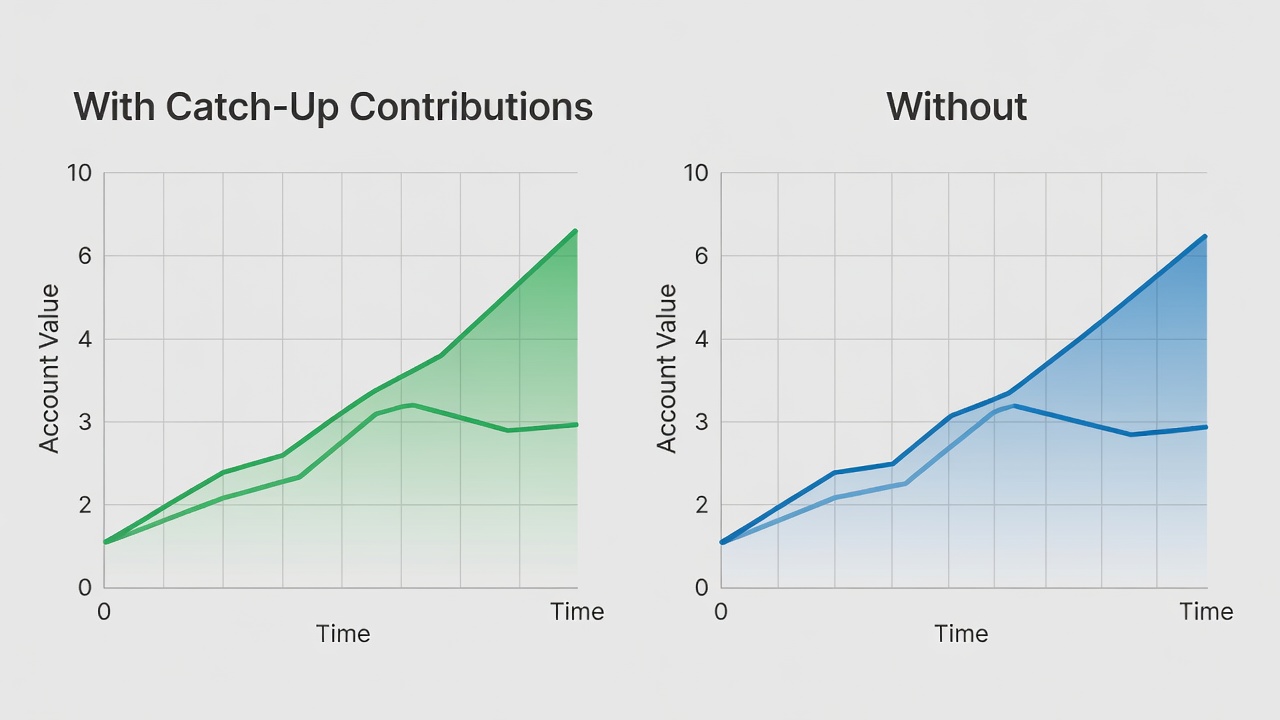
Imagine two 52-year-old professionals with identical starting balances and contribution habits except for catch-up usage. The first maintains only standard contributions, while the second adds the full catch-up amount each year. Over a 13-year period to age 65, the second individual experiences noticeably larger account values due to consistent extra deposits and compounding returns, assuming average market performance.
Another example involves a couple where one spouse maximizes both 401k and Roth IRA catch-ups while the other focuses solely on employer matching. The combined household strategy creates multiple income streams in retirement and reduces sequence-of-returns risk through diversified account types.
Side-by-Side Scenario Comparison
Comparing outcomes side by side reveals clear advantages:
- Scenario Without Catch-Ups: Slower balance growth may necessitate working longer, reducing spending in early retirement, or accepting higher withdrawal rates that increase longevity risk.
- Scenario With Catch-Ups: Enhanced compounding supports earlier retirement, larger legacy goals, or greater spending flexibility while maintaining principal.
These illustrations underscore why consistent extra contributions produce meaningful differences even when markets fluctuate.
Common Mistakes to Avoid When Using Catch-Up Provisions
Savers frequently neglect to update contribution elections after turning 50 or fail to coordinate between spousal accounts. Others overlook that some employer plans do not automatically apply matching formulas to catch-up amounts. Timing errors, such as waiting until year-end, can also limit payroll opportunities. Reviewing plan documents annually and consulting Department of Labor resources on fiduciary responsibilities helps prevent these issues.
Timing, Coordination, and Employer Plan Nuances
Begin catch-up contributions at the start of the year you turn 50 to capture the maximum number of pay periods. If you change jobs mid-year, ensure the new plan accepts catch-ups and that prior contributions are properly tracked. Self-employed individuals using solo 401k plans enjoy additional flexibility but must follow the same eligibility rules.
Frequently Asked Questions
When should I begin planning catch-up contributions?
Start reviewing options at least six months before your 50th birthday to allow time for plan adjustments and financial projections.
Can catch-up contributions be made to both a 401k and Roth IRA in the same year?
Yes, the accounts operate under independent limit structures, permitting simultaneous maximization when you meet eligibility criteria for each.
How do required minimum distributions interact with prior catch-up contributions?
Catch-up amounts become part of your overall balance and are subject to standard RMD rules beginning at the applicable age, regardless of when the extra funds were added.
What happens if my employer plan does not offer catch-up options?
Redirect efforts to IRA catch-ups or negotiate with HR about adding the feature, as many plans now include it by default.
Conclusion
Catch-up contributions in 2026 offer mid-career professionals a practical method to strengthen retirement outcomes in both Roth IRA and 401k accounts. By mastering eligibility rules, following precise contribution steps, selecting suitable investments, and avoiding common pitfalls, you can harness the power of additional compounding. Begin the process early, maintain accurate records, and revisit your strategy annually to stay aligned with evolving financial goals and IRS updates.


No comments yet. Be the first!