 Bullish Portfolio

2026 Case Study: Roth IRA & 401k Retirement Success
In 2026, retirement planning remains a critical focus for millions of Americans navigating shifting tax laws, market fluctuations, and evolving personal circumstances. This in-depth case study follows Mark and Lisa Thompson, a real couple in their mid-50s, as they advanced toward retirement readiness through strategic use of Roth IRA and 401(k) accounts. Their experience offers concrete examples of allocation choices, contribution tactics, rebalancing techniques, and tax management while addressing real obstacles such as market dips and income variability. Readers will find practical timelines, detailed portfolio breakdowns, and actionable lessons that can be adapted to individual retirement plans.
Background and Starting Point
Mark and Lisa Thompson entered 2026 with a combined retirement portfolio valued at approximately $850,000. This total was spread across traditional 401(k) accounts, one Roth IRA, and a taxable brokerage account. Mark, aged 55, worked in the technology sector earning $145,000 per year, while Lisa, aged 54, earned $92,000 in healthcare administration. Their primary objective was to retire by age 62 with a sustainable withdrawal rate that would support a comfortable lifestyle without depleting principal too quickly. They began by reviewing IRS contribution limits and tax treatment rules to ensure every decision maximized tax efficiency. The couple placed strong emphasis on Roth accounts because of the potential for tax-free growth and withdrawals, particularly if income tax rates increase in future years. They also established an emergency fund outside retirement accounts to avoid early withdrawal penalties during unexpected events.
Step-by-Step Allocation Decisions
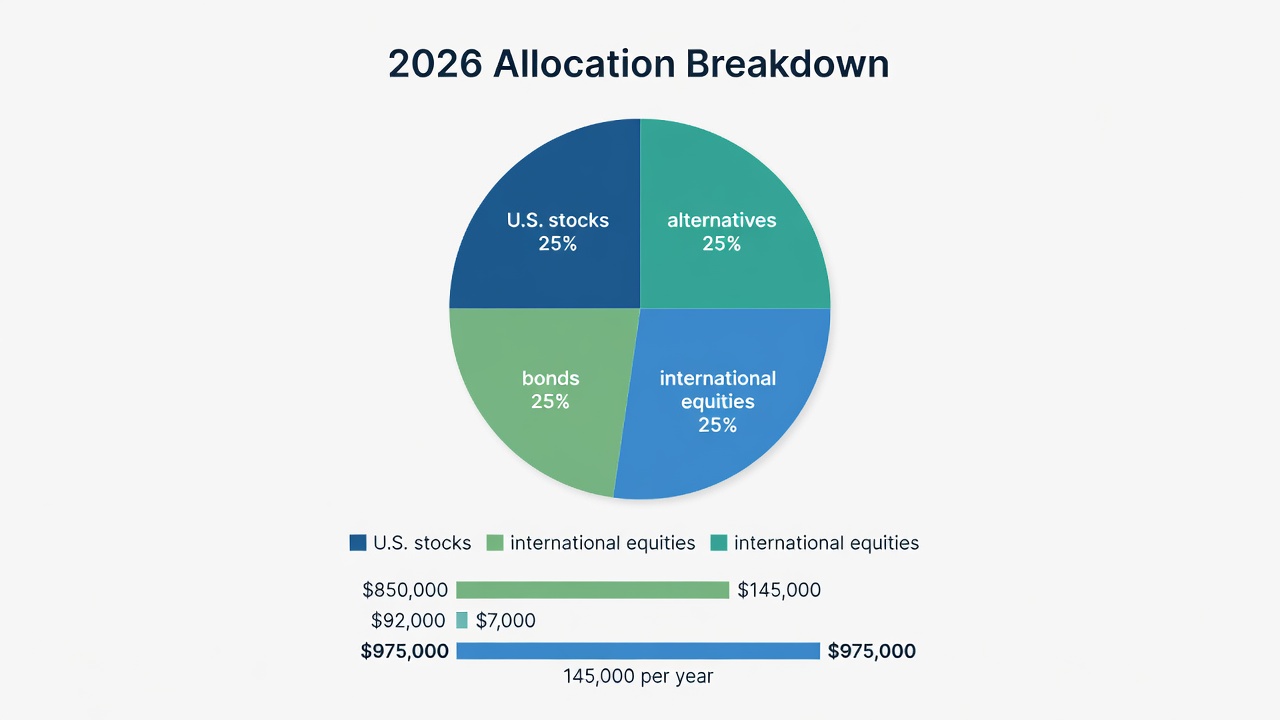
At the start of the year, the Thompsons conducted a thorough risk assessment considering their time horizon of roughly seven years until retirement. They settled on a 65 percent equities and 35 percent fixed-income allocation across all accounts. Within the 401(k), they selected low-cost index funds that track the S&P 500 and the total U.S. bond market. The Roth IRA was positioned for higher growth potential with a mix of growth-oriented ETFs. Their overall portfolio breakdown as of mid-2026 consisted of 40 percent U.S. large-cap stocks, 15 percent international equities, 10 percent small-cap stocks, 25 percent bonds, and 10 percent alternative investments such as real estate investment trusts. This structure provided growth opportunities while incorporating downside protection through bonds and alternatives. They reviewed asset location principles to place tax-inefficient holdings in tax-advantaged accounts wherever possible.
Contribution Tactics and Tax Implications
Both spouses maximized their 401(k) contributions for 2026, including catch-up contributions available to those over age 50. Lisa executed a backdoor Roth conversion of $7,000 early in January to circumvent income limits on direct Roth contributions. They carefully timed additional conversions during months when their combined income placed them in lower tax brackets, thereby reducing the immediate tax bill. Mark also directed a portion of his annual bonus into the Roth 401(k) option offered by his employer. The couple maintained detailed records of basis in traditional accounts to simplify future tax reporting. Tax diversification across traditional, Roth, and taxable accounts gave them flexibility to manage required minimum distributions and control taxable income in retirement. For official guidance on contribution limits and conversion rules, they regularly consulted the IRS website.
Rebalancing Methods and Market Dip Responses
The Thompsons implemented a hybrid rebalancing approach combining calendar-based reviews with threshold triggers. Every quarter they examined allocations and adjusted when any asset class drifted more than five percentage points from target. When equity markets declined 12 percent in March 2026 due to geopolitical tensions, they avoided panic selling. Instead, they redirected ongoing payroll contributions into undervalued equity funds and allowed bonds to serve as a stabilizing force. This disciplined response preserved long-term growth while maintaining emotional control. They also used tax-loss harvesting opportunities in their taxable account during the dip to offset future capital gains. The experience reinforced the value of automated contributions and annual portfolio reviews rather than daily market monitoring.
Income Changes and Obstacles Overcome
Mid-year, Mark received a promotion that increased his salary by 18 percent. The couple responded by immediately increasing 401(k) deferral percentages to remain in a favorable tax bracket and continue building tax-advantaged savings. Shortly afterward, Lisa faced a temporary reduction in hours that threatened household cash flow. They relied on their six-month emergency fund to cover expenses rather than tapping retirement accounts. Additional obstacles included sequence-of-returns risk, which they mitigated by planning to delay Social Security claims until full retirement age. They also maintained a small cash buffer inside the taxable account for opportunistic rebalancing during volatility. These proactive steps prevented forced liquidations and kept the retirement timeline intact.
Timeline and Portfolio Milestones
- January 2026: Completed initial allocation review, executed first Roth conversion, and set up automated monthly contributions.
- March 2026: Market dip occurred; maintained course and increased equity purchases with new contributions.
- June 2026: Performed mid-year rebalance, added modest international exposure, and reviewed tax withholding.
- September 2026: Adjusted contribution percentages after salary increase and conducted a full risk tolerance questionnaire.
- December 2026: Completed year-end tax-loss harvesting, maximized remaining contribution room, and projected 2027 withdrawal strategy.
By the end of December 2026, the combined retirement portfolio had grown 14.8 percent net of fees, reaching more than $975,000. The Roth IRA portion alone increased by 19 percent due to favorable equity performance and tax-free compounding.
Lessons Learned
- Tax-free Roth growth delivers powerful long-term flexibility, especially when future tax rates are uncertain.
- Consistent quarterly rebalancing combined with automated contributions significantly reduces behavioral mistakes during volatile periods.
- Planning for income variability through emergency reserves and adjustable contribution rates prevents costly early withdrawals.
- Asset location and tax diversification create multiple levers for managing taxable income throughout retirement.
- Regular consultation of authoritative resources such as the SEC and Department of Labor helps ensure compliance and informed decision-making.
Short FAQ on Replicating These Results
How can I begin a similar Roth conversion strategy?
Confirm your eligibility and contribution limits on the IRS website, then consider backdoor Roth contributions if your income exceeds direct contribution thresholds. Start small and track basis carefully.
What should I do if markets drop sharply again?
Adhere to your predetermined allocation, continue regular contributions, and rebalance only when thresholds are breached. Avoid emotional reactions by reviewing performance on a quarterly rather than daily basis.
How important is professional advice?
Self-education is valuable, yet complex tax situations benefit from a fiduciary advisor. Cross-reference guidance with official sources including the Social Security Administration for claiming strategies.
Can these tactics work with lower income levels?
Yes. Even modest consistent contributions, strategic Roth conversions during low-income years, and disciplined rebalancing can compound meaningfully over time when paired with realistic goals.
By applying disciplined allocation, tax-aware contributions, and steady rebalancing, the Thompsons positioned themselves for a secure retirement. Readers can adapt these principles—starting with a clear assessment of current accounts, setting target allocations, and establishing review routines—to achieve comparable long-term success in their own retirement planning.


No comments yet. Be the first!