 Bullish Portfolio
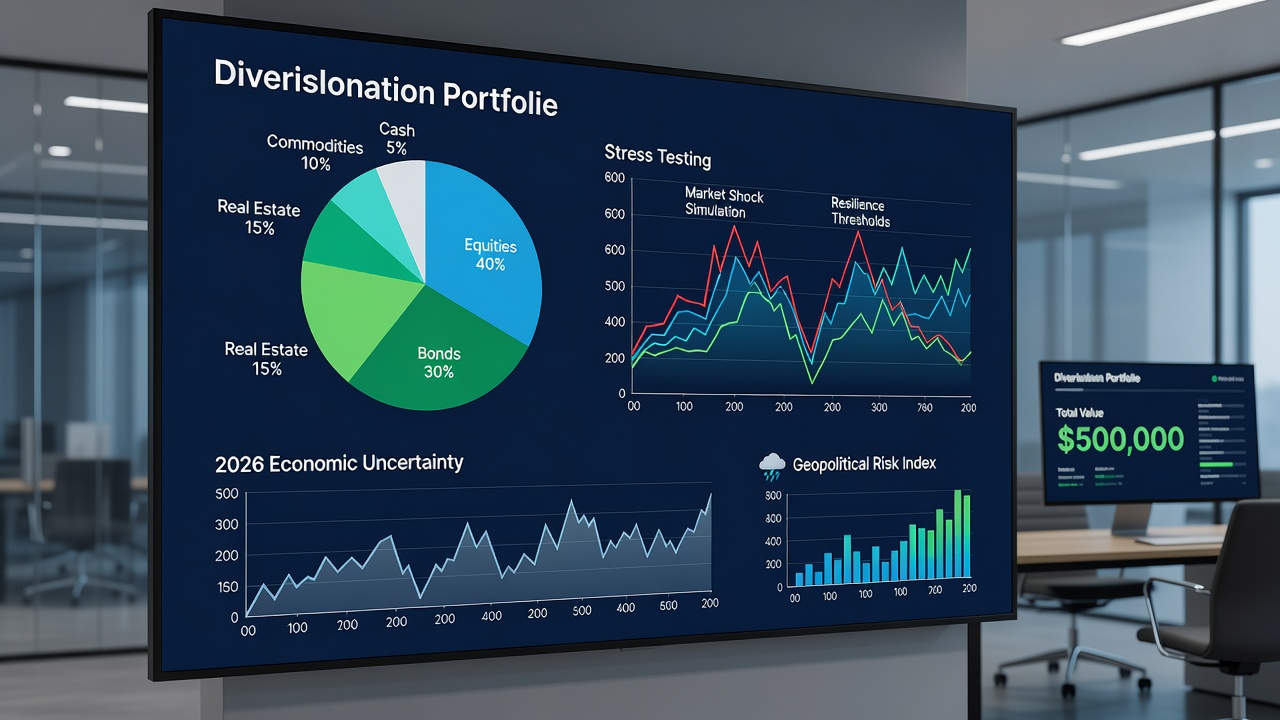
Introduction to Stress Testing in Portfolio Management
In an era of economic uncertainty heading into 2026, investors must move beyond traditional diversification. Stress testing asset allocation serves as a proactive tool to evaluate how portfolios might perform under adverse conditions. This guide provides a comprehensive, step-by-step approach to simulate scenarios such as interest rate spikes and geopolitical tensions, helping both beginners and advanced investors strengthen their strategies. Stress testing goes far beyond simple historical backtesting by forcing portfolios through hypothetical but plausible shocks, revealing hidden correlations and concentration risks that could erode returns during real crises. It also incorporates forward-looking variables that standard models often overlook, such as sudden policy reversals or supply chain breakdowns triggered by climate events.
Why Stress Testing Matters for 2026 Diversification
Global markets face ongoing volatility from inflation pressures, policy shifts, and international conflicts. Stress testing reveals vulnerabilities in asset mixes that standard backtesting might miss. By identifying weak points early, investors can rebalance toward more resilient allocations that maintain diversification across equities, fixed income, alternatives, and cash equivalents. In 2026, factors like central bank policy divergence, supply chain disruptions, and climate-related financial risks add layers of complexity that demand forward-looking analysis rather than reliance on past performance alone. Without this proactive approach, even seemingly diversified portfolios can experience amplified losses when multiple risk factors converge simultaneously.
Step-by-Step Process to Stress Test Your Portfolio
Step 1: Define Your Current Asset Allocation
Begin by documenting your portfolio's breakdown. For example, a sample moderate-risk allocation might include 50% equities, 30% bonds, 15% real estate, and 5% commodities. Use portfolio tracking tools to capture precise weights and correlations. Break down each category further by sub-asset classes such as large-cap versus emerging-market equities or investment-grade versus high-yield bonds to uncover concentration risks. Document any leverage, derivatives exposure, or illiquid holdings that could magnify losses during stress periods.
Step 2: Select Relevant Stress Factors
Choose scenarios aligned with 2026 risks. Key factors include interest rate spikes of 200 basis points, geopolitical events disrupting energy supplies, equity market corrections of 30% or more, and inflation surges above 5%. These factors should reflect plausible shocks drawn from historical data and forward-looking analyses. Additional considerations might include currency devaluations, credit spread widening, or liquidity crunches in private markets. Prioritize three to five primary scenarios rather than attempting to model every possible outcome.
Step 3: Simulate Scenario Impacts on Asset Classes
Apply quantitative models to estimate effects. Equities may decline sharply in rate-hike scenarios, while certain commodities could rise during geopolitical tensions. 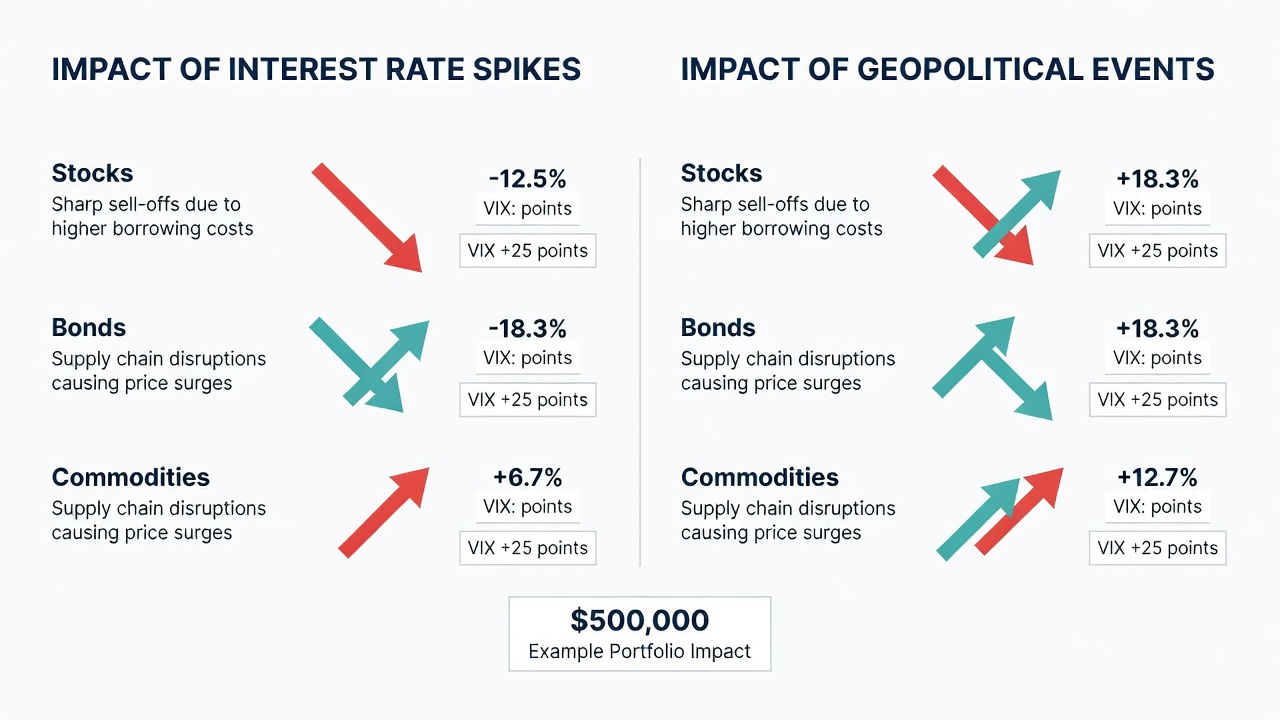
Analyze correlations: In a combined rate spike and equity correction, bonds might provide limited protection if yields rise across the curve. Extend the simulation by modeling recovery paths and drawdown durations to understand not just peak losses but also time to recovery. Incorporate second-order effects such as margin calls or forced selling that can accelerate portfolio declines.
Step 4: Interpret Results and Rebalance
Review drawdowns and recovery timelines. If your portfolio loses more than 25% in a simulated shock, consider increasing allocations to defensive assets like short-duration bonds or gold. Rebalancing should aim to reduce tail risks while preserving upside potential. Create a decision framework that sets thresholds for action, such as reducing equity exposure by 10 percentage points if losses exceed predefined limits. Document the rationale for each change to maintain discipline during actual market stress.
Real-World Portfolio Examples and Before-After Comparisons
Consider a hypothetical $500,000 portfolio with heavy equity exposure. Pre-stress testing, it might suffer a 35% drawdown in a rate-spike scenario. After adjustments—shifting 10% from equities to alternatives—the simulated loss drops to 22%. Another example involves a retiree portfolio tilted toward fixed income: stress testing against an inflation surge reveals that adding Treasury inflation-protected securities reduces purchasing-power erosion by 15% compared to the original mix. These before-and-after comparisons highlight how targeted rebalancing improves resilience without sacrificing long-term returns. Track multiple metrics including maximum drawdown, Sharpe ratio under stress, and recovery time to gain a fuller picture. A third case study of a growth-oriented investor shows that incorporating a 5% allocation to managed futures reduced overall portfolio volatility by 8% across three simultaneous stress events.
Analyzing Impacts on Various Asset Classes
Equities often experience the largest swings during equity-correction or geopolitical shocks, while bonds can suffer in rising-rate environments unless duration is shortened. Real estate may provide inflation hedging but faces liquidity challenges during credit crunches. Commodities like gold and oil tend to act as diversifiers yet carry their own volatility. Investors should map each asset class against every stress factor to build a matrix of expected outcomes. International equities may behave differently from domestic holdings due to currency fluctuations, and private equity valuations can lag public markets, creating temporary distortions in reported performance.
Tools and Software for Effective Stress Testing
Many investors start with spreadsheet-based models using historical return series and correlation matrices. More advanced users turn to dedicated platforms that offer Monte Carlo simulations and scenario libraries updated with current macroeconomic data. When selecting tools, prioritize those that allow custom scenario creation and provide clear visualization of results. Always validate outputs against simpler methods to avoid over-reliance on black-box algorithms.
Mistakes to Avoid When Stress Testing
- Using only historical data without forward-looking adjustments
- Ignoring correlations that break down during crises
- Overlooking liquidity constraints in alternative assets
- Failing to update scenarios as macroeconomic conditions evolve
- Neglecting behavioral responses such as panic selling
Common Pitfalls and FAQ
What data sources should I use for stress factors?
Rely on authoritative institutions such as the Federal Reserve for rate data and the International Monetary Fund for global risk assessments.
How often should stress testing be performed?
Conduct tests quarterly or after major market events to keep allocations aligned with evolving conditions.
Is stress testing suitable for beginners?
Yes, start with simple spreadsheet models before advancing to Monte Carlo simulations. Avoid overcomplicating initial tests.
Should I include private assets in stress tests?
Yes, but apply conservative liquidity discounts and longer holding-period assumptions to reflect their unique risk profile.
How do I account for taxes and fees in simulations?
Include estimated transaction costs and tax drag on rebalancing trades, especially when modeling frequent adjustments during recovery phases.
Conclusion
Stress testing asset allocation equips investors with actionable insights for resilient 2026 diversification. By following the outlined process, selecting appropriate factors, and interpreting impacts carefully, portfolios can better withstand shocks while supporting growth objectives. Regular application of these techniques fosters disciplined decision-making in uncertain markets. For deeper methodology, consult resources from the Bank for International Settlements and the World Bank.
Explore proven investment strategies to enhance portfolio resilience.


No comments yet. Be the first!