 Bullish Portfolio
Why Commodities Strengthen Portfolios in Uncertain 2026 Markets
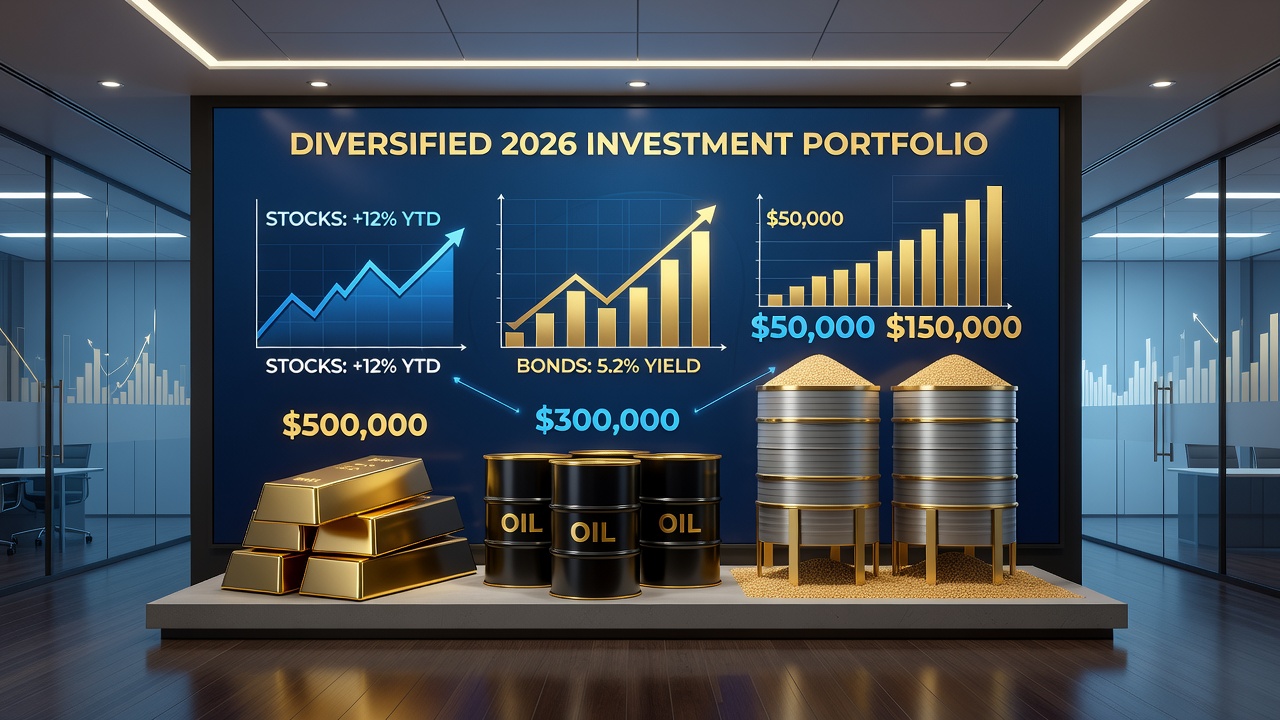
As global markets face ongoing volatility from geopolitical tensions, shifting monetary policies, and supply chain disruptions, investors are reevaluating traditional asset mixes. Commodities offer a compelling way to diversify because they often exhibit low correlations with stocks and bonds. Assets such as gold, crude oil, and agricultural grains tend to move independently of equity markets, providing a buffer during downturns. In 2026, persistent uncertainties around central bank actions and trade policies make this asset class particularly relevant for those seeking stability alongside growth.
Historical patterns show commodities performing differently during economic cycles. For instance, energy commodities can surge when supply tightens due to geopolitical events, while precious metals like gold act as safe havens amid equity selloffs. Agricultural products such as wheat and corn respond to weather patterns and global demand shifts rather than corporate earnings reports. This unique behavior positions commodities as essential tools for building resilient portfolios that can weather multiple economic scenarios simultaneously.
Understanding Correlations and Diversification Benefits
Commodities frequently demonstrate negative or near-zero correlations with equities and fixed income. Gold, for example, often rises when stock markets fall due to risk aversion and flight-to-safety flows. Oil prices respond more to supply-demand dynamics, inventory reports, and OPEC decisions than to quarterly earnings from public companies. Grains are influenced by seasonal harvests, climate conditions, and export policies, creating return streams that diverge from traditional financial assets.
This independence helps reduce overall portfolio volatility significantly. A strategic mix that includes 5-15% commodities can lower maximum drawdowns during equity bear markets while maintaining competitive long-term returns. Institutional examples from the past decade illustrate how portfolios with commodity exposure navigated the 2022 inflation surge with smaller losses compared to pure stock-bond allocations. The diversification effect compounds over time, smoothing returns and improving risk-adjusted performance metrics like the Sharpe ratio.
Determining Appropriate Allocation Sizes
Allocation decisions should account for individual risk tolerance, investment time horizon, liquidity needs, and the composition of existing holdings. Conservative investors might begin with a modest 5% allocation to broad commodity exposure, gradually increasing as they gain comfort with the asset class. More aggressive portfolios could target 10-15% to capitalize on inflation-hedging characteristics without overexposing to commodity-specific volatility drivers such as weather events or cartel decisions.
Rebalancing plays a critical role in maintaining target weights. Investors should review allocations quarterly and adjust based on market movements to avoid drift. For example, a retiree with a moderate risk profile might allocate 8% to commodities by reducing bond holdings slightly, thereby preserving equity exposure for growth while adding real-asset ballast against rising prices. Over-allocation beyond 15% introduces unnecessary concentration risk and potential liquidity challenges during periods of market stress.
ETF Access Versus Futures Contracts
Exchange-traded funds represent the most accessible entry point for retail and institutional investors alike. Broad commodity ETFs hold baskets of futures contracts across energy, metals, and agriculture, delivering diversified exposure with high liquidity and minimal account requirements. These vehicles eliminate the need for margin accounts and simplify tax reporting in many cases, making them ideal for buy-and-hold strategies focused on long-term diversification.
Futures contracts, by contrast, offer precise control over individual commodities and can be rolled or adjusted tactically. However, they demand active management, ongoing margin maintenance, and familiarity with rollover mechanics that can erode returns in contango environments. Professional managers often employ futures for short-term tactical allocations during supply shocks, while most individual investors benefit from starting with ETFs and only advancing to direct futures once they develop sufficient expertise and infrastructure.
Performance During Inflation Spikes
Commodities have historically delivered strong relative performance when inflation accelerates beyond expectations. Energy prices tend to climb alongside consumer costs, agricultural commodities respond to food price pressures, and gold preserves real purchasing power when currency values erode. In contrast, traditional bond holdings often suffer price declines as interest rates rise to combat inflation, creating a natural hedge dynamic within a diversified portfolio.
Examining past inflationary episodes reveals consistent patterns where diversified commodity baskets outperformed nominal fixed-income assets. In 2026, with many economies still managing elevated price levels, this characteristic supports the inclusion of commodities as a tactical complement rather than a standalone growth engine. The inflation-hedging benefit becomes especially valuable in environments where monetary tightening pressures both equities and bonds simultaneously.
Three-Step Process for Integration
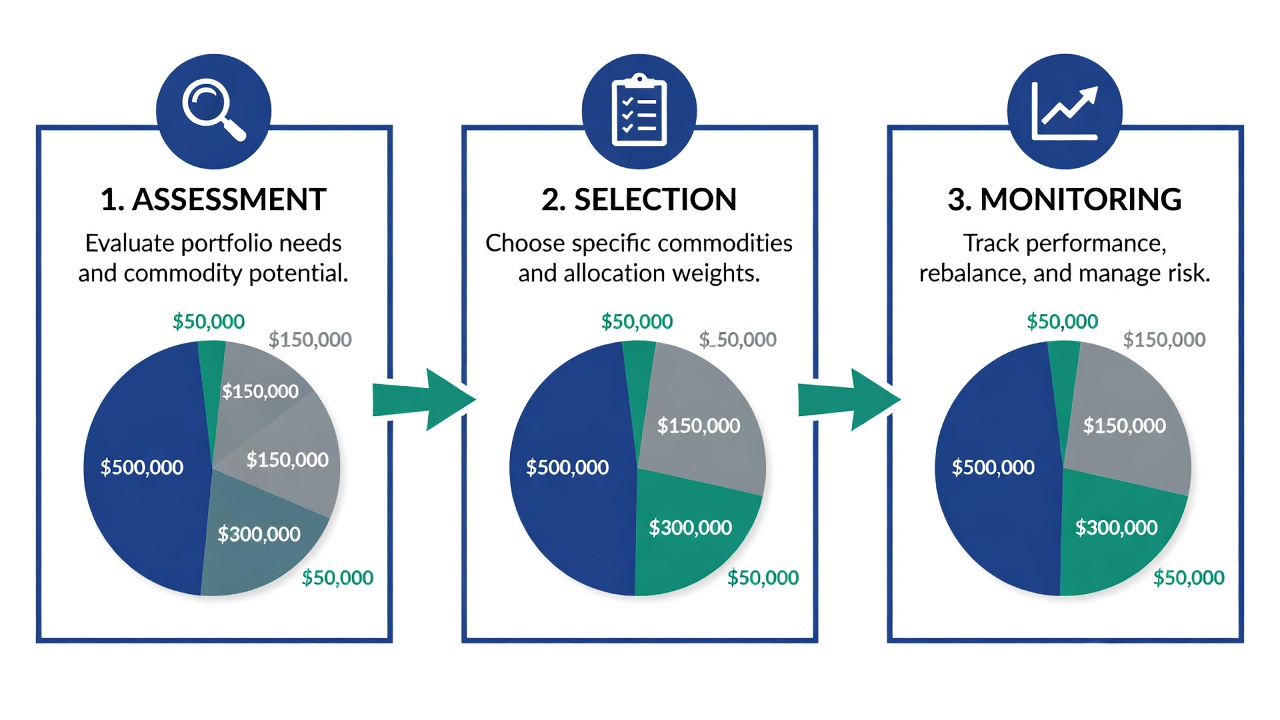
- Assess Current Portfolio: Begin by mapping existing asset correlations using portfolio analysis tools available through major brokerages. Identify gaps in inflation protection and calculate baseline volatility metrics before introducing commodities. Review historical performance data across multiple market regimes to set realistic expectations.
- Select Vehicles and Sizing: Decide between broad-based ETFs for simplicity or targeted futures for precision based on experience level and account type. Establish initial position sizes between 5% and 10% and implement a rebalancing schedule that occurs quarterly or after significant market moves to maintain discipline.
- Monitor and Adjust: Track commodity performance against relevant benchmarks while watching for structural issues such as futures roll costs or changes in correlation regimes. Incorporate economic indicators like monthly CPI releases and supply reports into the review process, adjusting exposure only when fundamental conditions warrant changes rather than reacting to short-term price noise.
Comparison Table: Commodities-Enhanced Portfolio vs Traditional 60/40
| Metric | Traditional 60/40 | With 10% Commodities |
|---|---|---|
| Expected Volatility | Moderate | Lower due to diversification |
| Inflation Protection | Limited | Stronger via real assets |
| Equity Correlation | High | Reduced overall |
| Rebalancing Frequency | Annual | Quarterly recommended |
| Drawdown Mitigation | Moderate | Improved during inflation events |
Real-World Portfolio Examples
Consider a balanced investor managing a $500,000 portfolio: $300,000 in equities, $150,000 in bonds, and $50,000 allocated to a diversified commodity ETF tracking energy, metals, and agriculture. During an equity correction accompanied by rising inflation, the commodity allocation can offset losses in the bond sleeve while equities recover. Another scenario involves a growth-oriented investor adding targeted energy futures exposure when global supply forecasts signal tightening, using the position to enhance returns without altering core equity holdings.
A third example features a retiree portfolio that trims 5% from intermediate bonds to fund a commodity ETF position. This adjustment improves inflation resilience without sacrificing too much income generation, demonstrating how modest reallocations can meaningfully enhance overall portfolio durability across market cycles.
Risks and Common Mistakes to Avoid
While commodities add diversification, they carry unique risks including high short-term volatility, potential for contango-related return erosion in futures-based products, and regulatory changes affecting specific sectors. Investors should avoid over-concentration in single commodities, neglecting tax implications of futures trading, and failing to rebalance regularly. Starting with small positions and using broad ETFs helps mitigate many of these pitfalls.
FAQ on Volatility and Tax Considerations
How volatile are commodity investments?
Commodities can experience sharp price swings driven by weather, geopolitics, or inventory reports. Broad ETFs dampen some of this compared to single-commodity futures, but investors should still expect periods of elevated fluctuation.
What are the tax implications?
ETFs structured as partnerships may issue K-1 forms requiring additional tax preparation. Futures gains are typically taxed at a blended 60/40 long-term/short-term capital gains rate. Always consult a qualified tax professional familiar with your specific situation and jurisdiction.
Can commodities replace bonds in a portfolio?
They serve best as a complement rather than a replacement, adding diversification without generating the steady income typically provided by bonds.
Are there liquidity concerns with commodity investments?
Major ETFs and futures markets maintain high liquidity, but smaller or niche commodity vehicles may face wider spreads during stress periods.
Conclusion
Incorporating commodities into 2026 portfolios delivers meaningful diversification benefits through low correlations and inflation hedging. By following a structured three-step approach, choosing appropriate vehicles such as ETFs, and monitoring for key risks, investors can construct more resilient allocations suited to uncertain markets. Regular review ensures the strategy evolves alongside changing economic conditions while supporting long-term financial goals. For further reading on regulatory frameworks and market data, consult resources from the Federal Reserve, the Commodity Futures Trading Commission, and Investopedia.
No comments yet. Be the first!