 Bullish Portfolio
Introduction to Sector Rotation for Modern Portfolios
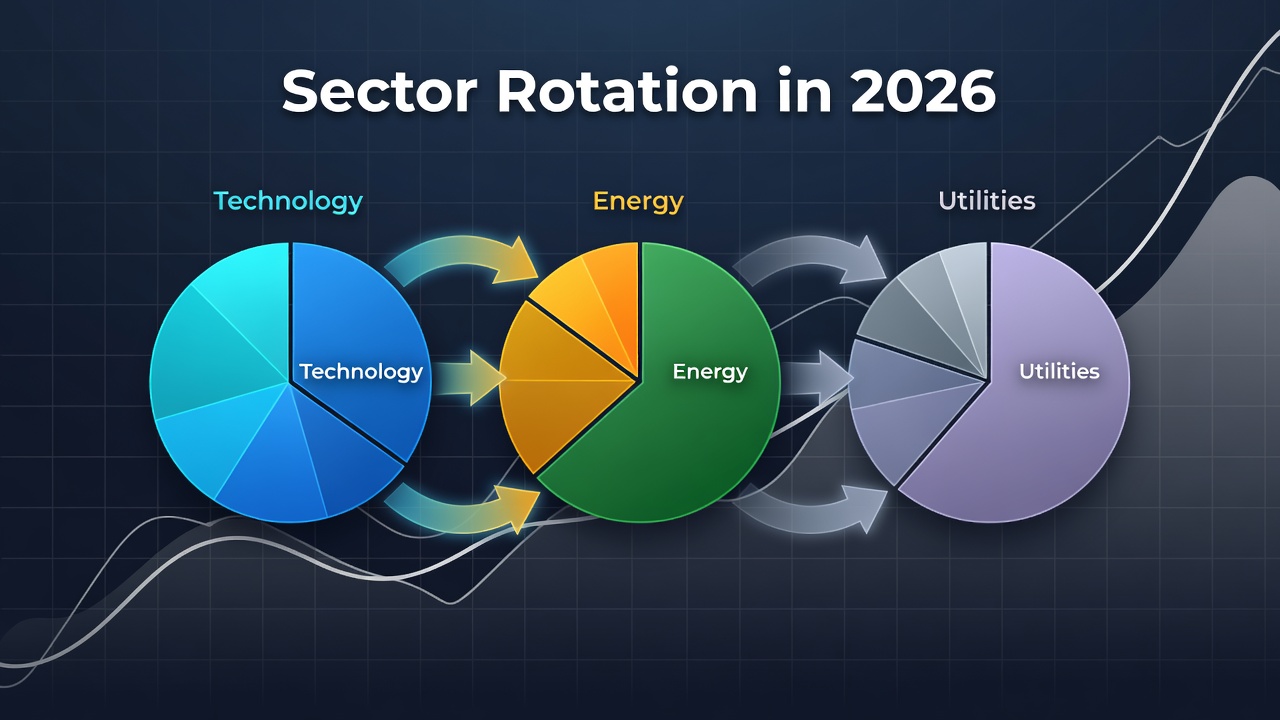
Sector rotation represents an advanced portfolio management technique that dynamically shifts investments across economic sectors based on anticipated business cycle phases. Unlike static buy-and-hold approaches, this method aims to capture relative outperformance during different stages of expansion, peak, contraction, and recovery. For investors targeting 2026 diversification, understanding sector rotation can help mitigate volatility while pursuing optimized returns through timely reallocations. The strategy differentiates itself by responding to macroeconomic signals rather than maintaining fixed weights. This article explores its core principles, 2026-specific timing indicators, implementation frameworks, real-world applications, and essential safeguards in greater depth.
Many investors begin with broad market index funds but eventually seek more responsive tactics. Sector rotation fills this gap by allowing adjustments that align with evolving economic conditions. It requires discipline, data analysis, and a clear understanding of how sectors interact with GDP growth, interest rates, and consumer behavior. Throughout 2026, factors such as potential policy changes and global supply chain shifts will create opportunities for those who monitor these dynamics closely.
Core Principles of Sector Rotation
Sector rotation rests on the observation that industries perform differently across economic cycles. Defensive sectors such as utilities and consumer staples often lead during slowdowns, while cyclical areas like technology and industrials tend to excel in expansions. The approach emphasizes relative strength analysis, where investors compare sector performance metrics to identify leaders and laggards. Fundamental drivers include corporate earnings growth, profit margins, and sensitivity to interest rate movements.
Key principles include monitoring leading economic indicators, assessing corporate earnings trends, and evaluating valuation multiples. Rotation decisions prioritize sectors showing improving fundamentals paired with favorable macroeconomic backdrops. This dynamic method contrasts with static allocation by actively seeking to reduce exposure to underperforming areas before broad market declines materialize. Investors also consider sector correlations to ensure true diversification rather than concentrated bets.
Understanding Business Cycle Stages
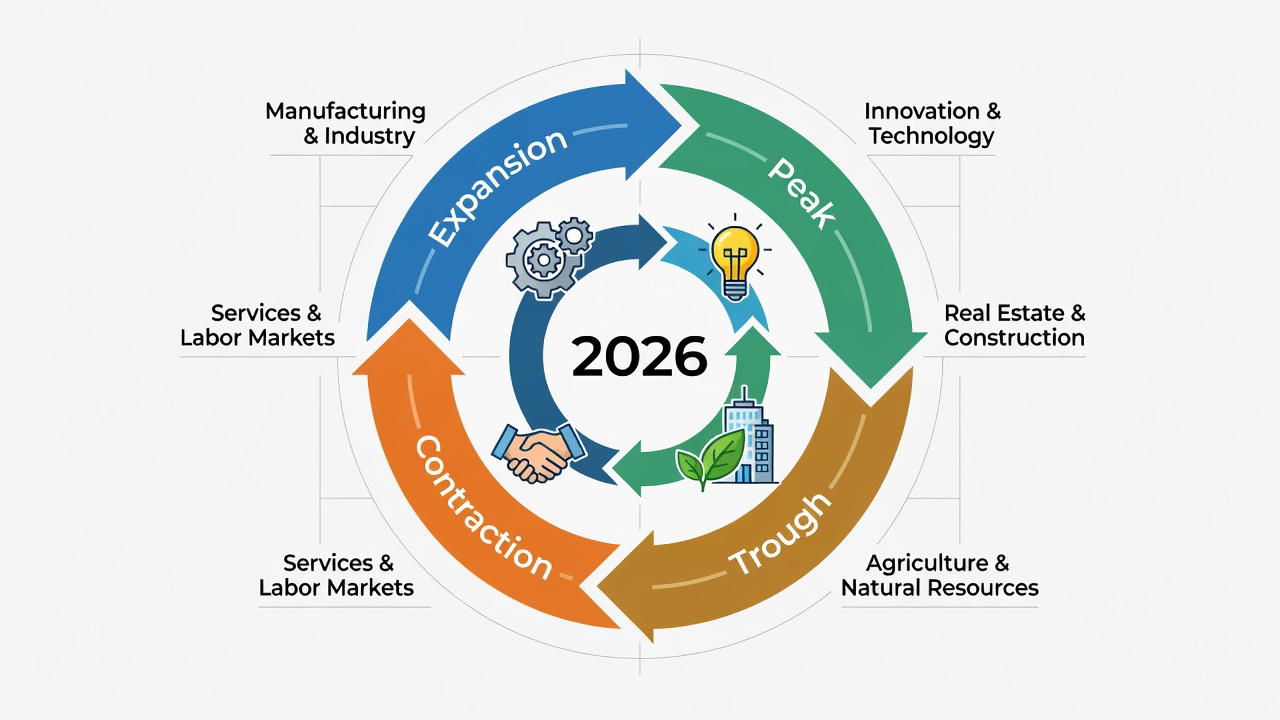
Early-cycle phases typically reward financials and consumer discretionary stocks as borrowing costs fall and spending rises. Mid-cycle environments favor industrials and technology as capital expenditures increase. Late-cycle rotations often move toward energy and materials amid rising commodity demand. Defensive positioning in healthcare and staples becomes critical during contraction periods. Recognizing these transitions early provides the foundation for successful implementation.
Timing Signals Based on 2026 Economic Cycles
Projecting into 2026, investors should track indicators such as Federal Reserve policy shifts, inflation trajectories, and employment data. Expansion phases may favor growth-oriented sectors including technology and consumer discretionary, while late-cycle signals could prompt moves toward energy and materials. Yield curve movements, manufacturing PMI readings, and commodity price trends serve as reliable early warnings of phase changes.
Useful signals encompass yield curve steepening, manufacturing PMI readings, and commodity price movements. For instance, rising interest rate expectations often benefit financials, whereas softening growth data may elevate healthcare and staples. Analysts recommend combining multiple indicators to avoid false positives and confirm cycle transitions before executing rotations. Additional data points include retail sales figures, housing starts, and corporate capital expenditure reports that collectively paint a clearer picture of economic momentum.
Federal Reserve resources provide timely data on monetary policy that directly influences sector leadership patterns. Cross-referencing with Bureau of Labor Statistics employment reports adds another layer of confirmation for rotation decisions.
Step-by-Step Implementation Guide
Implementing sector rotation requires a structured process. Begin by defining your risk tolerance and benchmark index, such as the S&P 500 sector breakdown. Next, establish a monitoring dashboard using economic calendars and sector ETF performance screens. Investors should also select appropriate vehicles such as sector ETFs or individual stocks within targeted industries to execute shifts efficiently.
- Identify current cycle phase through composite indicators like the Conference Board Leading Economic Index and review historical sector performance patterns.
- Rank sectors by relative strength using 3- to 6-month performance data and earnings revisions while incorporating forward-looking analyst estimates.
- Select 3-5 target sectors aligned with the projected phase and allocate accordingly via low-cost ETFs, maintaining position sizes that reflect conviction levels.
- Set rebalancing rules, such as quarterly reviews or threshold-based triggers when a sector's weight deviates by more than 5% from target allocations.
- Document decisions and performance to refine the process over time, including post-rotation analysis of what worked and what did not.
Practical tools include sector-specific ETFs and portfolio analytics platforms that automate relative strength calculations. Many platforms also offer backtesting capabilities so investors can simulate rotation rules against past market environments before committing capital.
Real-World Case Examples
During the 2020-2021 recovery, rotation from defensives into technology and industrials delivered strong relative gains for disciplined practitioners. Investors who moved early into semiconductors and software benefited from accelerated digital adoption trends. Similarly, late-2022 shifts toward energy sectors ahead of commodity rallies illustrated the value of early cycle detection when geopolitical tensions drove oil prices higher.
In hypothetical 2026 scenarios, an investor detecting early tightening signals might rotate from growth stocks toward value-oriented financials and materials, preserving capital during potential volatility spikes. Another example involves monitoring inflation data: when core CPI readings moderate, defensive sectors often give way to cyclicals. These cases highlight how combining quantitative signals with qualitative judgment produces more robust outcomes than relying on any single factor.
Risk Management Tips
Effective risk controls include position sizing limits (no sector exceeding 25% of equity allocation), stop-loss rules based on relative underperformance, and diversification across multiple rotation signals. Investors should also account for transaction costs and tax implications by favoring tax-advantaged accounts where possible. Regular stress testing against historical cycle data helps validate the strategy's resilience under various market regimes.
Additional safeguards involve maintaining a cash buffer for opportunistic entries and avoiding over-concentration in any single economic theme. Monitoring sector correlations prevents unintended overlaps that could amplify losses during broad market drawdowns. Finally, setting predefined rules for exiting positions removes emotional bias from the decision-making process.
Performance Comparisons and Common Pitfalls
Compared with static allocation, sector rotation has historically shown periods of outperformance during pronounced cycle shifts, though it can lag in prolonged bull markets with low dispersion. Backtests reveal that consistent application over multiple cycles tends to reduce drawdowns while maintaining competitive upside capture. However, frequent trading can erode returns through costs, underscoring the importance of measured execution.
Frequently Asked Questions
What are the biggest mistakes investors make with sector rotation? Overtrading based on short-term noise and ignoring valuation discipline rank highest among pitfalls. How frequently should rotations occur? Most successful implementations rebalance quarterly rather than monthly to balance responsiveness with cost efficiency. Can individual investors apply these strategies without institutional resources? Yes, by using widely available ETF platforms and free economic data releases from government agencies.
Conclusion
Sector rotation offers a powerful framework for 2026 portfolio diversification when executed with discipline and robust signals. By combining macroeconomic awareness with systematic processes, investors can move beyond basic methods toward more adaptive asset allocation. Continuous education, ongoing backtesting, and adherence to risk rules remain essential for long-term success in dynamic market environments.

No comments yet. Be the first!