 Bullish Portfolio
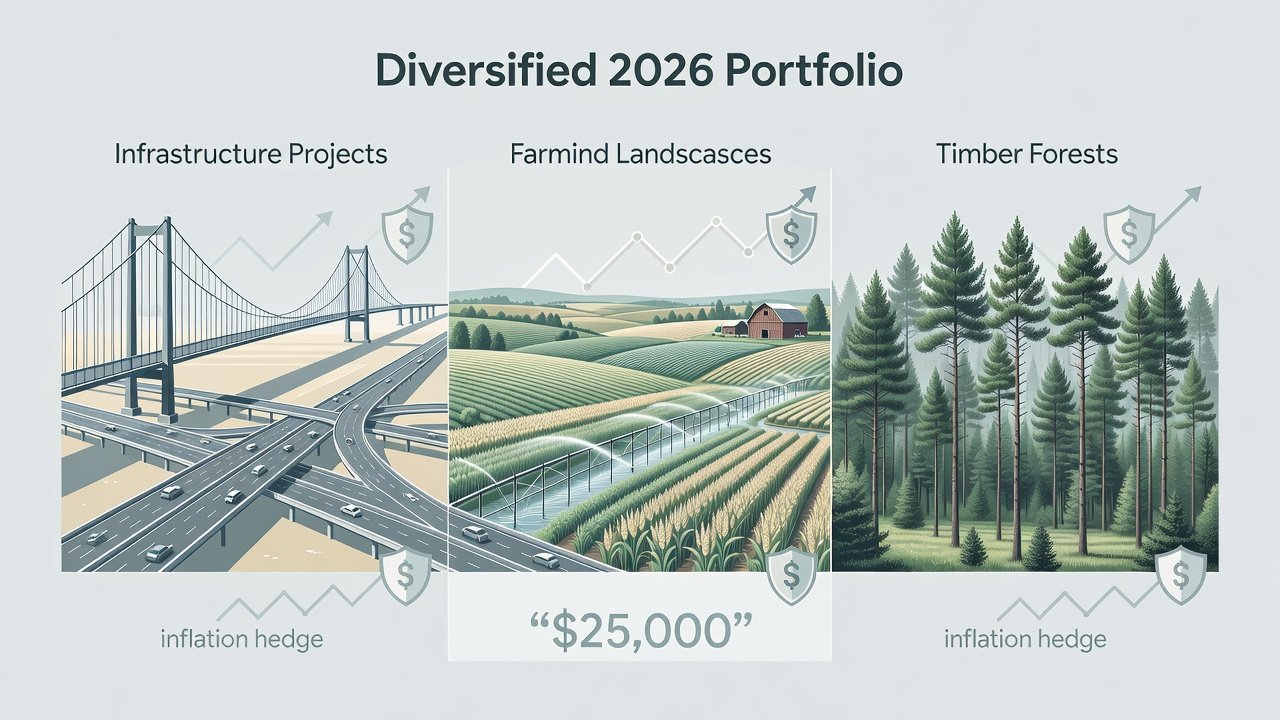
Real Assets Allocation Tactics for 2026 Inflation Hedging
Inflation remains a persistent concern for investors navigating 2026 markets. While traditional tools like TIPS and broad commodities provide some protection, real assets such as infrastructure, farmland, and timber offer deeper diversification and resilience. This comprehensive guide explores optimal allocation strategies tailored for 2026 portfolios, helping investors build robust defenses against rising prices while enhancing overall returns through tangible economic exposure.
Why Real Assets Excel as Inflation Hedges
Real assets generate returns tied to physical economic activity, often outpacing inflation during periods of rising prices. Unlike equities or bonds, which can suffer from higher discount rates, infrastructure projects, agricultural output, and timber harvests benefit from increased nominal revenues. These assets provide a natural hedge because their underlying value and cash flows adjust upward with general price levels. For instance, toll roads and utilities can raise fees in line with inflation, while crop prices and timber stumpage rates respond directly to supply-demand dynamics influenced by broader economic conditions. Investors seeking long-term portfolio stability find these characteristics particularly valuable in environments where traditional financial assets underperform.
Understanding Infrastructure as a Core Holding
Infrastructure encompasses essential facilities like energy pipelines, transportation networks, and communication towers. These assets deliver stable, regulated cash flows that tend to rise with inflation through contractual escalators. In 2026, focus on sectors such as renewable energy grids and data centers, which align with global sustainability trends. Allocation to this category provides both income and capital appreciation potential, with lower volatility compared to equities during market stress.
Farmland: Tangible Productivity with Inflation Linkage
Farmland ownership delivers returns through crop yields, land appreciation, and rental income from operators. Its value correlates strongly with food commodity prices, offering direct inflation protection. Recent examples show resilience during supply chain disruptions, where rising input costs were offset by higher output prices. Investors can access this via direct purchases, REITs, or funds, though liquidity varies significantly by region and scale.
Timber: Long-Term Growth and Harvest Flexibility
Timberland combines biological growth with harvest timing flexibility, allowing owners to delay sales during weak markets. Prices for lumber and pulp often track construction and manufacturing activity, which inflate over time. This asset class benefits from sustainable management practices and carbon credit opportunities emerging in 2026, adding another layer of return potential beyond traditional wood products.
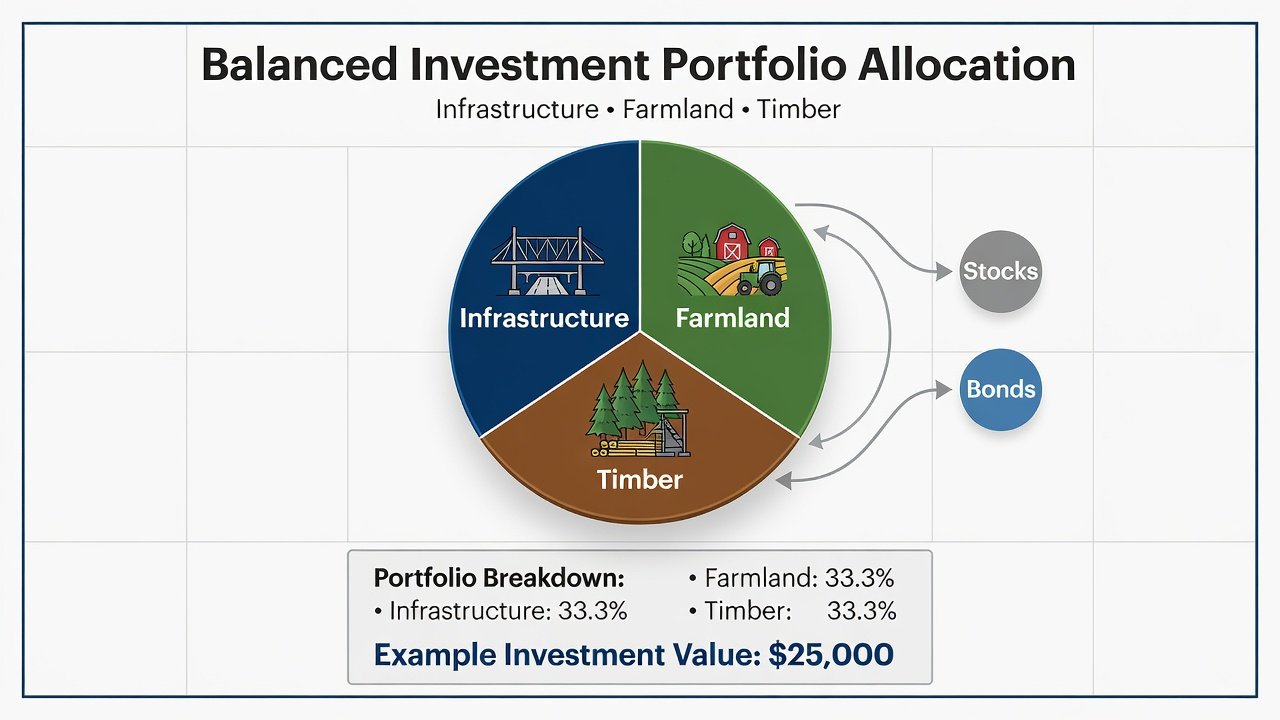
Recommended Allocation Percentages for 2026
Portfolio managers typically suggest dedicating 10-15% to infrastructure, 5-8% to farmland, and 3-5% to timber within a diversified real assets sleeve. These ranges balance inflation protection with overall portfolio stability, adjusted for individual risk tolerance and liquidity needs. Conservative investors might start at the lower end, while those with longer horizons can increase exposure. Total real assets allocation often fits within 15-25% of the overall portfolio to avoid over-concentration.
Correlation Benefits with Stocks and Bonds
Infrastructure exhibits low correlation to equities (around 0.3-0.5 historically) while maintaining modest ties to bonds. Farmland and timber show even lower correlations, often below 0.2, enhancing diversification during equity drawdowns or bond yield spikes. This low interdependence reduces overall portfolio volatility and improves risk-adjusted returns, as demonstrated in multi-decade backtests across various economic cycles.
Step-by-Step Allocation Framework
- Assess current portfolio exposure to inflation-sensitive assets through a full holdings review.
- Determine risk capacity and liquidity requirements based on personal financial goals and time horizon.
- Select vehicles such as REITs for infrastructure or timber ETFs that match desired exposure levels.
- Rebalance quarterly to maintain target weights and capture any drift from market movements.
- Monitor macroeconomic indicators like CPI trends and adjust as needed for emerging inflation signals.
- Consult professionals for tax-efficient implementation and ongoing oversight.
Real-World Case Examples from Recent Market Stress
During the 2022-2023 inflation surge, portfolios with 12% infrastructure allocations outperformed broad equity benchmarks by preserving capital through steady dividend growth. Farmland holdings demonstrated resilience through steady rental yields amid commodity price volatility, with many regions seeing land values rise 8-12% annually. Timber investments allowed flexible harvesting strategies that maximized returns when lumber prices peaked, providing cash flow when other assets faltered. These cases highlight how targeted real asset mixes can mitigate losses and generate positive real returns even in challenging environments.
Comparison of Real Asset Classes
| Asset Class | Inflation Sensitivity | Liquidity | Expected Volatility | Tax Considerations |
|---|---|---|---|---|
| Infrastructure | High | Medium | Medium | Depreciation benefits |
| Farmland | Very High | Low | Low | Long-term capital gains |
| Timber | High | Low | Medium | Timber depletion allowances |
Risk Considerations
Key risks include regulatory changes affecting infrastructure, weather impacts on farmland, and cyclical demand for timber products. Investors should stress-test allocations against scenarios of prolonged high inflation or recession. Mitigation strategies involve geographic diversification, insurance products, and blending public and private vehicles to balance liquidity with returns. Operational risks such as maintenance costs or tenant defaults require careful due diligence before committing capital.
Implementation Tips and Vehicle Selection
Begin with publicly traded options like infrastructure ETFs for ease of entry, then layer in private funds for farmland and timber as portfolio size grows. Review expense ratios and management fees annually. Regular performance reporting helps track inflation-adjusted results and correlation shifts. Partnering with specialized advisors ensures compliance with fiduciary standards and alignment with 2026 market conditions.
FAQ
How liquid are real asset investments?
Infrastructure and timber often involve longer holding periods, while publicly traded vehicles improve liquidity. Farmland typically requires 5-10 year commitments depending on the access method chosen.
What are the tax implications?
Many real assets qualify for favorable capital gains treatment and depreciation deductions, but consult a tax advisor for jurisdiction-specific rules and reporting requirements.
Can these allocations work in retirement accounts?
Yes, through appropriate ETFs or funds that fit IRA or 401(k) guidelines, though direct farmland ownership may require self-directed accounts for full access.
How do correlations change during high inflation periods?
Correlations often decrease further, enhancing diversification benefits as real assets decouple from financial markets under price pressure.
What minimum investment sizes apply?
Public vehicles allow small starting amounts, while private real asset funds may require $25,000 or more depending on the sponsor and structure.
For authoritative guidance on economic indicators influencing these strategies, refer to resources from the Federal Reserve, the International Monetary Fund, and the Bureau of Labor Statistics.
Conclusion
Strategic allocation to infrastructure, farmland, and timber equips 2026 portfolios with powerful inflation-hedging tools and meaningful diversification. By following a disciplined framework, monitoring risks, and leveraging real-world insights, investors can achieve more resilient outcomes amid uncertain economic conditions.
No comments yet. Be the first!