 Bullish Portfolio
Introduction to Options-Based Portfolio Management in 2026
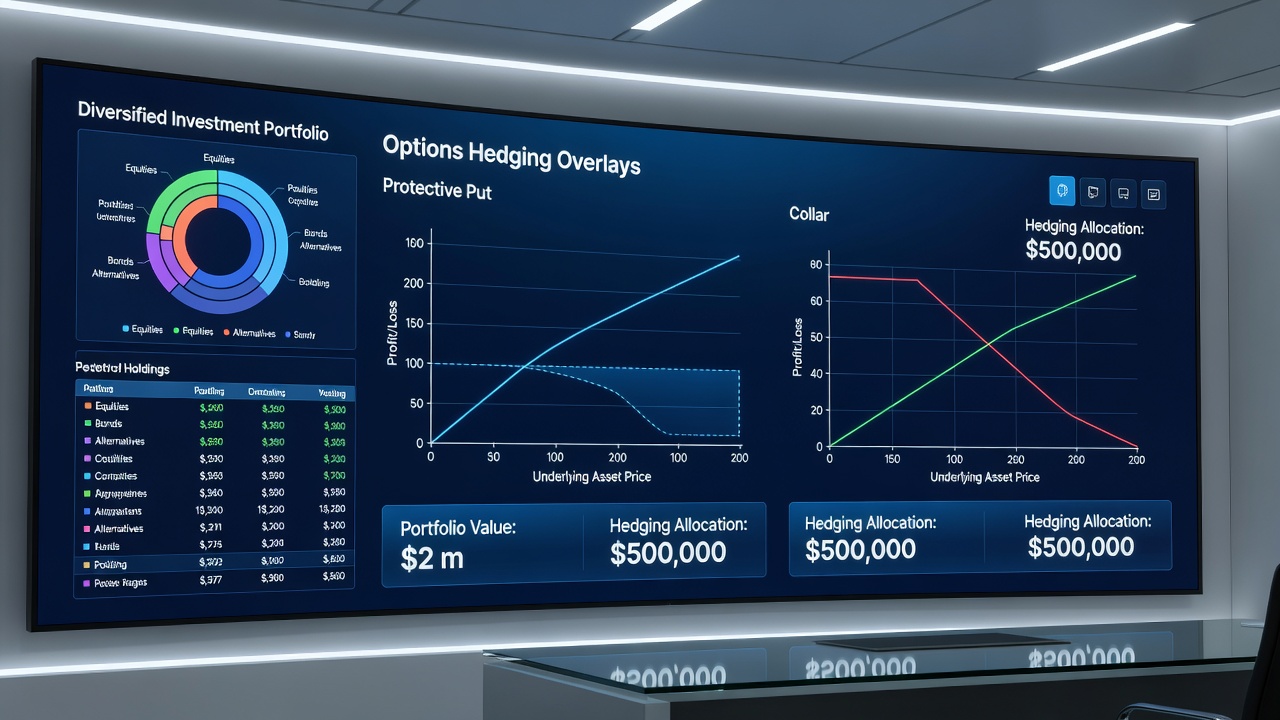
Experienced investors facing evolving market conditions in 2026 are turning to options strategies for enhanced hedging and diversification beyond traditional asset allocation. These techniques offer precise risk control while maintaining upside potential, making them valuable additions to core holdings. This guide covers protective puts, covered calls, collars, and straddle strategies with practical examples and implementation steps. In an environment of shifting interest rates, geopolitical tensions, and sector rotations, options provide tools that can be tailored to specific portfolio vulnerabilities rather than relying solely on broad diversification across stocks, bonds, and alternatives.
Why Options for Hedging and Diversification in 2026
Market volatility and shifting economic factors make options attractive for protecting portfolios. They allow investors to define risk parameters more tightly than broad diversification alone. When integrated thoughtfully, options can reduce drawdowns during corrections while generating income or capturing volatility moves. Unlike static asset allocation, options strategies can be dynamically adjusted as market conditions change, offering flexibility that mutual funds or ETFs cannot match. For portfolios exceeding several hundred thousand dollars, even modest options overlays can meaningfully alter risk profiles without disrupting long-term holdings. Learn foundational concepts at Investopedia before implementing advanced tactics.
Protective Puts: Insurance for Your Holdings
A protective put involves buying put options on existing long positions. This strategy acts as downside insurance, capping losses if the underlying asset declines sharply. For a stock portfolio valued at significant levels, purchasing out-of-the-money puts can provide peace of mind without fully sacrificing upside. Consider an investor holding a diversified basket of technology and healthcare stocks; buying puts on an index ETF tracking the same sectors creates a hedge that activates only when needed.
Step-by-step implementation begins with portfolio analysis to identify concentrated exposures. Next, select the underlying assets or broad indices for efficiency. Choose expiration aligned with your risk horizon, typically three to six months, and determine strike prices five to ten percent below current levels. Monitor delta and adjust positions quarterly, rolling contracts as they approach expiration. Real-world allocation example: a $2 million equity portfolio might dedicate 3 percent to protective put premiums on major holdings, protecting against a potential 15-20 percent correction while allowing participation in moderate rallies.
Covered Calls: Generating Income While Holding Core Positions
Covered calls involve owning the underlying stock and selling call options against it. This generates premium income that enhances yield and provides a modest buffer against small declines. It works best in moderately bullish or range-bound environments common in many 2026 scenarios. Investors can target 1-3 percent monthly income on stable holdings without altering their long-term outlook.
Practical guidance includes selecting liquid underlyings with adequate options volume and implied volatility levels that support attractive premiums. Rebalance monthly based on volatility levels, closing or rolling calls if the underlying approaches the strike. A sample allocation might apply covered call overlays to 25 percent of a blue-chip equity sleeve, using the collected premiums to offset management fees or fund additional diversification into international markets.
Collars: Combining Protection with Cost Efficiency
The collar strategy pairs a protective put purchase with the sale of an out-of-the-money call. This finances the put premium through call income, creating a defined risk range. Collars are particularly useful for investors seeking zero-cost or low-cost hedging while retaining some upside participation.
Practical steps include identifying correlated index or stock positions, selling calls five to eight percent above spot, and buying puts five to eight percent below spot with matching expirations. Review and roll positions as needed, typically every 60-90 days. An example might involve collaring a concentrated single-stock position worth $500,000 by selling calls at the 105 strike and buying puts at the 95 strike, effectively limiting both downside and extreme upside for the next quarter.
Straddle Strategies for Volatility Scenarios
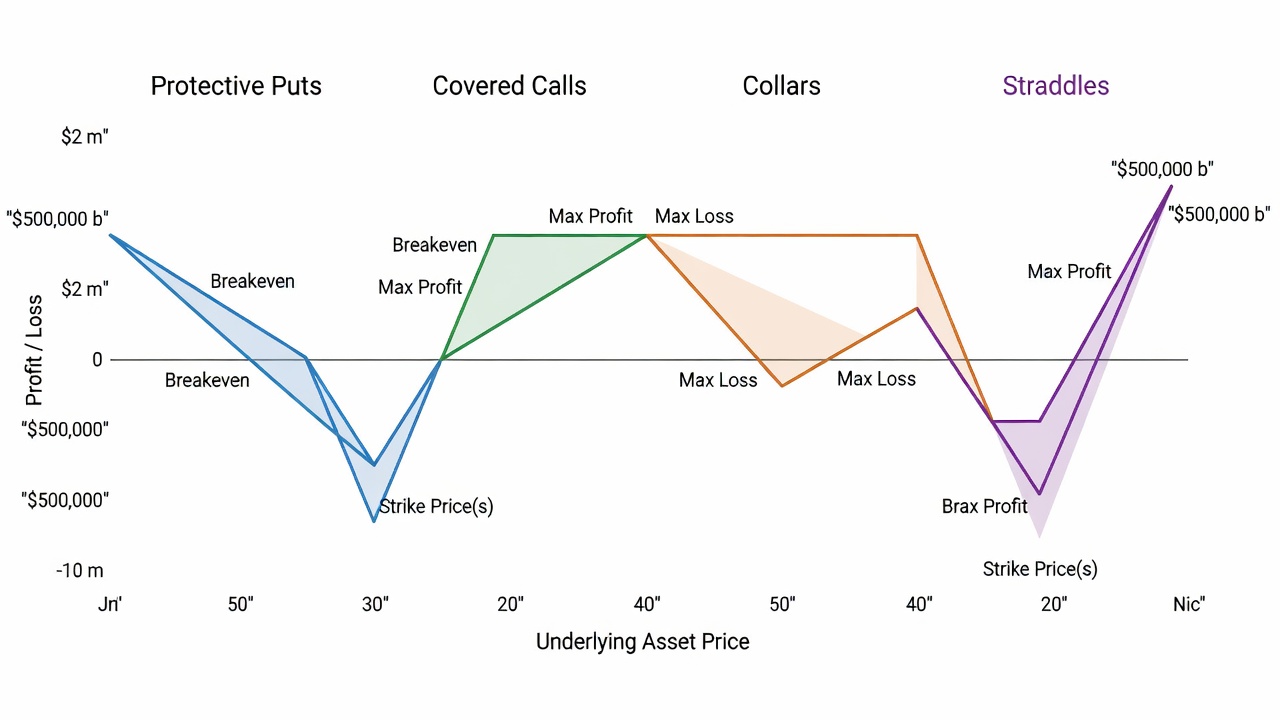
Long straddles profit from significant price moves in either direction by buying both at-the-money calls and puts. Short straddles collect premium when expecting low volatility. These are ideal for event-driven periods like earnings seasons or policy announcements.
- Long straddle: Buy ATM call and put on the same underlying with identical expiration to benefit from large swings regardless of direction.
- Short straddle: Sell both, collecting premium but facing unlimited risk on sharp moves; best reserved for low-volatility forecasts.
- Adjustments: Use strangles for wider breakeven points when volatility is elevated, or combine with spreads to reduce capital requirements.
- Position sizing: Limit straddle exposure to 2-5 percent of total portfolio value to manage theta decay and potential margin calls.
Integrating Strategies with Core Portfolio Holdings
Start by assessing overall portfolio beta and desired hedge ratio using tools from major exchanges. Allocate 5-15 percent of assets to options overlays rather than replacing core holdings. Rebalance quarterly and stress-test against historical volatility spikes, incorporating scenario analysis for inflation surprises or recession signals. Combine multiple strategies, such as layering covered calls on non-hedged portions while using collars on growth-oriented sleeves, to create a balanced risk overlay that complements existing diversification across asset classes.
Risk/Reward Comparisons and Common Pitfalls
Protective puts offer strong downside protection but carry ongoing premium costs that can erode returns in sideways markets. Covered calls cap upside in strong rallies and may trigger unwanted tax events upon assignment. Collars limit both sides for cost efficiency yet reduce participation in trending markets. Straddles can deliver large gains during volatility but suffer from time decay and require precise timing.
Common pitfalls include over-leveraging position sizes, ignoring implied volatility skew, failing to account for assignment risk, and neglecting liquidity when selecting contracts. Always maintain a written plan that specifies entry, adjustment, and exit rules. Avoid chasing premiums without regard to overall portfolio correlation or holding period.
Frequently Asked Questions
What are the tax implications of options strategies?
Options trades can generate short-term capital gains taxed as ordinary income. Consult a tax advisor for wash-sale rules and straddle tax treatment, particularly when positions overlap with underlying holdings.
How do these strategies perform in high-volatility environments?
Protective puts and long straddles tend to perform well during spikes, while covered calls and short straddles benefit from volatility contraction. Review resources at Cboe for current volatility data and strategy backtests.
Can beginners start with these advanced techniques?
While experienced investors are the target audience, beginners should first paper trade strategies and study margin requirements through SEC.gov investor education materials before committing capital.
How often should options hedges be reviewed?
Quarterly reviews aligned with earnings or economic calendars are recommended, with more frequent monitoring during periods of elevated market stress.
Additional educational support is available at OIC.
Conclusion
Options strategies provide sophisticated investors with targeted tools for hedging and diversification in 2026. By thoughtfully applying protective puts, covered calls, collars, and straddles, portfolios can achieve better risk-adjusted returns while preserving core investment theses. Success depends on disciplined implementation, ongoing education, and alignment with individual risk tolerance and tax considerations.

No comments yet. Be the first!