 Bullish Portfolio
Introduction to Dollar-Cost Averaging in 2026
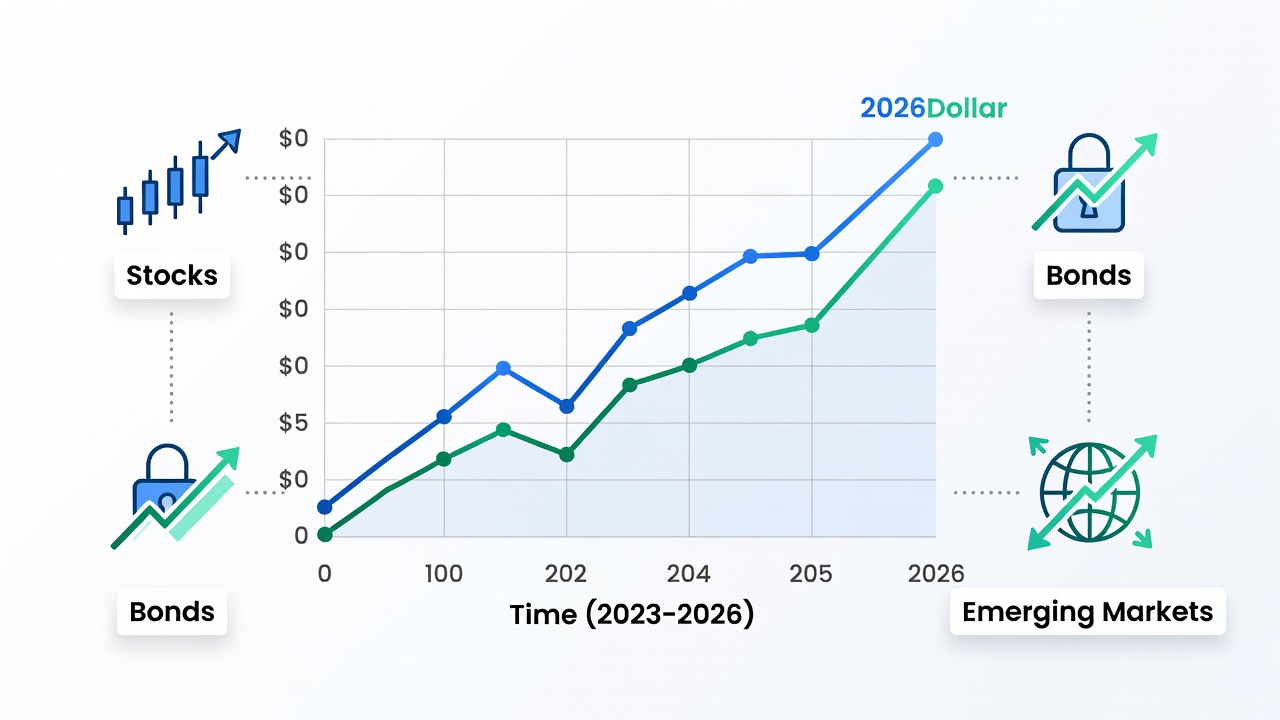
Dollar-cost averaging (DCA) remains a cornerstone strategy for investors seeking disciplined portfolio management. By investing fixed amounts at regular intervals regardless of market prices, DCA reduces the impact of volatility and supports long-term diversification and asset allocation goals. In 2026, with potential shifts in interest rate environments and growing opportunities in emerging markets, this approach helps investors navigate uncertainty while building resilient portfolios that can withstand economic fluctuations.
This comprehensive guide explores the mechanics of DCA, practical implementation steps across asset classes, real-world examples, and comparisons to lump-sum investing. It also includes detailed checklists, risk considerations, common mistakes to avoid, and answers to frequently asked questions. Forward-looking insights tailored to 2026 trends ensure the strategies remain relevant for modern investors focused on sustainable growth.
Core Mechanics of Dollar-Cost Averaging
DCA involves purchasing investments at consistent dollar amounts on a set schedule, such as monthly or quarterly. This method automatically buys more shares when prices are low and fewer when prices are high, lowering the average cost per share over time. For portfolio management in 2026, DCA integrates seamlessly with diversification by spreading exposure across equities, fixed income, and alternative assets. The strategy mitigates emotional decision-making during market swings, which is especially valuable in a rising rate environment where bond yields and equity valuations may fluctuate unpredictably.
Investors benefit from the psychological advantages of removing the need to predict market bottoms or tops. Instead of attempting to time entries, DCA enforces consistency, which compounds over years into meaningful position building. When combined with proper asset allocation, it creates a foundation for balanced exposure that adapts as personal circumstances or market conditions evolve.
Benefits for Diversification and Asset Allocation
Integrating DCA with asset allocation allows investors to maintain target weights across classes without timing the market. It supports diversification by enabling gradual entry into volatile sectors like emerging markets. Research from authoritative sources shows DCA often outperforms lump-sum approaches in uncertain conditions by smoothing entry points and reducing regret associated with large single investments.
Learn more about investment fundamentals at Investopedia. Additionally, the approach aligns well with rebalancing protocols, ensuring that gains in one area fund purchases in underweighted segments during regular intervals.
Step-by-Step Implementation Across Asset Classes
Implementing DCA requires careful planning to maximize its effectiveness in 2026 portfolios. Begin by defining your investment horizon and risk tolerance for long-term goals. Next, select a brokerage with low or no transaction fees for recurring investments to minimize drag on returns. Choose asset classes strategically: start with broad equity ETFs for growth, add bonds for stability, and allocate a portion to emerging market funds to capture international opportunities.
Set automated transfers from your bank on a fixed schedule that matches your cash flow. Rebalance quarterly to maintain desired allocation percentages, adjusting only when drifts exceed predetermined thresholds. Monitor macroeconomic trends like Federal Reserve policy without altering your DCA cadence, allowing the strategy to work through cycles. This methodical process ensures steady progress toward diversified holdings while adapting to 2026's dynamic landscape.
Track current monetary policy updates at the Federal Reserve.
Real-World Examples with Sample Portfolios
Consider a moderate-risk investor starting with consistent monthly contributions. A sample 2026 allocation might include 50% U.S. large-cap equities, 20% international developed markets, 15% emerging market equities, and 15% investment-grade bonds. Over successive periods, DCA would average purchases across price movements in each category, building positions gradually.
Another example involves aggressive growth: 60% equities split between growth and value styles, 25% emerging markets for diversification, and 15% alternatives such as real estate investment trusts. This structure leverages DCA to capitalize on emerging market opportunities while managing volatility through regular, smaller purchases. A conservative variant could emphasize 40% bonds, 35% equities, and 25% in defensive sectors, demonstrating how the same tactic scales across risk profiles.
Dollar-Cost Averaging vs. Lump-Sum Investing
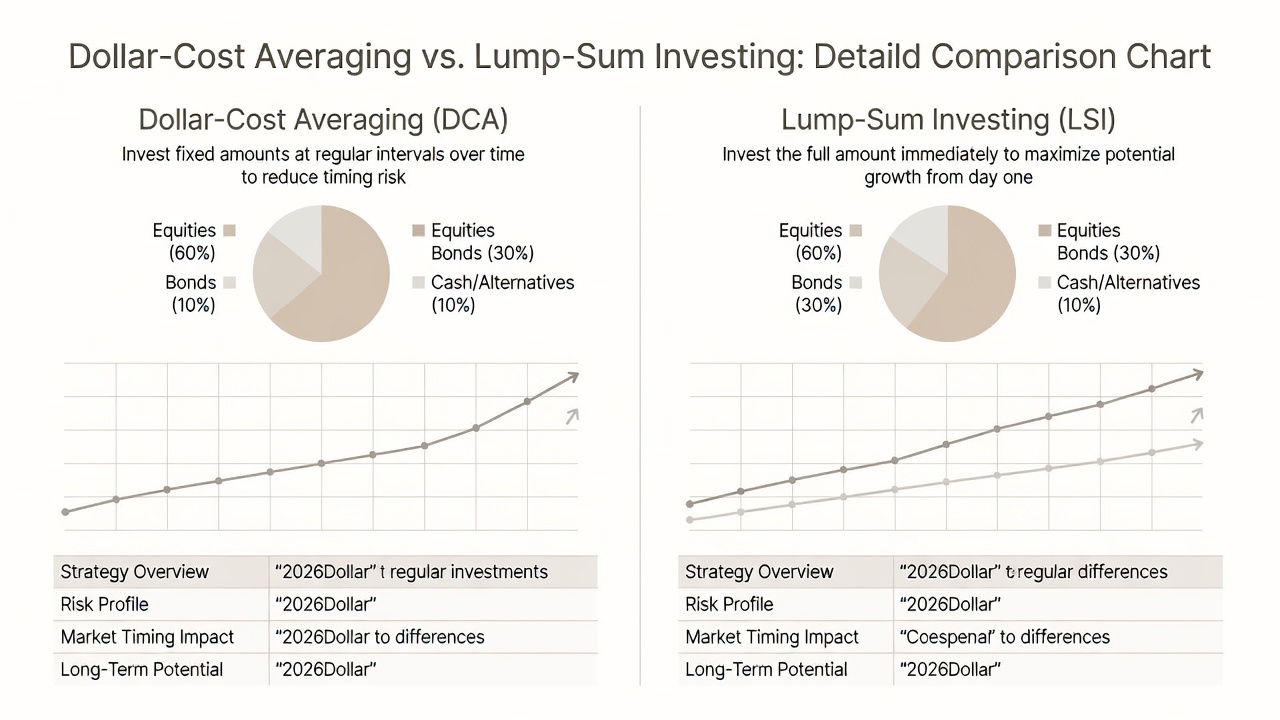
While lump-sum investing can deliver higher returns in strong bull markets, DCA provides psychological comfort and risk reduction during sideways or declining periods. Studies indicate DCA shines in volatile years, making it suitable for 2026's projected economic landscape. Investors should evaluate personal cash flow and market outlook when choosing between the two approaches, recognizing that DCA excels at removing timing pressure and promoting disciplined behavior.
Practical Checklists for 2026 DCA Success
- Review and update your asset allocation targets annually to reflect changing life stages or economic outlooks.
- Ensure emergency reserves are kept separate from investment capital to avoid forced liquidations.
- Automate contributions to remove behavioral biases and maintain consistency.
- Track performance metrics such as average cost basis and portfolio Sharpe ratio for ongoing evaluation.
- Adjust emerging market exposure based on geopolitical developments while staying committed to the schedule.
- Document all transactions for tax reporting efficiency throughout the year.
Risk Considerations and Mitigation
Key risks include opportunity cost in rapidly rising markets and potential underperformance if cash sits idle between intervals. Mitigation involves maintaining a long-term perspective, using tax-advantaged accounts where possible, and pairing DCA with periodic rebalancing. Investors must also consider inflation impacts and currency fluctuations in international holdings. Always align strategies with individual financial circumstances and consult professionals when needed.
Common Mistakes to Avoid
Many investors abandon DCA during market dips, undermining its core benefit of buying at lower averages. Others select overly narrow asset classes, limiting true diversification. Failing to adjust for life changes or ignoring fees can erode gains. Avoiding these pitfalls requires periodic reviews without deviating from the established plan.
2026 Trends: Rising Rates and Emerging Market Opportunities
In a rising rate environment, DCA helps investors gradually build fixed-income positions as yields improve. Simultaneously, emerging markets may offer growth potential driven by demographic shifts and technological adoption. Allocating portions of DCA contributions to these areas supports forward-looking diversification while spreading risk across global opportunities.
FAQ
How often should I apply DCA in 2026?
Monthly intervals work well for most investors, balancing transaction costs with volatility reduction and aligning with typical paycheck cycles.
Can DCA be used with retirement accounts?
Yes, it pairs effectively with 401(k) or IRA contributions for consistent asset allocation and long-term compounding benefits.
Is DCA suitable for emerging markets?
Absolutely, as it helps navigate higher volatility typical of those regions while capturing growth potential over time.
What if I have irregular income?
Adjust the contribution amount flexibly while maintaining the schedule, or use quarterly intervals to accommodate variability.
How does DCA interact with tax-loss harvesting?
Coordinate the two by harvesting losses during rebalancing periods without disrupting the regular investment flow.
Conclusion
Dollar-cost averaging offers a disciplined path to stronger portfolio management and diversification in 2026. By following structured steps, using sample allocations, avoiding common mistakes, and addressing risks, investors can build resilient portfolios positioned for rising rate environments and emerging opportunities. Consistent application of these tactics supports sustainable wealth accumulation across market cycles.

No comments yet. Be the first!