 Bullish Portfolio

Introduction to Inflation Hedging in 2026
Inflation erodes purchasing power, making it essential for investors to adopt forward-looking tactics that preserve wealth. In 2026, economic shifts driven by policy changes and global supply dynamics require portfolios to move beyond traditional stocks and bonds. This guide provides step-by-step allocation adjustments focused on diversification into inflation-sensitive assets such as Treasury Inflation-Protected Securities (TIPS), commodities, and real estate. Effective hedging starts with understanding real returns, which account for inflation's impact on nominal gains. By balancing risk across asset classes and reviewing historical performance, investors can build resilient portfolios that maintain value amid rising prices.
Many investors overlook the compounding effect of even moderate inflation over a decade. A diversified approach not only protects capital but also positions the portfolio for growth when traditional assets underperform. Throughout this article we examine concrete tactics, sample allocations, and review processes tailored specifically for 2026 conditions.
Understanding Current Inflation Dynamics
Inflation in 2026 reflects a mix of lingering supply-chain adjustments, energy transitions, and monetary policy normalization. Investors must monitor leading indicators such as producer prices, wage growth, and commodity futures to anticipate shifts. Recognizing these dynamics early allows proactive reallocation before inflation accelerates and erodes fixed-income returns.
Forward-looking analysis also considers geopolitical factors that can suddenly spike energy and food costs. Diversification into assets with built-in inflation adjustments or pricing power becomes a practical response rather than a theoretical exercise.
Identifying Inflation-Sensitive Assets
Key assets for inflation protection include TIPS, which adjust principal and interest payments based on CPI changes. Commodities like gold and oil often rise with inflation, while real estate provides rental income that can be adjusted upward. Investors should also consider REITs for liquid exposure to property markets. Additional options encompass infrastructure funds and certain equities in sectors like energy and materials. Diversification reduces reliance on any single asset, mitigating volatility from unexpected inflation spikes.
Each asset class carries distinct characteristics. TIPS offer government backing and direct CPI linkage but limited upside in deflationary periods. Commodities deliver strong historical correlation with inflation yet experience sharp price swings. Real estate blends income stability with appreciation potential, though liquidity varies by vehicle. Understanding these trade-offs helps investors construct balanced exposures.
Calculating Real Returns and Risk Balancing
Real return is calculated by subtracting the inflation rate from the nominal return. For example, a 7% nominal return during 3% inflation yields a 4% real return. Investors should apply this metric across every holding to identify which components truly preserve purchasing power. Tools from authoritative sources help track these metrics accurately.
Balancing risk involves assessing correlations between assets. TIPS correlate negatively with equities during inflation surges, while commodities add diversification but introduce price volatility. A balanced approach limits exposure to high-risk classes to 20-30% of the portfolio. Stress testing against multiple inflation scenarios further refines the allocation.
TreasuryDirect offers detailed TIPS resources, and Federal Reserve publications provide inflation outlook data.
Step-by-Step Allocation Adjustments for 2026
- Assess current portfolio exposure to inflation via asset correlation analysis. Begin by mapping each holding against historical inflation sensitivity using publicly available correlation matrices.
- Increase TIPS allocation to 15-25% for direct inflation linkage. Start with core holdings and layer in longer-duration TIPS if inflation expectations rise.
- Allocate 10-20% to commodities through ETFs or futures. Focus on broad baskets rather than single commodities to smooth volatility.
- Dedicate 15-25% to real estate via REITs or direct holdings. Prioritize sectors with inflation-protected leases such as industrial and residential properties.
- Rebalance equities toward inflation-resilient sectors like utilities and consumer staples. Reduce exposure to high-valuation growth stocks that suffer when rates rise.
- Monitor overall equity-bond split, targeting 50-60% equities for growth with protection layers. Maintain flexibility to shift within bands as economic data evolves.
Sample Portfolios for Inflation Resilience
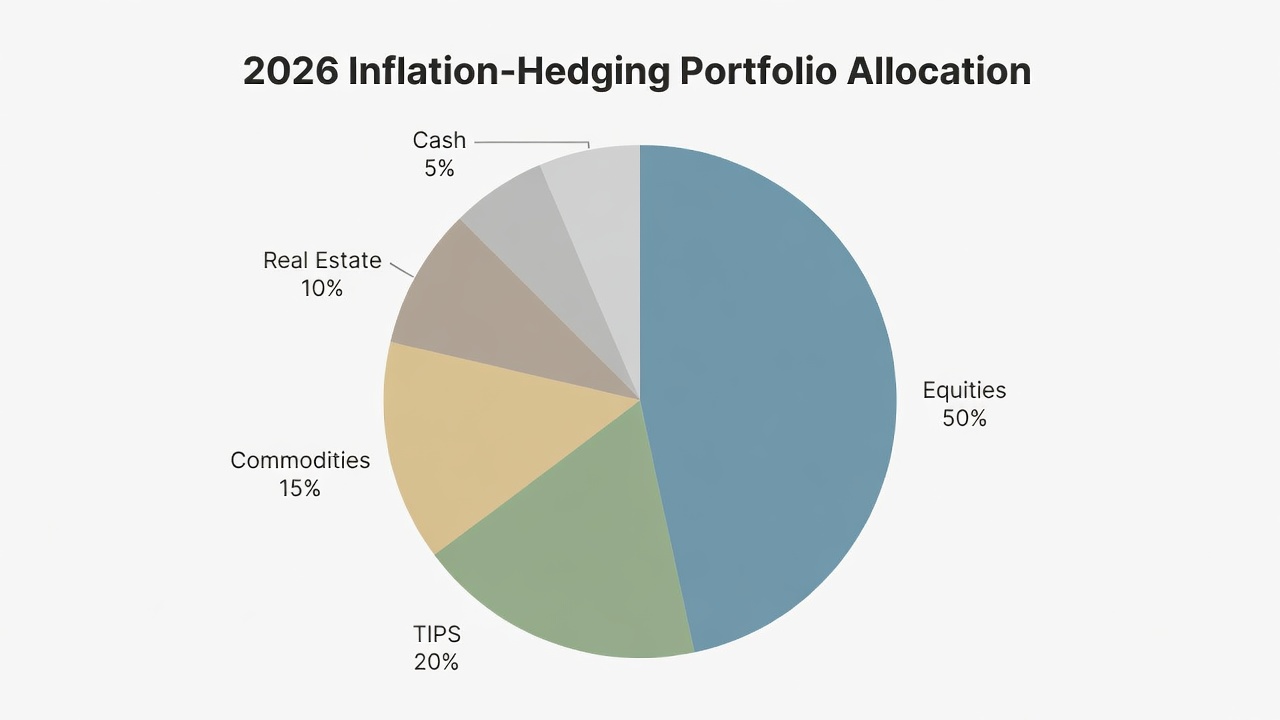
A conservative sample portfolio might include 40% equities, 25% TIPS, 15% commodities, 15% real estate, and 5% cash. Within equities, 60% could target defensive sectors while the remainder provides broad market exposure. An aggressive version shifts to 55% equities, 20% TIPS, 10% commodities, 10% real estate, and 5% alternatives. Here the equity sleeve emphasizes dividend growth stocks and infrastructure companies.
These examples demonstrate how diversification maintains purchasing power. Historical scenarios from the 1970s and 2021-2022 periods show such mixes outperforming traditional 60/40 portfolios during inflation peaks. Investors can scale allocations based on risk tolerance and time horizon while preserving the core inflation-hedging ratios.
Quarterly Review Checklist
- Review CPI data and adjust TIPS holdings if inflation exceeds 3%. Compare year-over-year changes and revise duration exposure accordingly.
- Rebalance commodity exposure based on price trends in energy and metals. Use rolling averages to avoid overreacting to short-term spikes.
- Evaluate real estate performance through rental yields and property values. Check vacancy rates and lease renewal terms for early warning signs.
- Stress-test the portfolio against 4-6% inflation scenarios. Model both sudden spikes and prolonged moderate inflation environments.
- Update real return calculations using latest economic indicators. Recalculate after each major data release from government agencies.
- Consult tax implications of rebalancing trades. Harvest losses where possible and consider tax-advantaged accounts for frequent adjustments.
Comparing Historical Performance Scenarios
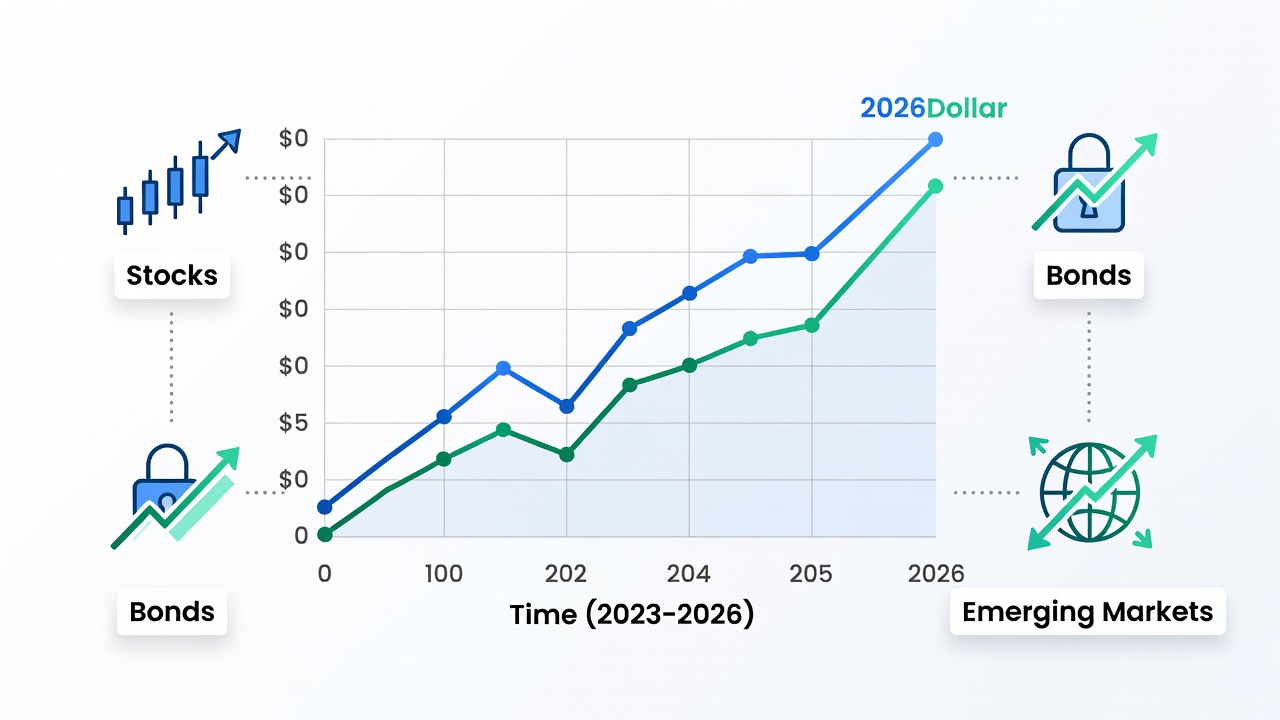
During the 1970s stagflation, diversified portfolios with commodities delivered positive real returns while pure equity holdings lagged. In contrast, the low-inflation 2010s favored stocks. For 2026, forward simulations suggest a 10-15% allocation tilt toward real assets could add 1-2% annualized real returns. Investors should review multiple cycles rather than relying on any single historical period.
Bureau of Labor Statistics data supports these historical comparisons, highlighting asset behavior across cycles. Combining this evidence with current macroeconomic forecasts produces more robust allocation decisions.
Common Mistakes to Avoid
One frequent error is over-concentrating in a single inflation hedge such as gold without considering liquidity needs. Another involves ignoring correlations that shift during different inflation regimes. Investors should also avoid neglecting tax efficiency when moving between asset classes. Finally, failing to update assumptions after major policy announcements can leave the portfolio misaligned with new realities.
FAQ
How much TIPS should I hold?
Most investors benefit from 15-25% depending on risk tolerance and inflation outlook. Conservative portfolios may lean toward the higher end.
Are commodities volatile for long-term holding?
Yes, but ETF wrappers and small allocations (under 20%) help manage swings effectively. Broad diversification within commodities further reduces single-commodity risk.
What role does real estate play in 2026?
Real estate hedges via income growth and appreciation, especially in inflation-linked lease structures. REITs offer easier entry for smaller portfolios.
How often should I rebalance?
Quarterly reviews with annual major adjustments keep allocations aligned with goals. Major life events or policy shifts may warrant interim reviews.
Conclusion
By implementing these diversification tactics, investors can safeguard portfolios against 2026 inflation pressures. Focus on measurable real returns, disciplined allocation, and regular reviews to sustain purchasing power over time. Consistent application of these principles transforms inflation from a threat into a manageable variable within a well-structured investment plan.

No comments yet. Be the first!