 Bullish Portfolio
Introduction to Alternative Data in Modern Portfolio Management
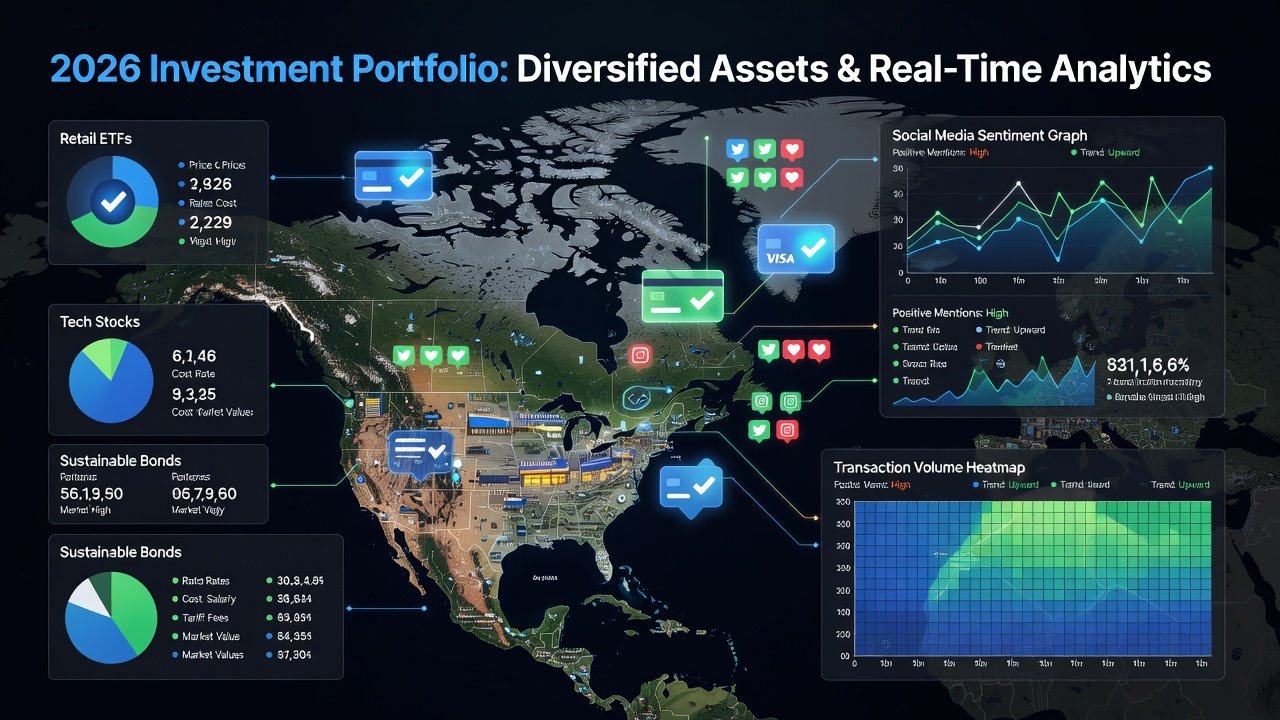
In 2026, traditional financial metrics such as earnings reports and macroeconomic indicators are no longer sufficient on their own for robust portfolio diversification. Institutional investors and sophisticated retail managers are increasingly turning to alternative data sources to gain an edge. These non-traditional datasets provide real-time insights into consumer behavior, supply chain dynamics, and market sentiment, enabling more precise asset allocation decisions that traditional models often miss. As markets become more efficient and competitive, the ability to incorporate unconventional signals can mean the difference between average returns and consistent outperformance across asset classes.
This comprehensive guide explores practical ways to leverage alternative data for portfolio diversification, including specific types, integration frameworks, real-world examples, and risk controls. Readers will discover how to move beyond basic quantitative strategies by building layered approaches that combine multiple data streams for enhanced decision-making in volatile conditions.
Key Types of Alternative Data for 2026
Satellite Imagery and Geospatial Data
Satellite imagery offers visibility into physical economic activity, such as retail parking lot occupancy, agricultural yields, or oil storage levels. Providers aggregate high-resolution images to track changes over time, helping predict revenue for companies before official reports are released. For example, monitoring shipping activity at major ports can signal global trade shifts weeks in advance, allowing managers to adjust international equity exposures proactively.
Credit Card and Transaction Data
Anonymized credit card transaction streams reveal consumer spending patterns across sectors. This data helps forecast quarterly results for retailers, restaurants, and travel companies with greater accuracy than historical averages alone. In practice, spikes in luxury goods transactions might indicate rising consumer confidence, prompting reallocations toward cyclical stocks.
Social Sentiment Analysis
Natural language processing applied to social media, news, and forums measures public perception of brands or economic events. When combined with volume metrics, it can signal shifts in demand or emerging risks days or weeks ahead of traditional indicators. This type of data excels in fast-moving sectors like technology and consumer discretionary where brand reputation directly influences stock performance.
Other emerging sources include web scraping of job postings to gauge corporate expansion plans, shipping container tracking for supply chain health, and mobile app usage statistics that reflect user engagement trends. Each adds unique layers of predictive power when integrated responsibly into allocation models.
Comparison Frameworks: Alternative Data vs Traditional Metrics
Traditional metrics like P/E ratios and GDP growth provide lagging or periodic snapshots. Alternative data, by contrast, delivers higher frequency and granularity. A useful comparison framework evaluates datasets across four dimensions: timeliness, uniqueness, coverage, and noise level. For instance, satellite data scores high on timeliness but may require significant cleaning to reduce noise from weather events. Investors should also consider scalability and regulatory compliance when selecting sources.
- Timeliness: Alternative sources often update daily or hourly versus quarterly earnings releases.
- Uniqueness: They capture signals invisible to standard financial statements, such as real-time foot traffic.
- Coverage: Global reach is possible with satellite or shipping data, extending beyond domestic markets.
- Integration ease: Requires new technical infrastructure compared to standard Bloomberg terminals or basic spreadsheets.
- Cost-benefit analysis: Weigh acquisition expenses against potential alpha generation through diversified holdings.
Practical Integration Steps into Existing Models
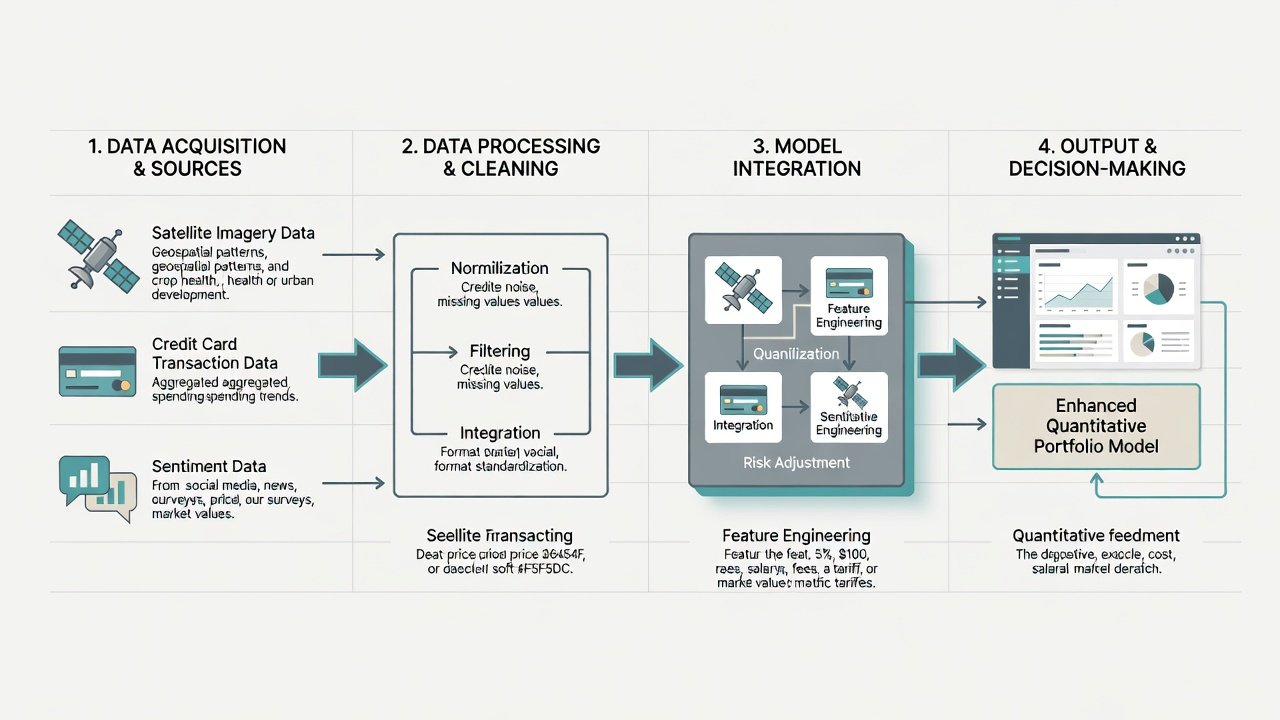
Step 1: Audit current data infrastructure and identify gaps in predictive power by reviewing historical model performance during market stress periods. Step 2: Source vetted alternative datasets from established providers with clear documentation on methodology. Step 3: Apply machine learning models to normalize and fuse the new data with traditional factors, ensuring feature engineering accounts for seasonality. Step 4: Backtest strategies using at least three years of historical alternative data while controlling for look-ahead bias. Step 5: Implement live monitoring dashboards with alerts for data drift and conduct periodic revalidation. Step 6: Train portfolio teams on interpreting outputs and establish governance protocols for ongoing oversight.
Real-World Examples from Institutional Portfolios
Large hedge funds have used credit card aggregates to adjust retail sector allocations ahead of earnings seasons, achieving measurable alpha by reducing exposure before disappointing results. Pension funds have incorporated satellite-derived agricultural data to hedge commodity exposure during weather anomalies, protecting against inflation spikes. Family offices managing multi-asset portfolios have combined social sentiment with transaction data to tilt toward emerging consumer trends in sustainability-focused companies. These cases demonstrate how alternative signals improve diversification across equities, fixed income, and alternatives while reducing correlation risks.
Risk Mitigation Tactics and Regulatory Considerations
Key risks include data privacy breaches, model overfitting, and regulatory scrutiny. Always anonymize datasets and comply with evolving rules from bodies like the U.S. Securities and Exchange Commission. Conduct regular audits and maintain documentation of data lineage to demonstrate due diligence. Diversify across multiple alternative sources to avoid single-point failures. Additional tactics involve stress-testing models against extreme scenarios and establishing clear escalation procedures for anomalous signals.
Mistakes to Avoid When Adopting Alternative Data
Common pitfalls include over-reliance on a single data source without cross-validation, ignoring latency issues that can render signals obsolete, and failing to account for changing data provider methodologies. Another frequent error is neglecting team education, which leads to misinterpretation of outputs. Investors should also avoid rushing full-scale implementation without pilot phases that measure incremental benefits to overall portfolio resilience.
Actionable Implementation Checklist
- Define clear investment objectives tied to diversification goals and risk tolerance levels.
- Establish data governance policies before ingestion, including access controls and ethical sourcing standards.
- Pilot one dataset type, such as social sentiment, on a small sleeve of the portfolio to test compatibility.
- Measure performance lift against a traditional benchmark over six months using risk-adjusted metrics.
- Scale successful pilots while documenting lessons learned and updating model documentation.
- Train team members on interpretation of new signals through workshops and case studies.
- Review regulatory compliance quarterly with legal counsel specializing in financial data use.
Frequently Asked Questions
How do I assess data quality in alternative datasets?
Evaluate for completeness, accuracy through third-party validation, and consistency over time. Request sample datasets and run statistical tests for anomalies before full integration.
What regulatory concerns should I be aware of in 2026?
Focus on data sourcing ethics, especially consumer transaction privacy. Consult legal experts familiar with Federal Reserve guidelines on alternative data usage in financial services and monitor updates from international bodies.
Can retail investors access these datasets affordably?
Yes, many providers now offer tiered access. Start with aggregated reports rather than raw feeds to control costs while building expertise and gradually expand as results justify further investment.
How does alternative data interact with existing factor models?
It enhances them by adding orthogonal signals that traditional factors overlook, improving diversification without replacing core quantitative foundations when properly calibrated.
Conclusion
Leveraging alternative data transforms portfolio diversification from a reactive exercise into a proactive, insight-driven process. By systematically integrating sources like satellite imagery, transaction streams, and sentiment analysis, investors can achieve more resilient allocations in 2026 and beyond. Begin with small, measurable pilots and scale based on proven results while maintaining strict risk and compliance standards for long-term success.

No comments yet. Be the first!