 Bullish Portfolio
Introduction to ETF Diversification in 2026
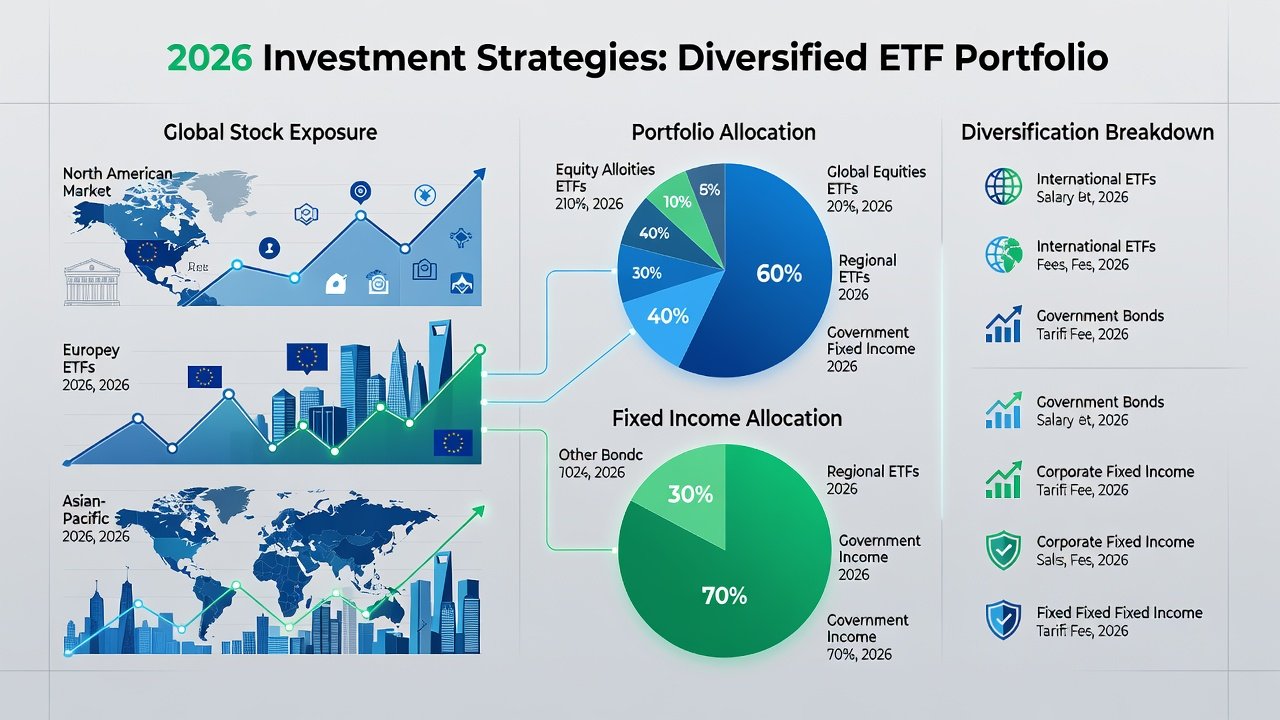
Exchange-traded funds (ETFs) remain a cornerstone of modern portfolio construction, offering investors low-cost exposure to broad markets and specialized themes. In 2026, with evolving economic conditions including shifting interest rates and geopolitical tensions, strategic ETF allocation helps build resilience against volatility while pursuing growth. This guide explores proven approaches to diversification that prioritize cost efficiency and long-term stability. Investors today face a landscape where traditional stock and bond correlations may shift, making thoughtful ETF selection essential for maintaining balanced risk exposure across asset classes. By understanding how different ETF types interact within a portfolio, individuals can create structures that weather market downturns and capitalize on emerging opportunities without incurring high management fees typical of actively managed mutual funds.
Understanding Market Conditions Shaping 2026 Strategies
Global markets in 2026 reflect ongoing adjustments from previous years, with central banks navigating inflation targets and supply chain realignments. These factors influence how investors approach diversification through ETFs. Equity markets may exhibit sector rotation, while fixed-income instruments respond to policy changes. Thematic areas such as technology and sustainability continue to attract attention due to innovation cycles. Recognizing these dynamics allows investors to position ETFs that hedge against inflation or benefit from growth in specific regions. A diversified approach mitigates the impact of any single economic event, ensuring the portfolio remains adaptable rather than reactive to short-term news cycles.
Selecting Core and Satellite ETFs
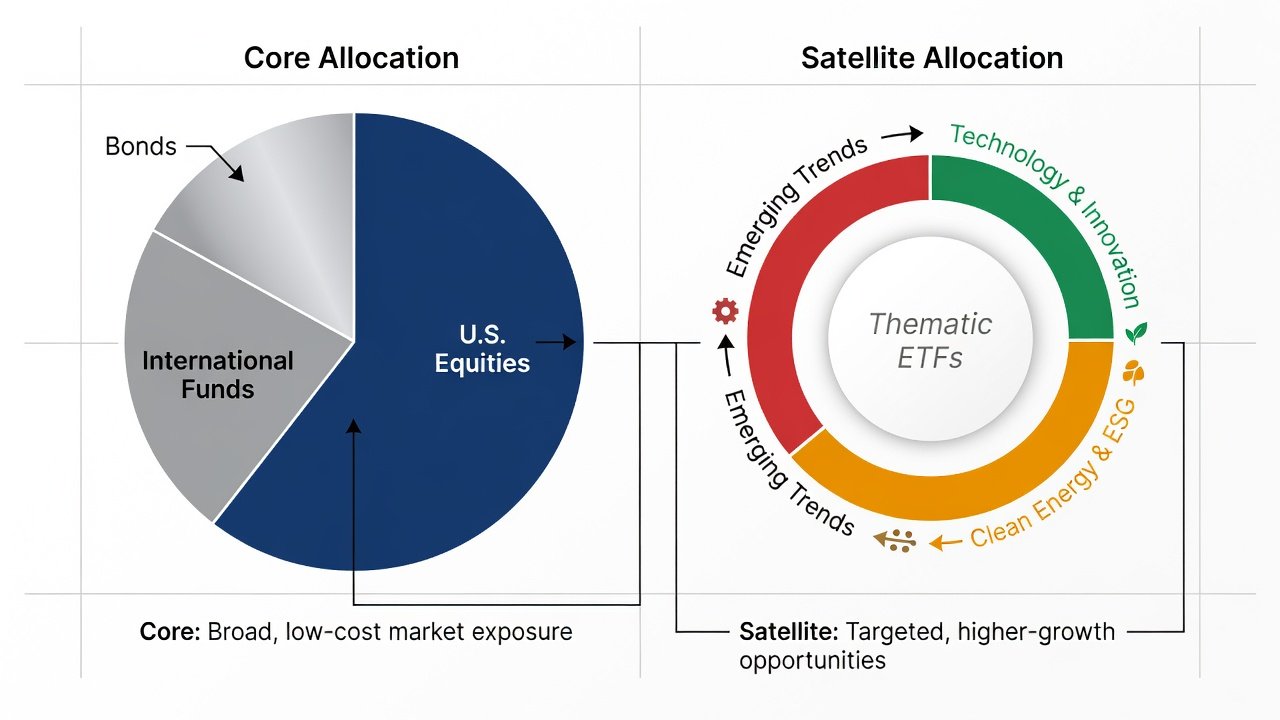
Core ETFs form the foundation of any diversified portfolio, typically tracking major indices like the S&P 500 or total bond markets. These holdings provide broad, low-cost market exposure and serve as the stable backbone. Satellite ETFs add targeted exposure to emerging opportunities such as sector-specific or factor-based funds, introducing potential for enhanced returns. Investors should evaluate expense ratios, tracking error, and liquidity before selection. A balanced mix might allocate 70% to core holdings for stability and 30% to satellites for potential outperformance. When choosing core options, prioritize funds with high assets under management and tight bid-ask spreads to minimize costs over time. Satellite selections benefit from thorough research into underlying holdings and alignment with personal investment theses, such as tilting toward value or growth factors based on current valuations.
Balancing Equity and Fixed-Income Exposure
Equity ETFs provide growth potential but carry higher volatility, while fixed-income ETFs offer income and capital preservation. In 2026, a common starting point is a 60/40 allocation, adjusted based on risk tolerance and market outlook. Younger investors may tilt toward 70% equities, whereas those nearing retirement favor higher fixed-income weights. Regular assessment of correlations between asset classes ensures the portfolio maintains its intended risk profile. Equity allocations can further diversify across market caps and styles, incorporating small-cap or international equities for added breadth. Fixed-income choices range from government bonds to corporate credit, each responding differently to interest rate environments. Re-evaluating this balance annually helps account for life changes and economic shifts that alter overall risk appetite.
Incorporating Thematic and International Funds
Thematic ETFs allow exposure to trends like clean energy, artificial intelligence, or healthcare innovation. These funds target specific growth narratives that may outperform broader indices over multi-year periods. International ETFs broaden geographic diversification beyond domestic markets, reducing country-specific risks through exposure to developed and emerging economies. Combining these with core holdings can enhance returns without excessive concentration. Consider funds with strong underlying liquidity and transparent methodologies to avoid hidden costs. Thematic investments require monitoring for hype cycles that could lead to overvaluation, while international holdings demand attention to currency fluctuations and regulatory differences across borders. A measured allocation, such as 10-15% to thematic and 20% to international, often strikes an effective balance in most portfolios.
Step-by-Step Allocation Examples
Begin by defining goals and risk tolerance through a detailed questionnaire or advisor consultation. Step 1: Assess current holdings and identify gaps in diversification. Step 2: Choose a core ETF such as a broad-market equity fund with minimal tracking error. Step 3: Add satellite positions in thematic areas aligned with long-term convictions. Step 4: Allocate fixed-income ETFs for ballast against equity swings. Step 5: Monitor and adjust quarterly using performance reports and economic indicators. For example, a moderate-risk portfolio might include 40% U.S. large-cap equity ETF, 20% international equity ETF, 25% aggregate bond ETF, and 15% thematic growth ETF. An aggressive variant could increase equity to 65% and reduce bonds to 15%, emphasizing growth themes. Conservative examples shift weight heavily toward bond and dividend-focused ETFs. These examples illustrate how customization based on individual circumstances leads to more resilient outcomes.
Active Versus Passive ETF Approaches
Passive ETFs track indices with minimal intervention, delivering market returns at very low costs and high transparency. Active ETFs employ managers to outperform benchmarks, potentially justifying higher fees in inefficient markets or specialized sectors. Comparison reveals that passive suits most long-term investors seeking simplicity and broad exposure, while active may add value in specialized themes but requires careful due diligence on performance consistency and manager tenure. Hybrid approaches sometimes combine both within one portfolio to capture market beta alongside alpha generation. Investors should review historical outperformance data, though past results do not guarantee future success, and consider tax efficiency differences between the two styles.
Practical Rebalancing Checklist
- Review portfolio weights monthly or after major market moves to detect drift.
- Rebalance when any asset class deviates more than 5% from target allocations.
- Use tax-advantaged accounts to minimize capital gains impact during adjustments.
- Document changes for performance tracking and future reference.
- Consider transaction costs and bid-ask spreads during execution to preserve returns.
- Incorporate new contributions strategically to restore balance without selling assets.
- Evaluate overall risk metrics such as standard deviation after each rebalance.
Common Pitfalls to Avoid
Over-concentration in popular themes, ignoring liquidity during stress periods, and chasing recent performance are frequent errors that undermine diversification goals. Investors should also steer clear of excessive trading that erodes returns through fees and taxes. Maintaining discipline with a written investment policy statement helps mitigate emotional decisions during market turbulence. Another common issue involves neglecting currency hedging in international ETFs or failing to account for dividend reinvestment strategies. Avoiding these pitfalls requires ongoing education and periodic portfolio audits.
FAQ: Tax Implications and Liquidity Considerations
What are the tax implications of ETF investing?
ETFs often generate fewer capital gains distributions than mutual funds due to their in-kind creation/redemption mechanism. However, dividends and realized gains remain taxable. Consult resources from IRS.gov for current rules on qualified dividends and holding periods.
How does liquidity affect ETF choices?
High-volume ETFs trade with tight spreads and minimal price impact. Lower-liquidity funds may experience wider spreads during volatile periods. Always check average daily volume and assets under management before committing significant capital.
Are there differences in tax treatment for international ETFs?
Foreign withholding taxes on dividends can reduce net returns, though some ETFs structure holdings to minimize this. U.S. investors may claim foreign tax credits on their returns.
What liquidity metrics should investors monitor?
Beyond daily volume, examine the bid-ask spread relative to the net asset value and the presence of authorized participants who facilitate trading. These factors ensure efficient entry and exit even in stressed markets.
Conclusion
Implementing thoughtful ETF strategies positions portfolios for success amid 2026 uncertainties. By focusing on core-satellite construction, thoughtful asset balancing, and disciplined rebalancing, investors achieve superior diversification while controlling costs. Regular education through authoritative sources like SEC.gov and FederalReserve.gov supports informed decision-making over time, fostering portfolios that deliver consistent results across varying market regimes.
No comments yet. Be the first!