 Bullish Portfolio
What is Factor Investing and Why It Matters for 2026
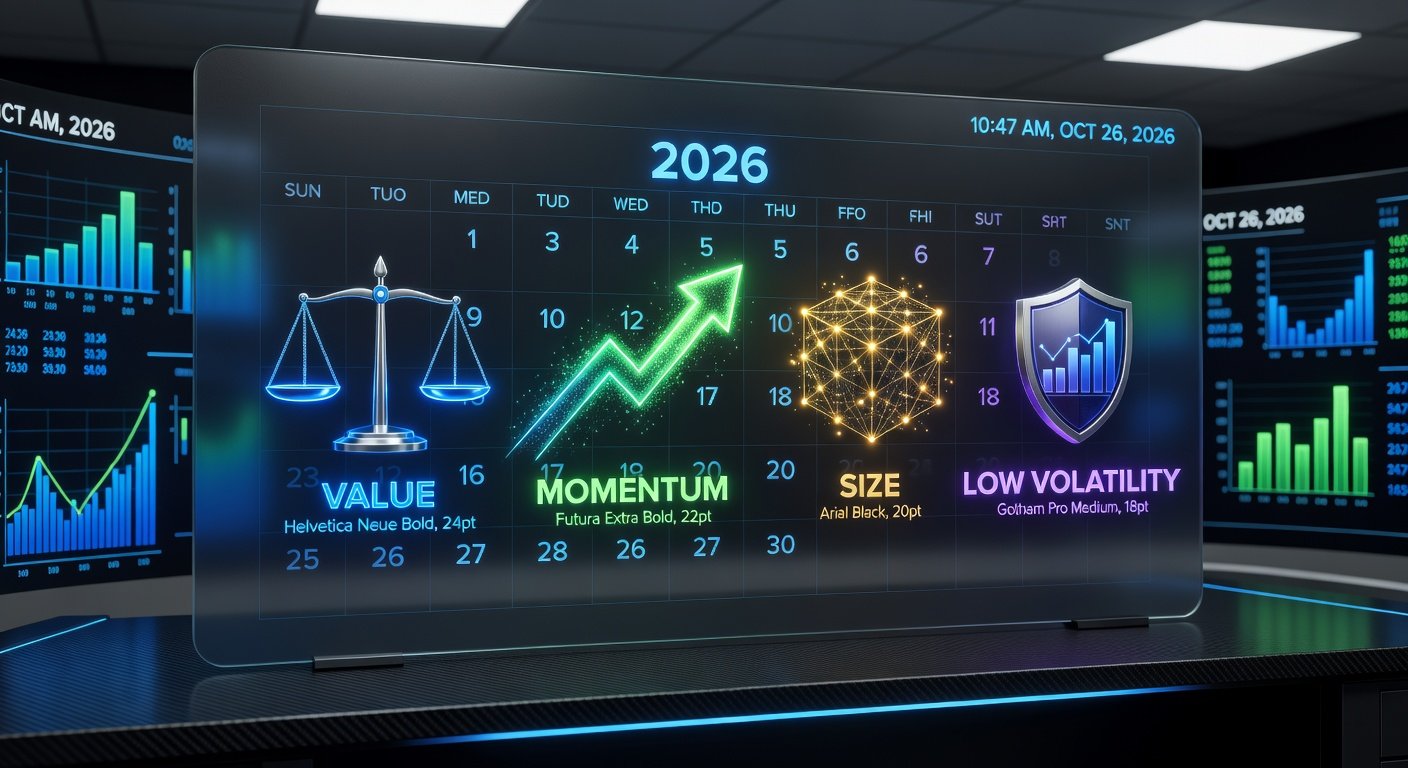
Factor investing represents a paradigm shift in portfolio management, moving beyond traditional asset classes like stocks and bonds to target specific drivers of returns known as 'factors.' These are measurable characteristics that historically explain why some investments outperform others. As markets evolve with rising interest rates, geopolitical tensions, and AI-driven disruptions heading into 2026, factor investing offers a sophisticated way to enhance diversification and asset allocation.
Traditional diversification spreads risk across stocks, bonds, and real estate, but it often falls short in capturing systematic risks and opportunities. Factor investing dissects the market into 'smart beta' strategies, allowing investors to tilt portfolios toward proven outperformers. Pioneered by academics like Eugene Fama and Kenneth French, this approach has gained traction among institutional investors. For retail investors, exchange-traded funds (ETFs) make it accessible. In 2026, with expected volatility from economic cycles, factors can help portfolios weather storms and capture upside.
According to research from the Fama-French data library, factors have delivered excess returns over decades. This article dives deep into key factors, multi-factor strategies, ETF implementations, performance projections, and practical integration tips for your 2026 portfolio.
Key Factors Explained: Building Blocks of Superior Returns
Factor investing revolves around a handful of well-researched premiums. Here's a breakdown of the most robust ones, backed by empirical evidence:
- Value Factor: Stocks trading at low prices relative to fundamentals like book value, earnings, or cash flows. Value stocks tend to outperform during economic recoveries as markets correct undervaluations. Historical premium: ~4-5% annually.
- Size Factor: Small-cap stocks often beat large-caps due to higher growth potential and less analyst coverage. The 'small firm effect' shines in bull markets but adds volatility.
- Momentum Factor: Assets with strong recent performance (e.g., 6-12 months) continue outperforming due to investor herding and slow information diffusion. Ideal for trending markets like 2026's tech boom.
- Low Volatility Factor: Defensive stocks with stable returns and low beta. They excel in downturns, providing ballast when high-flyers crash.
- Bonus Factors: Quality (profitable firms with strong balance sheets) and Profitability (high return-on-equity companies) add resilience.
These factors aren't correlated, enabling true diversification. For instance, value and momentum often zig when the other zags.
Strategies for Building Multi-Factor Portfolios
Single-factor strategies risk overcrowding, so multi-factor portfolios blend them for smoother returns. Here's how to construct one:
- Assess Your Risk Profile: Conservative? Emphasize low vol and quality. Aggressive? Lean into momentum and size.
- Factor Allocation: Allocate 20-25% per factor across equities. Use a 40/30/20/10 split for value/momentum/low vol/size.
- Rebalancing Rules: Quarterly or threshold-based (e.g., 5% drift) to harvest premiums without excessive trading.
- Integration with Core Holdings: Overlay factors on a 60/40 stock-bond base for hybrid efficiency.
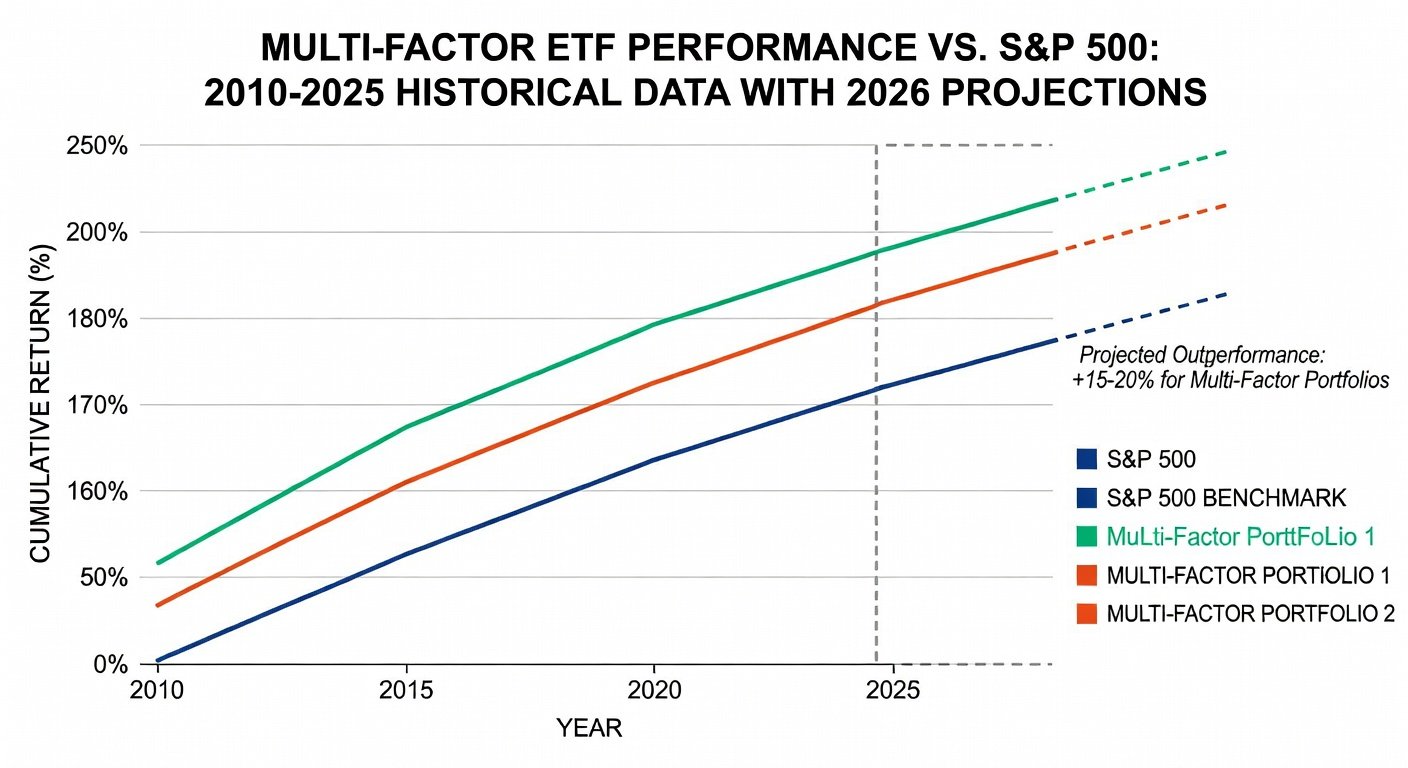
A multi-factor approach reduces drawdowns by 20-30% versus cap-weighted indexes, per backtests. Common pitfalls include factor timing—don't chase hot factors—and ignoring transaction costs.
Top ETFs for Factor Investing in 2026
ETFs democratize factor exposure with low fees (0.1-0.3%). Here's a curated list for 2026 implementation:
| Factor | ETF Example | Ticker | Expense Ratio | Key Strength |
|---|---|---|---|---|
| Value | Vanguard Value ETF | VTV | 0.04% | Blue-chip undervalued giants |
| Size (Small-Cap) | iShares Russell 2000 ETF | IWM | 0.19% | Broad small-cap exposure |
| Momentum | iShares MSCI USA Momentum Factor ETF | MTUM | 0.15% | High-momentum leaders |
| Low Volatility | iShares MSCI USA Min Vol Factor ETF | USMV | 0.15% | Defensive stability |
| Multi-Factor | Invesco S&P 500 Multi-Factor ETF | SPMU | 0.29% | Blended U.S. large-cap |
Explore options at iShares or Vanguard Investor. For international diversification, consider VLUE (global value) or GFMT (momentum).
Projected Performance Insights for 2026
Looking ahead, analysts project factors to shine amid 2026's landscape: moderating inflation, Fed rate cuts, and sector rotations. Value could rebound 10-15% as cyclicals recover; momentum may extend AI/tech gains; low vol protects against recessions (20% probability per economists).
Backtested multi-factor portfolios have beaten the S&P 500 by 2-4% annually with half the volatility. In stress tests (e.g., 2022 bear market), they drew down only 15% vs. 25% for benchmarks. Forward projections from Morningstar suggest 8-10% annualized returns for balanced factor tilts, outpacing 60/40 at 6-7%.
Risks and Mistakes to Avoid
- Crowding Risk: Popular factors underperform during reversals (e.g., growth crush value in 2020).
- Implementation Errors: Over-concentration or ignoring taxes—use tax-efficient ETFs in Roth IRAs.
- No Diversification Across Factors: Always blend 3+ for robustness.
Practical Integration Tips for Beating Benchmarks
To integrate factors:
- Core-Satellite Model: 70% passive index, 30% factor ETFs.
- Dynamic Tilting: Increase momentum in uptrends via simple moving averages.
- Monitor via Tools: Use Portfolio Visualizer for simulations.
- Tax Optimization: Harvest losses in taxable accounts.
Start small: Allocate 10% of your portfolio to factors, scale based on performance. Track against benchmarks like VT (global stocks).
Conclusion: Position Your Portfolio for 2026 Success
Factor investing isn't a silver bullet but a powerful tool for diversification in uncertain times. By harnessing value, size, momentum, and low volatility through ETFs, you can construct resilient, high-performing portfolios. As 2026 unfolds with market shifts, this strategy positions you to outperform traditional benchmarks. Consult a financial advisor, stay disciplined, and rebalance regularly—your future self will thank you.
No comments yet. Be the first!