 Bullish Portfolio
What is Bond Laddering and Why It Matters in 2026
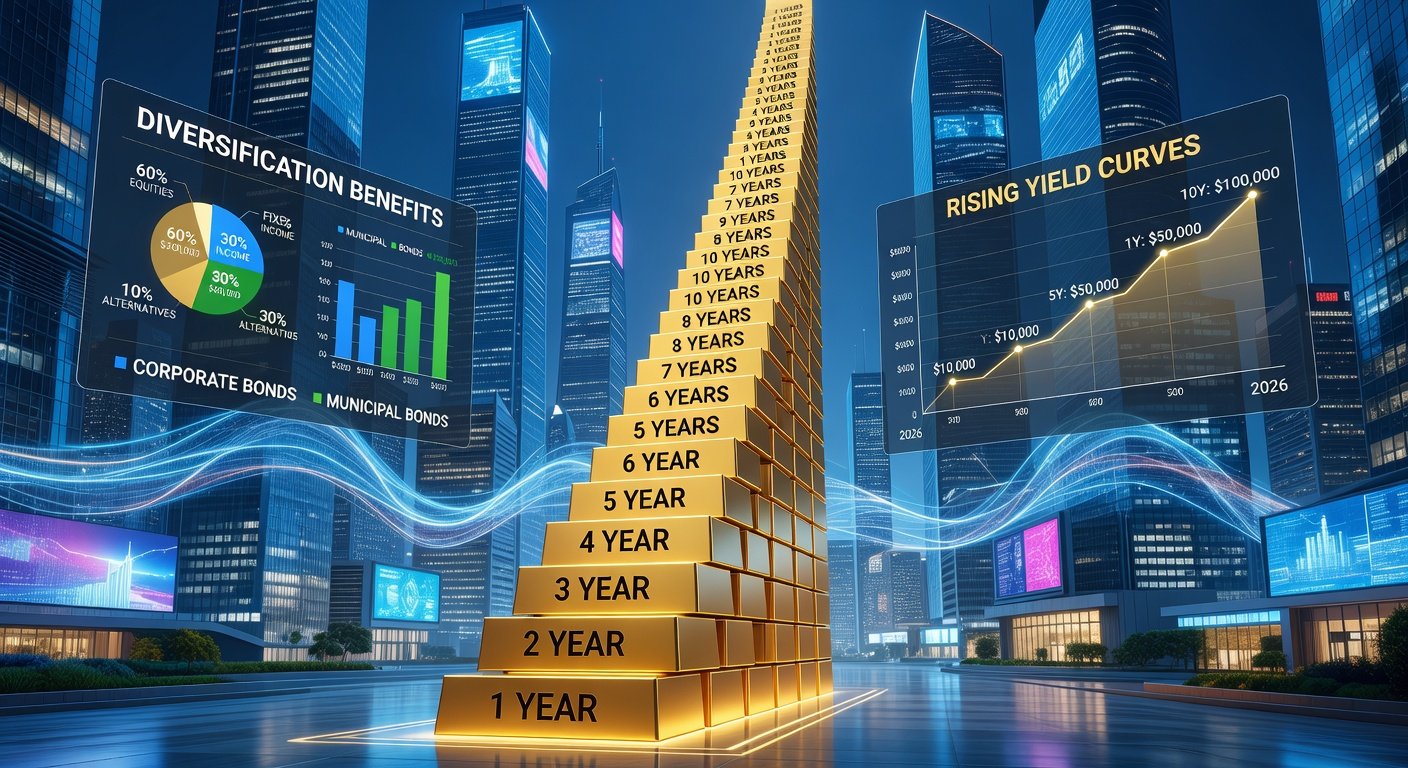
Bond laddering is an investment strategy that involves purchasing bonds with staggered maturity dates, creating a "ladder" of fixed-income securities. This approach spreads out maturity dates—typically from short-term to long-term—allowing investors to capture yields across different durations while managing reinvestment and interest rate risks. In 2026, with economic uncertainties like potential inflation rebounds and central bank policy shifts, bond laddering emerges as a diversification powerhouse for portfolios.
Traditional buy-and-hold strategies expose investors to lump-sum maturity risks, where all bonds mature simultaneously, forcing reinvestment at potentially unfavorable rates. Laddering mitigates this by providing regular liquidity as bonds mature sequentially, enabling reinvestment at prevailing market rates. For portfolio managers seeking stability amid volatile equities and alternative assets, this method enhances fixed-income allocation without sacrificing potential returns.
According to financial experts, bond laddering is particularly relevant in environments of fluctuating interest rates, as seen in recent years. It promotes disciplined asset allocation, ensuring a portion of the portfolio is always accessible for opportunistic moves or emergencies.
The Core Benefits of Bond Laddering for Diversification
Bond laddering excels in diversification by reducing concentration risk in any single maturity bucket. Here's why it's a 2026 must-have:
- Interest Rate Risk Mitigation: Shorter-term bonds mature sooner, allowing reinvestment if rates rise, while longer-term ones lock in higher yields if rates fall.
- Income Stream Predictability: Regular maturities provide steady cash flow, ideal for retirees or income-focused investors.
- Liquidity Management: No need to sell bonds prematurely in a down market; maturing principal returns capital naturally.
- Yield Curve Navigation: Captures opportunities across the yield curve, from steep to flat environments.
In a diversified portfolio, bonds typically comprise 20-60% depending on risk tolerance. Laddering ensures this slice performs reliably, balancing equity volatility. For more on bond basics, visit the Investopedia bond guide.
Step-by-Step Guide to Constructing a Bond Ladder
Building a bond ladder is straightforward yet requires thoughtful planning. Follow these steps tailored for 2026 market conditions:
- Define Objectives and Time Horizon: Assess your investment goals—e.g., income generation or capital preservation—and risk tolerance. Aim for a ladder spanning 1-10 years or longer for conservative strategies.
- Determine Allocation Size: Allocate 10-30% of your portfolio initially, scaling based on total assets. For a $500,000 portfolio, start with $100,000 in bonds.
- Select Bond Types: Mix Treasuries for safety, corporates for yield, and municipals for tax efficiency. Prioritize investment-grade issues to minimize credit risk.
- Set Maturity Intervals: Create rungs every 1-2 years. Example: $20,000 each in 1-year, 2-year, up to 10-year bonds.
- Purchase Strategically: Buy through brokerage platforms or directly via TreasuryDirect.gov for U.S. Treasuries. Use ETFs for simplicity if individual bonds feel overwhelming.
- Reinvest Maturities: Roll proceeds into the longest rung to maintain the ladder, adjusting for current conditions.
- Monitor and Rebalance: Review quarterly, tweaking for yield curve changes or credit shifts.
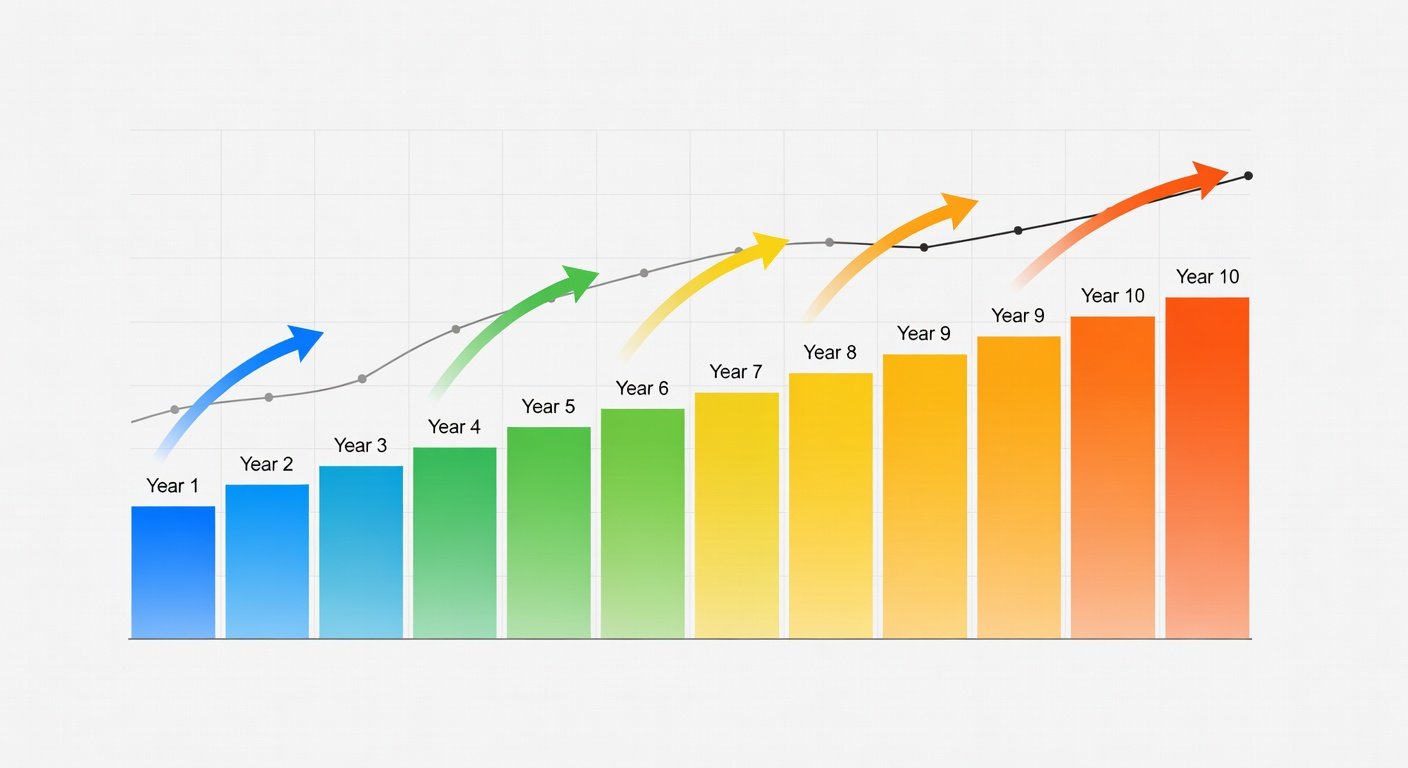
This visual illustrates a sample 10-year bond ladder, showing cash flows from maturing rungs.
Bond Laddering's Role in 2026 Asset Allocation
In 2026, portfolios face headwinds from geopolitical tensions, tech sector rotations, and energy transitions. Bond laddering integrates seamlessly into modern asset allocation:
- Equity Complement: Offsets stock market drawdowns with stable income.
- Alternative Asset Buffer: Provides ballast against real estate or commodities volatility.
- Inflation Hedge Pairing: Combine with TIPS (Treasury Inflation-Protected Securities) ladders for dual protection.
A balanced 60/40 portfolio (60% equities, 40% fixed income) benefits immensely. Within fixed income, ladder 70% in Treasuries/corporates and 30% in high-yield or internationals for yield enhancement. Tools like those from Fidelity offer ladder-building calculators to optimize allocations.
Comparing Bond Laddering to Other Strategies
| Strategy | Pros | Cons | Best For |
|---|---|---|---|
| Bond Laddering | Flexibility, risk mitigation | Requires management | Intermediate investors |
| Barbell | High yield at ends | Middle gap risk | Rate decline bets |
| Bullet | Target maturity focus | Reinvestment lump risk | Short-term goals |
| ETFs/Funds | Easy access | Less control | Beginners |
Laddering outperforms in uncertain rate environments like 2026 projections.
Real-World Examples Tailored to 2026 Conditions
Consider a mid-career professional with $1 million in assets. They allocate $300,000 to a 5-year ladder: $60,000 across 1-5 year Treasuries. As the 1-year matures, reinvest into a 5-year bond amid rising rates, boosting yield. In a downturn, coupons provide income without selling equities at lows.
For retirees: A 10-rung ladder ($50,000 each) in municipals yields tax-free income. Scenario: Post-2026 election volatility spikes rates; early maturities fund at higher yields, preserving purchasing power.
High-net-worth example: Blend corporate ladders with ESG bonds, diversifying across sectors like green energy, aligning with 2026 sustainability trends. Check Vanguard for sustainable fixed-income options.
Common Mistakes to Avoid in Bond Laddering
- Overlooking Credit Quality: Stick to AAA/AA ratings; junk bonds amplify risks.
- Ignoring Costs: Brokerage fees erode returns—use no-load options.
- Static Ladders: Fail to rebalance, missing yield opportunities.
- Tax Inefficiency: Mismatch taxable bonds with tax-advantaged accounts.
- Short Horizon Bias: Too many short rungs limit yield capture.
FAQs on Bond Laddering for 2026
Q: Is bond laddering suitable for beginners?
A: Yes, via bond ETFs like Vanguard's short/long-term funds as ladder proxies.
Q: How does it perform in rising rates?
A: Excellently—short rungs reinvest higher, offsetting long-rung price drops.
Q: Can I automate it?
A: Platforms like Fidelity offer auto-reinvestment tools.
Q: What's the minimum investment?
A: $10,000-50,000 for meaningful diversification.
Conclusion: Build Your 2026 Ladder Today
Bond laddering isn't just a tactic—it's a cornerstone for resilient portfolios in 2026. By staggering maturities, you harness diversification, tame interest rate risks, and ensure steady income. Start small, scale thoughtfully, and consult a financial advisor for personalization. In an era of flux, this strategy positions you for long-term success.
No comments yet. Be the first!