 Bullish Portfolio
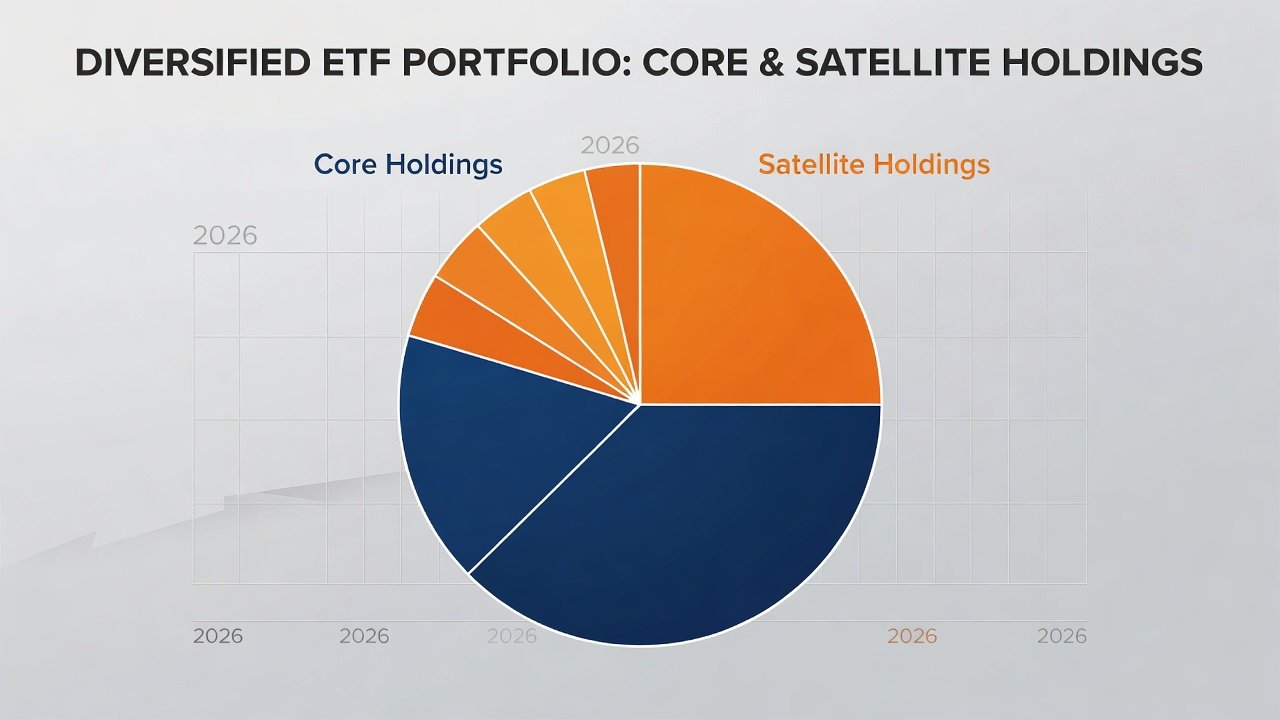
Introduction to Core-Satellite ETF Strategies
Core-satellite ETF models provide a structured approach to portfolio construction that combines broad market exposure with targeted opportunities. This framework helps investors achieve better diversification while controlling costs and risk in dynamic markets. As we approach 2026, economic shifts, interest rate environments, and sector innovations make this model particularly relevant for balancing stability with growth potential. Investors today face an environment of evolving inflation pressures, geopolitical uncertainties, and technological disruption that can create both risks and opportunities across asset classes.
The core typically consists of low-cost, broad-market ETFs that deliver market-like returns with minimal effort. Satellites add active tilts through sector-specific, thematic, or factor-based ETFs. Together, they allow for precise asset allocation across equities, fixed income, and alternatives. This hybrid method draws from modern portfolio theory principles while remaining practical for individual and institutional investors alike. By anchoring the majority of assets in efficient core holdings, investors reduce overall expenses and tracking error while using satellites to express specific market views without overhauling the entire portfolio.
Understanding the Core-Satellite Framework in Depth
The core-satellite approach divides a portfolio into two distinct layers. The core represents the foundational holdings designed to capture systematic market returns across major asset classes. This layer emphasizes broad diversification, low turnover, and minimal costs. In contrast, the satellite layer introduces concentrated bets that aim to generate alpha or protect against specific risks. The balance between these layers depends on an investor’s risk tolerance, time horizon, and market outlook for 2026.
Successful implementation requires clear rules for sizing each component. Most practitioners allocate 60 to 80 percent to the core and the remainder to satellites. This structure preserves the benefits of passive indexing while allowing room for active management where conviction is highest. The framework also facilitates easier performance attribution, as returns can be clearly separated between market beta from the core and active decisions from the satellites.
Selecting the Right Core ETFs
Choosing core holdings starts with identifying ETFs that offer comprehensive market coverage at low expense ratios. Focus on total market or index-tracking funds that span large-cap, mid-cap, and international equities. Investors should evaluate tracking error, liquidity, and tax efficiency before committing capital. Practical steps include reviewing historical performance consistency, checking fund size for stability, and ensuring alignment with overall risk tolerance. For fixed-income cores, prioritize government and investment-grade corporate bond ETFs that provide ballast during equity volatility.
Additional considerations involve examining the underlying index methodology and any securities lending practices that could affect returns. Investors may also compare similar core ETFs from different providers to identify the most efficient option. In 2026, particular attention should be paid to currency-hedged international core ETFs if foreign exchange volatility is expected to remain elevated.
Identifying High-Conviction Satellite Opportunities
Satellite positions should reflect specific market views or thematic convictions without dominating the portfolio. In 2026, opportunities may arise in technology innovation, sustainable energy, or emerging market debt. Selection criteria emphasize strong fundamentals, reasonable valuations, and clear catalysts for outperformance. High-conviction satellites often include factor ETFs focused on value, momentum, or quality. Alternatives such as real estate or commodity ETFs can further diversify returns. Limit satellite exposure to 20-40% of the total portfolio to preserve the stabilizing effect of the core.
When evaluating satellites, investors should conduct thorough due diligence on liquidity, bid-ask spreads, and premium or discount behavior. Thematic satellites tied to artificial intelligence, clean energy transition, or healthcare innovation may offer compelling growth stories but require monitoring for valuation compression. Factor-based satellites can be rotated tactically as economic cycles progress through 2026.
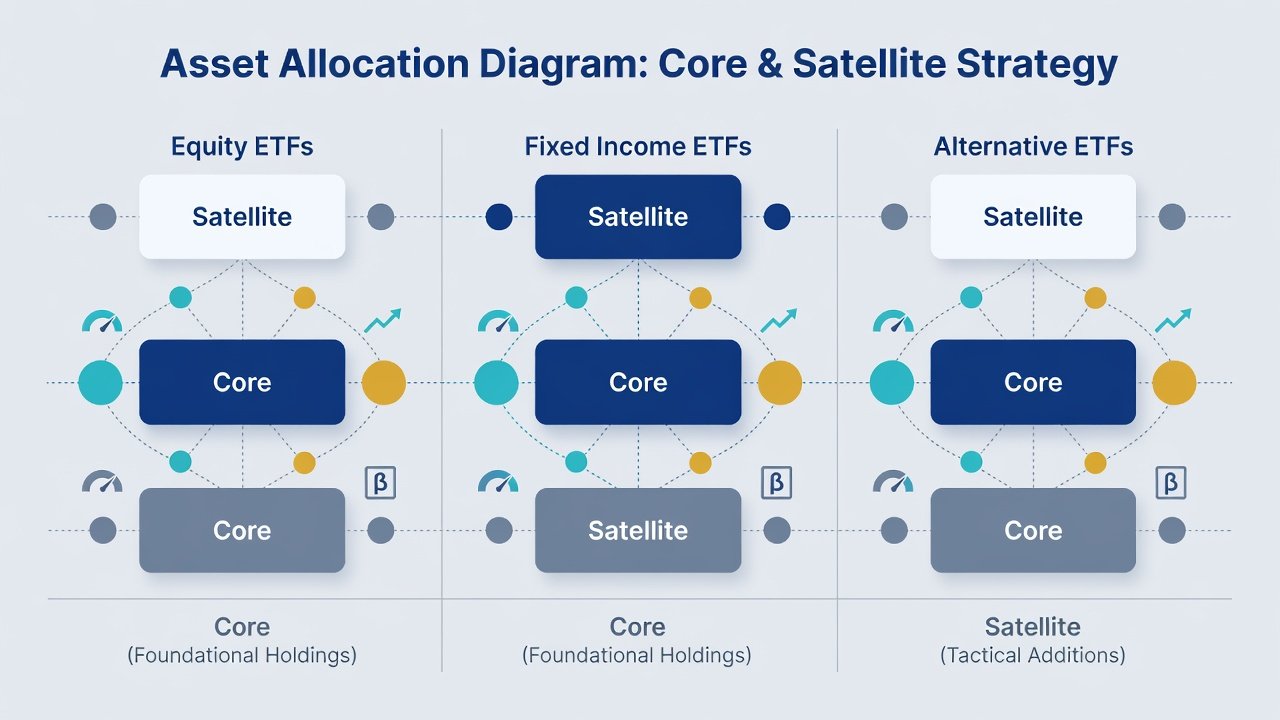
Allocation Examples Across Asset Classes
A sample 2026 allocation might feature 60% in core equity ETFs covering U.S. and global markets, 25% in core fixed-income ETFs for income and stability, and 15% split among satellite holdings in thematic equities and alternatives. Risk metrics such as standard deviation and maximum drawdown should guide adjustments, with satellites carrying higher volatility that is offset by the core. Equity cores provide growth, while fixed-income satellites can target high-yield or inflation-protected segments. Alternative satellites, including infrastructure or private-credit proxies via ETFs, add non-correlated returns. Regular stress testing against 2026 scenarios like moderate recession or rate stabilization helps refine these weights.
Another example allocation could tilt toward 50% core equities, 30% core fixed income, and 20% satellites distributed across emerging markets, real assets, and defensive equity factors. Investors should document the rationale for each satellite choice and establish exit criteria in advance. Comparing expected Sharpe ratios across different allocation mixes can highlight which configuration best matches personal objectives while maintaining diversification benefits.
Rebalancing Tactics and Performance Tracking
Effective rebalancing maintains target allocations without excessive trading costs. Calendar-based rebalancing (quarterly or semi-annually) or threshold-based triggers (when allocations drift beyond 5%) both work well. In 2026 market scenarios involving sector rotations or geopolitical events, tactical shifts within satellites can capture opportunities while the core remains anchored. Performance tracking involves comparing total returns against benchmarks, monitoring Sharpe ratios, and reviewing contribution from core versus satellite segments. Tools from major providers help visualize drift and tax implications over time.
Investors should also incorporate forward-looking indicators such as earnings growth forecasts and credit spreads when deciding whether to rebalance satellites. Automated alerts from brokerage platforms can notify users when drift thresholds are breached, reducing emotional decision-making during periods of market stress.
Common Pitfalls to Avoid
- Over-concentrating satellites in correlated themes that amplify rather than reduce risk, such as loading multiple technology-focused ETFs without checking overlap.
- Ignoring liquidity differences between core and satellite ETFs during volatile periods, which can lead to unfavorable execution prices.
- Failing to account for tax drag when frequently rebalancing taxable accounts instead of using tax-loss harvesting opportunities strategically.
- Neglecting to update convictions as macroeconomic conditions evolve into 2026, leaving outdated satellite positions that no longer align with the investment thesis.
- Underestimating the impact of currency fluctuations on international satellite holdings without considering hedged alternatives.
FAQs on Tax Implications and Liquidity Management
How do core-satellite models affect taxes? Core holdings in tax-advantaged accounts minimize capital gains. Satellite trades should prioritize tax-efficient ETFs and harvest losses strategically. Investors can further reduce tax impact by placing higher-turnover satellites inside retirement accounts. For more guidance on tax-efficient investing, consult resources from the U.S. Securities and Exchange Commission.
What liquidity considerations apply? Core ETFs typically offer high daily volume. Satellite selections require checking average trading volume and bid-ask spreads to avoid execution slippage. During periods of market stress, less liquid satellite ETFs may trade at wider spreads, so maintaining a liquidity buffer in the core is advisable.
How should investors handle dividends and distributions? Reinvest core ETF distributions automatically to maintain allocation targets. Satellite distributions may be directed toward new satellite opportunities or used for rebalancing without additional cash contributions.
What role does monitoring play in liquidity management? Regular review of trading volumes and premium/discount data helps ensure satellites remain easy to enter and exit. Investors can reference educational materials from Investor.gov for best practices on ETF liquidity evaluation.
Conclusion
Core-satellite ETF models deliver a disciplined path to diversification and risk management heading into 2026. By thoughtfully selecting cores, curating high-conviction satellites, and applying consistent rebalancing, investors can adapt to shifting markets while pursuing long-term objectives. This approach remains flexible enough to incorporate new opportunities without sacrificing overall portfolio integrity. Regular review and clear documentation of allocation decisions further strengthen the framework over multiple market cycles.
No comments yet. Be the first!