 Bullish Portfolio
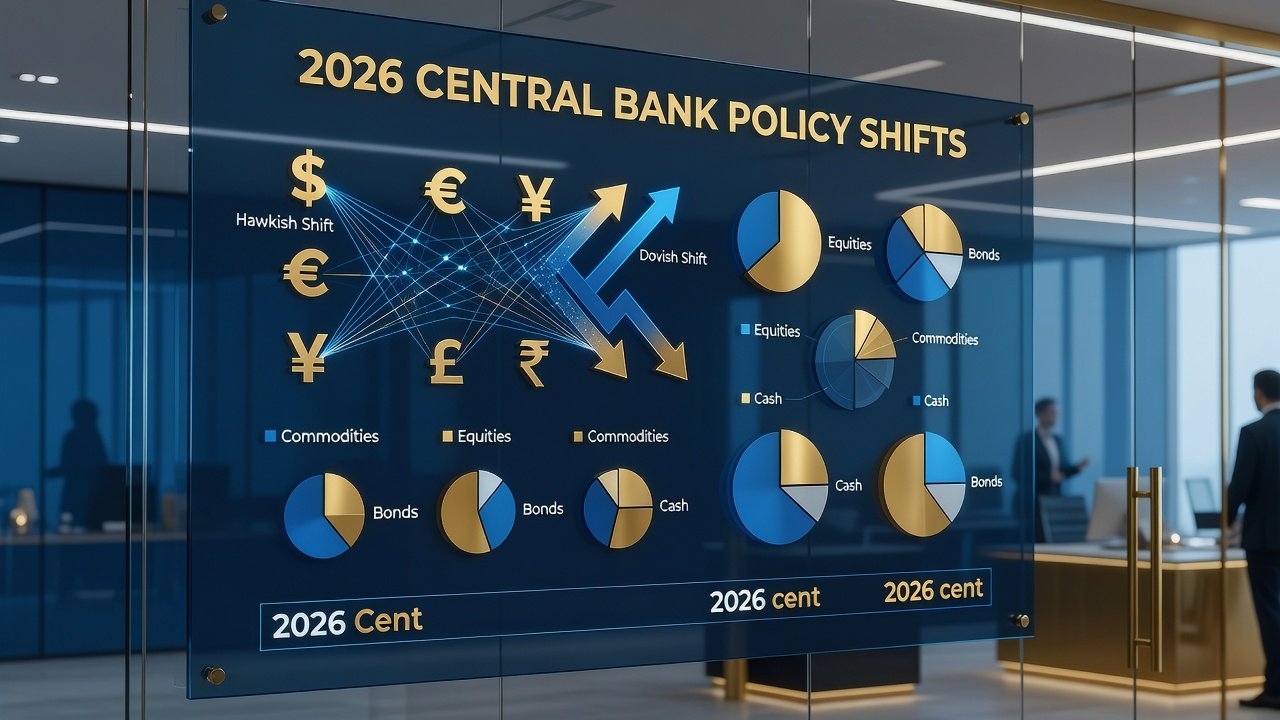
Introduction: Navigating 2026 Central Bank Policy Evolution
Central bank decisions in 2026 continue to reshape global markets through interest rate adjustments and quantitative measures. Investors must adapt asset allocation strategies to maintain resilience amid potential rate cuts, balance sheet expansions, or tightening moves. This guide provides a detailed framework for responding to these shifts, emphasizing diversification and risk management across equities, bonds, and alternative assets. Policy changes from major institutions such as the Federal Reserve, European Central Bank, and others create ripple effects that influence everything from corporate borrowing costs to commodity prices and currency valuations.
Understanding policy impacts requires examining how rate decisions influence borrowing costs, inflation expectations, and asset valuations. Quantitative easing or tightening further amplifies effects on liquidity and market volatility. By focusing on practical adaptation, investors can position portfolios to weather surprises while pursuing long-term growth. Effective adaptation also involves recognizing that central bank communications often precede actual policy actions, giving attentive investors a window to prepare reallocations in advance.
Impacts of 2026 Rate Decisions and Quantitative Measures
Rate hikes typically pressure bond prices downward while supporting certain equity sectors like financials. Conversely, rate cuts often boost bond values and growth-oriented equities. Quantitative measures, such as asset purchases, inject liquidity that can elevate risk assets but may fuel inflation concerns. In 2026, these dynamics affect equities through corporate earnings sensitivity, bonds via yield curve shifts, and alternatives like real estate or commodities through cost of capital changes. For example, prolonged easing measures can compress credit spreads and encourage risk-taking, while tightening cycles often lead to higher volatility in leveraged positions.
Portfolio resilience hinges on balancing exposure. Over-reliance on fixed-income assets can lead to losses during tightening cycles, while heavy equity weighting risks drawdowns in surprise hawkish turns. Diversification into alternatives provides a buffer, as these assets often exhibit lower correlation to traditional markets during policy volatility. Additional considerations include currency fluctuations and cross-border capital flows, which can magnify or offset domestic policy effects depending on an investor’s geographic exposure.
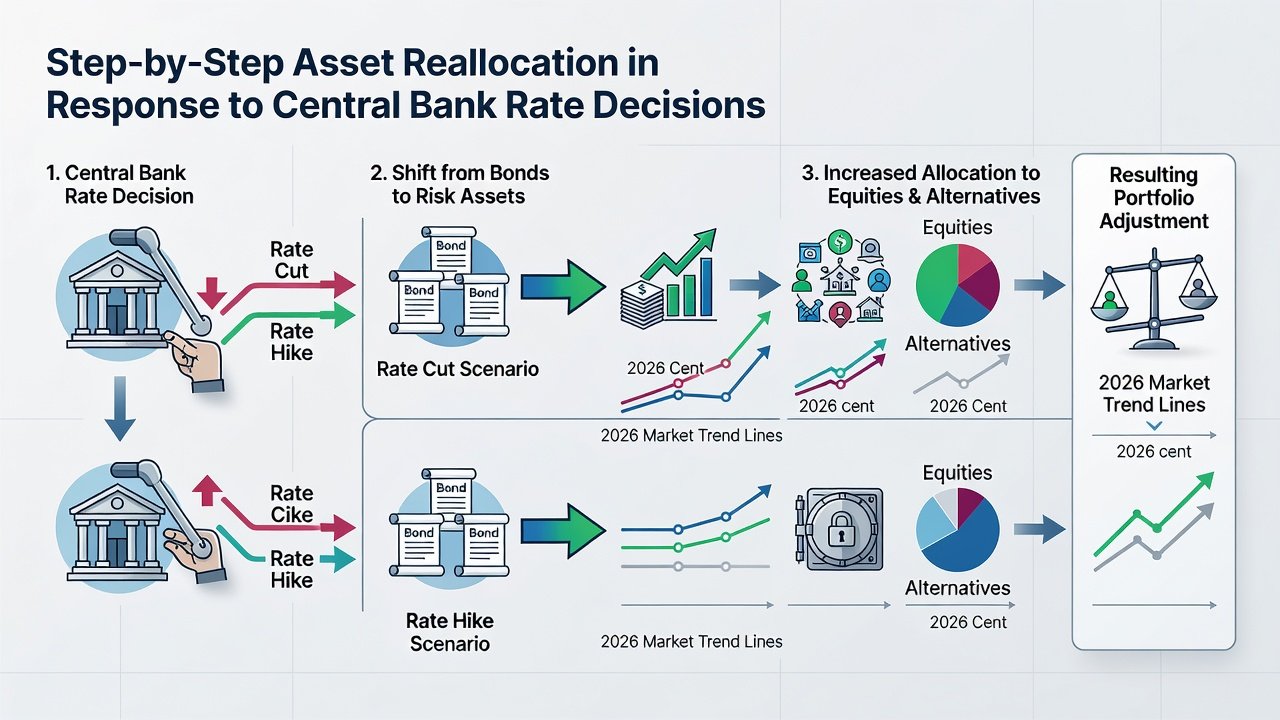
Step-by-Step Framework for Asset Allocation Adaptation
- Assess current portfolio exposure to rate-sensitive assets using duration metrics and sector breakdowns. Begin by calculating weighted average duration across fixed-income holdings and identifying equity sectors most vulnerable to rate movements, such as utilities or real estate investment trusts.
- Monitor central bank communications from major institutions for signals on policy direction. Subscribe to official statements and minutes releases from bodies like the Federal Reserve and the European Central Bank to capture forward guidance early.
- Model scenarios including baseline, aggressive easing, and unexpected tightening paths. Use historical analogs and current economic indicators to assign probabilities and estimate portfolio impacts under each case.
- Rebalance by shifting weights toward defensive equities, shorter-duration bonds, or inflation-hedging alternatives. Execute changes gradually to minimize transaction costs and tax implications while maintaining target risk levels.
- Implement ongoing reviews quarterly or after major policy announcements to maintain alignment. Document decisions and performance outcomes to refine the process over subsequent cycles.
This structured approach ensures systematic responses rather than reactive decisions driven by short-term market noise.
Scenario Analysis for Policy Surprises
Scenario planning helps anticipate outcomes. In a dovish surprise with deeper rate cuts, equities in technology and consumer discretionary may rally while bonds gain from falling yields. An aggressive tightening scenario could favor value stocks and short-term fixed income. Quantitative easing expansions often lift alternatives such as infrastructure and commodities. Investors should also prepare for mixed outcomes where one central bank eases while another tightens, creating divergent regional effects on global portfolios.
Using 2026 market data, investors can backtest these paths to quantify potential drawdowns and recovery times. For instance, a modest rate cut might lift broad equity indices by supporting valuations, whereas tightening could compress multiples across growth sectors. Incorporating stress tests that include liquidity squeezes and correlation spikes provides an additional layer of preparedness. Bank for International Settlements research offers valuable frameworks for modeling these interconnected risks.
Reallocation Tactics Across Asset Classes
Equities: Reduce exposure to high-valuation growth stocks in favor of dividend payers and defensive sectors like utilities and healthcare. Consider tilting toward companies with strong balance sheets that can withstand higher borrowing costs. Bonds: Shorten duration to limit interest-rate risk while maintaining income through investment-grade credits and floating-rate instruments. Alternatives: Increase allocations to real assets, private credit, or hedged strategies that perform well in volatile policy environments. Real estate and infrastructure often benefit from inflation pass-through characteristics, while certain commodity exposures can hedge against currency depreciation.
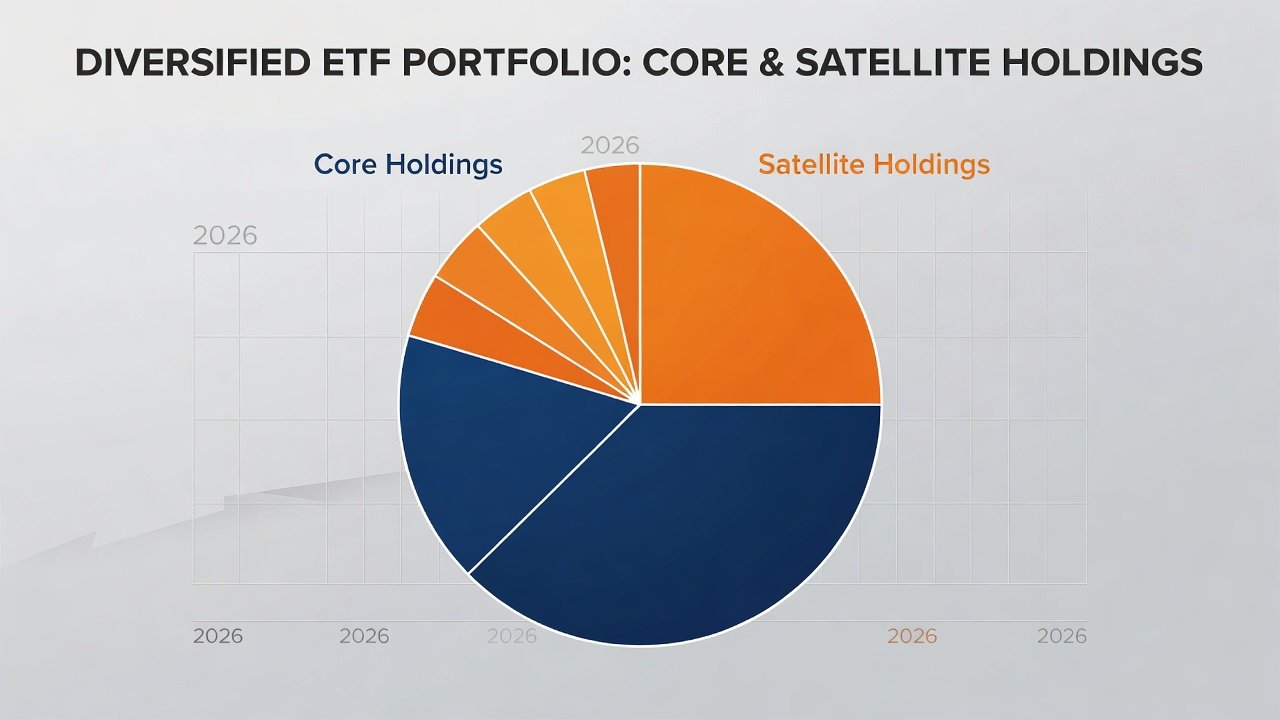
Comparisons of pre- and post-policy shift portfolios reveal clear benefits. A pre-shift allocation heavy in long-duration bonds might suffer meaningful drawdowns during rate rises, whereas a post-shift mix incorporating a larger alternatives sleeve could limit losses with faster rebound potential. Tactical use of exchange-traded funds allows precise adjustments without disrupting core holdings.
Risk Mitigation Examples Using 2026 Market Data
Real-world examples from early 2026 illustrate successful adaptations. Portfolios that incorporated dynamic hedging reduced volatility during policy announcement periods. Diversifying into global equities helped offset domestic rate impacts, while tactical shifts into commodities provided inflation protection. Another effective tactic involves maintaining a modest cash buffer that can be deployed opportunistically when policy-driven dislocations create attractive entry points.
Common mistakes include ignoring correlation changes post-policy and failing to stress-test liquidity needs. Avoid these by maintaining cash reserves and using options overlays for downside protection. Regular rebalancing also prevents unintended drift that can amplify losses when conditions shift abruptly.
Maintaining Portfolio Resilience Through Diversification
Beyond simple reallocation, true resilience comes from multi-layered diversification that accounts for both expected and tail-risk outcomes. Geographic diversification across developed and emerging markets can offset region-specific policy surprises. Within alternatives, blending liquid instruments like commodity ETFs with less liquid private-market exposures creates a balance between accessibility and return potential. Investors should also evaluate tax-efficient vehicles and consider how policy changes interact with fiscal measures in their home jurisdiction.
Pre- and Post-Policy Shift Portfolio Comparisons
Pre-shift portfolios often feature higher equity concentrations in growth areas, longer bond durations, and modest alternatives exposure. Post-shift versions typically reduce growth tilts, compress duration, and elevate alternatives to 20-30 percent of total assets. These adjustments enhance resilience without sacrificing expected returns over multi-year horizons when executed with discipline.
FAQ: Common Adaptation Challenges
How frequently should I review my allocation after policy announcements?
Conduct reviews immediately after major meetings and at least quarterly to capture evolving conditions and prevent drift from target allocations.
What role do alternatives play in 2026 environments?
Alternatives reduce correlation to rate movements and offer inflation or growth hedges depending on the policy stance, helping stabilize overall portfolio returns.
Can individual investors access the same tools as institutions?
Yes, through ETFs and mutual funds that replicate institutional strategies in duration management and alternatives exposure, along with low-cost brokerage platforms.
How should currency risk be handled during divergent central bank policies?
Consider hedged international equity or bond funds and monitor relative policy paths to decide whether to maintain unhedged exposure for potential currency gains.
What data sources provide the most reliable policy signals?
Official central bank websites, meeting minutes, and economic projections remain primary sources, supplemented by analysis from organizations such as the International Monetary Fund.
Conclusion
Adapting to 2026 central bank shifts demands proactive asset allocation grounded in scenario analysis and disciplined rebalancing. By following the outlined framework, investors can build resilient portfolios that navigate policy uncertainty effectively. Stay informed through authoritative sources and adjust strategies as new data emerges to preserve capital and capture opportunities across market cycles.

No comments yet. Be the first!