 Bullish Portfolio
Introduction to REIT-Based Volatility Hedging
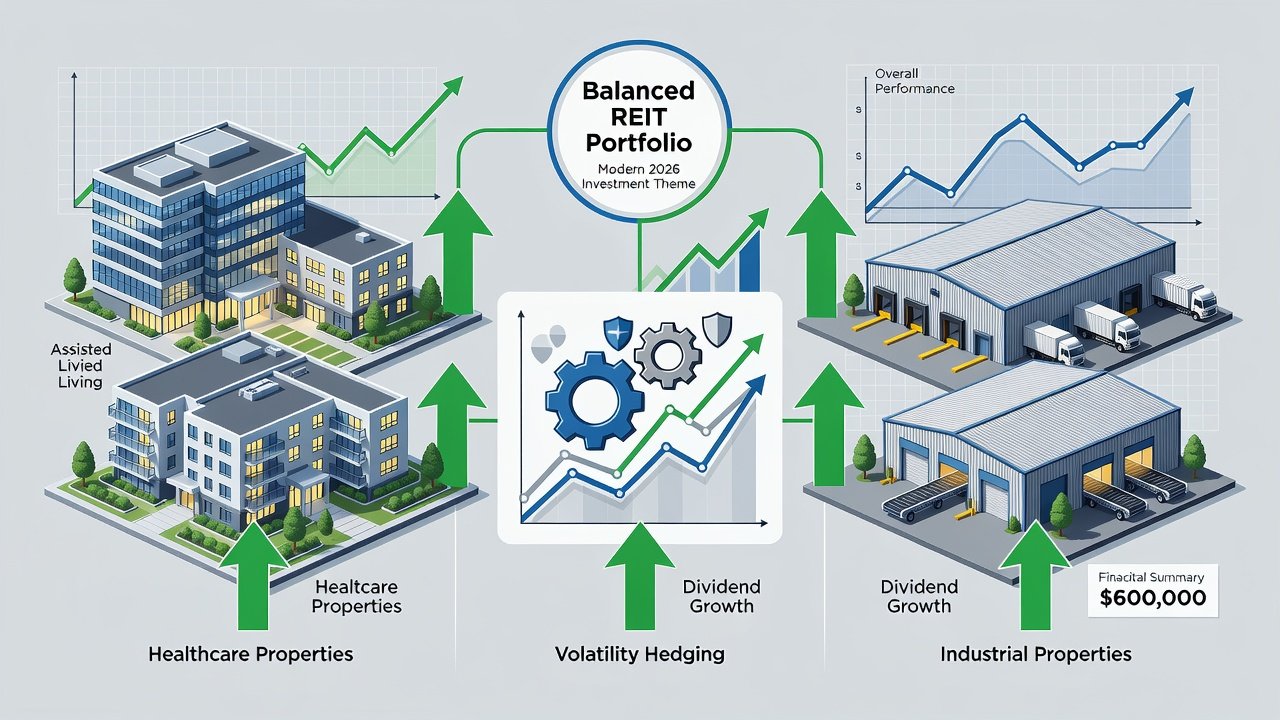
Market volatility poses significant challenges for investors relying on passive income, yet real estate investment trusts (REITs) provide a proven mechanism to hedge against equity swings while preserving dividend yields. In 2026, with ongoing economic uncertainties, many portfolios are incorporating REITs to reduce overall risk without sacrificing income generation. REITs own and operate income-producing real estate across various sectors, distributing most taxable earnings as dividends. This structure makes them attractive for hedging because certain sub-sectors exhibit lower correlations to stock market movements during turbulent times.
By strategically blending REITs with dividend-paying stocks, investors can create balanced portfolios that weather volatility better than pure equity holdings. The key lies in understanding how different REIT categories respond to macroeconomic shifts, interest rate changes, and sector-specific demand. This article explores correlation analysis, defensive sub-sector choices, allocation frameworks, and actionable construction steps to help build resilient income streams throughout 2026.
Analyzing Correlations Between REIT Sectors and Broader Markets
Effective hedging starts with detailed correlation analysis. Correlations measure how REIT returns move in relation to broader indices like the S&P 500 or bond markets. Sectors such as retail or lodging REITs often track economic cycles closely, showing higher correlations during expansions and contractions. In contrast, healthcare and industrial REITs frequently demonstrate weaker ties to equity volatility due to essential demand drivers like medical services and logistics infrastructure.
Investors can access historical data through resources like the Federal Reserve Economic Data to calculate rolling correlations over 12- to 36-month periods. For 2026 planning, focus on periods of elevated volatility, such as inflation surges or policy shifts, to identify which REITs provided downside protection. Industrial REITs tied to warehousing have shown moderate correlations around 0.5 to equities in recent cycles, while healthcare REITs often dip below 0.4 during stress events. Monitoring these metrics helps adjust exposures proactively rather than reactively.
Selecting Defensive REIT Sub-Sectors: Healthcare and Industrial
Defensive sub-sectors anchor volatility-hedging strategies because they rely on inelastic demand. Healthcare REITs invest in hospitals, outpatient centers, senior living facilities, and life sciences campuses. These assets benefit from demographic trends like aging populations and stable government reimbursements, leading to predictable occupancy and rent growth. Industrial REITs own distribution centers, manufacturing parks, and cold storage facilities that support e-commerce and supply chain modernization, offering resilience even when consumer spending fluctuates.
Key selection criteria include long-term lease durations, tenant credit quality, and low leverage ratios. Here is a scannable list of evaluation factors for defensive REITs:
- Occupancy rates above 95% with staggered lease expirations
- Dividend payout ratios below 80% for sustainability
- Exposure to essential services rather than discretionary spending
- Strong sponsor track records in property management
- Geographic diversification across stable regions
Avoid over-concentration in office or hospitality REITs, which remain sensitive to remote work trends and travel disruptions. Combining healthcare and industrial holdings typically yields a portfolio beta under 0.7 while supporting consistent distributions.
Building Allocation Models with Dividend Stocks
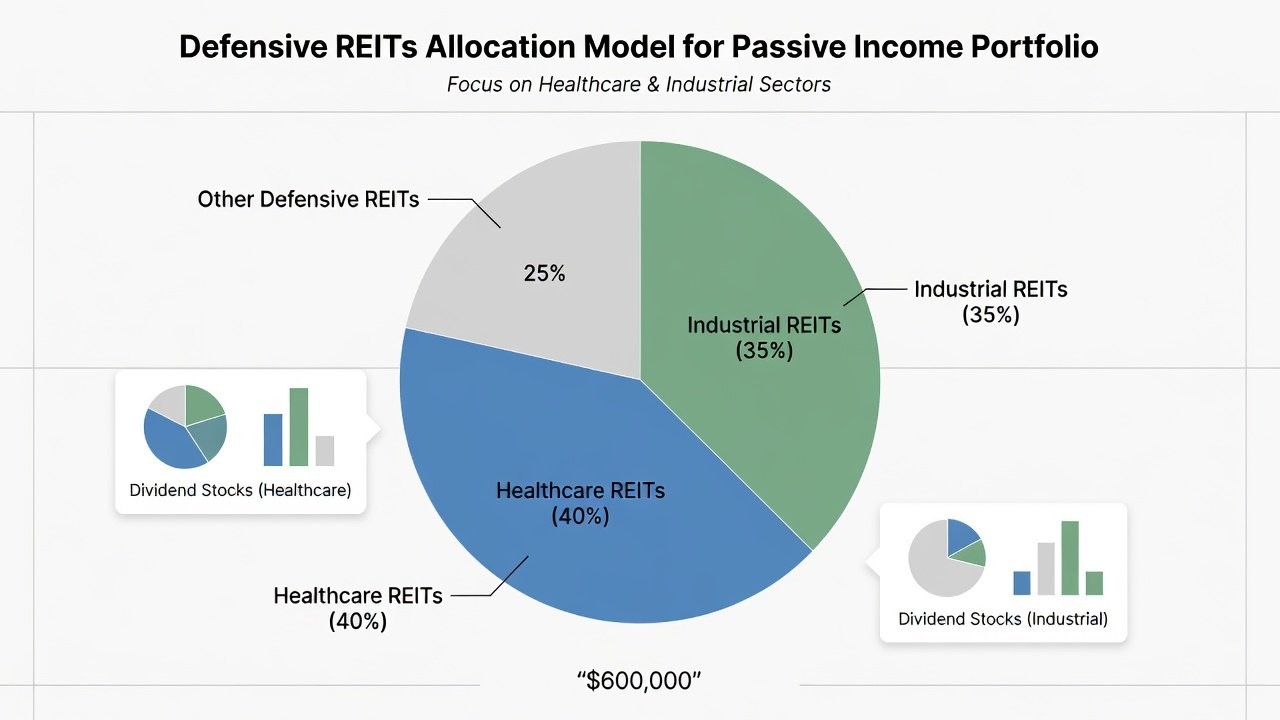
Allocation models integrate REITs with dividend stocks to enhance income stability and diversification. A balanced 2026 framework might target 35-45% in defensive REITs, 30-40% in quality dividend stocks from sectors like consumer staples and utilities, and 15-25% in fixed income or cash buffers. This structure aims to limit maximum drawdowns while targeting sustainable yields through mixed income sources.
Dividend stock selection should emphasize companies with multi-year growth streaks and conservative debt levels. REIT portions benefit from focusing on sponsors with transparent governance and access to capital markets. Review correlations between chosen assets quarterly to ensure the overall portfolio maintains hedging properties rather than amplifying risk.
Step-by-Step Portfolio Construction Examples
Building a hedged portfolio requires methodical steps grounded in current data. Begin by auditing existing holdings for concentration risks using volatility measures like standard deviation. Next, identify 6-8 individual REITs or ETFs spanning healthcare and industrial themes, prioritizing those with proven dividend histories. Pair these with 10-12 dividend stocks exhibiting low pairwise correlations. Establish target weights aligned with your risk tolerance, then run forward-looking simulations assuming equity declines of 15-25% and moderate interest rate volatility.
Consider a practical mid-sized example: an investor starts with a $600,000 portfolio by placing 25% into a diversified healthcare REIT vehicle, 15% into industrial-focused trusts, 35% into defensive dividend equities, and the balance in short-term bonds. Revisit weights after any major market move exceeding 10%. This process helps maintain income continuity even if broader markets experience turbulence in 2026.
Evaluating Risk Metrics and Performance Indicators
Beyond simple yields, evaluate portfolios using metrics such as the Sharpe ratio, Sortino ratio, and beta. Target a Sharpe ratio exceeding 1.0 and portfolio beta below 0.75 for effective hedging. Track dividend coverage ratios and funds from operations growth to confirm income reliability. Leverage filings available on the SEC EDGAR database to assess REIT balance sheet strength, including debt maturity schedules and interest coverage.
Compare performance against benchmarks like the NAREIT Equity REIT Index during both calm and volatile windows. Regular metric reviews allow timely adjustments before correlations shift unfavorably.
Implementing Rebalancing Tactics for 2026
Rebalancing preserves intended risk exposures. Implement rules-based triggers, such as adjusting when any category drifts more than 5% from targets. Conduct full reviews quarterly, with deeper analysis annually or after significant events like Federal Reserve policy changes. The Federal Reserve site offers timely updates on rate outlooks that often influence REIT pricing.
During volatility spikes, consider tax-efficient rebalancing by directing new contributions toward underweight defensive holdings rather than selling appreciated assets. This approach minimizes transaction costs and preserves compounding for passive income goals.
Real-World Case Studies: Yield Stability in Volatility Scenarios
Historical patterns and modeled 2026 scenarios illustrate REIT hedging value. In one simulated environment featuring inflation-driven equity drops of 20%, a healthcare-heavy REIT allocation maintained dividend distributions near prior levels due to long-term medical leases. Industrial components offset some pressure through sustained warehouse demand from online retail growth, resulting in overall portfolio income declining only 4% versus 12% for equity-only strategies.
A second case combined REITs with dividend stocks and showed maximum drawdown limited to 11% during a hypothetical six-month volatility period, compared with 28% for unhedged benchmarks. These outcomes highlight how sub-sector diversification and disciplined allocations support yield stability without requiring market timing.
FAQs on Tax Implications and Hedging Pitfalls
What tax considerations apply to REIT dividends in passive portfolios?
REIT distributions frequently count as ordinary income, though portions may represent return of capital that reduces cost basis and defers taxes. The qualified business income deduction can provide relief for eligible taxpayers; always review current IRS guidance for 2026 specifics.
How do investors avoid common REIT hedging mistakes?
Frequent errors include chasing high yields without checking coverage, neglecting interest rate duration risk, and failing to diversify across sub-sectors. Overlooking liquidity differences between public REITs and private vehicles can also create unexpected volatility. Prioritize quality metrics and maintain a written investment policy to stay disciplined.
Should REIT allocations change with interest rate forecasts?
Yes, rising rates can pressure property valuations, so tilt toward REITs with shorter lease durations or strong pricing power. Monitor macroeconomic indicators and adjust gradually rather than making abrupt shifts.
Applying these REIT hedging techniques equips investors to navigate 2026 volatility while sustaining reliable dividend passive income over the long term.

No comments yet. Be the first!