 Bullish Portfolio

Introduction to REIT Sector Rotation in 2026
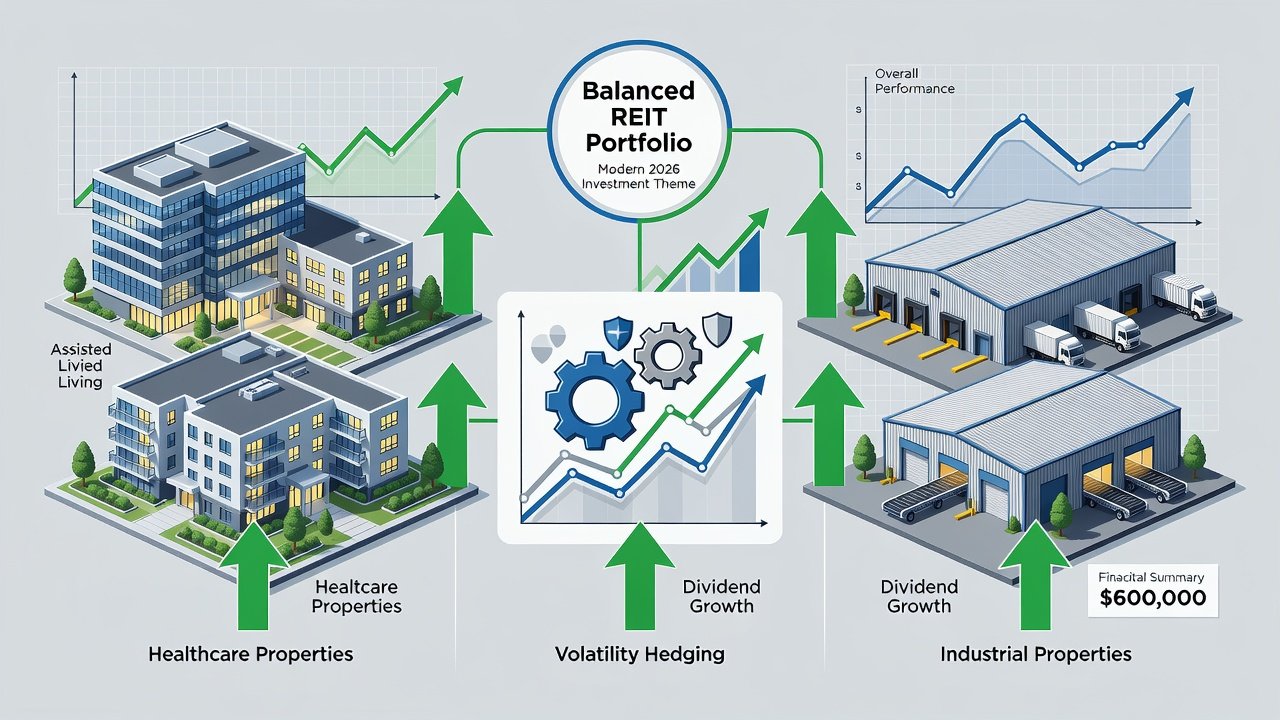
Experienced investors focused on passive income generation recognize the value of sector rotation within real estate investment trusts. With 2026 market conditions shaped by continued e-commerce expansion, evolving supply chain networks, and shifting tenant demands, strategic allocation adjustments across industrial, data center, and healthcare REITs offer a pathway to higher sustainable yields. This comprehensive guide details performance metrics, timing frameworks, allocation examples, and risk controls tailored for seasoned portfolio managers seeking to enhance income stability without excessive volatility exposure.
REIT sector rotation involves systematically shifting capital between property types based on forward-looking indicators. Unlike broad market timing, this approach targets relative strength in occupancy, lease growth, and funds from operations. Investors who master these tactics can capture dividend growth while mitigating downside from interest rate fluctuations or sector-specific slowdowns.
Key REIT Sectors Driving 2026 Opportunities
Industrial REITs stand at the forefront due to persistent demand from logistics and warehousing tied to online retail and reshoring trends. Facilities serving last-mile delivery and manufacturing support high occupancy levels and long-term lease escalations that bolster dividend consistency.
Data Center REITs
Data center REITs benefit from explosive growth in artificial intelligence infrastructure and cloud services. These assets feature specialized power and cooling requirements that create high barriers to entry, supporting premium rental rates. However, rapid technological change demands close monitoring of tenant credit and expansion pipelines.
Healthcare REITs
Healthcare REITs provide defensive characteristics through exposure to senior housing, medical offices, and hospitals. Demographic tailwinds from aging populations sustain occupancy even during economic contractions, making this sector ideal for stabilizing overall portfolio income during rotation cycles.
Performance Comparisons Based on Key Metrics
Industrial REITs typically maintain occupancy rates exceeding 95 percent with moderate sensitivity to GDP growth. Data center properties often post higher revenue growth but exhibit greater variability tied to hyperscale tenant decisions. Healthcare REITs deliver occupancy near 90 percent alongside lower beta to economic cycles, translating into more predictable dividend coverage ratios. Investors compare these factors using trailing twelve-month funds from operations growth and dividend payout ratios to identify rotation entry points.
Additional context comes from macroeconomic releases on supply chain activity and retail sales. NAREIT resources supply aggregated sector benchmarks that facilitate objective comparisons across time periods.
Step-by-Step Framework for Timing Rotations
- Monitor leading indicators such as monthly e-commerce sales data and freight volume reports to anticipate demand shifts in industrial assets.
- Analyze sector occupancy trends and lease expiration schedules published in quarterly earnings to detect early signs of weakening fundamentals.
- Calculate relative yield spreads between sectors and compare them against historical averages to spot undervalued opportunities.
- Implement rotations in tranches over several weeks to minimize market impact and transaction costs.
- Review portfolio weights after each earnings season and adjust targets based on updated economic forecasts.
This disciplined process reduces emotional decision-making and aligns allocations with verifiable data rather than short-term price movements.
Sample Allocation Models and Rebalancing Examples
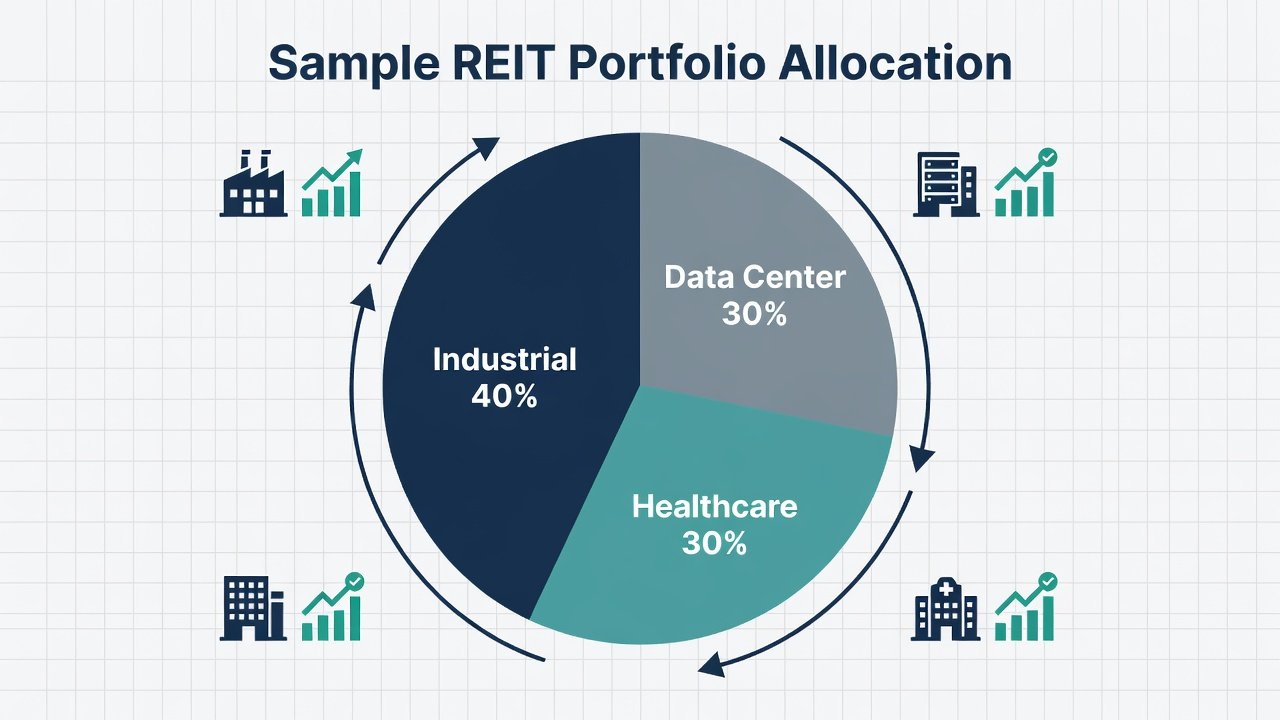
One practical 2026 model allocates 40 percent to industrial REITs for growth exposure, 30 percent to data centers for technology-driven upside, and 30 percent to healthcare REITs for income stability. An alternative defensive model increases healthcare to 45 percent while reducing data centers to 20 percent during periods of elevated interest rate uncertainty.
Rebalancing occurs when any sector weight drifts more than 5 percentage points from target. For instance, if industrial holdings rise to 48 percent after strong performance, investors sell portions and redeploy proceeds into underweight sectors using dividend reinvestment where possible. These examples illustrate how rotation maintains desired risk-return profiles while harvesting gains.
Risk Management and Correlation Analysis with Dividend Stocks
REIT sectors display correlations with broad dividend stock indices typically between 0.45 and 0.70, allowing meaningful diversification benefits when combined in a larger income portfolio. Key risks include interest rate sensitivity, tenant concentration, and regulatory changes affecting property taxes or zoning. Mitigation strategies involve maintaining position limits per REIT, reviewing credit ratings of major tenants, and stress-testing dividend coverage under rising rate scenarios.
Regular review of Federal Reserve policy statements helps anticipate rate-driven valuation impacts. Federal Reserve economic data provides timely context for adjusting rotation speed and sector emphasis.
Practical Mistakes to Avoid in REIT Rotations
- Over-concentrating in a single high-yield sector without regard to occupancy sustainability.
- Ignoring transaction costs and tax drag from frequent trading that erodes net passive income.
- Failing to update models when supply chain data or e-commerce growth rates materially change.
- Neglecting liquidity differences among smaller REITs during rotation execution.
FAQs on Tax Implications and Implementation
How are REIT dividends taxed in taxable accounts? Distributions are generally treated as ordinary income, though portions classified as return of capital reduce cost basis and defer taxation until sale.
Should investors hold REITs inside retirement accounts? Tax-advantaged vehicles such as IRAs shield ordinary income distributions from immediate taxation, preserving compounding power for long-term passive income objectives.
What forms do investors receive for tax reporting? REITs issue Form 1099-DIV that breaks down ordinary dividends, capital gains, and return of capital components each year.
How frequently should rebalancing occur? Quarterly reviews aligned with earnings releases strike a balance between responsiveness and cost efficiency for most experienced investors.
Conclusion
Sector rotation across industrial, data center, and healthcare REITs equips experienced investors with tools to navigate 2026 market dynamics while prioritizing sustainable passive income. Through detailed performance analysis, structured timing frameworks, realistic allocation examples, and proactive risk controls, portfolios can achieve enhanced yields with managed exposure. Consistent application of these principles, supported by authoritative data sources, positions investors for resilient income generation amid evolving economic conditions.

No comments yet. Be the first!