 Bullish Portfolio

Introduction to Tax-Efficient REIT Investing in 2026
REITs offer reliable passive income through dividends, but tax drag can significantly reduce net yields. This guide examines sophisticated structures to maximize after-tax returns without revisiting basic metrics or beginner basics. Focus remains on account types, dividend classifications, state nuances, and practical high-earner implementations for 2026. Investors increasingly seek ways to protect income streams amid evolving tax environments, making proactive account structuring essential for long-term wealth preservation.
REIT distributions often face higher effective taxation than other equity income because they rarely qualify for reduced rates. Understanding the interplay between federal rules, state laws, and account vehicles allows investors to retain more of each distribution. This article provides concrete examples and decision frameworks rather than surface-level advice.
Selecting the Right Account Types
Taxable brokerage accounts expose REIT dividends to immediate ordinary income taxation. In contrast, tax-deferred options like traditional IRAs or 401(k)s postpone taxes until withdrawal. Tax-free vehicles such as Roth IRAs allow qualified distributions to escape federal taxation entirely. The choice depends on current income levels, projected retirement brackets, and liquidity needs.
For REITs, tax-deferred accounts often prove optimal because they shelter non-qualified dividends and avoid current-year tax reporting. High earners may benefit from backdoor Roth conversions to shift future growth into tax-free status. Taxable accounts suit only small allocations when other vehicles are maxed out.
Consider your marginal tax bracket and expected retirement income when deciding. Tax-free accounts provide the strongest long-term protection against rising rates. Investors should also evaluate contribution limits and employer matches, which can amplify the benefits of retirement accounts holding REIT positions.
Qualified Versus Non-Qualified Dividends
REIT distributions rarely qualify for preferential long-term capital gains rates. Most count as non-qualified dividends taxed at ordinary income rates up to 37 percent federally. This classification increases the importance of sheltering REIT income inside retirement accounts. Non-qualified treatment applies because REITs pass through rental income rather than corporate earnings that meet qualified dividend tests.
Investors holding REITs in taxable accounts should track Form 1099-DIV reporting carefully. Qualified dividends from non-REIT stocks can offset some exposure, but REIT-specific planning requires separate treatment. Maintaining separate lots or sub-accounts helps isolate REIT income for accurate tax filing each year.
IRS official guidance details the distinctions and reporting requirements for all dividend types. Reviewing these publications annually ensures compliance as tax forms and instructions evolve.
State-Level Tax Considerations
Many states conform to federal treatment of REIT distributions, yet several impose additional taxes or offer partial exemptions. Residency matters: states without income tax provide clear advantages for taxable account holders. High-tax states may add 5 to 13 percent on top of federal liabilities, making account choice even more critical.
High earners in high-tax states should prioritize tax-deferred or tax-free accounts to neutralize state-level liabilities. Some states provide credits for taxes paid to other jurisdictions, but REIT income rarely qualifies. Relocating residency or using multi-state trusts can offer marginal benefits, though these strategies require professional review.
Review your state's revenue department resources annually, as conformity rules can shift. Municipal bond ladders or other state-specific shelters may complement REIT holdings in certain jurisdictions.
Step-by-Step Setup for High Earners
High-income investors follow a deliberate sequence to optimize REIT exposure. First, maximize contributions to employer-sponsored plans. Next, fund a backdoor Roth IRA if income limits apply. Finally, allocate REIT positions inside these accounts while keeping growth stocks in taxable accounts.
- Calculate projected 2026 taxable income to determine contribution room and eligibility for various account types.
- Execute mega backdoor Roth contributions where plan rules permit, converting after-tax funds into Roth status.
- Rebalance existing taxable REIT holdings into retirement accounts via tax-efficient transfers such as in-kind rollovers or direct trustee movements.
- Monitor required minimum distributions starting at age 73 to avoid forced taxable events that could push income into higher brackets.
- Document all basis adjustments and contribution sources to simplify future tax reporting and avoid IRS scrutiny.
These steps reduce effective tax rates on REIT income from ordinary rates down to zero in Roth structures. Regular reviews every six months help adapt to income changes or new legislation.
Comparing Effective Tax Rates Pre- and Post-Optimization
Without optimization, a 32 percent federal bracket investor faces roughly 32 percent tax on REIT distributions in a taxable account. After shifting holdings into a Roth IRA, the effective rate drops to zero on qualified withdrawals. Tax-deferred accounts defer the same 32 percent liability, allowing compounding on the full amount until distribution.
Over 20-year horizons, this deferral creates substantial differences in net wealth. Scenario modeling shows that placing $100,000 of REIT assets in a Roth versus a taxable account can preserve tens of thousands in after-tax income depending on distribution frequency and bracket stability.
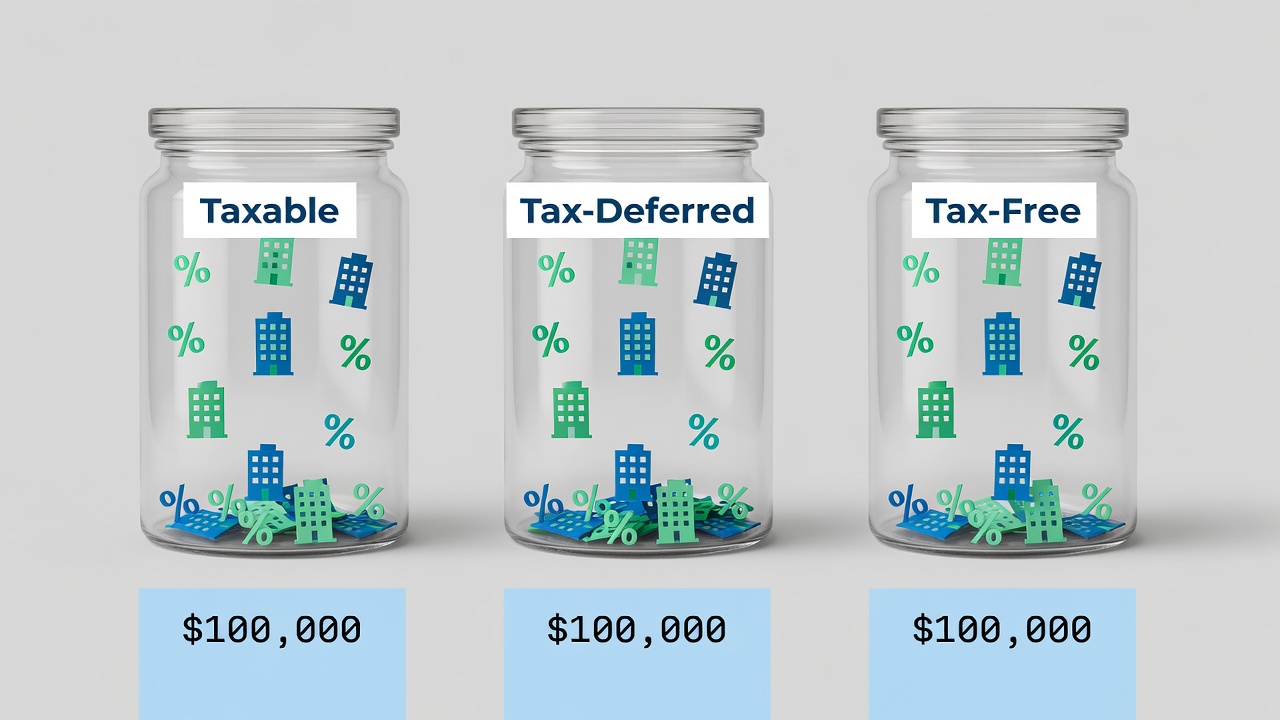
Post-optimization, investors often reallocate the tax savings into additional REIT purchases, accelerating portfolio growth through compounding. Tracking these outcomes with spreadsheet models or advisor software provides clear evidence of strategy effectiveness.
Advanced Strategies and Common Mistakes to Avoid
Beyond basic account selection, high earners can explore charitable remainder trusts or donor-advised funds to manage large REIT positions while generating income streams. Timing contributions around tax-law changes expected in 2026 further enhances results. Another tactic involves pairing REITs with tax-loss harvesting in taxable accounts to offset any unavoidable distributions.
Common mistakes include overlooking UBTI exposure, failing to coordinate spousal accounts, and neglecting state filing requirements after residency changes. Investors should also avoid concentrating all REIT exposure in one account type, as diversification across vehicles reduces risk if rules change.
Common Pitfalls and FAQ
UBTI from REITs held in IRAs can trigger unrelated business taxable income taxes. Always verify whether a REIT generates UBTI before placement in tax-advantaged accounts.
- How do I handle UBTI in REITs? Review the REIT's annual tax disclosures and consider taxable accounts or UBTI-free alternatives if exposure exceeds thresholds.
- Can I move existing REITs tax-free? Direct trustee-to-trustee transfers avoid recognition events and preserve deferral benefits.
- What about international REITs? Foreign withholding taxes may apply; tax treaties and account type influence net impact, requiring careful custodian selection.
- How often should I review my setup? Conduct annual reviews each January and after major life events such as job changes or inheritance.
- Are there penalties for early withdrawals? Yes, traditional accounts impose 10 percent penalties before age 59½ on top of ordinary income tax.
SEC resources provide additional REIT disclosure details. Treasury Department publications offer further context on retirement account regulations.
Conclusion
Strategic account selection and careful attention to dividend character and state rules allow high earners to preserve significantly more REIT income in 2026. Implementing the outlined steps delivers measurable tax efficiency and stronger long-term passive income streams. Consistent monitoring ensures the structure remains aligned with personal circumstances and regulatory updates.

No comments yet. Be the first!