 Bullish Portfolio

Introduction to REIT Dividend Growth Investing
Real Estate Investment Trusts (REITs) offer investors a unique way to access real estate returns without direct property ownership. When focused on dividend growth rather than chasing high yields, REITs can provide reliable passive income that compounds over time. This approach prioritizes companies with strong fundamentals, consistent payout increases, and sustainable distribution policies. Investors seeking long-term wealth often turn to these vehicles because they combine the income-generating power of real estate with the liquidity of stock market investments.
Unlike static high-yield options that may cut dividends during downturns, growth-oriented REITs emphasize long-term stability. Investors benefit from both rising income streams and potential capital appreciation as property values and rents increase. Over extended periods, this compounding effect can significantly enhance retirement portfolios and create reliable cash flow without the headaches of managing physical properties.
Why Focus on Dividend Growth Over High Yield
High-yield REITs often carry elevated risk, including payout ratios above sustainable levels or exposure to declining sectors. Dividend growth strategies target REITs that have raised distributions for 5–10+ consecutive years, signaling financial strength and management confidence. This method aligns with compounding principles, where reinvested dividends accelerate wealth accumulation through the power of regular increases.
Historical patterns demonstrate that consistent dividend growers outperform high-yield peers during market volatility because they maintain stronger balance sheets and lower leverage ratios. By avoiding yield traps, investors reduce the likelihood of sudden dividend cuts that can erode portfolio value and income reliability. The focus on growth also provides a buffer against inflation as rents and distributions tend to rise over time.
Understanding Key Metrics: FFO and Payout Ratios
Funds From Operations (FFO) serves as the primary earnings metric for REITs, adjusting net income for non-cash items like depreciation. Analyzing FFO trends over multiple years reveals whether a REIT can support ongoing dividend growth. Investors should seek REITs where FFO per share grows steadily at 4–8% annually.
Payout ratios calculated against FFO provide insight into sustainability. Ratios below 70% leave room for reinvestment and future increases, while higher ratios signal potential vulnerability. Combining these metrics with debt-to-equity ratios and occupancy statistics creates a comprehensive picture of financial health.
Step-by-Step Evaluation Criteria for REITs
Follow these criteria to identify quality dividend growth REITs:
- Examine dividend growth history using resources from SEC filings and company reports to verify consecutive years of increases.
- Analyze payout ratios, ideally keeping them below 70% of Funds From Operations (FFO) to ensure sustainability.
- Review FFO trends over multiple quarters and years to confirm consistent earnings growth and operational efficiency.
- Assess debt levels, occupancy rates, and sector diversification to gauge resilience against economic shifts.
- Compare valuation metrics such as price-to-FFO ratios against historical averages and peer groups for attractive entry points.
Real-World Examples of Top Growth REITs
Consider established names like Prologis for industrial exposure, which has benefited from e-commerce growth and maintains a track record of annual dividend hikes supported by rising FFO. Equity Residential offers exposure to multifamily housing with steady rent growth in major markets, translating into reliable distribution increases over the past decade. Healthcare-focused REITs such as Welltower demonstrate resilience through demographic trends, with dividends growing alongside an aging population's demand for senior housing and medical facilities.
These examples highlight how sector selection combined with disciplined financial management leads to compounding income. Investors should cross-reference current performance data with long-term histories before committing capital.
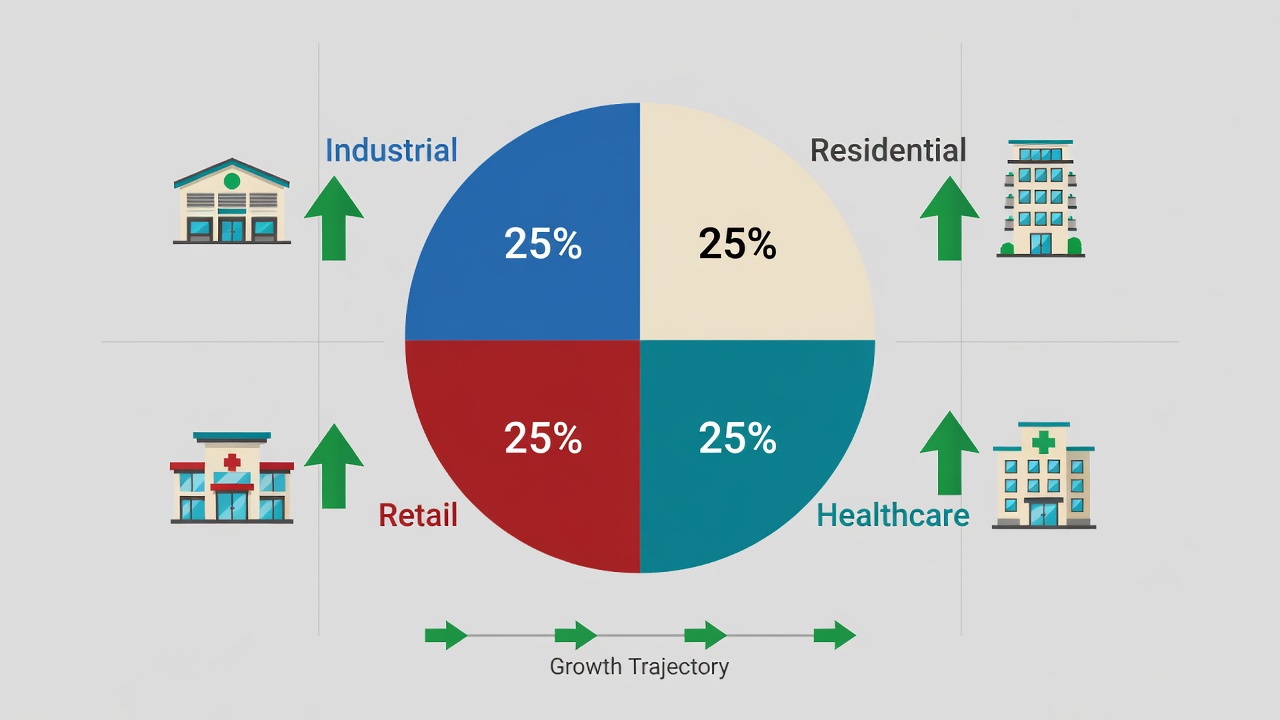
Constructing a Diversified Portfolio Allocation
A balanced REIT allocation might include 40% in industrial and data center REITs for growth sectors, 30% in residential properties for stable demand, 20% in healthcare for demographic tailwinds, and 10% in retail or specialty sectors. This spread reduces exposure to any single economic driver. Rebalance annually to maintain target weights and limit any single holding to 5–8% of the portfolio to manage concentration risk effectively.
Geographic diversification across regions further protects against localized downturns in real estate markets. Incorporating both equity REITs and mortgage REITs can add another layer of balance when appropriate.
Risk Mitigation Tactics
Protect your income stream by maintaining cash reserves equivalent to 6–12 months of living expenses, using dollar-cost averaging during periods of market volatility, and closely monitoring interest rate environments that affect borrowing costs. Diversification across property types and geographies reduces sector-specific downturn impacts, while regular portfolio reviews help identify underperformers early.
Stress testing the portfolio against scenarios like rising interest rates or recessions builds confidence in the strategy's durability. Avoiding leverage within personal REIT holdings prevents amplified losses during corrections.
Performance Comparisons Versus Static High-Yield Options
Growth-focused REIT portfolios have historically delivered superior total returns over 10-year periods due to reinvested dividend increases and lower drawdowns during market stress. Static high-yield strategies often suffer from dividend cuts when underlying properties face economic pressure, leading to permanent capital loss and income disruption.
The compounding advantage becomes evident when comparing reinvested growth dividends against flat high-yield payments, especially after accounting for inflation erosion on static income streams.
Practical 5-Step Action Plan
- Define your income goals and risk tolerance by calculating required annual cash flow and acceptable volatility levels.
- Screen REITs using the evaluation criteria above, focusing on those with at least five years of consecutive dividend increases and healthy FFO trends.
- Build a core position with 8–12 holdings across sectors, starting with larger positions in proven dividend growth leaders.
- Implement automatic dividend reinvestment through brokerage platforms to harness compounding without manual intervention.
- Review and adjust the portfolio quarterly while avoiding emotional decisions during market swings, always referring back to your original allocation targets.
FAQ
How do REIT dividends perform during inflation?
Many REITs can pass along rising costs through rent escalations and lease renewals, helping preserve real income over time as property values adjust upward.
What happens to REITs in market downturns?
Quality dividend growth REITs typically experience temporary price declines but maintain or grow distributions, providing income stability when other assets falter and offering buying opportunities for long-term holders.
Should beginners start with individual REITs or funds?
Exchange-traded funds focused on dividend growth REITs offer instant diversification and lower research requirements, making them suitable entry points before moving to individual selections.
Conclusion
REIT dividend growth strategies create sustainable passive income by emphasizing quality, consistency, and disciplined portfolio construction. By following the outlined steps and focusing on long-term compounding, investors can build resilient income streams that withstand economic cycles and support financial independence over decades.


No comments yet. Be the first!