 Bullish Portfolio
Introduction to Automating Dividend and REIT Cash Flow
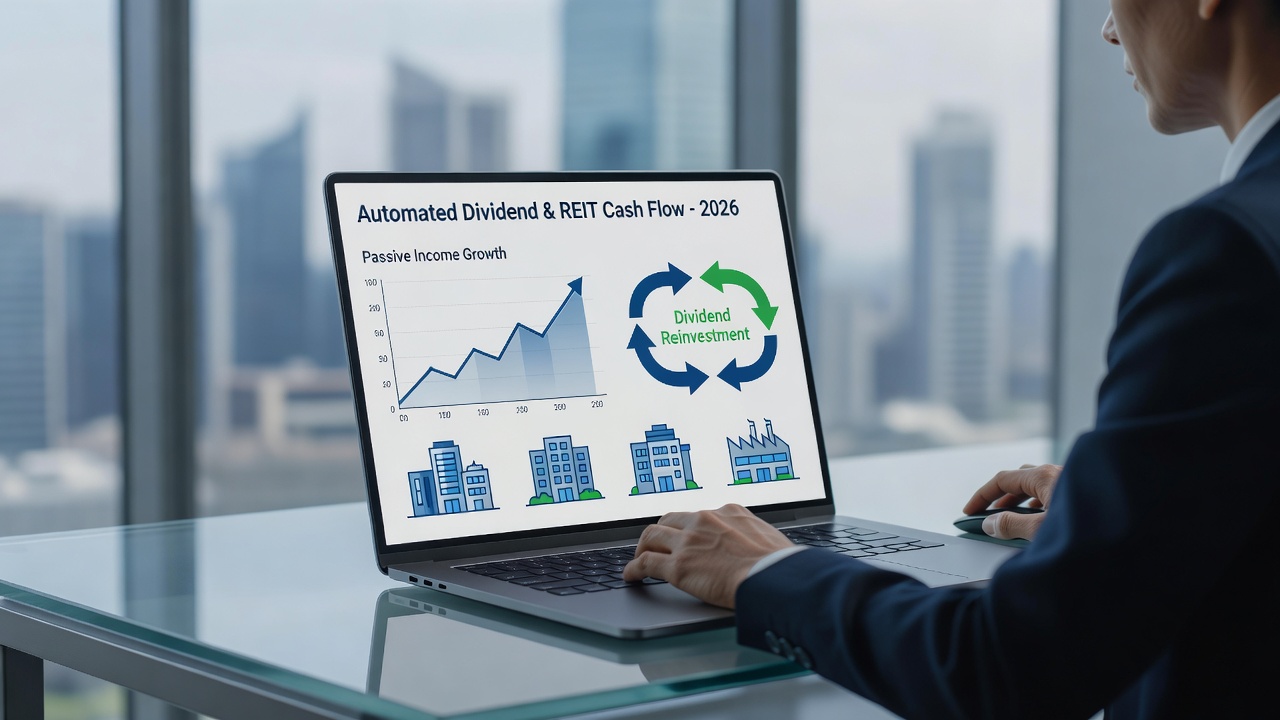
Generating passive income through dividends and real estate investment trusts (REITs) has long appealed to investors seeking steady returns without daily market monitoring. In 2026, automation takes this further by reducing manual tasks like tracking payments, reinvesting shares, and monitoring performance. This approach helps minimize errors and frees time for other priorities while maintaining a reliable income stream from equity holdings and property-focused trusts alike.
Automation tools range from built-in brokerage features to third-party applications that handle recurring actions. By setting up these systems once, investors can focus on portfolio growth rather than routine administration. The following sections detail practical methods, platform examples, and strategies for scaling automation effectively across different account sizes and investment styles.
Why Automate Dividend and REIT Income Streams
Manual management of dividend and REIT cash flows often involves logging into multiple accounts, calculating reinvestments, and reconciling tax records. Automation addresses these pain points by executing predefined rules consistently. Benefits include faster reinvestment to compound returns, timely alerts for payment dates, and centralized dashboards for performance tracking that update automatically each quarter.
Investors also reduce the risk of missing reinvestment opportunities during market volatility. For REITs specifically, which distribute income from property holdings, automated systems ensure funds are redeployed quickly into additional shares or diversified holdings. Consider an investor who receives quarterly distributions from several REIT positions; without automation, manually directing each payment could consume hours per year, whereas a configured system handles the process in the background.
Core Automation Tools and Features
Several categories of tools support dividend and REIT automation. Brokerage dividend reinvestment plans (DRIP) allow automatic purchase of additional shares with each payout. Payment apps facilitate scheduled transfers to checking accounts or savings vehicles. Portfolio trackers aggregate data across accounts and provide performance visualizations that include yield history and projected cash flow.
Popular brokerage platforms offer robust DRIP options that cover both individual stocks and REITs. Payment applications integrate with bank accounts to move funds automatically on dividend receipt dates. Trackers connect via APIs to display real-time metrics such as yield trends and total income received. Many investors combine two or three of these tools to create a seamless experience that covers reinvestment, cash movement, and oversight.
IRS guidelines on investment income reporting remain essential when configuring these tools, as automated systems must align with tax documentation requirements for accurate year-end filings.
Step-by-Step Setup for Recurring Transfers and DRIP
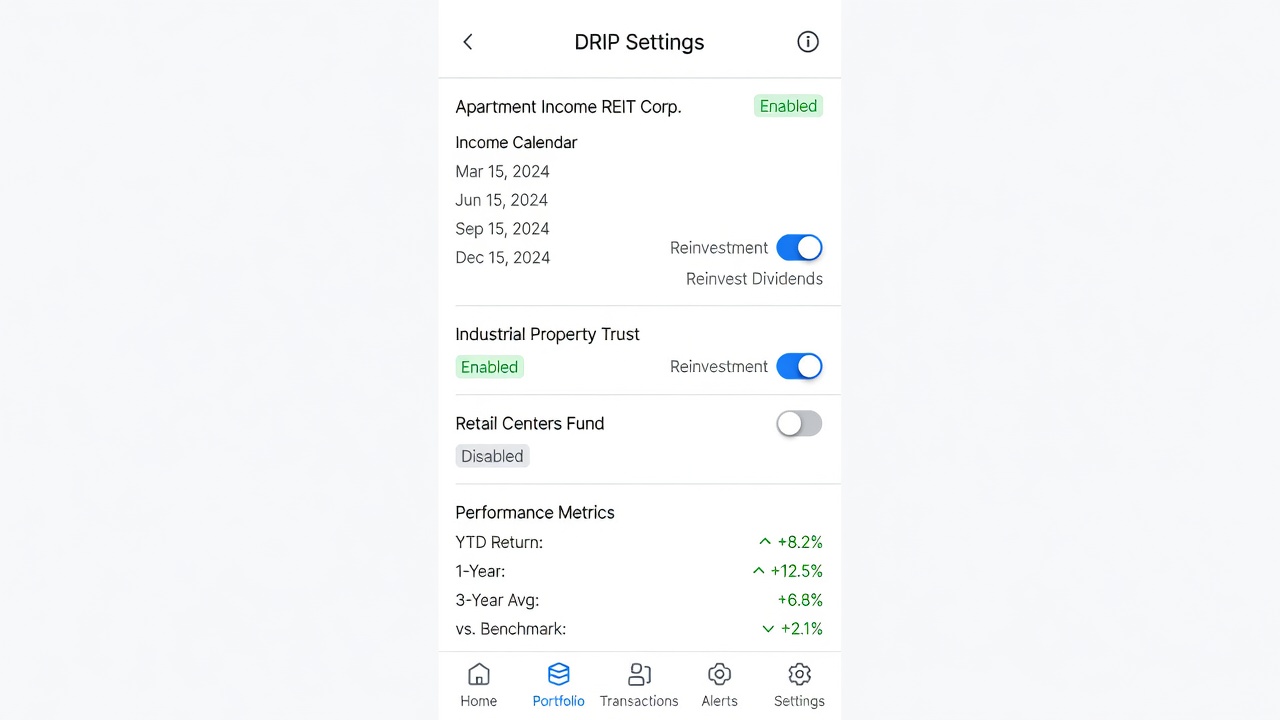
Begin by selecting a primary brokerage account that supports full DRIP enrollment for REIT holdings. Log in, navigate to the dividend preferences section, and enable automatic reinvestment for targeted securities. Confirm the reinvestment occurs at the market price on the payable date without additional fees in most cases. It is wise to review the list of eligible securities first, as some international REITs may be excluded from DRIP programs.
Next, link a payment app to the brokerage for any cash distributions not set to reinvest. Set recurring transfer rules to move a percentage of income to a high-yield savings account or retirement vehicle. Test the first cycle manually to verify timing and amounts match expectations. After confirmation, enable notifications so any deviation triggers an immediate alert.
For tax-lot automation, enable cost-basis tracking features within the brokerage. This ensures the system selects appropriate lots for sales or reinvestments, maintaining accurate records for capital gains calculations. Review settings quarterly to adjust for any changes in holdings or tax regulations that might affect reporting.
Building a Sample Automation Workflow
A typical workflow starts with dividend or REIT distribution detection by the brokerage platform. Funds are either reinvested via DRIP or transferred to a linked account within one business day. Portfolio trackers then update dashboards with new income figures and projected annual yields based on current distribution rates.
Alerts notify users via email or app notification when distributions exceed a threshold or when performance deviates from targets. This closed-loop system allows investors to review summaries monthly rather than daily, freeing attention for strategic decisions such as rebalancing or adding new positions.
Comparing Low-Cost and Premium Automation Solutions
Low-cost options rely primarily on native brokerage DRIP and free tracker tiers, offering solid functionality for basic needs. Premium solutions add advanced analytics, multi-account aggregation, and custom scripting for complex portfolios that span multiple brokerages and asset classes.
Investors with smaller holdings often find sufficient value in standard brokerage features. Those managing larger or multi-asset portfolios may benefit from premium platforms that include tax optimization algorithms and detailed reporting. Evaluate based on the number of holdings and desired customization level. A simple comparison list can help clarify choices:
- Low-cost approach: Uses existing brokerage tools and free mobile apps for transfers and basic alerts.
- Premium approach: Adds third-party dashboards with exportable tax reports and automated rebalancing suggestions.
- Hybrid approach: Starts with brokerage DRIP and layers one paid tracker for deeper insights as the portfolio grows.
Performance Dashboards and Ongoing Monitoring
Dashboards consolidate dividend history, REIT distribution schedules, and total passive income generated. Key metrics include trailing twelve-month yield, reinvestment rate, and income growth over time. Set automated reports to export monthly summaries for personal records or accountant review.
Regular review ensures automation rules remain aligned with investment goals. Adjust allocation percentages or transfer destinations as portfolio size increases and new REIT opportunities arise. Many users schedule a quarterly check-in to verify that all linked accounts remain secure and that notification settings still match current preferences.
Common Mistakes to Avoid When Automating
One frequent oversight is failing to confirm DRIP eligibility for every REIT position before enabling automation, which can lead to cash sitting idle. Another is overlooking transfer limits on linked payment apps, potentially causing delays during high-distribution quarters. Investors should also double-check API connections for portfolio trackers after any brokerage updates to prevent data gaps.
Finally, neglecting to review tax-lot settings annually can create complications at filing time. Taking a few minutes each quarter to audit the entire workflow prevents small issues from compounding over multiple years.
Frequently Asked Questions on Automation Setup
- How do I troubleshoot missed DRIP enrollments? Verify account settings and contact brokerage support to confirm eligibility for each security.
- Can automation handle tax reporting automatically? Most platforms generate Form 1099 data, but consult SEC resources and a tax professional for complex situations involving multiple account types.
- What happens when scaling to larger portfolios? Add new holdings to existing DRIP rules and update tracker connections to maintain seamless operation without rebuilding the entire system.
- Are there risks with automated transfers? Confirm all linked accounts use secure authentication and review transfer limits periodically to avoid overdrafts or compliance issues.
- How often should I review automation rules? A quarterly review is recommended, especially after major market events or changes in personal financial goals.
Conclusion
Automating dividend and REIT cash flow creates a more efficient path to passive income in 2026. By combining DRIP features, payment apps, and trackers with careful initial setup, investors achieve consistent results with minimal ongoing effort. Start with core brokerage tools, expand to premium features as needed, and maintain periodic reviews to support long-term portfolio health. The time invested in proper configuration pays dividends through reduced administrative burden and more reliable compounding over time.

No comments yet. Be the first!