 Bullish Portfolio

Introduction to Inflation-Resistant Passive Income
In 2026, investors continue to navigate an environment where inflation can steadily erode the real value of savings and fixed-income returns. Dividend stocks and real estate investment trusts (REITs) stand out as proven vehicles for generating passive income streams that have the potential to keep pace with or exceed rising costs. These assets draw from companies and property sectors with inherent pricing power, recurring revenue, and track records of growing distributions over time. The strategy emphasizes quality over yield chasing, focusing on businesses that can raise prices without losing customers and real estate assets whose rents adjust naturally with broader economic trends.
Successful implementation requires understanding which sectors demonstrate resilience, how past inflationary episodes unfolded, and how to construct and maintain a diversified portfolio. This guide provides in-depth coverage of selection criteria, allocation frameworks, economic monitoring processes, and practical risk controls to help investors build lasting income sources.
Understanding Dividend Stocks That Withstand Inflation
Dividend-paying companies in defensive sectors such as consumer staples, healthcare, and utilities have historically maintained earnings stability during periods of rising prices. These firms often sell essential products or services that consumers continue to purchase regardless of cost increases, allowing them to pass along higher input expenses through price adjustments. Dividend aristocrats—companies that have raised payouts for at least 25 consecutive years—offer a particularly strong subset, as their long histories reflect disciplined capital allocation and durable competitive advantages.
When evaluating candidates, examine payout ratios ideally below 60 percent to ensure room for future increases, consistent revenue growth linked to necessities, and robust balance sheets with manageable debt levels. Additional filters include wide economic moats from brand strength, regulatory barriers, or network effects that support sustained pricing power. Investors should also review free cash flow trends to confirm dividends are supported by actual operations rather than borrowing.
REIT Sectors Poised to Benefit from Rising Prices
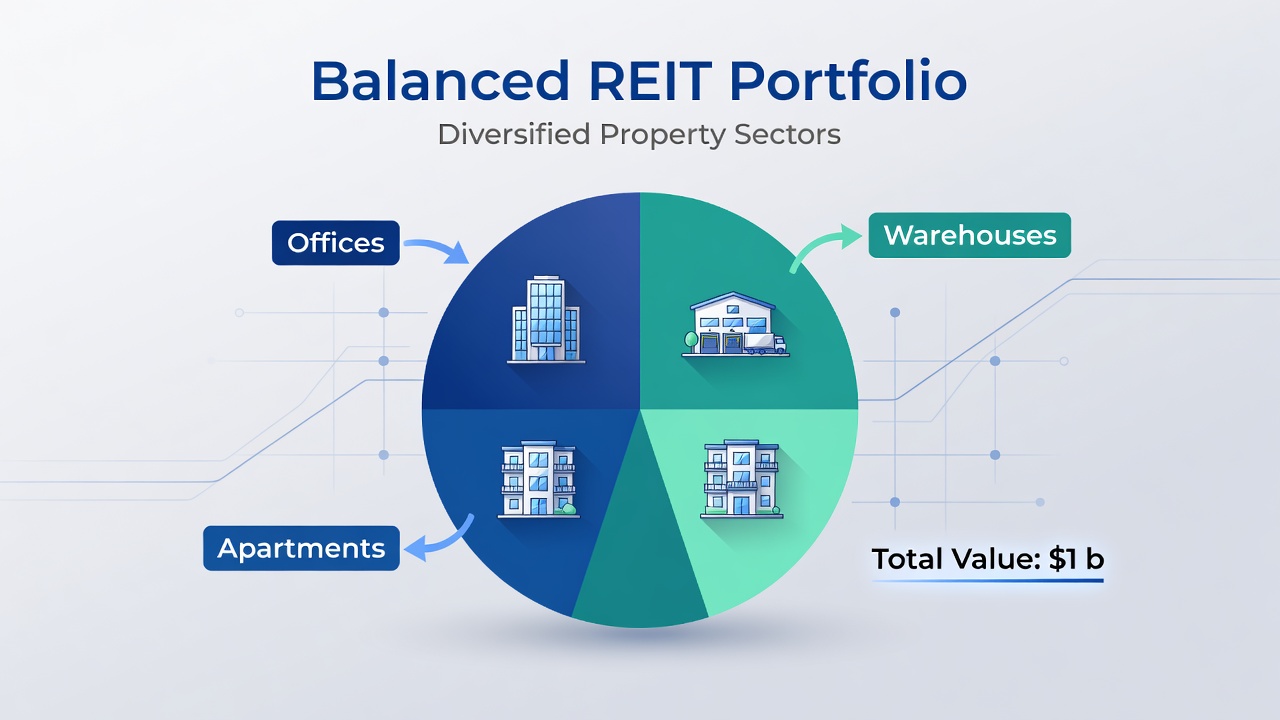
REITs deliver exposure to income-producing real estate through publicly traded securities, eliminating the need for direct property management. Industrial warehouses, multifamily residential properties, and healthcare facilities frequently perform well as inflation rises because lease agreements commonly include escalation clauses tied to consumer price measures or market rents. Property owners can renegotiate terms at renewal, capturing higher cash flows while occupancy remains supported by ongoing demand for essential space.
Selecting REITs involves prioritizing those with high occupancy rates above 90 percent, diversified tenant rosters that limit single-industry exposure, and internal growth drivers such as development pipelines or operational efficiencies. This structure allows distributions to grow even when broader fixed-income yields face pressure from inflation.
Historical Performance During Inflationary Periods
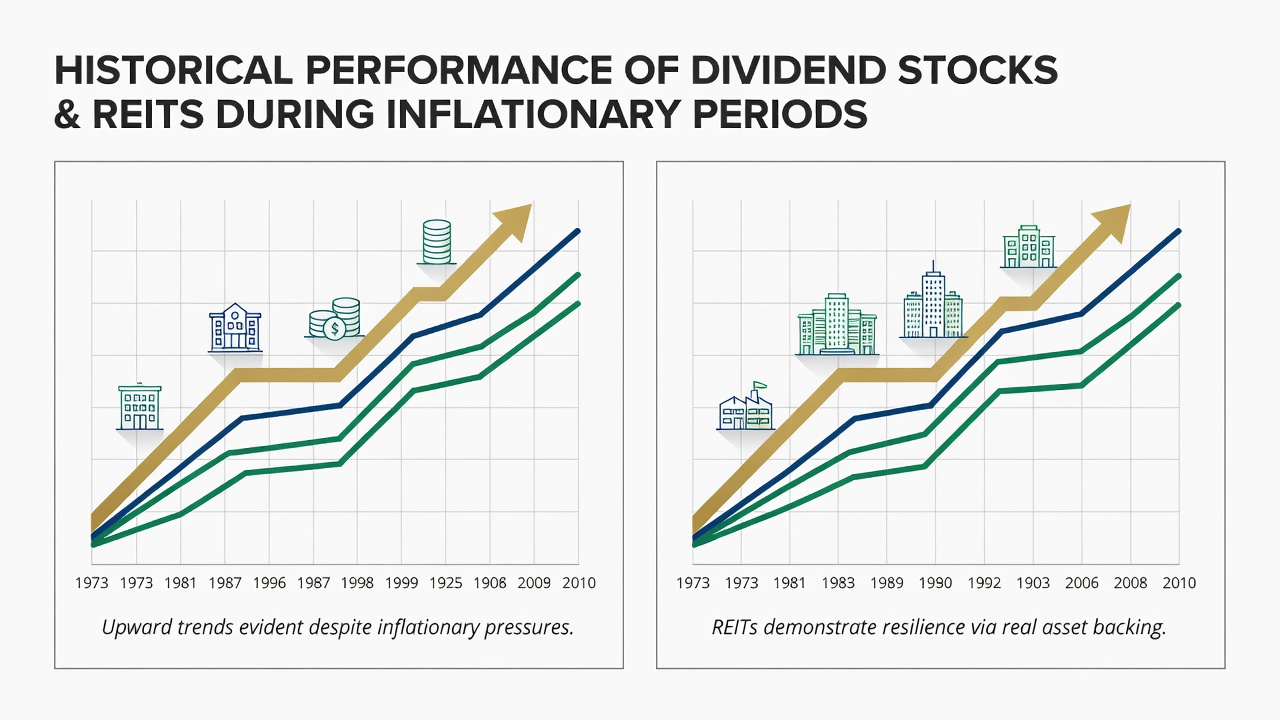
Reviewing data from previous high-inflation decades, including the 1970s and early 1980s, shows that portfolios heavy in dividend growth stocks and REITs preserved purchasing power more effectively than bonds or cash holdings. Broad equity indexes with elevated dividend yields delivered positive real returns after inflation adjustments, while REITs benefited from rising property values and rent resets that mirrored consumer price increases. These patterns underscore the importance of owning real assets and cash-flowing businesses rather than nominal fixed payments during such cycles.
More recent episodes of moderate inflation have reinforced similar outcomes, with defensive dividend payers and property-focused vehicles showing lower drawdowns and quicker recovery in income generation compared with growth-oriented equities alone.
Portfolio Allocation Tips for 2026
A practical starting framework allocates 40 to 60 percent of the income portion to high-quality dividend stocks across multiple sectors, 20 to 30 percent to REITs spanning industrial, residential, and healthcare categories, and the balance to broad equity or short-duration fixed-income holdings for liquidity. Rebalance at least annually or when allocations drift more than 5 percentage points from targets. Dollar-cost averaging new contributions reduces the impact of short-term volatility, while limiting any single holding to under 5 percent of the total portfolio promotes diversification.
Tax-advantaged accounts such as IRAs can house REITs efficiently because their distributions often include non-qualified income. In taxable accounts, focus on qualified dividend payers to optimize after-tax returns.
Step-by-Step Guidance on Monitoring Economic Indicators
- Review monthly Consumer Price Index releases published by the Bureau of Labor Statistics to gauge inflation direction and magnitude.
- Follow Federal Reserve policy announcements and dot-plot projections through official channels at federalreserve.gov to anticipate interest-rate shifts that may affect REIT valuations.
- Analyze quarterly corporate earnings transcripts for commentary on pricing actions, margin trends, and dividend guidance from portfolio companies.
- Examine REIT supplemental reports for same-store rent growth, occupancy statistics, and lease expiration schedules on a quarterly basis.
- Cross-reference employment and wage data to assess consumer spending capacity, which supports both dividend payers and property demand.
- Adjust sector weights gradually if inflation readings accelerate, increasing exposure to the most defensive names while trimming holdings showing margin compression.
Risk Assessment Methods
Interest-rate sensitivity represents a primary risk for REITs, as higher rates can increase borrowing costs and compress property valuations. Calculate interest coverage ratios and monitor debt maturity schedules to identify vulnerable positions. For dividend stocks, evaluate earnings volatility and industry-specific regulatory risks through scenario analysis. Conduct annual portfolio stress tests using historical inflation and recession data to measure potential income shortfalls. Geographic and property-type diversification within REIT allocations further reduces exposure to localized market downturns or policy changes.
Real-World Examples of Successful Portfolios
One illustrative case involves an investor who began constructing an inflation-focused portfolio in the early 2020s by overweighting consumer staples dividend payers with decades-long increase streaks alongside industrial and residential REITs holding long-term leases. Through consistent rebalancing and reinvestment of distributions during accumulation years, the portfolio generated cash flow growth that exceeded cumulative inflation across multiple economic cycles. Another example highlights a retiree who maintained a 50/30/20 split among dividend equities, REITs, and short-term bonds, using quarterly indicator reviews to tilt toward healthcare REITs during periods of rising medical costs, thereby sustaining real income without principal erosion.
Common Mistakes to Avoid
- Selecting stocks solely based on current yield without verifying payout sustainability or earnings quality.
- Concentrating too heavily in one REIT subsector vulnerable to regulatory shifts such as rent control proposals.
- Overlooking tax treatment differences between qualified dividends and REIT distributions in non-retirement accounts.
- Neglecting to reinvest distributions during the early years of portfolio construction, which delays compounding benefits.
- Failing to maintain an emergency cash reserve outside the income portfolio, forcing premature sales during market stress.
FAQ
How do dividends help against inflation?
Companies possessing pricing power can raise prices on essential goods and services, supporting earnings growth that funds higher dividend payments and preserves real income over time.
Are REITs better than direct real estate ownership?
REITs provide daily liquidity, professional management, and instant diversification across dozens of properties without the operational burdens or large capital requirements of individual ownership.
What economic indicators matter most?
Key metrics include CPI readings from bls.gov, Federal Reserve rate decisions, and corporate earnings data available through sec.gov filings.
Can beginners start with small amounts?
Many brokerage platforms support fractional share purchases and low-minimum REIT ETFs, allowing investors to build positions incrementally without large initial capital.
How often should portfolios be reviewed?
Conduct formal reviews quarterly alongside earnings seasons, with more frequent checks during periods of rapid inflation changes or major policy announcements.
Conclusion
Dividend stocks and REITs continue to serve as effective building blocks for inflation-protected passive income in 2026. By applying rigorous selection standards, maintaining balanced allocations, and actively monitoring economic signals through authoritative sources such as FRED economic data, investors can create resilient income streams that support long-term financial goals despite evolving price pressures. Begin with thorough research on quality payers and consider consulting a financial advisor to tailor the approach to individual circumstances.

No comments yet. Be the first!