 Bullish Portfolio
Introduction: Building Reliable Passive Income Through REITs
Real Estate Investment Trusts (REITs) offer investors an accessible way to generate passive income from real estate without direct property ownership. However, many investors fall into common traps that erode returns and increase risk. This guide explores the critical mistakes to avoid when pursuing REIT dividends in 2026, helping you create a more stable income stream. REITs must distribute at least 90 percent of taxable income as dividends, making them attractive for income-focused investors, yet this structure also creates vulnerabilities if underlying operations weaken. Understanding these pitfalls allows you to refine your strategy and achieve more consistent results over time.
Chasing Unsustainable High Yields
One of the biggest errors is selecting REITs solely based on sky-high dividend yields. While a double-digit yield may seem attractive, it often signals underlying problems like declining property values or excessive debt. Sustainable yields typically range from 4-7 percent for high-quality REITs, supported by strong occupancy rates and consistent cash flow. Investors who chase yields without analysis frequently encounter dividend cuts when economic conditions shift. To avoid this, examine funds from operations (FFO) growth trends over multiple years and ensure payout ratios stay below 80 percent. Reviewing occupancy statistics and lease expiration schedules provides further insight into whether a high yield is truly sustainable or merely a temporary illusion.
Overlooking Management Quality and Track Record
Strong leadership is essential for REIT success. Poor management can lead to value-destroying acquisitions or inadequate property maintenance. Always review the executive team's history, insider ownership levels, and alignment with shareholder interests before investing. Look for managers with proven experience navigating market cycles and a track record of prudent capital allocation. Low insider ownership may indicate misaligned incentives, while frequent changes in leadership can signal instability. Reading earnings call transcripts and analyzing past acquisition performance helps reveal whether the team prioritizes long-term value or short-term appearances.
Neglecting Portfolio Rebalancing
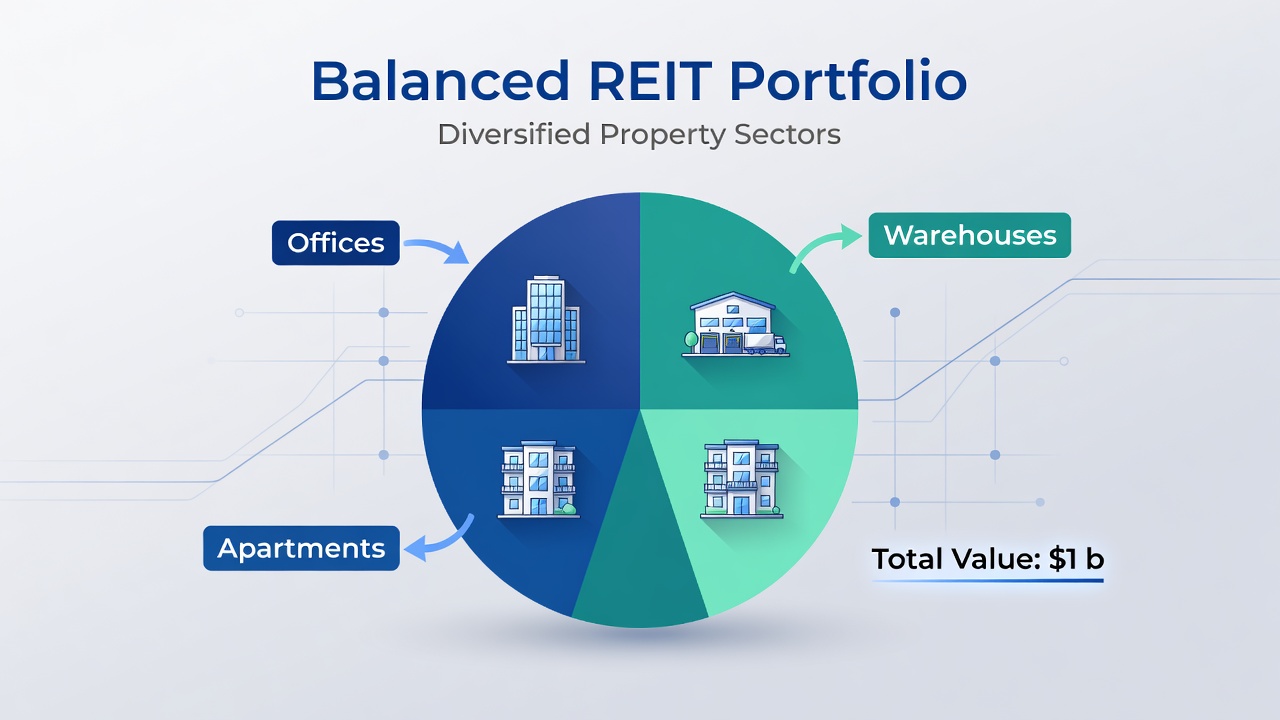
Markets shift over time, and a once-balanced REIT portfolio can become overweight in certain sectors like retail or offices. Regular rebalancing ensures diversification across property types such as residential, industrial, healthcare, and data centers. Without periodic review, investors may find their holdings concentrated in vulnerable areas exposed to remote work trends or e-commerce disruption. Setting calendar reminders for quarterly reviews and using target allocation percentages helps maintain balance. Rebalancing also involves selling portions of outperforming holdings to buy underweighted sectors, preserving overall risk levels.
Learn more about REIT sector performance at reit.com.
Ignoring Interest Rate Sensitivity and Macroeconomic Factors
REITs are particularly sensitive to interest rate changes because they rely on debt financing for property acquisitions. Rising rates increase borrowing costs and can pressure property valuations. Investors often overlook how Federal Reserve policy affects cap rates and refinancing options. Monitoring economic indicators such as inflation data and employment reports allows better anticipation of rate environments. Diversifying into REITs with fixed-rate debt maturing far in the future reduces this vulnerability compared to those with heavy floating-rate exposure.
Real-World Examples of Failed REIT Investments
Consider cases where high-yield retail REITs faced bankruptcies due to e-commerce disruption. Investors who ignored tenant concentration risks suffered significant losses when anchor tenants vacated properties. In contrast, diversified industrial REITs with e-commerce exposure have shown resilience through strong warehouse demand. Another example involves office REITs that maintained high valuations until hybrid work policies reduced occupancy, leading to dividend suspensions. These cases highlight the importance of stress-testing portfolios against sector-specific headwinds rather than relying on historical performance alone.
Due Diligence Checklist for REIT Investors
Conducting thorough research prevents many common mistakes. Start by reviewing SEC filings for debt levels and occupancy rates. Assess dividend sustainability through funds from operations (FFO) growth and compare it against peers. Evaluate geographic and sector diversification to avoid overexposure to single markets. Check management compensation structures for alignment with shareholder returns. Analyze interest rate sensitivity by examining debt maturity schedules. Additional steps include studying tenant credit quality, reviewing environmental sustainability reports, and comparing valuation metrics such as price-to-FFO ratios against historical averages. Using multiple data sources ensures a complete picture before committing capital.
- Review SEC filings for debt levels and occupancy rates
- Assess dividend sustainability through funds from operations (FFO) growth
- Evaluate geographic and sector diversification
- Check management compensation structures
- Analyze interest rate sensitivity and debt maturity
- Examine tenant credit ratings and lease terms
Resilient vs. Fragile REIT Portfolios: Key Comparisons
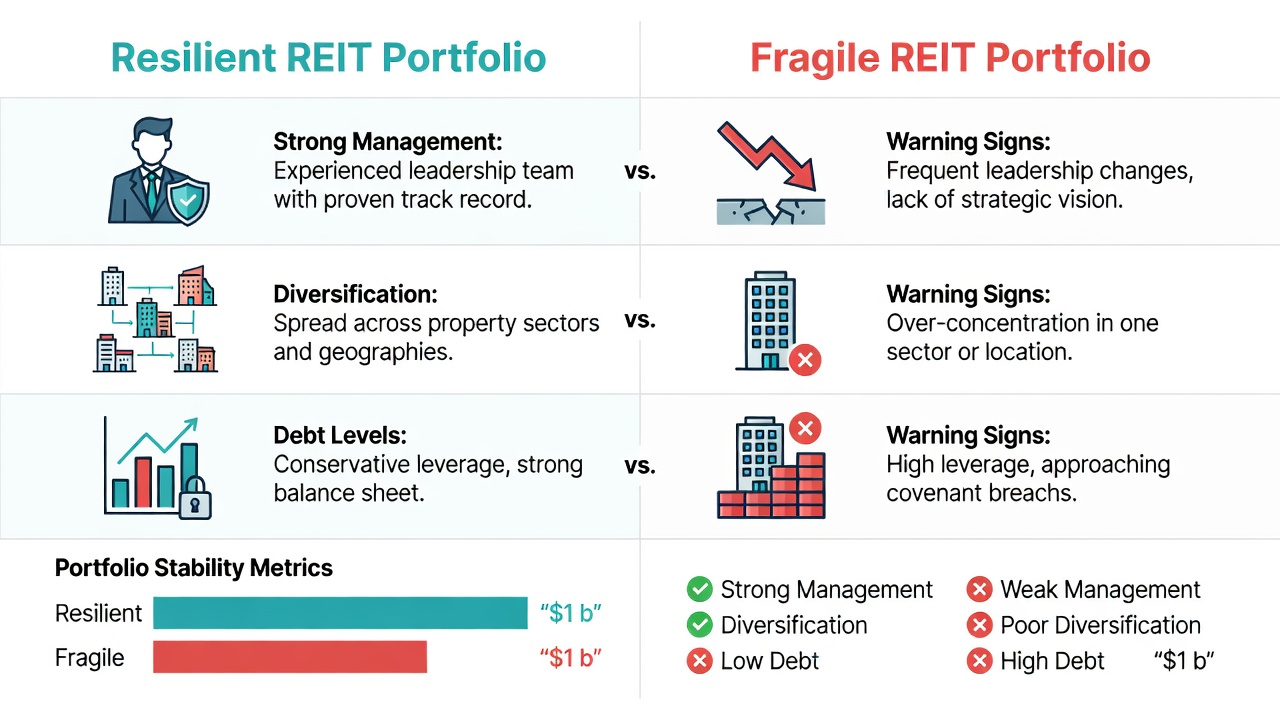
Resilient portfolios feature low leverage, high-quality tenants with long leases, and exposure to growing sectors. Fragile ones often carry high debt, concentrated exposure to declining industries, and inconsistent dividend histories. Building the former requires ongoing monitoring and selective allocation. For instance, a resilient portfolio might allocate across logistics, healthcare, and data center REITs with average debt-to-equity ratios below industry norms. Fragile portfolios, by comparison, may hold legacy retail assets with short-term leases and elevated refinancing needs. Investors should periodically run scenario analyses to test how portfolios perform under rising rates or recession conditions.
Tax Optimization Tips for REIT Dividends
REIT dividends are often taxed as ordinary income, but holding them in tax-advantaged accounts like IRAs can defer taxes. Qualified REIT dividends may qualify for lower rates in taxable accounts when certain holding periods are met. Consider Roth conversions for long-term holdings to minimize future tax burdens. Investors should also track return of capital distributions, which reduce cost basis rather than triggering immediate tax events. Consulting IRS guidelines for the latest rules ensures compliance and maximizes after-tax returns.
Review current REIT tax treatment on irs.gov.
Access REIT filings and disclosures at sec.gov.
Practical Screening Criteria and Tools
Use screeners focusing on minimum market cap, maximum debt-to-equity ratios, and positive FFO trends. Free tools from major financial platforms allow filtering by yield stability and sector exposure. Combine quantitative metrics with qualitative research on property portfolios. Begin by setting minimum thresholds for market capitalization above $1 billion to ensure liquidity. Next, screen for payout ratios under 75 percent and dividend growth over five years. Finally, cross-reference results with analyst reports and property-level data to confirm operational strength. This multi-step process narrows candidates efficiently while reducing emotional decision-making.
Frequently Asked Questions
How much should I allocate to REITs for passive income?
A common guideline is 5-15 percent of a diversified portfolio, adjusted for personal risk tolerance and income needs. Younger investors may start lower while those nearing retirement increase exposure for income generation.
What risks should I watch in 2026?
Interest rate fluctuations, regulatory changes, and sector-specific disruptions like remote work trends remain key concerns. Monitoring macroeconomic data helps anticipate these shifts.
Can beginners start with REIT ETFs?
Yes, broad REIT ETFs provide instant diversification and lower individual stock risk for new investors. They also simplify rebalancing compared to managing individual holdings.
How often should I rebalance a REIT portfolio?
Review allocations quarterly and rebalance annually or when any sector exceeds target weights by more than 5 percent. This disciplined approach maintains intended risk levels.
Are international REITs worth including?
They can enhance diversification but introduce currency and regulatory risks. Limit international exposure to 20-30 percent unless you have specialized knowledge of foreign markets.
Conclusion
Avoiding these REIT dividend mistakes requires discipline and ongoing education. By focusing on quality, diversification, and tax efficiency, investors can build a reliable passive income foundation for 2026 and beyond. Consistent application of due diligence processes and regular portfolio reviews will help navigate changing market conditions successfully.

No comments yet. Be the first!