 Bullish Portfolio
Introduction
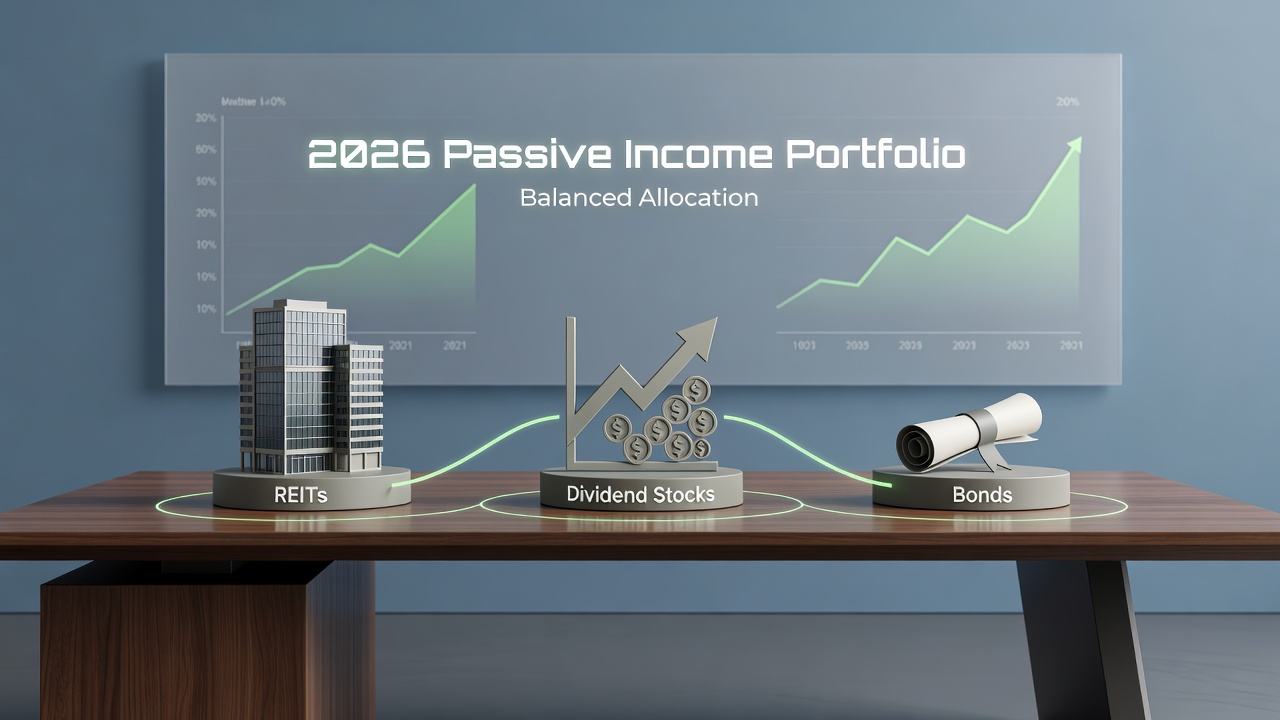
Investors seeking reliable passive income in 2026 are increasingly evaluating REITs and dividend stocks alongside traditional bonds. While bonds have long been viewed as stable income vehicles, shifting market conditions have prompted many to consider equity-based income sources for potentially higher yields and better long-term growth. This article examines the trade-offs, backed by historical context, allocation frameworks, and actionable steps for building a diversified income portfolio. Understanding these options helps investors align their choices with personal risk tolerance, time horizon, and income goals in a dynamic economic environment.
Why REITs and Dividend Stocks Appeal for Passive Income
REITs provide exposure to real estate without direct ownership, distributing most of their taxable income as dividends. Dividend stocks from established companies offer regular payouts that can grow over time. In contrast, bonds deliver fixed interest payments but face reinvestment risk when rates change. Many investors favor the combination of REITs and dividends because these assets can deliver income that keeps pace with inflation while offering capital appreciation potential. This appeal stems from the ability of equity income vehicles to participate in economic growth, unlike the more static returns of fixed-income instruments. Additionally, REITs often focus on high-demand sectors such as logistics, healthcare facilities, and data centers, creating diversified revenue streams that support consistent distributions.
Yield Comparisons and Risk-Adjusted Returns
Current market dynamics in 2026 show that equity income vehicles often provide competitive or superior income relative to bonds when adjusted for risk. REITs frequently yield more than investment-grade bonds, while quality dividend stocks balance income with growth. Risk-adjusted metrics such as Sharpe ratios tend to favor diversified equity income portfolios over pure bond holdings during periods of moderate economic expansion. Investors should evaluate total return potential rather than yield alone, considering factors like dividend growth rates and property value appreciation that can enhance overall portfolio performance.
Historical Performance Data
Over multiple decades, a blend of REITs and dividend-paying equities has outperformed bonds on a total-return basis. REITs benefited from property appreciation and rent growth, while dividend aristocrats compounded income through reinvestment. Bonds delivered steady but lower returns with limited upside. These patterns suggest that a hybrid approach can enhance income stability across market cycles. For instance, during recovery periods following economic downturns, REITs have historically captured upside from rising property values, while dividend stocks provided a buffer through consistent payouts. Long-term data illustrates how such combinations reduce reliance on any single asset class.
Interest Rate Impacts
Rising rates typically pressure bond prices downward while affecting REIT valuations through higher borrowing costs. Dividend stocks may experience short-term volatility but often recover as companies adapt. In 2026, with rates having stabilized after previous tightening cycles, REITs have shown resilience in sectors such as data centers and industrial properties. Monitoring Federal Reserve policy remains essential for timing allocations. Federal Reserve policy updates provide timely context for rate expectations and help investors anticipate shifts that could influence both equity income and fixed-income holdings.
Liquidity Differences
Bonds trade in over-the-counter markets with varying liquidity, while publicly traded REITs and dividend stocks offer intraday liquidity on major exchanges. This difference allows investors to rebalance portfolios quickly when market conditions shift. However, high-yield bonds can exhibit liquidity constraints during stress periods, making equity income assets more flexible for most retail investors. Liquidity advantages become particularly valuable during unexpected market events, enabling swift adjustments without significant price concessions.
Tax Implications
REIT dividends are often taxed as ordinary income, though some portions may qualify as return of capital. Qualified dividend stocks benefit from lower long-term capital gains rates. Municipal bonds offer tax-free income at the federal level. A hybrid portfolio can optimize after-tax returns by placing REITs in tax-advantaged accounts and holding qualified dividends in taxable accounts. Consulting official resources such as IRS tax guidelines ensures compliance and helps maximize efficiency. Investors should also consider state-level tax treatments and account type selections when structuring holdings.
Building a Hybrid Portfolio: Practical Steps
- Assess your risk tolerance and income needs by reviewing current expenses and future goals.
- Allocate 40-60% to a diversified REIT ETF for real estate exposure across multiple property types.
- Place 30-40% in a dividend growth ETF focused on quality companies with strong payout histories.
- Reserve 10-20% for short- to intermediate-term bonds for stability and capital preservation.
- Rebalance annually and reinvest dividends automatically to compound growth over time.
- Review sector allocations within REITs to avoid overexposure to any single property category.
Real-World Allocation Scenarios
A conservative investor might use 50% REITs, 30% dividend stocks, and 20% bonds to emphasize stability while capturing moderate growth. An aggressive approach could shift to 60% REITs and 40% dividend stocks for higher income potential and appreciation. Both scenarios aim to balance income generation with growth while mitigating sector-specific risks. For example, a retiree prioritizing steady cash flow could tilt toward higher bond weighting initially, gradually increasing equity income exposure as market conditions evolve.
Simple Comparison Table
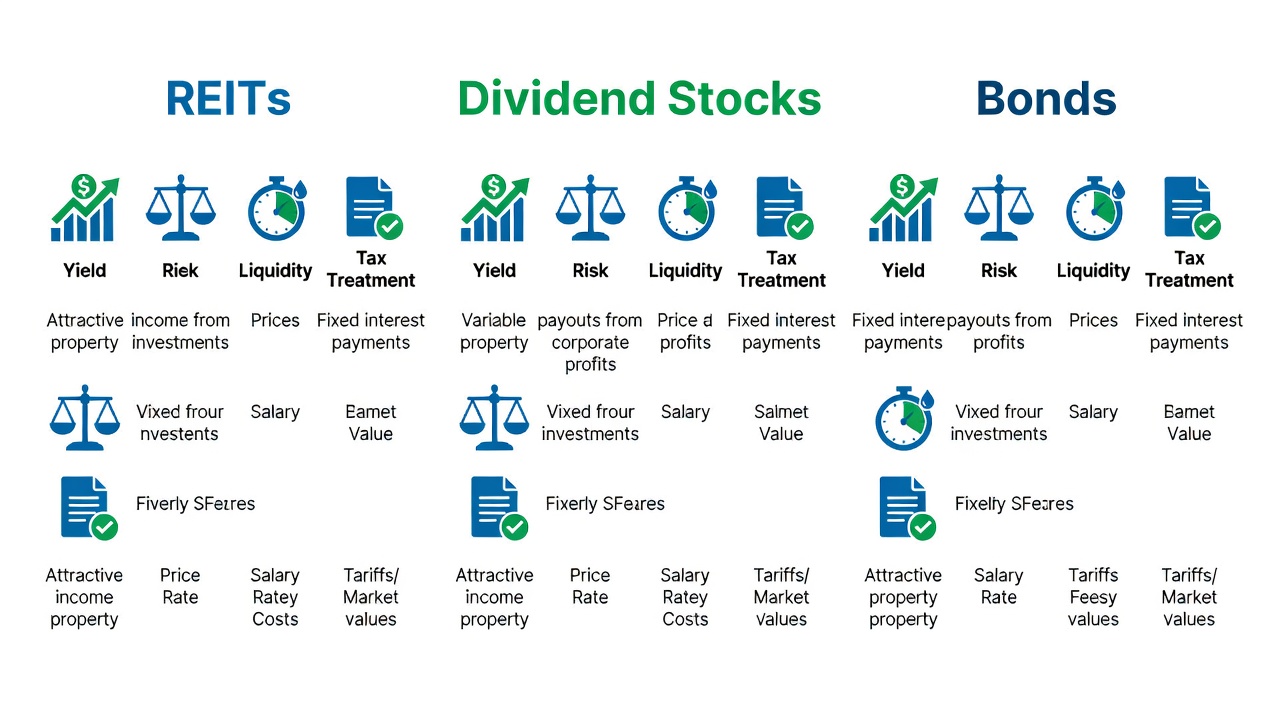
| Asset | Typical Yield Profile | Volatility | Liquidity | Tax Treatment |
|---|---|---|---|---|
| REITs | Higher than bonds | Medium-High | High | Mostly ordinary income |
| Dividend Stocks | Moderate to high | Medium | High | Qualified rates possible |
| Bonds | Lower, fixed | Low-Medium | Variable | Interest taxed as income |
Common Mistakes to Avoid
Investors often chase the highest yields without considering sustainability, leading to potential dividend cuts or REIT distribution reductions. Another frequent error is ignoring diversification within asset classes, such as concentrating REIT holdings in one property sector. Failing to account for tax location or rebalancing regularly can also erode returns over time. Avoiding these pitfalls requires ongoing education and periodic portfolio reviews.
FAQ
How volatile are REITs compared to bonds?
REITs exhibit higher price swings than investment-grade bonds but have historically recovered faster during expansions, providing growing income streams that support long-term passive income objectives.
Can I rely on dividend income during recessions?
Quality dividend payers with strong balance sheets often maintain or grow payouts even in downturns, though cuts remain possible in severe crises; selecting companies with consistent histories helps mitigate this risk.
What role should bonds still play?
Bonds provide ballast and predictable cash flow, making them useful for capital preservation and short-term income needs within a diversified mix that includes REITs and dividend stocks.
How do interest rate changes affect a hybrid portfolio?
Rate increases can pressure REIT and bond prices while dividend stocks may offer relative resilience through earnings growth, underscoring the value of balanced allocations.
Are there liquidity concerns with REITs?
Publicly traded REITs offer high liquidity similar to stocks, though private REITs may involve longer holding periods and redemption restrictions that investors should evaluate carefully.
Conclusion
REITs and dividend stocks can form a compelling core for passive income portfolios in 2026 when balanced with bonds. By understanding yield dynamics, tax considerations, and allocation principles, investors can construct resilient income streams tailored to their goals. Regular review and disciplined rebalancing remain key to long-term success. Resources like SEC investor education materials offer additional guidance for informed decision-making.


No comments yet. Be the first!