 Bullish Portfolio

Introduction to Passive Income Options
In the quest for reliable passive income streams heading into 2026, investors often debate between Real Estate Investment Trusts (REITs) and dividend stocks. Both offer ways to generate income without daily management, but they differ in yields, risks, taxes, and liquidity. This article breaks down the comparison, analyzes historical and projected performance, and provides actionable strategies for building a diversified portfolio.
With interest rates stabilizing and economic uncertainties lingering, understanding these assets is crucial. Whether you're a beginner dipping your toes or an advanced investor optimizing returns, we'll cover it all.
What Are REITs and Dividend Stocks?
REITs are companies that own, operate, or finance income-generating real estate. They must distribute at least 90% of taxable income as dividends, making them high-yield vehicles. Popular sectors include residential, commercial, and data centers. For authoritative insights, check the National Association of REITs (NAREIT).
Dividend Stocks are shares in companies with a history of paying consistent dividends from profits. Think blue-chip firms like Procter & Gamble or Johnson & Johnson, prized for stability.
Yield Differences
REITs typically offer higher yields: average around 4-6% in 2024, projected to hold or rise slightly in 2026 with real estate recovery. Dividend stocks average 2-4%, with aristocrats (25+ years of increases) at 2.5-3.5%.
- REITs: Higher due to mandatory payouts, but sensitive to interest rates.
- Dividend Stocks: Lower but more predictable growth.
For dividend details, see Investopedia.
Volatility Comparison
REITs are more volatile, correlating with real estate cycles and rates. Beta often 1.0-1.2 vs. S&P 500. Dividend stocks, especially defensive sectors, have lower betas (0.7-0.9), offering stability in downturns.
2022 bear market: REITs dropped 25%, dividend aristocrats ~15%. In bull markets, REITs can outperform with leverage.
Tax Implications
REIT dividends are mostly ordinary income (up to 37% federal tax), with return-of-capital portions deferring taxes. Qualified dividend stocks get favorable 0-20% rates.
Hold REITs in tax-advantaged accounts like IRAs. For tax rules, refer to IRS.gov.
Liquidity and Accessibility
Both trade on major exchanges, but REITs can have wider bid-ask spreads in non-publicly traded versions. Dividend stocks from large caps are highly liquid. Minimum investments are low via brokers like Vanguard or Fidelity.
Real-World Performance Data
Over 10 years to 2024:
- Vanguard REIT ETF (VNQ): ~7.5% annualized total return, 3.8% yield.
- ProShares S&P 500 Dividend Aristocrats (NOBL): ~11% annualized, 2.1% yield.
2020-2023: REITs rebounded strongly post-COVID (office/data centers boomed). Projections for 2026: REITs 5-8% yields if rates fall; dividends steady at 3% with 5-7% growth.
Hybrid Strategies for Diversified Portfolios
Don't choose one—combine for balance:
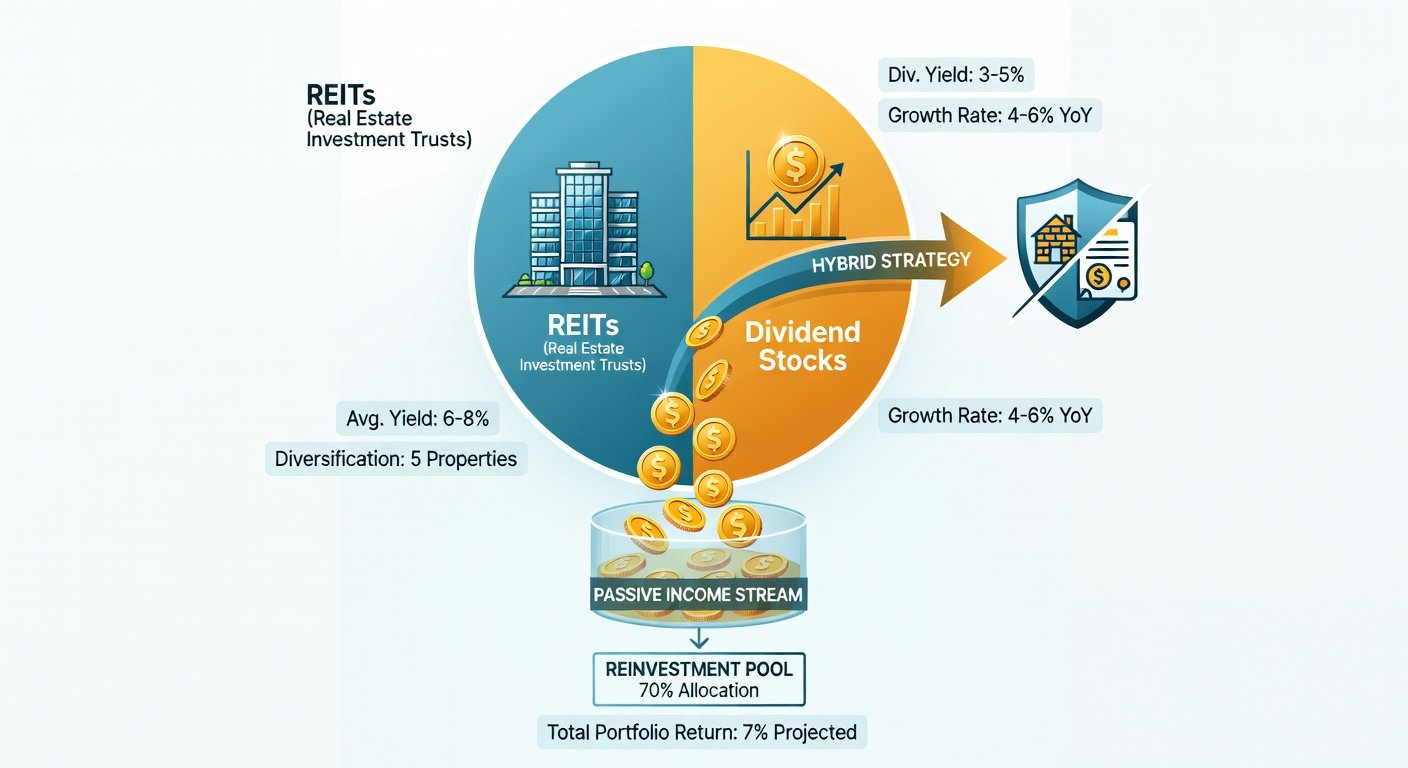
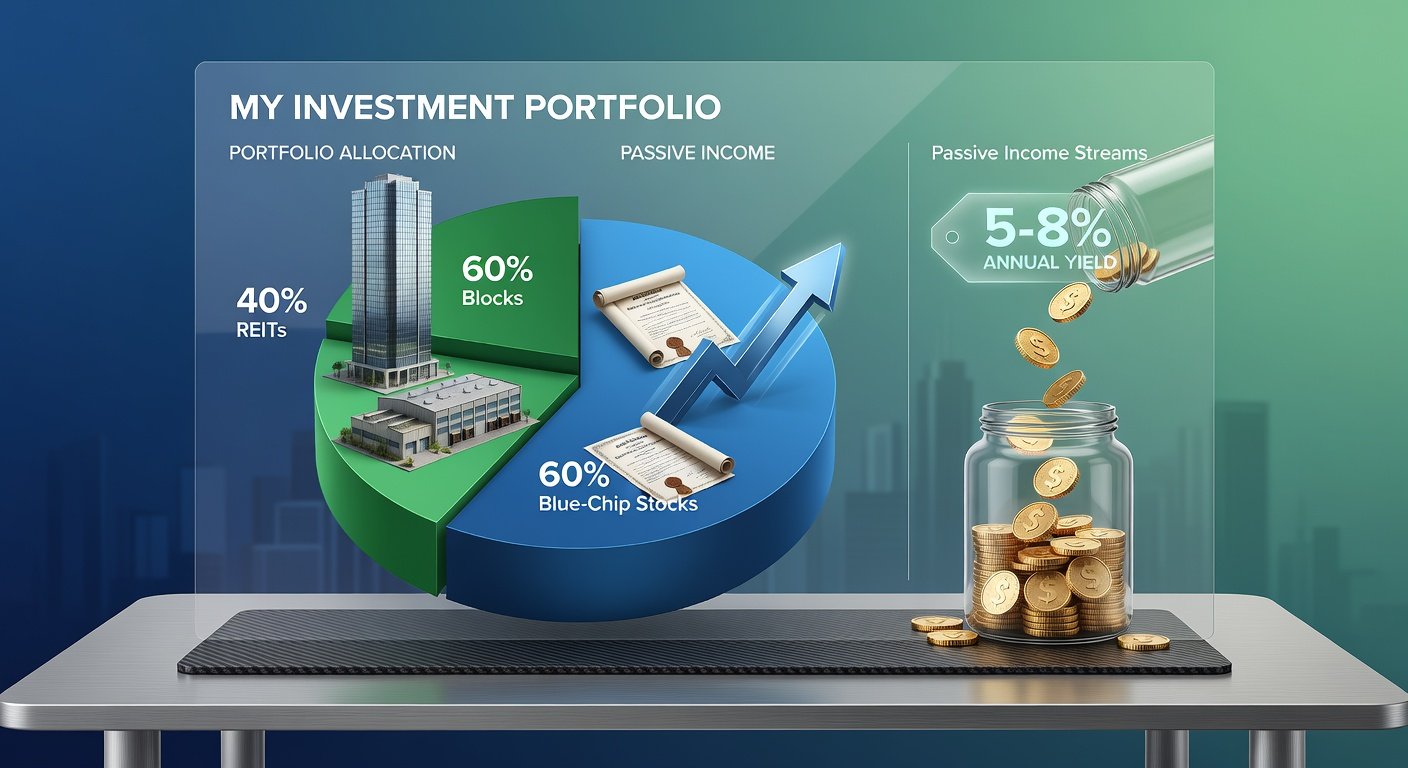
- 60/40 Split: 60% dividend stocks for growth/stability, 40% REITs for yield.
- Sector Diversification: Pair residential REITs with utility dividend stocks.
- ETF Approach: Use SCHD (dividends) + VNQ (REITs) for instant exposure.
- Rebalancing: Quarterly, sell winners to buy laggards.
This hybrid reduces volatility (portfolio beta ~0.9) while targeting 4-5% yield.
Step-by-Step Guide: Selecting Top Performers
For Beginners
- Research Yields: Use Yahoo Finance or Morningstar for 5-year average yield >3%.
- Check Payout Ratio: <75% for sustainability.
- Diversify: Buy ETFs like VNQ or SCHD ($5K minimum).
- Monitor: Set dividend alerts.
For Advanced Investors
- Screen Metrics: FFO (REITs) growth >5%; EPS growth (stocks) >8%.
- Valuation: P/FFO <15 for REITs; P/E <20 for stocks.
- Hedge: Use options or pairs trading (long REITs, short rates ETF).
- International: Add global REITs (e.g., VNQI) for 20% allocation.
Example picks: REITs - Prologis (PLD), data centers; Stocks - Coca-Cola (KO), consumer staples.
Conclusion: Build Your 2026 Income Engine
REITs edge out on yield but lag in taxes/volatility; dividend stocks win on stability. A hybrid portfolio maximizes passive income with managed risk. Start small, diversify, and reinvest dividends for compounding. Consult a financial advisor for personalized advice. In 2026, this duo could be your ticket to financial freedom.

No comments yet. Be the first!