 Bullish Portfolio

Introduction to REIT Dividend Investing
Real Estate Investment Trusts, or REITs, provide an excellent entry point for beginners looking to generate passive income through dividend payments without the complexities of direct property ownership. In 2026, REIT dividend investing remains a popular strategy for those seeking reliable cash flow from real estate assets while maintaining liquidity and diversification. This comprehensive guide explains the fundamentals, walks through actionable steps for getting started, and equips newcomers with tools to build a sustainable portfolio focused on income generation.
REITs function as pooled investment vehicles that own, operate, or finance income-producing real estate. They are required by regulation to distribute the majority of their earnings as dividends, making them particularly attractive for income-focused investors. Unlike buying individual properties, REITs allow participation with smaller capital amounts and professional management.
Understanding REIT Structures, Types, and Dividend Yields
REITs are categorized primarily into equity REITs, which own and manage physical properties such as apartments, shopping centers, and warehouses; mortgage REITs, which provide financing for real estate through loans and mortgages; and hybrid REITs that combine elements of both. Equity REITs tend to offer more stability for beginners due to their direct exposure to property appreciation and rental income. Publicly traded REITs are listed on stock exchanges, enabling easy buying and selling similar to common stocks.
Dividend yields on REITs are calculated as the annual dividend divided by the current share price. Yields often exceed those of many traditional stocks because of the mandatory high payout ratio. However, beginners should prioritize sustainability over the highest advertised yields, focusing instead on consistent growth in funds from operations and strong balance sheets. Understanding these structures helps investors select REITs aligned with long-term passive income goals.
Why REITs Excel for Passive Income Generation in 2026
REITs deliver passive income through regular dividend distributions, often paid quarterly. This creates a predictable revenue stream that can supplement salaries, fund retirement, or support other financial objectives. In 2026, factors such as evolving work patterns, e-commerce growth, and demographic shifts continue to support demand across various property sectors. Additionally, REITs provide inflation-hedging potential as rental rates adjust upward over time.
Compared to direct real estate, REITs eliminate the need for property maintenance, tenant management, or large down payments. They also offer instant diversification across dozens or hundreds of properties within a single investment. This accessibility makes them ideal for beginners building their first income-oriented portfolio.
Step-by-Step Guide to Setting Up Your REIT Investment Account
Launching a REIT investing plan begins with proper account setup. Follow these detailed steps:
- Select a reputable brokerage that offers commission-free trades, robust research tools, and access to a wide range of REITs and REIT ETFs. Consider platforms with mobile apps for convenient monitoring.
- Decide between a standard taxable brokerage account for flexibility or a tax-advantaged account such as a traditional or Roth IRA if you meet eligibility requirements.
- Complete the account application process, providing identification and linking a bank account for funding.
- Deposit initial capital, starting with an amount comfortable for your budget—many investors begin with a few thousand dollars to purchase multiple positions.
- Explore educational materials provided by the brokerage and enable features like automatic dividend reinvestment to maximize compounding effects over time.
Take time to familiarize yourself with the platform's interface before making purchases. This foundation ensures smooth execution of your investment strategy.
Key Screening Criteria for Identifying Sustainable REIT Dividends
Thorough screening helps avoid high-risk investments. Apply these criteria when evaluating potential REITs:
- Examine historical dividend growth and consistency over at least five years to confirm reliability.
- Review the payout ratio, ideally keeping it below 80% of funds from operations to leave room for reinvestment and unexpected expenses.
- Assess debt levels through metrics like debt-to-equity ratio, preferring conservative leverage that supports long-term viability.
- Analyze sector trends, tenant quality, and occupancy rates reported in quarterly updates.
- Consider management track record and alignment with shareholder interests through insider ownership data.
Cross-reference information from official filings and reputable financial databases to build a shortlist of candidates meeting these standards.
Constructing a Sample Starter Portfolio with Diversification Examples
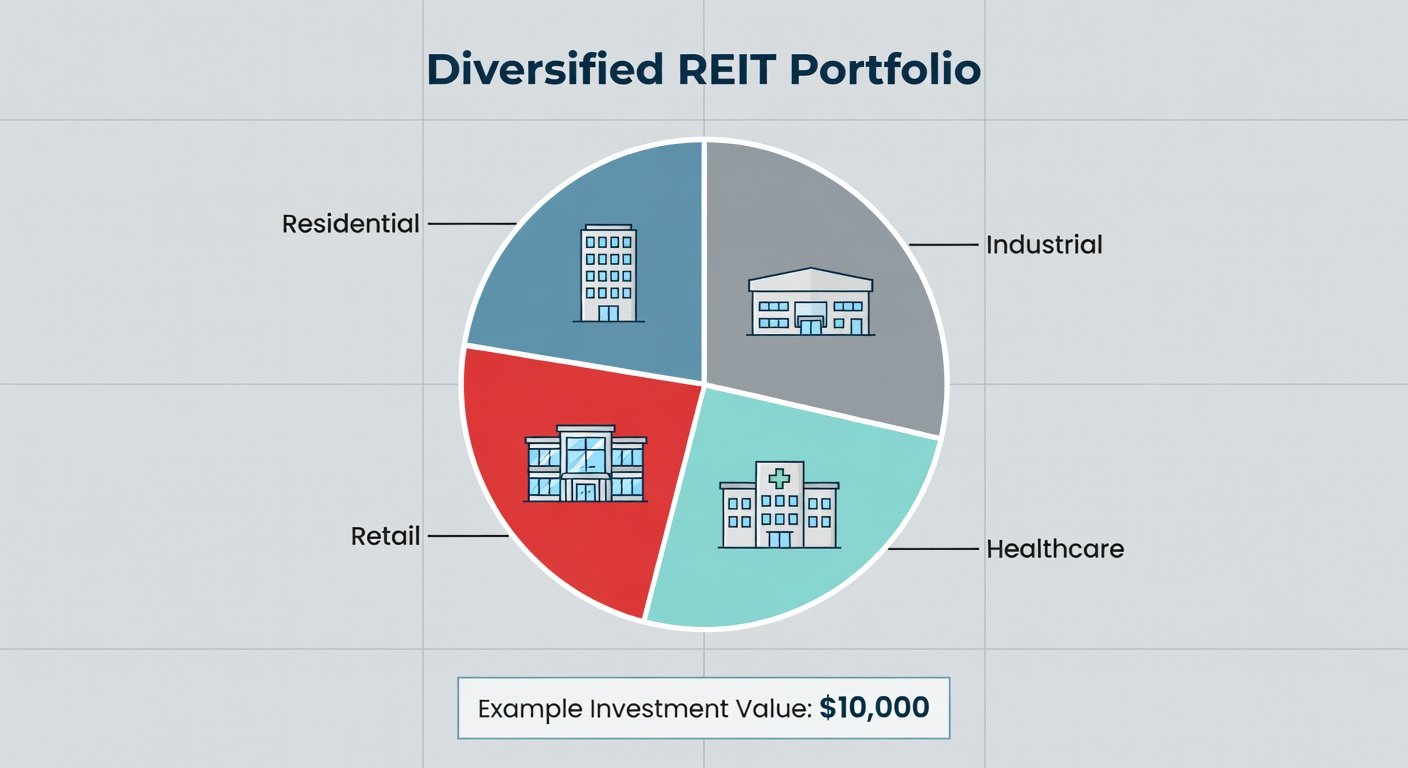
A beginner-friendly portfolio balances income potential with risk management through sector allocation. Consider this hypothetical starter example with $10,000 initial investment:
- 40% allocated to residential REITs for exposure to housing demand and stable rents.
- 25% in industrial REITs capitalizing on logistics and warehousing needs.
- 20% in healthcare REITs tied to medical facilities and senior housing trends.
- 15% in data center or specialty REITs for technology-driven growth opportunities.
This mix spreads risk across uncorrelated property types. For instance, if retail faces challenges, industrial holdings may offset impacts. Adjust allocations gradually as your knowledge and capital grow, always maintaining at least four to six positions for basic diversification.
Advanced Diversification Strategies and Portfolio Monitoring
Beyond initial allocation, incorporate geographic diversification by selecting REITs with properties in multiple regions. Monitor performance quarterly by reviewing earnings reports, occupancy statistics, and dividend announcements. Set calendar reminders for rebalancing once or twice per year to maintain target percentages. Tools within brokerage platforms can help track total portfolio yield and income projections, allowing you to make informed adjustments without emotional decisions.
Common Beginner Pitfalls and How to Avoid Them
New investors frequently encounter avoidable mistakes. Chasing the highest yields without checking underlying fundamentals often leads to dividend cuts during economic downturns. Another pitfall involves neglecting fees, which can erode returns over time—opt for low-cost options whenever possible. Failing to diversify across sectors concentrates risk, while ignoring interest rate sensitivity can surprise holders when borrowing costs rise. To sidestep these issues, create a written investment checklist and review it before each purchase. Educate yourself continuously through reliable resources rather than relying on hype.
FAQ: Addressing Tax Basics, Reinvestment, and More
How are REIT dividends typically taxed?
Most REIT dividends are taxed as ordinary income, though portions may represent return of capital that lowers your cost basis for future sales. Consult Form 1099-DIV and refer to guidance on the IRS website for accurate reporting.
What are the benefits of dividend reinvestment?
Reinvesting dividends through DRIP programs allows automatic purchase of additional shares, accelerating compounding without transaction costs in many cases.
Can REITs be held in retirement accounts?
Yes, placing REITs inside IRAs or similar vehicles defers or eliminates taxes on distributions, enhancing long-term growth potential.
How often should beginners review their REIT holdings?
Conduct a full review at least annually, with lighter quarterly checks on dividend payments and major news.
Conclusion
REIT dividend investing offers beginners a practical, scalable method for building passive income streams in 2026. By understanding structures, following structured account setup, applying rigorous screening, and maintaining diversification, investors can create resilient portfolios. Leverage resources from organizations such as Nareit and Investor.gov, along with SEC.gov for filings, to stay informed. Begin with a disciplined approach, remain patient, and focus on sustainability to achieve your income objectives over time.

No comments yet. Be the first!