 Bullish Portfolio

Introduction to Advanced ETF Strategies for Passive Income
Experienced investors in 2026 continue to seek efficient methods for generating scalable passive income through exchange-traded funds that strategically combine dividend-paying equities with real estate investment trusts. This blended approach delivers diversification across asset classes, enhanced liquidity compared to direct property ownership, and access to professional portfolio management at minimal cost. Dividend ETFs focus on companies demonstrating consistent earnings and payout growth, while REIT ETFs provide exposure to income-producing real estate sectors such as commercial offices, residential apartments, and industrial warehouses. The combination creates a portfolio resilient to economic cycles, offering both current yield and potential capital appreciation over time.
Unlike concentrating solely on individual stocks or physical real estate, ETF-based strategies reduce single-asset risk and simplify rebalancing. Investors benefit from automatic dividend reinvestment options and transparent holdings disclosure. In the current environment of fluctuating interest rates and persistent inflation concerns, these vehicles have gained prominence for their ability to deliver total returns that outpace inflation while maintaining steady cash flows. This article examines proven methods for selecting, allocating, and managing such portfolios with an emphasis on long-term sustainability.
Top ETF Options for Dividend and REIT Exposure
Choosing suitable ETFs involves careful evaluation of expense ratios, historical distribution consistency, underlying holdings quality, and sector diversification. Prominent dividend ETFs often track indexes like the Nasdaq U.S. Dividend Achievers Select or Dow Jones U.S. Dividend 100, emphasizing firms with multi-year payout increases. REIT ETFs typically mirror benchmarks such as the MSCI US REIT Index, providing access to equity REITs across property types while excluding mortgage REITs that carry higher interest-rate sensitivity.
Real-world examples illustrate effective selections. SCHD offers exposure to high-quality dividend payers with strong fundamentals, whereas VNQ delivers broad REIT market representation. Additional considerations include geographic diversification through ETFs holding international REITs or global dividend aristocrats. Screening tools should assess five-year total returns, maximum drawdowns during downturns, and correlation coefficients between selected funds to ensure complementary behavior rather than redundant overlap.
Allocation Models and Screening Criteria
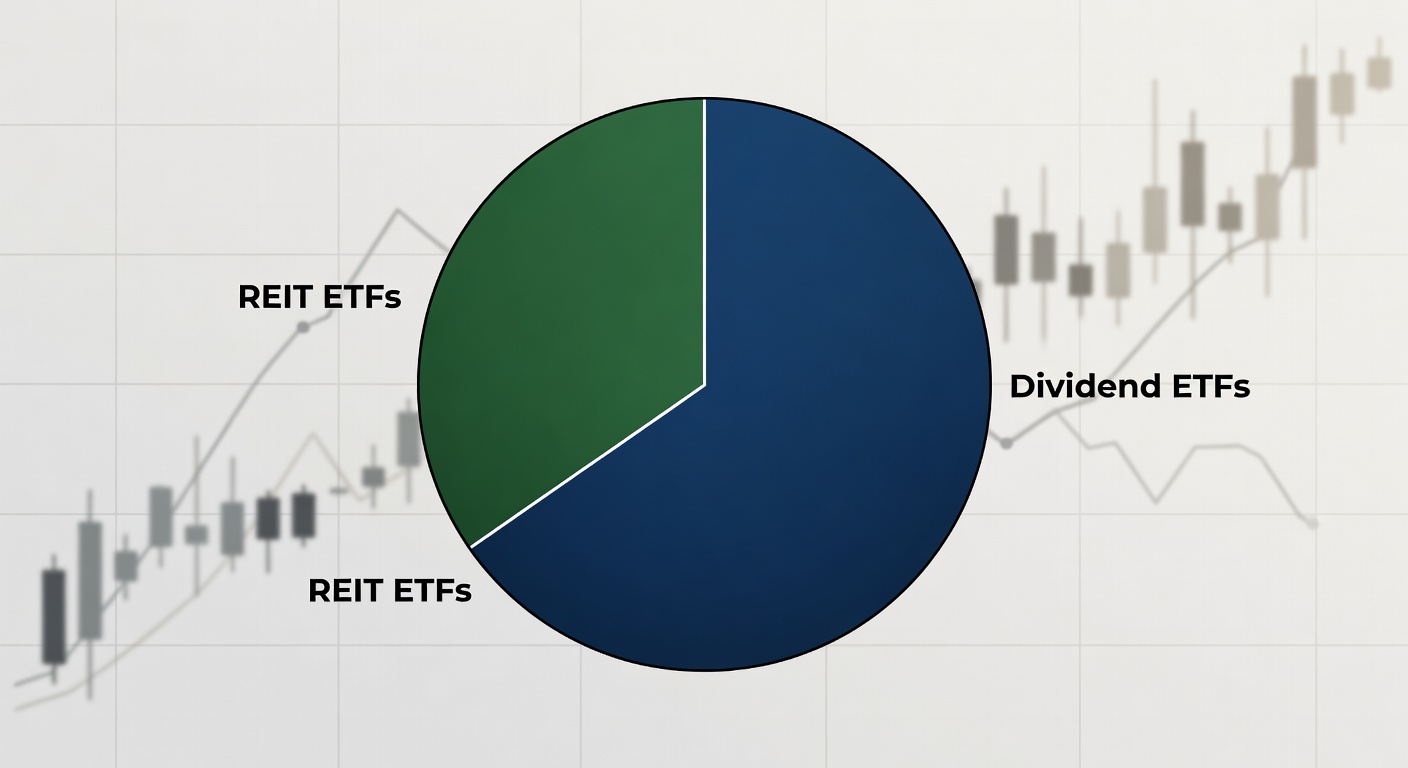
Strategic allocation models balance income generation with growth potential. A foundational 60/40 framework allocates 60 percent to dividend ETFs and 40 percent to REIT ETFs, adjustable based on investor age, income needs, and market outlook. More conservative models favor 70/30 weighting toward dividends during periods of rising rates, while aggressive allocations increase REIT exposure when property sectors show undervaluation relative to broader equities. Dynamic models incorporate tactical overlays using economic indicators such as GDP growth and unemployment trends to shift weights temporarily.
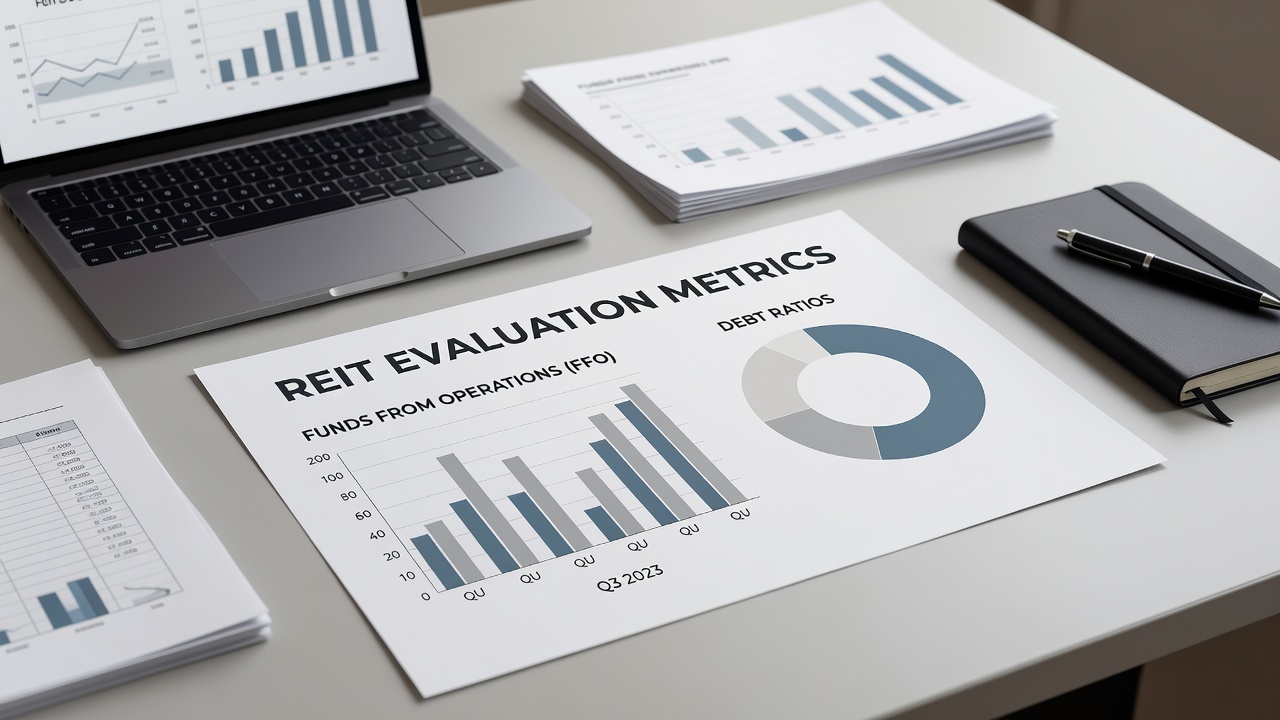
Screening criteria center on yield sustainability and total return potential. Key metrics include dividend coverage ratios above 1.5 times earnings, payout ratios under 70 percent, and consistent annual distribution growth exceeding 3 percent over five years. For REITs, focus on occupancy rates, funds from operations growth, and debt-to-equity levels below industry averages. Investors should compare performance across multiple market regimes, including the high-inflation environment of 2022 and the recovery phases through 2025, to validate resilience. Backtesting these criteria on leading funds reveals superior risk-adjusted outcomes when avoiding high-yield traps with unsustainable distributions.
Risk Management Techniques
Advanced risk management begins with portfolio-level diversification and extends to position sizing and hedging overlays. Techniques include setting allocation drift limits at 5 percent before rebalancing, employing low-correlation assets to reduce overall volatility, and monitoring beta relative to major indexes. Sector concentration risks in REITs, such as heavy retail or office exposure, can be mitigated through multi-sector REIT ETFs or complementary holdings in defensive dividend payers like consumer staples.
Inflation protection arises naturally from REIT rental escalators and dividend growth that historically outpaces consumer price increases. Practical implementation involves stress-testing the portfolio against scenarios like 2008-style credit crunches or 2022 rate-hike cycles. Maintaining a modest cash reserve equivalent to several months of distributions provides liquidity without forced sales during downturns. Regular review of fund prospectuses helps identify changes in strategy or fees that could alter risk profiles.
Tax-Efficient Structures and Considerations
Tax efficiency significantly impacts net returns, making account selection critical. Housing these ETFs within traditional or Roth IRAs defers or eliminates taxes on distributions, allowing compounding to work uninterrupted. In taxable brokerage accounts, prioritize ETFs generating qualified dividends taxed at lower long-term capital gains rates and REITs whose distributions often include return-of-capital elements that reduce immediate tax liability. IRS guidelines detail specific reporting for REIT income on Schedule K-1 forms in certain structures.
Additional strategies include harvesting tax losses during market dips and timing sales to align with lower-income years. Investors should consult current tax rules, as REIT dividends may qualify for the qualified business income deduction in some cases. SEC investor resources provide further education on understanding prospectus disclosures related to tax characteristics.
Performance Comparisons Across Market Conditions
Historical comparisons highlight the value of blended allocations. During inflationary periods, REIT components have preserved purchasing power better than pure bond holdings, while dividend ETFs provided downside protection in equity bear markets. In low-rate bull markets, total returns favor growth-oriented dividend selections. Analysis using data from Federal Reserve economic reports demonstrates that dynamic rebalancing between the two categories improved Sharpe ratios compared to static holdings. Investors can review fund fact sheets for rolling period returns to identify patterns and adjust expectations accordingly.
Practical Steps for Building and Rebalancing an ETF Portfolio
- Establish clear income targets and maximum acceptable volatility levels based on personal financial plans.
- Conduct thorough due diligence on 5 to 8 candidate ETFs using screening platforms and third-party research.
- Construct the initial portfolio through phased purchases over several months to average entry prices.
- Document target weights and set calendar reminders for quarterly reviews.
- Execute rebalancing trades only when drifts exceed predefined thresholds to minimize transaction costs and tax events.
- Incorporate new capital contributions strategically to restore target allocations without unnecessary selling.
Leading fund examples show investors maintaining 4 to 7 percent blended yields with disciplined adherence to these steps across multi-year periods.
Common Mistakes to Avoid
- Chasing the highest advertised yields without verifying sustainability through coverage metrics.
- Over-concentrating in a single property sector within REIT allocations.
- Ignoring expense ratio creep when adding multiple similar funds.
- Failing to account for correlation spikes during systemic crises.
- Neglecting to update the portfolio after major life or regulatory changes.
Conclusion
Advanced ETF strategies that integrate dividend and REIT exposure offer experienced investors a robust framework for building passive income in 2026. Through deliberate selection, balanced allocation, proactive risk controls, and tax-aware implementation, these portfolios can deliver reliable distributions alongside long-term growth. Consistent application of the outlined principles positions investors for success across diverse economic environments.
FAQ
What are typical expense ratios for these ETFs?
Most quality dividend and REIT ETFs carry expense ratios between 0.05% and 0.20%, making them cost-effective for long-term holding.
How does liquidity compare between dividend and REIT ETFs?
Both categories generally offer high liquidity on major exchanges, with average daily volumes supporting easy entry and exit even for larger positions.
Can these strategies protect against inflation?
REIT components provide natural inflation hedges through rental adjustments, while dividend growth stocks often maintain purchasing power over time.
What role does rebalancing play in long-term success?
Regular rebalancing maintains intended risk levels and captures gains from outperforming segments, preventing style drift over multi-year horizons.

No comments yet. Be the first!