 Bullish Portfolio

Introduction to Industrial REITs for Passive Income
Industrial real estate investment trusts (REITs) have emerged as standout performers in the dividend investing landscape, offering investors reliable income streams amid evolving economic conditions. These specialized REITs own and operate properties such as warehouses, distribution centers, and logistics facilities that support modern commerce. In 2026, they stand out as prime dividend plays due to sustained demand from e-commerce expansion and global supply chain realignments. Unlike more volatile sectors, industrial REITs provide a balance of capital appreciation and consistent payouts, making them ideal for building passive income portfolios. Investors seeking steady yields often turn to these assets because they benefit from long-term leases and essential infrastructure needs that generate recurring revenue. This article examines the key growth drivers, highlights notable examples, compares them to other REIT categories, and provides actionable guidance for selection and allocation. By understanding these elements, income-focused investors can position themselves for sustainable returns in a dynamic market environment.
Key Drivers Boosting Industrial REIT Performance in 2026
Several macroeconomic factors are fueling growth in the industrial REIT sector. The continued rise of online shopping has increased the need for strategically located distribution hubs near major population centers. Supply chain disruptions from previous years have prompted companies to diversify and shorten logistics networks, further elevating demand for modern industrial spaces. Additionally, nearshoring trends and advancements in automation are reshaping warehouse requirements, favoring larger, tech-enabled facilities. These dynamics support higher occupancy rates and rental growth, which in turn bolster dividend sustainability for REIT shareholders. External resources like NAREIT offer ongoing industry data on these trends. Beyond e-commerce, population migration to suburban and secondary markets is creating new pockets of demand for last-mile facilities. This geographic shift allows industrial REITs to capture premium rents in previously underserved areas while maintaining high utilization across their portfolios.
E-commerce Demand and Logistics Shifts
E-commerce penetration continues to drive leasing activity across industrial properties. Retailers and third-party logistics providers require flexible spaces that accommodate rapid order fulfillment. This structural demand helps insulate industrial REITs from broader economic cycles compared to traditional office or retail properties. Automation technologies such as robotics and AI-driven inventory systems are also prompting upgrades to existing facilities, leading to higher capital expenditures but stronger long-term tenant retention. As a result, many industrial REITs report robust renewal rates and incremental rent increases upon lease expiration.
Top Industrial REIT Examples and Dividend Considerations
Several established industrial REITs have built strong track records of dividend growth through diversified portfolios and disciplined management. While specific yields fluctuate with market conditions, these companies generally emphasize high-quality tenants and geographic diversity to maintain payout consistency. Examples include firms focused on last-mile delivery centers and large-scale distribution parks. Reviewing their latest filings provides insight into occupancy trends and lease expirations. When evaluating dividend metrics, focus on payout ratios, historical growth rates, and funds from operations (FFO) coverage rather than headline yields alone. This approach reveals the sustainability of income distributions over time. Investors should also examine debt maturity schedules and interest expense trends to ensure that rising borrowing costs do not erode future distributions. Diversification across property types, such as cold storage or flex industrial spaces, can further enhance resilience.
Step-by-Step Process for Selecting Industrial REIT Holdings
Building a position in industrial REITs requires a systematic evaluation to align with personal income goals. Follow these steps for informed decisions: First, assess sector fundamentals, including vacancy rates and new supply pipelines in target markets, by reviewing quarterly industry reports and local economic indicators. Second, analyze individual REIT balance sheets for debt levels and interest coverage ratios to confirm financial flexibility during rate fluctuations. Third, review tenant concentration and lease durations to gauge revenue stability, paying close attention to credit ratings of major lessees. Fourth, compare dividend histories and growth projections against peers using consistent metrics such as dividend per share growth over five-year periods. Fifth, consider macroeconomic factors such as interest rate environments and their impact on borrowing costs by monitoring central bank communications. This process helps identify holdings that support reliable passive income while managing downside risks. Additional due diligence might include site visits to key properties or analysis of redevelopment pipelines that could drive future value creation.
Comparisons to Traditional Retail and Residential REITs
Industrial REITs differ markedly from retail and residential counterparts in risk profile and growth potential. Retail REITs often face challenges from shifting consumer habits and e-commerce competition, leading to more variable occupancy and the need for frequent property repositioning. Residential REITs, while benefiting from housing demand, can experience higher turnover and sensitivity to local employment trends, resulting in elevated operating expenses. In contrast, industrial assets enjoy longer lease terms and essential-use characteristics that support steadier cash flows. For passive income seekers, this translates to potentially lower volatility and more predictable distributions. Investors can review broader market context through resources such as SEC filings for cross-sector comparisons. Industrial properties also tend to require lower maintenance capital expenditures than retail malls or apartment complexes, freeing up more cash for dividend payouts and accretive acquisitions.
Practical Portfolio Allocation Examples
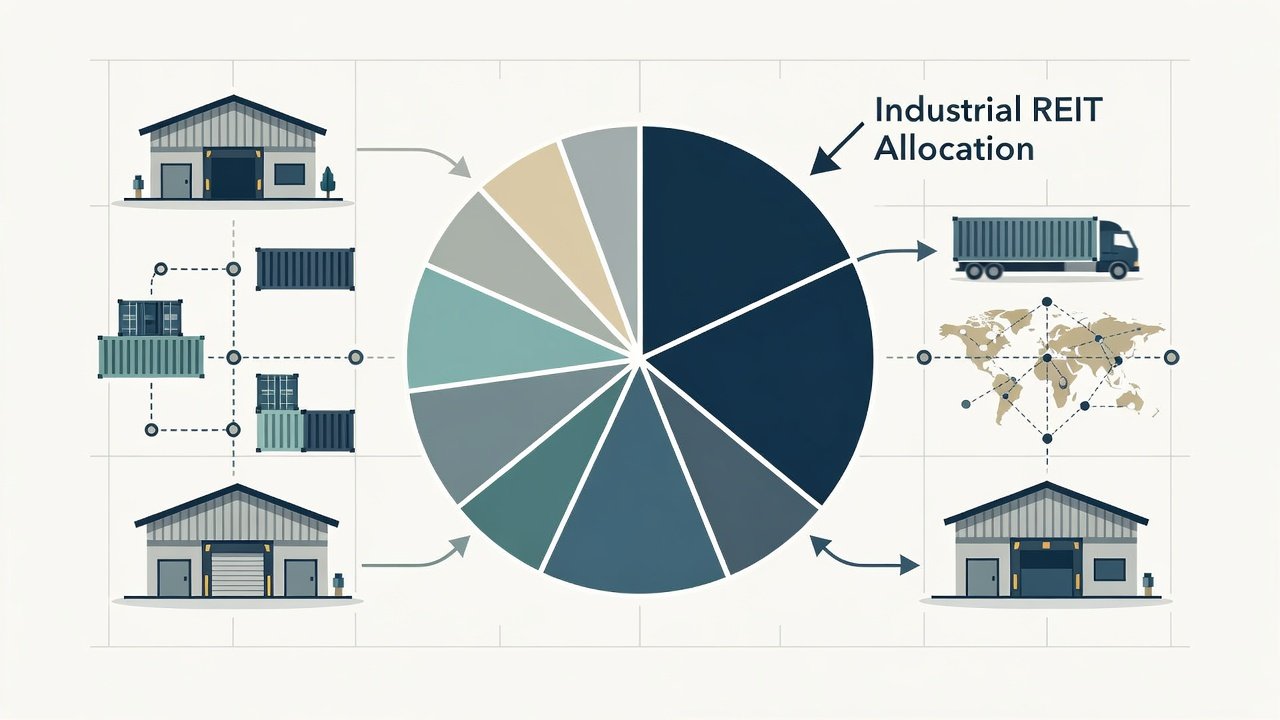
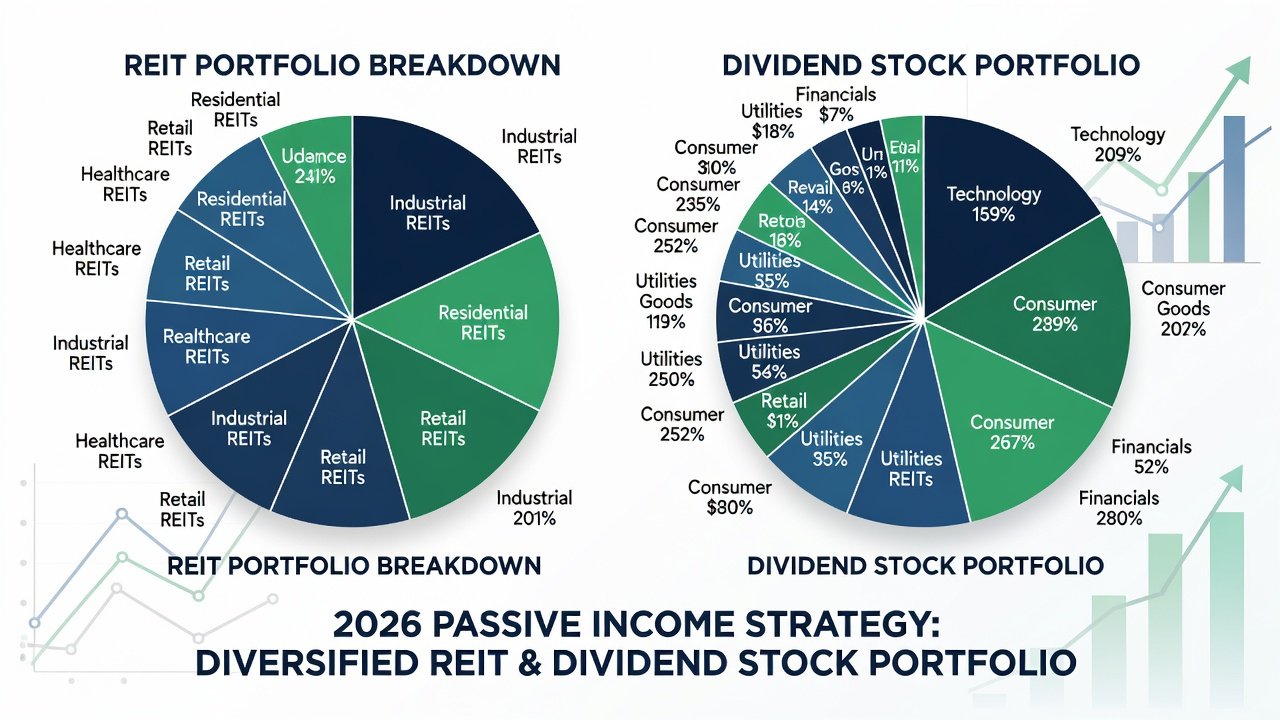
Allocating to industrial REITs within a diversified portfolio can enhance income generation. A sample conservative allocation might dedicate 10-15% of the real estate sleeve to industrial holdings, balanced with other REIT types and equities to moderate overall risk. More aggressive investors could increase exposure to 20-25% if seeking higher growth from logistics themes, particularly when paired with holdings in related sectors such as transportation infrastructure. Rebalancing annually helps maintain target weights as property values and dividends evolve. Combining industrial REITs with broad market ETFs further reduces concentration risk while preserving yield advantages. For a retiree-focused portfolio, an example might include a 12% allocation split across three industrial REITs with varying market capitalizations, supplemented by dividend aristocrat stocks and fixed-income instruments. Younger investors building long-term wealth could tilt higher toward growth-oriented industrial names while reinvesting distributions to compound returns.
FAQ: Addressing Common Risks and Concerns
How sensitive are industrial REITs to interest rate changes?
Like most REITs, industrial vehicles carry sensitivity to rising rates due to higher financing costs. However, strong rental growth can offset this pressure over time. Monitoring Federal Reserve policy through official updates aids in timing adjustments. Many industrial REITs have also extended debt maturities at favorable rates in recent periods, providing a buffer against near-term volatility.
What occupancy trends should investors watch?
Industrial occupancy has remained robust due to persistent demand, but oversupply in certain regions could pressure rates. Focus on markets with limited new construction and strong job growth. Tracking absorption statistics and asking rents in primary logistics corridors offers early signals of potential softening.
Are there liquidity or regulatory risks?
REITs trade on public exchanges, offering good liquidity. Regulatory changes around zoning or taxation could influence performance, so staying informed on policy developments is prudent. Environmental regulations related to warehouse energy efficiency may also create both compliance costs and opportunities for upgraded assets.
How do economic downturns affect industrial REIT dividends?
While industrial REITs are generally more defensive than other property types, severe recessions can still reduce tenant expansion plans. Long lease durations and creditworthy tenants typically help maintain dividend coverage even during challenging periods.
Conclusion
Industrial REITs represent a compelling avenue for passive income in 2026, supported by enduring structural tailwinds from e-commerce and supply chain evolution. By applying a disciplined selection process, comparing across REIT categories, and incorporating thoughtful allocations, investors can build resilient income streams. Regular portfolio reviews and attention to macroeconomic indicators will help sustain performance over the long term. As always, individual circumstances and professional advice should guide final decisions.

No comments yet. Be the first!