 Bullish Portfolio

Introduction to Industrial REITs for Passive Income
Industrial REITs have emerged as a compelling option for investors seeking reliable dividend income amid growing e-commerce and logistics demands in 2026. These real estate investment trusts own and operate warehouses, distribution centers, and manufacturing facilities, benefiting from structural tailwinds like supply chain modernization and the continued expansion of online retail. Unlike broader equity markets, industrial REITs offer sector-specific exposure with attractive distribution yields that can support long-term passive income goals. This comprehensive guide provides actionable strategies to build passive income through careful selection, portfolio construction, and ongoing management.
Investors are drawn to industrial REITs because of their relatively stable cash flows derived from long-term leases with creditworthy tenants in essential sectors. In 2026, demand remains robust due to online retail growth, nearshoring trends, and the need for modern, efficient warehousing space. This article goes beyond surface-level advice to deliver practical details, real-world examples, and decision-making frameworks that help investors navigate the sector effectively.
Understanding Industrial REITs and Their Dividend Potential
Industrial REITs lease properties to tenants in logistics, warehousing, and light manufacturing. Their revenue stability stems from long-term leases, making them suitable for income-focused investors who prioritize consistency over high-risk growth plays. Distributions often come directly from rental income, providing a steady cash flow stream that can be reinvested or used for living expenses. Investors should focus on funds from operations (FFO) growth rather than just headline yields, as FFO better reflects the underlying profitability after maintenance expenses.
The sector benefits from secular trends that are expected to persist through 2026 and beyond. E-commerce penetration continues to drive demand for last-mile delivery facilities, while manufacturers seek larger, more automated warehouses. This creates a favorable environment for occupancy and rent growth, which in turn supports dividend sustainability.
Key Selection Criteria for Industrial REITs
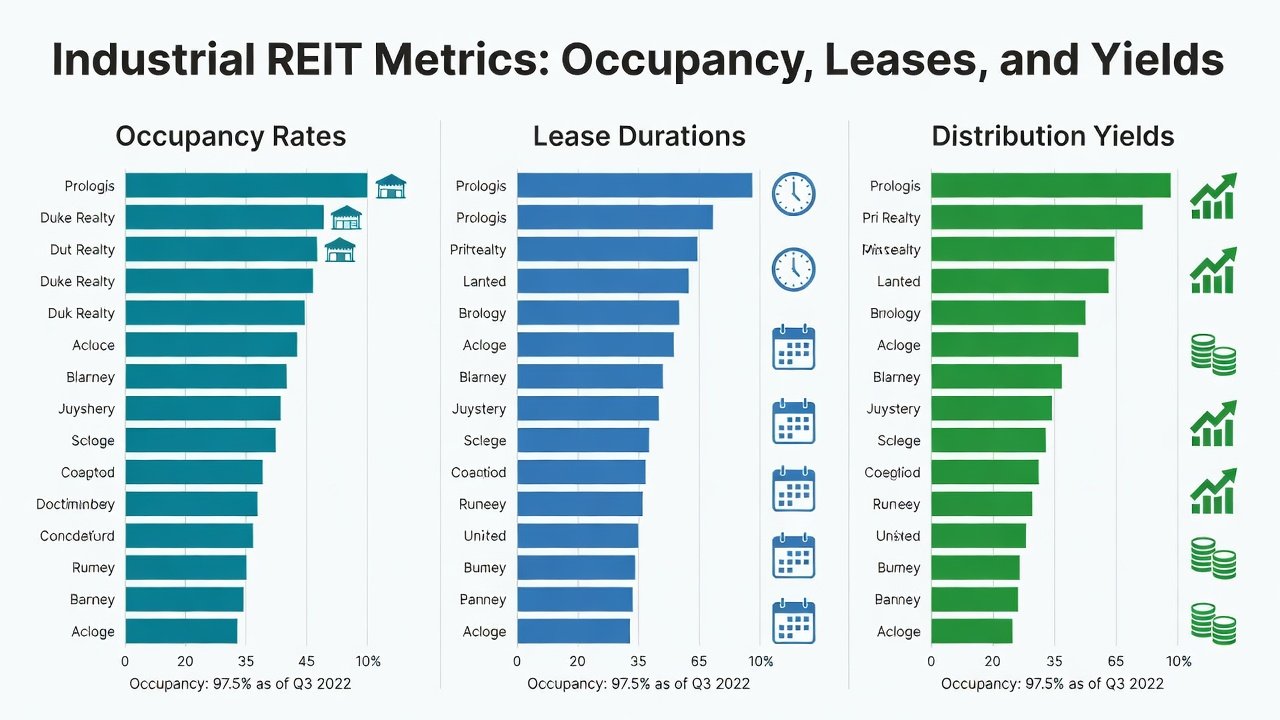
When evaluating options, prioritize metrics that signal sustainability and income reliability. Occupancy rates serve as a primary indicator of demand and property quality. Target REITs with rates above 95 percent for resilience against economic fluctuations. Lower occupancy can signal oversupply or property obsolescence, both of which threaten future distributions.
Lease durations are equally critical. Longer weighted average lease terms (WALT) reduce turnover risk and provide greater visibility into future revenue. Investors should examine lease expiration schedules to avoid concentrated rollover risk in any single year. Distribution yields must be assessed alongside payout ratios to ensure coverage from actual earnings. High yields that exceed FFO coverage often prove unsustainable and can lead to dividend cuts.
Additional considerations include geographic diversification across high-growth logistics corridors, tenant credit quality, and balance sheet strength measured by debt-to-EBITDA ratios. These factors collectively help filter high-quality vehicles from riskier ones.
Comparing Industrial REITs to Broader Market Options
Industrial-focused REITs often outperform diversified portfolios in growth phases due to specialized demand drivers. For context, compare against equity REIT averages or bond yields using resources from Nareit. They provide sector data and performance benchmarks that allow investors to contextualize returns.
While broader market ETFs offer instant diversification across property types, industrial REITs deliver concentrated exposure to logistics expansion. This concentration can enhance income growth when the sector performs well but also introduces higher volatility during downturns. Investors should weigh these trade-offs based on their overall risk tolerance and existing portfolio allocations.
Building a Starter Portfolio Allocation
Begin with 5-15 percent of your investment portfolio in industrial REITs for balanced passive income exposure. Allocate across three to five REITs to mitigate single-asset or single-property-type risk. Dollar-cost averaging into positions helps manage entry timing and reduces the impact of short-term price fluctuations.
Consider blending large-cap industrial REITs with smaller or regional players that may offer higher growth potential. Review holdings overlap if using multiple vehicles and maintain a core-satellite approach where the majority of the allocation sits in established names. Rebalance annually to keep the industrial exposure within target ranges as market values shift.
Reinvestment Tactics for Compounding Growth
Reinvest distributions via dividend reinvestment plans (DRIPs) to accelerate compounding without incurring transaction costs. Many industrial REITs offer DRIP programs that allow shareholders to purchase additional shares at a discount. Alternatively, use yields to fund other income assets like bonds or diversified dividend ETFs for broader diversification.
Monitor tax-advantaged accounts such as IRAs or 401(k)s to optimize after-tax returns. In taxable accounts, be mindful of qualified dividend treatment and potential return-of-capital adjustments that can lower cost basis over time. Consistent reinvestment can meaningfully increase income over a five- to ten-year horizon.
Risk Factors Including Interest Rate Sensitivity
Industrial REITs face interest rate sensitivity, as higher rates increase borrowing costs and compress property valuations. Review updates from Federal Reserve for policy signals that may affect sector performance. Rising rates can also make alternative income investments more attractive, potentially pressuring REIT prices.
Other risks include tenant concentration, where reliance on a few large lessees increases vulnerability to lease non-renewals, and economic slowdowns that could reduce warehouse demand. Supply additions in certain markets may temporarily pressure rents and occupancy. Diversification and ongoing monitoring of these factors help mitigate downside exposure.
Step-by-Step Evaluation Checklist
- Review the latest occupancy rates and lease expiration schedules in quarterly filings.
- Calculate dividend coverage from FFO and adjusted funds from operations (AFFO) metrics.
- Analyze geographic footprint and tenant diversification to identify concentration risks.
- Compare yields and growth trajectories against peers using SEC filings at SEC.gov.
- Assess management track record, development pipeline, and debt maturity profile.
- Evaluate ESG factors and property modernization initiatives that may support long-term tenant retention.
Real-World Yield Examples and Scenarios
Consider scenarios where stable occupancy above 96 percent supports consistent payout growth. In one illustrative case, a REIT with a diversified tenant base and long-duration leases maintained distribution stability even during periods of moderate economic softness. Another scenario involves using reinvested dividends to increase share count, thereby amplifying future income without additional capital contributions. These examples serve as modeling tools rather than guarantees of specific outcomes.
Common Mistakes to Avoid
Investors frequently chase the highest yields without examining payout sustainability, leading to unexpected cuts. Over-concentration in a single REIT or market can amplify losses during localized downturns. Ignoring interest rate trends or failing to rebalance regularly can erode overall portfolio income goals. Conducting thorough due diligence and maintaining discipline around allocation limits helps avoid these pitfalls.
FAQ: Common Concerns About Sector Volatility and Tax Treatment
How volatile are industrial REITs compared to other sectors?
They exhibit lower volatility than tech stocks due to contractual rents but can fluctuate with interest rates and supply additions. Historical data shows they tend to be more defensive than cyclical sectors during moderate recessions.
What is the tax treatment of REIT dividends?
Distributions are often taxed as ordinary income, though a portion may qualify as return of capital or capital gains. Consult a tax advisor for personalized guidance and review Form 1099-DIV details each year. Resources at IRS.gov provide additional context on REIT taxation.
Can beginners start with industrial REITs?
Yes, via ETFs or individual picks after completing the evaluation checklist. Starting small and focusing on education reduces common early mistakes.
How do interest rate changes affect industrial REIT dividends?
Higher rates can pressure share prices and increase financing costs, potentially slowing dividend growth. However, strong underlying rental demand often allows quality REITs to offset these effects over time.
Conclusion
Industrial REITs represent a strategic path to passive income growth in 2026 when selected with discipline. By applying the criteria, allocation tactics, reinvestment methods, and risk awareness outlined here, investors can build resilient dividend streams aligned with ongoing logistics sector expansion. Regular monitoring and periodic rebalancing ensure the portfolio continues to meet income objectives as market conditions evolve.

No comments yet. Be the first!