 Bullish Portfolio
Introduction to REIT Sector Rotation in 2026
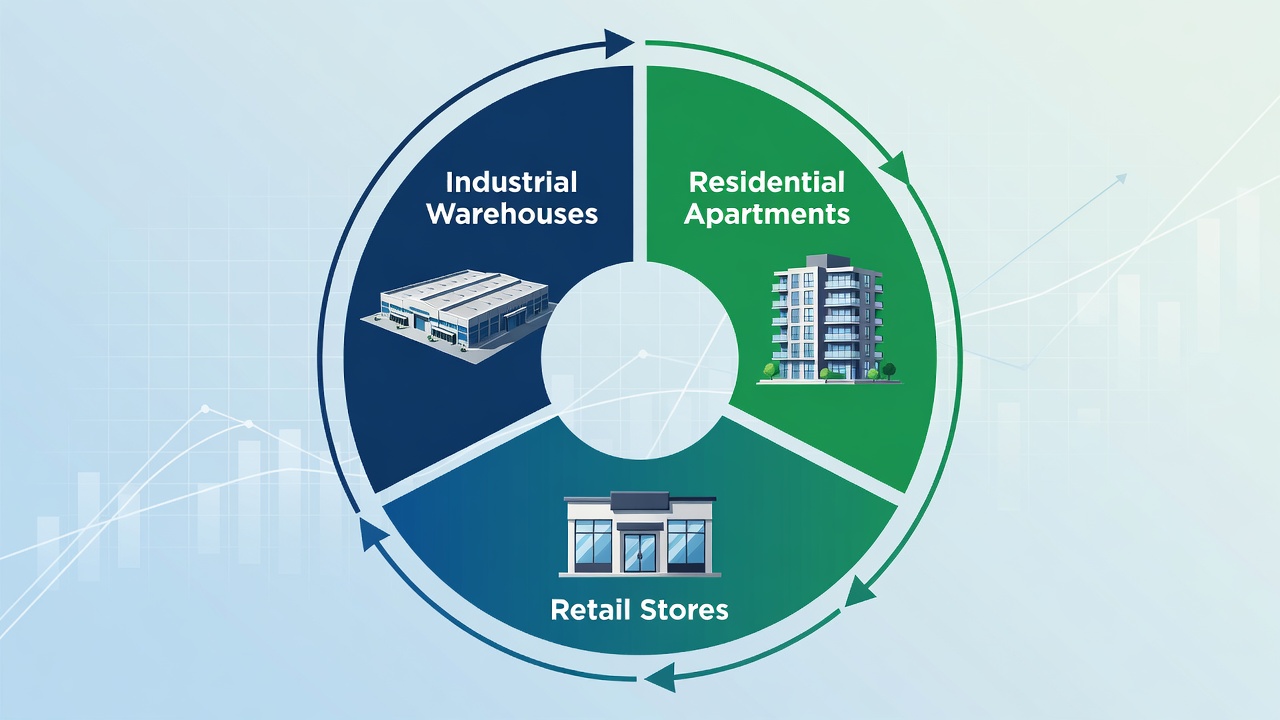
Experienced dividend investors understand that maintaining static allocations in real estate investment trusts often leads to suboptimal results during periods of economic transition. Sector rotation within REITs provides a dynamic framework for shifting capital between industrial, residential, and retail subsectors based on evolving macroeconomic conditions. This strategy aims to maximize dividend passive income by aligning portfolio exposure with sector-specific performance cycles projected throughout 2026. As interest rates, supply chain dynamics, and consumer spending patterns continue to evolve, investors who actively rotate holdings can capture higher yields while enhancing overall portfolio resilience compared to traditional buy-and-hold approaches.
The core principle involves monitoring leading economic signals to anticipate shifts in demand for different property types. Industrial REITs, for example, benefit from sustained e-commerce growth and reshoring of manufacturing, whereas residential REITs respond to demographic changes and housing affordability trends. Retail REITs gain traction when consumer confidence rebounds and foot traffic increases in physical stores. By timing these rotations effectively, investors can sustain elevated dividend payouts and reduce exposure to underperforming areas during downturns in specific sectors.
Economic Indicators for Timing REIT Rotations
Accurate timing relies on a combination of broad economic data and REIT-specific metrics. Industrial REIT performance often correlates with manufacturing output and logistics demand, signaled by rising ISM manufacturing indices and port activity levels. Residential REITs show strength when housing starts accelerate and migration patterns favor suburban or Sun Belt markets. Retail REITs respond positively to improvements in retail sales figures and declining vacancy rates in shopping centers.
Investors should closely track Federal Reserve policy announcements, inflation readings, and employment reports to gauge interest rate environments, as higher rates typically pressure REIT valuations across the board but affect sectors differently. Supply chain bottlenecks and regional economic disparities further refine rotation decisions. For comprehensive datasets, reference resources like FRED economic data and the Federal Reserve for real-time insights. Integrating occupancy rates, same-store net operating income growth, and funds from operations trends from individual REIT filings adds precision to the analysis.
Historical patterns demonstrate that rotations executed ahead of confirmed economic turning points have delivered superior risk-adjusted returns. For instance, positioning early in industrial assets ahead of 2025 supply chain recoveries yielded consistent dividend increases through subsequent quarters.
Building a REIT Rotation Checklist
Discipline is essential for successful rotation. A comprehensive checklist helps investors evaluate opportunities systematically and avoid impulsive moves. Begin each review cycle by analyzing updated macroeconomic forecasts from government and private sources. Next, compare relative valuations across subsectors using metrics such as price-to-FFO multiples and dividend coverage ratios to ensure sustainability of payouts.
- Review leading indicators including the ISM manufacturing index, housing starts data, and consumer confidence surveys on a monthly basis.
- Assess sector relative strength by tracking total returns and occupancy trends over rolling three-month periods.
- Calculate interest rate sensitivity for each holding using effective duration measures to anticipate rate-driven volatility.
- Establish clear yield targets and rebalancing thresholds, such as rotating when a sector's allocation deviates by more than 10 percent from target weights.
- Document all entry and exit rules, including stop-loss levels set at 15-20 percent below entry prices for downside protection.
- Incorporate tax considerations by favoring tax-advantaged accounts for frequent rotations to minimize capital gains drag.
- Stress test the portfolio quarterly against scenarios like a 200-basis-point rate hike or regional recession to quantify potential income impacts.
Following this checklist promotes consistency and helps experienced investors maintain focus on long-term passive income objectives rather than short-term noise.
Static vs. Dynamic REIT Portfolios
Static portfolios maintain predetermined allocations across REIT sectors indefinitely, offering simplicity and lower transaction costs but often missing opportunities during market rotations. Dynamic portfolios, by contrast, actively adjust weights in response to indicator shifts, frequently generating higher dividend income through timely overweighting of outperforming areas such as industrial REITs during logistics booms. Comparative analyses of recent market cycles reveal that dynamic strategies have produced annualized income advantages of several percentage points over static equivalents, particularly when rotations align with confirmed economic expansions.
Implementing a dynamic approach requires robust monitoring systems and tolerance for increased oversight. Investors must account for trading frictions and potential tax events while ensuring that rotations do not erode the stability of passive income streams. Many experienced practitioners blend both methods by maintaining core static holdings supplemented with satellite dynamic positions for targeted optimization.
Risk Mitigation Steps in REIT Rotation
While rotation offers upside potential, it introduces risks such as mistimed entries, elevated transaction costs, and sector concentration. Effective mitigation starts with broad diversification within each targeted subsector and maintaining a modest cash reserve for opportunistic deployments. Utilize limit orders and phased implementation over several weeks to minimize market impact.
Regular portfolio stress testing against adverse scenarios, including prolonged high-rate environments or localized economic slowdowns, helps identify vulnerabilities early. Position sizing should reflect conviction levels derived from indicator strength, with larger allocations reserved for high-confidence signals. Prioritizing REITs with fortress balance sheets, low leverage ratios, and multi-year dividend growth histories further safeguards income continuity. Finally, maintain detailed records of all rotation decisions to facilitate post-trade reviews and continuous strategy refinement.
Sample 2026 REIT Rotation Calendar
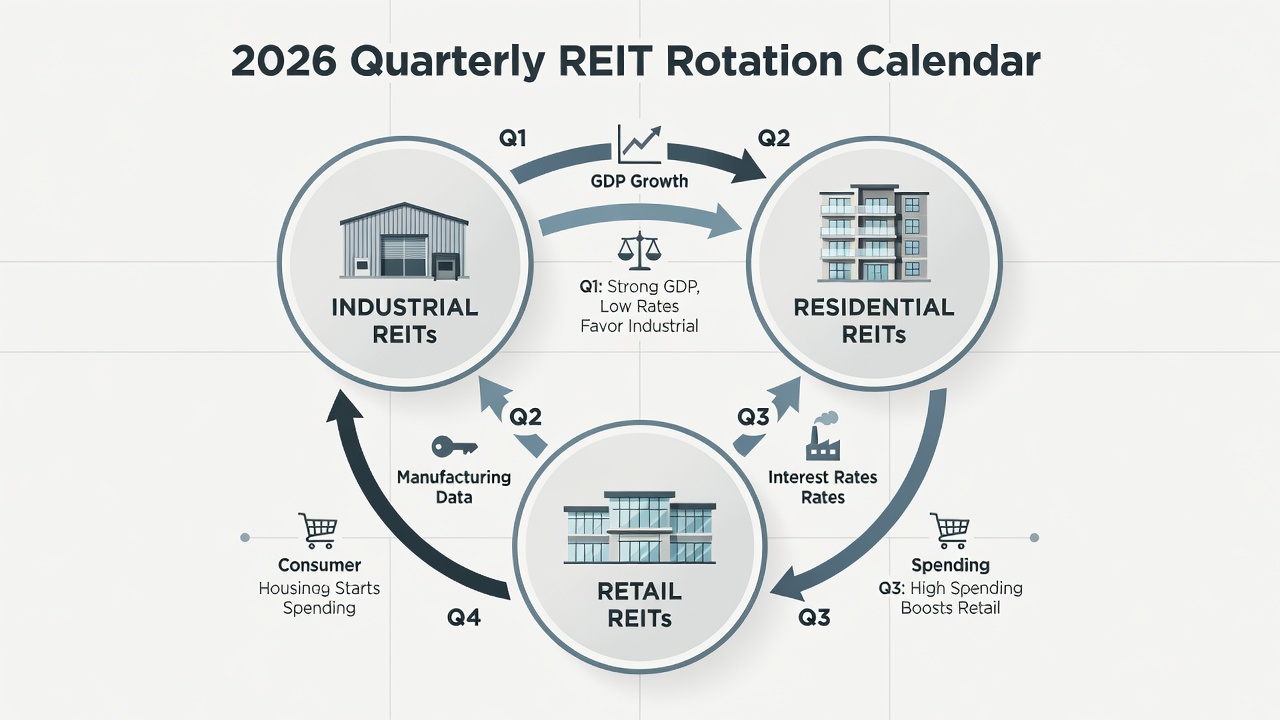
A flexible quarterly framework guides execution. In Q1 2026, focus on industrial strength signals from early-year manufacturing data and consider increasing exposure to logistics and warehouse REITs. Q2 emphasizes residential trends tied to spring housing market activity and potential migration data, prompting rotations into multifamily assets if affordability metrics improve. During Q3, monitor retail recovery indicators such as back-to-school spending and tourism rebounds to evaluate shopping center and outlet REITs. Q4 serves as a period for comprehensive annual performance review and rebalancing ahead of the following year, incorporating full-year economic summaries.
Adjustments remain contingent on personal risk tolerance and broader portfolio context, treating the calendar as an adaptable guide rather than a prescriptive schedule.
Investor Case Examples
One case involved an investor who shifted 35 percent of REIT holdings from retail to industrial assets in late 2025 following positive ISM data releases. This rotation captured elevated occupancy rates and dividend growth through 2026 logistics demand. Another investor gradually moved from residential to a balanced industrial-retail mix as interest rate stabilization became evident, preserving yield consistency amid fluctuating housing metrics. A third example demonstrates the value of partial rotations: maintaining core holdings while tactically overweighting retail REITs during confirmed consumer spending upswings, resulting in enhanced overall portfolio yield without full sector exits.
These applications illustrate how data-informed decisions can optimize passive income while managing downside exposure across varying market conditions.
Common Mistakes to Avoid
Many investors over-rotate based on short-term noise rather than confirmed trends, incurring unnecessary costs. Others neglect tax implications or fail to maintain adequate diversification within sectors. Avoiding these pitfalls through strict adherence to checklists and longer holding periods within rotations supports sustainable results.
Conclusion
REIT sector rotation equips experienced dividend investors with actionable methods to optimize passive income stability and growth throughout 2026. Combining rigorous indicator analysis, structured checklists, risk controls, and practical calendars enables portfolios to adapt proactively to market shifts. Adopting these techniques positions investors for superior outcomes relative to static allocation strategies while preserving the reliability of dividend income streams.


No comments yet. Be the first!