 Bullish Portfolio
Introduction to REIT Dividend Portfolio Allocation in 2026
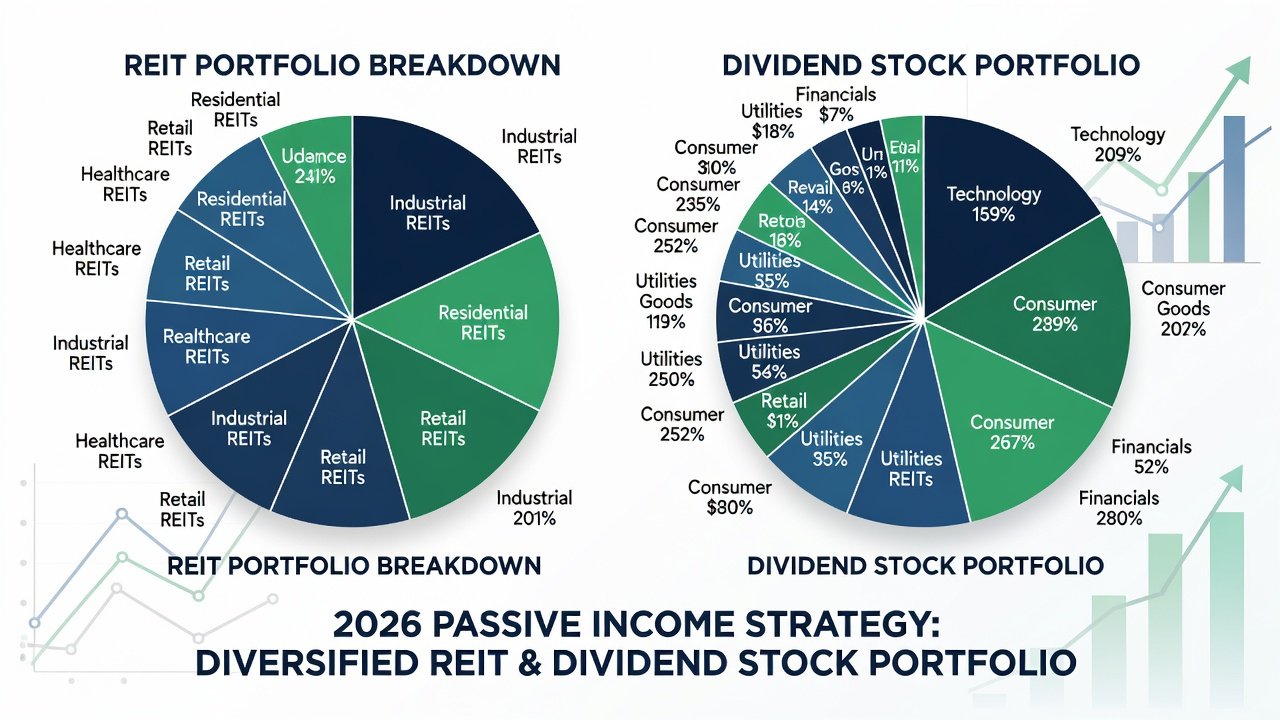
Building a resilient portfolio that blends real estate investment trusts (REITs) with dividend-paying stocks offers investors a powerful path to passive income. In 2026, market conditions emphasize diversification across sectors such as residential, healthcare, and industrial properties alongside stable dividend equities. This approach helps generate consistent cash flow while managing volatility amid evolving economic indicators and interest rate environments. Investors seeking beyond-basic strategies will find value in structured allocation models tailored to different risk profiles. These models prioritize long-term income generation through careful weighting of REITs, which provide exposure to real estate without direct ownership, and dividend stocks that offer equity upside with regular payouts. The goal is to create sustainable streams that support financial independence without constant active management.
Successful allocation requires understanding how REITs and dividend stocks interact. REITs often exhibit sensitivity to interest rates and real estate cycles, while dividend stocks from mature companies tend to provide more predictable earnings. By blending them thoughtfully, investors can smooth out returns and enhance overall portfolio yield potential over time.
Understanding REITs and Dividend Stocks for Passive Income
REITs are companies that own, operate, or finance income-generating real estate. They must distribute at least 90 percent of taxable income as dividends, making them attractive for income-focused investors. Common types include equity REITs focused on property ownership and mortgage REITs that deal in real estate financing. Dividend stocks, typically from established companies in consumer staples, utilities, or healthcare, complement REITs by adding growth potential and sector diversity. These stocks often come from firms with long histories of increasing payouts, known as dividend aristocrats.
Combining these assets reduces concentration risk. For example, REITs may perform well during periods of economic expansion in property demand, while dividend stocks provide stability during market downturns. Key benefits include liquidity compared to direct real estate ownership and the ability to reinvest dividends automatically for compounding. Risks involve interest rate fluctuations affecting REIT valuations and potential cuts to dividend payouts during economic stress. Authoritative guidance on investment structures can be found at the U.S. Securities and Exchange Commission.
Percentage Breakdowns by Risk Tolerance
Optimal allocations vary by investor profile, time horizon, and income needs. Conservative investors, often those nearing retirement or prioritizing capital preservation, might allocate 40 percent to REITs and 60 percent to dividend stocks. This setup emphasizes stability, with REITs providing inflation-hedging properties and dividend stocks offering defensive characteristics. Moderate investors often use a 50/50 split, balancing income generation with moderate growth opportunities across both asset classes. Aggressive portfolios tilt toward 70 percent REITs for higher yield potential, suitable for younger investors with higher risk tolerance who can weather short-term volatility.
These percentages account for factors like interest rate sensitivity in REITs and earnings consistency in dividend equities. Within the REIT portion, further breakdowns by sector—such as 20 percent healthcare REITs for demographic stability and 30 percent industrial REITs for e-commerce tailwinds—add granularity. Revisit allocations annually to maintain targets amid shifting economic data and personal circumstances.
Annual Rebalancing Steps
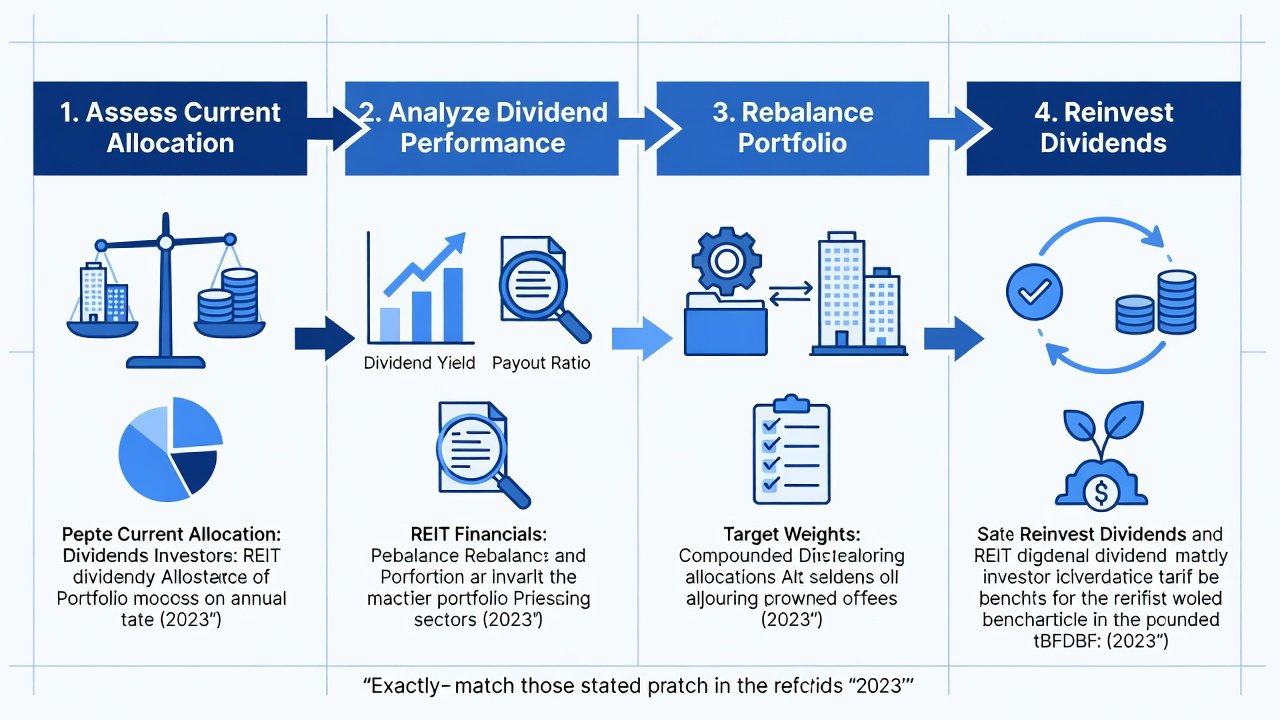
Rebalancing ensures the portfolio stays aligned with goals and prevents drift toward unintended risk levels. Follow these practical steps each year:
- Review current asset weights against target allocations using portfolio tracking tools or statements.
- Calculate deviations caused by market movements, dividend reinvestments, or new contributions to identify overweight and underweight positions.
- Sell portions of overweight holdings and buy underweight ones to restore balance, timing trades to minimize tax impacts where possible.
- Consider transaction costs, bid-ask spreads, and any applicable fees before executing trades to preserve net returns.
- Document changes for future reference and performance tracking, including notes on market conditions at the time of rebalancing.
This disciplined process supports sustained passive income. Investors should also factor in life events like inheritance or changes in income needs that might warrant off-cycle adjustments. Additional investor education resources are available at Investor.gov.
Sample Model Portfolios with Projected Yields
Consider these illustrative models using current REIT sectors such as healthcare and industrial properties paired with blue-chip dividend stocks. These examples demonstrate how different allocations translate into income-focused construction.
Conservative Model: 40% REITs (split across healthcare for aging population trends and residential for steady rental demand), 60% dividend stocks (utilities and staples for reliable payouts). Focus remains on capital preservation with steady distributions, suitable for those seeking minimal disruption to cash flow.
Moderate Model: 50% REITs (industrial and retail sectors for growth in logistics and consumer spending), 50% dividend stocks (financials and energy for balanced exposure). This mix balances income with moderate growth, appealing to investors midway through their accumulation phase.
Aggressive Model: 70% REITs (diversified across multiple property types including data centers for tech infrastructure), 30% high-yield dividend stocks. Higher allocation to REITs targets elevated income streams but requires comfort with potential price swings.
Performance Comparisons Across Mixes
Historical patterns show conservative allocations deliver smoother income with lower drawdowns during market stress. Aggressive mixes can produce higher average yields but experience greater fluctuations during rate changes or economic slowdowns. Performance data from the Federal Reserve highlights interest rate impacts on real estate sectors; see federalreserve.gov for ongoing economic indicators.
Comparisons reveal that moderate models often strike the best balance for most passive income seekers, offering resilience across cycles. For instance, a moderate mix may outperform pure REIT portfolios in high-rate environments while still generating more income than an all-stock approach. Investors should review backtested scenarios and forward-looking projections to align choices with personal goals.
Practical Examples Using Current REIT Sectors
Investors can apply these models by selecting established REITs in healthcare for demographic tailwinds or industrial REITs benefiting from e-commerce logistics growth. Pair them with dividend aristocrats in consumer staples for defensive income during recessions. Regular monitoring of sector trends helps refine holdings without frequent trading. For example, shifting a small portion from residential to data center REITs could capture emerging digital economy demand while maintaining overall allocation targets.
Risk Management and Tax Considerations
Beyond basic allocation, effective risk management involves diversifying within sectors and using dollar-cost averaging for new investments. Tax considerations play a key role, as REIT dividends are often taxed as ordinary income, whereas qualified dividend stocks may receive preferential rates. Holding assets in tax-advantaged accounts like IRAs can optimize after-tax returns. Avoid common pitfalls such as over-concentration in one property type or ignoring correlation between holdings.
FAQ: Common Allocation Pitfalls
How often should I rebalance?
Annual reviews suffice for most investors unless major market events occur that push allocations significantly off target.
What if yields drop across the portfolio?
Focus on total return and diversification rather than chasing short-term yields, as sustainable income comes from a balanced mix over time.
Are REITs suitable in all economic climates?
They add value through diversification but require pairing with stable dividend stocks to mitigate rate sensitivity and sector-specific downturns.
Should beginners start with aggressive allocations?
No, most new investors benefit from starting conservative and gradually increasing REIT exposure as they gain experience and comfort with volatility.
Conclusion
Strategic allocation of REITs and dividend stocks in 2026 empowers investors to build reliable passive income. By applying risk-appropriate percentages, following structured rebalancing, and learning from sample portfolios, individuals can create durable income streams. Consistent application of these models, combined with ongoing education and periodic reviews, positions portfolios for long-term success in varying market conditions.

No comments yet. Be the first!